North Korean Defector Yeonmi Park Shares Her Experience of Wokeness at Columbia University

North Korean Defector Yeonmi Park Shares Her Experience of Wokeness at Columbia University

I first learned of Yeonmi Park from Steve Bannon’s War Room. Her horrific story of growing up in North Korea and her harrowing escape to the West was hard to fathom, so I read her book, In Order to Live: A North Korean Girl’s Journey to Freedom, and it’s still hard to fathom. If anyone of us is tempted to complain about anything, I suggest reading her book. It shows us how trivial most issues we complain about, get frustrated and worry about, grow anxious about, really are.

She has a new book out called While Time Remains: A North Korean Defector’s Search for Freedom in America, and she tells Bannon on this War Room interview of experiencing wokeness at Columbia University, supposedly one of the most prestigious universities in America, one of the vaunted Ivy League Schools. As much as her story of escaping a North Korea hell hole needs to be read to be believed, the story of her experience at Columbia needs to be heard to be believed. Cultural Marxism in the guise of wokeness has completely captured American universities and the irrationality is something to behold. Her comparison of the woke leftist indoctrination centers of American universities to North Korea is spot on. We can thank God they don’t have the totalitarian power of the Kim’s of North Korea, yet.


Thoughts on the Global Disinformation Index PSYOP

Thoughts on the Global Disinformation Index PSYOP

It’s a woke world, so nobody who pays attention is surprised there is such a thing as an official “Global Disinformation Index.” Truth be told, I thought it was comical. If we’ve learned anything in the last several years it’s how inept and incompetent the globalist Uniparty elite cabal really is. Not only that, but they are liars who push a “narrative” trying to accomplish their globalist goals of rule by an elite class of overlords who believe in technocracy, or rule by scientific “experts.” Of course, they claim to believe they are doing this for good and noble ends. They also believe the people who are the object of those ends are either too ignorant or stupid to know any better, so they in some way must be made to comply.

Thus some globalist geniuses learned from the Silicon Valley tech giants that only some speech is worthy of being free, and other speech has to be labeled as “disinformation,” whatever that might be. Well, we can be thankful the good folks at the GDI have told us exactly what it is:

GDI defines disinformation as “adversarial narratives, which are intentionally misleading; financially or ideologically motivated; and/or, aimed at fostering long-term social, political or economic conflict; and which create a risk of harm by undermining trust in science or targeting at-risk individuals or institutions.”

Ah, “intentionally misleading.” Of course, these people know beyond a shadow of a doubt what other people’s motives are. Got it. And of course, we couldn’t have anyone “undermining trust in science.” We know now, since the enlightened elites have informed us, that “science” is our savior and must not be blasphemed. The “adversarial narratives” are those which in any way challenge or reject the accepted narrative of the globalist technocratic elite. How convenient! There is an awful lot of fly food coming from our GDI masters made to smell like roses.

One thing in all this pabulum they do get right is that we are in an information war in which the PSYOP is everything. What exactly is that?

Psychological operations (PSYOP) are operations to convey selected information and indicators to audiences to influence their emotions, motives, and objective reasoning, and ultimately the behavior of governments, organizations, groups, and individuals.

The most successful PSYOP in the history of the world by far was the Covid scam. Whatever Covid was or is, it was not the bubonic plague—the reaction was not commensurate with the actual threat to public health. The reaction was, however, a test run by the globalist elite cabal for what they’ve called the Great Reset, in the very words of Klaus Schwab. No thanks, Klaus! I like the world of sovereign nation states just fine.

These globalist tyrants will be no more successful at stifling free speech and ideas they disagree with, than they were with “flattening the curve.” It will work as well as masks do in keeping people from getting ill from a cold virus, which is not at all, and be as effectives as a vaccine against a cold virus, which is completely ineffective, when not harmful. All told, the GDI tyrants will fail miserably, they just don’t know it yet. The question is why they will fail. It’s simple: The Gutenberg Press of the 21st century, the Internet, our primary weapon in this information war.

Prior to the Internet it was much easier for the elite establishment to wage information warfare. When I was growing up information sources were limited to a handful of TV stations, AM and FM Radio, most of which was controlled by the same corporations as television, and newspapers that were mostly part of the same liberal echo chamber. When I discovered I was a conservative in the early ‘80s, it was terribly frustrating. I found the then reliable conservative publications of National Review and the Wall Street Journal Editorial Pages, but they got bad cases of TDS and are now shills for what I call Con Inc. Then Rush Limbaugh came on the scene on August 1, 1988, and it was positively shocking to hear conservative ideas on the radio. Then Al Gore invented the Internet and everything changed; climate Change Al is a very talented guy. While he was working on the Internet, Fox News was founded in 1996, and left-wing CNN finally had a conservative competitor. But cable is not the Internet, and we’ve seen how Fox has been coopted by Con Inc. and spouts the approved narrative whatever that happens to be, save Tucker who brings in far too much revenue to silence.

One of the best things we ever did was to de-couple from the Matrix by completely stopping any TV watching in our house, and that for me includes no sports. When professional sports leagues started going woke, and accepted all the Covid nonsense, I was done. What a blessing it is to not have to endure television commercials. Whatever advertising we have to endure on the Internet, can easily be skipped or ignored. We can also stream whatever we want to watch and so determine the content. Anyone who still watches cable or television news doesn’t realize how they are being programmed to see things according to “the narrative,” whatever that might be. I’ve learned that whatever “the narrative” is, the very consensus among the media and political elites is likely the exact opposite of the truth. It’s cynical, but necessary.

What’s also necessary is to search out information sources that question “the narrative.” Google, which owns Youtube, completely cooks the books in terms of search results to make sure people see only what they want them to see. It doesn’t mean information contrary to “the narrative” isn’t there, only that it’s really hard to find. The thing is, truth can never be fully, ultimately suppressed, because truth is ultimately incarnational, the very Son of God who is truth itself. Lies are unsustainable and can’t win in the long term. They can cause immense suffering and hardship, but they are ultimately futile. Just as we’re responsible for our own health, we’re responsible for finding truth whatever and wherever it might be, as best as we can discern it.

The reference to the Gutenberg Press and the analogy to the Internet is profound. The elite of the 15th and 16th centuries were the Roman Catholic Church and the nobility. What they wanted people to know, is what they were allowed to know. Then Johannes Gutenberg went and ruined everything with his invention of the first every movable type press in the mid-15th century. Less than a century later printing technology had so improved in quality and pricing that when Martin Luther nailed his 95 Thesis to the church door at Wittenberg in what he thought was a little internecine Catholic squabble, it took the European world by storm. The 21st century Gutenberg Press is doing the same thing only this time worldwide, and the globalist elites will no more be able to contain it than the Catholic Church and nobles contained the Reformation.


The “Health and Wealth” Gospel of Proverbs

The “Health and Wealth” Gospel of Proverbs

As I was reading through Proverbs recently for the first time in a long time, it almost made me believe there is such a thing as a health and wealth gospel. Notice the g in gospel is not capitalized so we’re not confusing it with The Gospel of the Lord Jesus Christ and our eternal salvation in Him. Nonetheless, when we do certain things we can have a reasonable expectation certain other things will follow as day follows night and that is good news. In a very real sense, there is no blessing from God that we do not earn.  In the Bible it’s called sowing and reaping because most of the audience to whom Scripture was written had to do that to live. We do too, it’s just not in the ground, unless of course you’re a farmer.

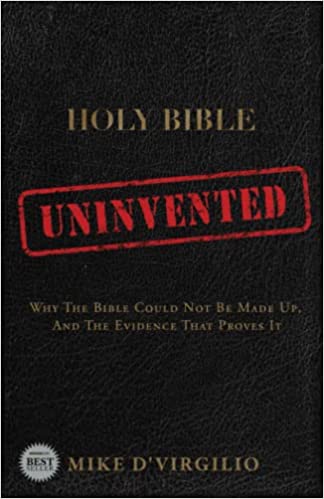
This, in fact, is the inheritance of Judaism and Christianity. We don’t live in the heathen/pagan universe the Hebrews were born into when Yahweh called Abram out of Ur of the Chaldees. God rescued us from the dead-end worldview of a universe without hope through the Hebrew people. Because of the importance of the Jewish nature of Jesus’ world, in Uninvented I referenced a book by Thomas Cahill, The Gifts of the Jews: How a Tribe of Desert Nomads Change the Way Everyone Thinks and Feels. Cahill describes how the ancient world, no matter what culture or part of the world, knew nothing of an almighty, all-powerful Creator God until the Israelites came along. Heathens, by contrast, believed in gods, plural, who were just like them, only more powerful. Now humanity had agency, meaning they could change things, and that did in fact change everything! It was Christianity that brought this Hebrew conception of reality to the entire world, and without Christianity the world would be a much less pleasant place.

However, I must offer one caveat before the non sequiturs start flying. I am not saying all sowing guarantees reaping wonderful, positive results. We can’t guarantee anything and are in control of nothing. We can live out Proverbs to the T, grow wealthy and prosperous, and a plane can fall out of the sky on our house and kill us. A farmer’s beautiful crops can be wiped out by a tornado or hurricane, or locusts. The point in a way isn’t even about the results of our sowing, although of course it is. Rather it is trusting God. This trusting Him, or not, is the most important lesson I’ve learned in my four plus decades walking with Jesus, and learning just how much I suck at it. I’m always tempted to worry, doubt, fear, anxiety, i.e., not trusting Him, so daily I repent of my lack thereof, and plead for God to help me to trust Him.

I can relate to the story of Jesus healing a boy of an unclean spirit told in Mark 9. The father is desperate to have Jesus heal his boy who had a spiritual and physical malady since he was a child, and he pleads with Jesus to heal him. He specifically asks if Jesus can do anything about it, and Jesus said if the man can believe, all things are possible for those who believe (i.e., trust). I love the father’s desperate reply (in the KJV):

24 And straightway the father of the child cried out, and said with tears, Lord, I believe; help thou mine unbelief.

I often pray, sometimes desperately, Lord, I trust you, help thou my lack of trust! And that includes in the cause-and-effect relationship of his creational order in my life. I now read the book of Proverbs through the lens of trust in the God who made the reliable reality spoken of in it.

It was some years ago that I slowly began to learn this lesson because I’m a slow learner. Once I do get something, though, I really do get it. I’ve always been the kind of person naturally lacking trust in God, who was always waiting for the other shoe to drop. Yeah, this or that great thing happened, but maybe disaster is right around the corner. To say this is dishonoring to God would be a massive understatement. Somewhere along the way in all my listening to learn, I heard someone reference Proverbs 10:22, and I was instantly convicted:

ESV: The blessing of the LORD makes rich, and he adds no sorrow with it.

NIV: The blessing of the LORD brings wealth, without painful toil for it.

NIV 1978: The blessing of the Lord brings wealth, and he adds no trouble to it.

The idea is simple but obviously hard for many of us to accept: God just flat out wants to bless us! As I very often talk about here, he doesn’t want us to live in worry, fear, doubt, or anxiety, and even commands we don’t engage in such harmful futility. What do those things come from after all? An imagination of disaster, and disasters that 99% of the time never happen! We live in the future unpleasantness that doesn’t exist instead of the present pleasantness that does. How dumb is that! We’re sinners, it comes naturally.

Clearly God wants us to succeed at life. What that looks like will obviously be different for each one of us, but he hasn’t kept the recipe for success a secret. We can be sure of one thing, though; it isn’t going to fall out of the sky on our head. Nor will we get “lucky,” hit the lottery, or get to home without going to first, second, and third.

The first several chapters of Proverbs talk about wisdom, and how important it is to search for it and seek it and do everything we can to get it. It is we’re told, more precious than gold or silver. If we do seek it, work at getting it, we’re promised the payoff will be huge. I guess the question for all of us is, how hard do we really seek it and work at getting it. The plethora of resources at our fingertips today is stunning. The contrast is remarkable even to fifteen or twenty years ago, unimaginable even in the last century. Growing in knowledge that leads to wisdom is available to anyone who really wants it.

I have a strong conviction related to this seeking of wisdom. The more knowledge I have about more things, the more resources God can use teach me wisdom. However, growing in our knowledge must lead to a deep humility. Isn’t it obvious why that would be the case? The more we know the more we realize we don’t know. It’s like coming upon a trickle of water in a dry land and following it to its source only to find out it’s as massively large and as seemingly endless as the Great Lakes! In this vein I Corinthians 8:2 has become an encouragement to continue to realize how very little I really know: “If anyone thinks he knows something he does not yet know as he ought to know.” Our knowing should be done lightly and with humility, and our knowledge used in service and love for others. Having this privilege is part of the health and wealth gospel of Proverbs because humility and loving others is woven throughout its pages.

Lastly, if we really want to be healthy and wealthy in a God honoring way, we have to be willing to question everything, and be willing change our minds about things we once held as certainties. This is a corollary of I Corinthians 8:2. Because we know so little about everything, we should at the least be willing, in humility, to consider new information and knowledge. Certainty is a good thing, but it can become a bad thing if we hold what we think we know so tightly we become deluded into thinking we own it. As if we were so omniscient that we could not possibly be wrong. Proverbs at the least teaches us that we need to be continually reminded what a gospel of true health and wealth looks like.


Gratitude, Serving others, and the Advancing Kingdom of God

Gratitude, Serving others, and the Advancing Kingdom of God

As I was writing my first book, The Persuasive Christian Parent, I realized how important it was that I taught my three children about the importance of gratitude and a thankful disposition in the Christian life. I remember often praying with the family, mostly around dinner and other such events, that God would give us a heart of gratitude. Once when my daughter had become an adult I too remember her praying and asking God to give us a heart of gratitude; my very own words spoken through my child back to God, and I got the chills. And I was beyond words grateful to God! In the book I focused primarily on gratitude to God to whom we have an infinite number of things to be grateful for, but here I want to focus on the horizontal aspect of this powerful attitude and perspective on life. Being grateful to God, though, naturally leads to gratitude to and for others.

I was prompted to write about this because as I’ve grown older I’ve become increasingly aware of how powerful gratitude and a thankful disposition is to the flourishing Christian life. Not only that, but I see it as an integral part of bringing the kingdom of God and its blessings into a dark fallen world, a way to put our light on a stand so everyone can benefit from it, not under a basket where no one can. And when I use the word kingdom I am purposefully using the metaphor of light with it in a very specific way to convey a message about what God’s kingdom means for us in a dark fallen world.

As a recently converted postmillennialist, I have been impressed by the almost ubiquitous use of Kingdom in the gospels, appearing some 124 times. The mistake almost all Christians make is to look at the kingdom as a synonym for the church. I always did. I never saw a reason not to. Now I’m convinced they are not the same thing. The kingdom is God’s rule in the world through Christ by the Holy Spirit, that serves as a blessing to all people, lost and saved. The church is specifically made up of those who have been spiritually raised from the dead by the same Triune God. I’ve been especially impressed by two kingdom parables I previously never thought through in terms of the implications for the world we now inhabit.

The parable of the mustard seed:

“The kingdom of heaven is like a mustard seed, which a man took and planted in his field. 32 Though it is the smallest of all seeds, yet when it grows, it is the largest of garden plants and becomes a tree, so that the birds come and perch in its branches.”

Notice the size of the mustard seed and the mustard tree. Quite the contrast. And if we had to guess how long it took the tree to get that big, it’s likely decades, maybe many decades. The point is that it is slow and enduring and obvious growth; it can’t be denied. Since Jesus came to bring the kingdom of heaven to this fallen world, died, rose again, and sent his Holy Spirit, his kingdom has been slowly but surely growing like a mustard seed into a massive tree. Unless the tree is chopped down, it only grows, and it grows through us.

Right after telling this parable, Jesus shares another with the same message:

 “The kingdom of heaven is like yeast that a woman took and mixed into about sixty pounds of flour until it worked all through the dough.”

The NIV here says sixty pounds, and different versions have different numbers, but the KJV and ESV render it as it is in Greek, “three measures of flour.” Three, of course, is the biblically symbolic number for perfection. For some reason Jesus uses an unnaturally large amount of flour, which I would suggest is symbolic of the whole world. Many commentators interpret yeast (or leaven) as sin because it’s often used that way in the Bible, but here it most certainly is not! Jesus compares yeast to “the kingdom of heaven,” not the “kingdom of hell.” The context is clearly the fruit of the kingdom he came to bring to earth. And notice how leaven or yeast works in this time laps photography of yeast working its way through a batch of dough, slowly but surely and in only one direction.

In both parables Jesus is clearly teaching that the growth and influence of the kingdom of heaven takes time, doesn’t happen quickly, but happens . . . inevitably. They are illustrations of the fulfillment in redemptive history of the gospel in a tiny corner of the Roman Empire as it spreads to the entire earth. Against absolutely all odds this little movement broke out into a world dominating influence, an influence that 2000 years later affects every corner of our world today and every person in it to one degree or another. That would include us in our own little corner of the world where we are kingdom and gospel influence for all the people we interact with on a daily basis. While I’m a big fan of talking kingdom and gospel content to people whenever and wherever I can, acting out kingdom and gospel values and the blessings that brings, is wonderful to behold. Gratitude is a very easy and effective way to do that.

A thankful disposition and words of gratitude to others in the most mundane of everyday interactions is beautiful. It is a bright kingdom light shining in darkness that makes the darkness flee. The reason I used the phrase “thankful disposition” above is because I like the idea of a mental or emotional outlook or mood of thankfulness toward others. It’s not just saying “thank you” to the person who answers the phone or serves you in a store, it’s being truly grateful for who they are  and what they are doing for you. It is not affectation, but sincere gratitude. It’s amazing to see a person’s face light up when you do this, or hear in their voice the gratitude, and often surprise, for your being thankful and appreciating them. In almost every e-mail interaction I have I write things like, Thanks! Or I really appreciate your help. Or in conversations say, thank you so much, and mean it. So simple, so profound.

I was going to end this by saying try it, but Jesus and God in his word doesn’t give us that option. We are commanded to be thankful. So I guess I should end by saying, do it! Make it a habit, do it all the time, and you’ll be very glad, and grateful, you did.

The Boundary Lines Have Fallen for Me in Pleasant Places: Psalm 16:6

The Boundary Lines Have Fallen for Me in Pleasant Places: Psalm 16:6

When I was involved in a campus Christian ministry in college, we periodically went to ministry conferences. I’ll never forget a talk at one such conference about Psalm 16:6. Having read through the Psalms recently coming upon this verse again brought back wonderful memories of that time before I had to go out into the real world. As I look back over 40 plus years I could not express any better than King David the life God has given me since I first encountered this verse:

The boundary lines have fallen for me in pleasant places; surely I have a delightful inheritance.

Land was a big deal in the ancient world, and more than just an economic transaction as we see it today—It was a matter of life and death. There were no grocery stores, and people fed themselves through painful toil and the sweat of their brow. The more and better land, the more wealth, the more food, the more life.

To really get what David is saying, though, the entire context of the Psalm is critical. These boundary lines didn’t just fall out of the sky, by chance, but involved David himself in his relationship with God. In other words, God’s blessings happen to us for a reason because we ask, seek, and knock; all blessings come from God’s hands. We also live in a cause-and-effect universe He designed, and when we live according to those designs blessing are likely to result. But more importantly, this is a Messianic Psalm, and our earthy blessings are ultimately tied to our spiritual and eternal blessings in Christ.

First, David commits himself to God’s care:

Keep me safe, my God,
for in you I take refuge.

This reflects something I write about here often, trust. We are promised perfect peace if our mind is stayed on God because we trust in Him. I know, easier said than done, but it is doable. We just have to pray for it all the time in everything, and live on his Word as Jesus exhorted us to do.

David also understands a basic fact of existence in God’s created reality:

I say to the Lord, “You are my Lord;
apart from you I have no good thing.”

David acknowledges Yahweh is his master and the Creator God who defines all things in his life that are good. Apart from Yahweh there is no such thing as good. This realization is fundamental to a life well lived, to life that is really life. It’s absurd to think otherwise because as Paul says, God gives us life, breath, and everything else. Then he contrasts this abundant life with the life of poverty that awaits those who think they can find good apart from God:

The sorrows of those who run after another god shall multiply . . .

This other god is of course no god at all, but a false god who promises everything but delivers nothing but hurt, injury, and pain. We call this idolatry, which is turning good things into ultimate things, as if the created thing can fulfill what only the Creator Himself can provide.

These realizations and practices lead to a life of boundary lines falling for us in pleasant places, for each of God’s people having a delightful inheritance. This is especially powerful in light of redemptive history and its fulfillment in Jesus and the gospel. We are sinners deserving of one thing and one thing only— death, sin’s wages. As I often say, if God’s justice prevailed I would be a pile of ashes smoldering on the ground. We begin to have problems when we think we deserve anything other than that. As I think of it, everything other than death for my sin is gravy. Paul’s contrast with death’s wages? The gift of God that is eternal life in Christ Jesus our Lord. Every other gift that is everything in our lives flows out of that supreme gift, and therein we can have true, bubbling over, inconceivable gratitude.

David could not know how the gospel would play out, but he knew enough:

I will praise the Lord, who counsels me;
even at night my heart instructs me.
I keep my eyes always on the Lord.
With him at my right hand, I will not be shaken.

The “secret” to the always blessed life is always keeping our eyes on Him, and that means on Jesus, on the cross, his death, burial, resurrection, and ascension to the right hand of God. Jesus used an event during the Exodus to convey the “secret”:

As Moses lifted up the serpent in the wilderness, so must the Son of Man be lifted up, that whoever believes in him may have eternal life.

The Israelites were complaining because this little journey through the wilderness wasn’t going so well, so the Lord sent venomous snakes among them and many were bitten and died. The Lord told Moses, “Make a snake and put it up on a pole; anyone who is bitten can look at it and live.” Don’t look at the bite no matter how much it hurts, look up and live! Jesus used this strange story to tell us that we too need to look up to him, trust him, that we too will with David not be shaken.

David’s confidence was in looking forward to Jesus:

Therefore my heart is glad and my tongue rejoices;
my body also will rest secure,
10 because you will not abandon me to the realm of the dead (Sheol),
nor will you let your holy one see decay.

It’s amazing when you consider David is writing God’s word which is The Word, so even as these are David’s words they are Jesus’ words. This is confirmed by Peter in the first Christian sermon after Pentecost in Acts 2 when he is testifying to the resurrection. Paul confirms it as well when he’s preaching about Jesus’ resurrection in Acts 13. David finishes the Psalm affirming the blessings of those who make God their refuge:

11 You make known to me the path of life;
you fill me with joy in your presence;
at your right hand are pleasures forevermore.

I had never thought of it quite this way before writing this post, but Christ himself is the boundary lines that fall for us in pleasant places. He is our delightful inheritance. I had always thought of these in more material terms, including friends and family, but when Paul says in Ephesians 1 that “the God and Father of our Lord Jesus Christ has blessed us in the heavenly realms with every spiritual blessing in Christ,” it is these spiritual blessings that imbue every material blessing with ultimate meaning, hope, and joy. Praise the Lord!