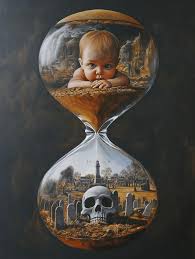
“The Universe” and the Demise of Secularism

“The Universe” and the Demise of Secularism

One of the many evidences secularism is dying is a phrase you’ll hear in popular culture, most often in TV shows and movies: “The Universe.” As in, “The Universe” is telling me something, or telling me not to do this or that. It’s funny how an impersonal material force can somehow communicate meaningful messages to persons. The reason people attribute power and will and intelligence to mere matter is because atheistic materialism, and it’s offspring, secularism, for all intents and purposes is dead, especially among the youngest generation.

Having been a consumer of popular culture all my life, this is something new, but it doesn’t surprise me. Secularism as the dominant societal ethos in the West has proved itself vacuous and unable to speak to the deepest needs of the human heart. As it developed and became dominant in the 20th century, God increasingly became persona non grata, merely a personal option among an infinite variety of options to find meaning in life. It hasn’t quite worked out like it was planned.

Where we are in this dying age of secularism reminds me of the beginning of Charles Dickens’ iconic work, A Tale of Two Cities, published in 1859 and set during the French Revolution of the 1790s. It could very well describe our own time:

It was the best of times, it was the worst of times, it was the age of wisdom, it was the age of foolishness, it was the epoch of belief, it was the epoch of incredulity, it was the season of light, it was the season of darkness, it was the spring of hope, it was the winter of despair, we had everything before us, we had nothing before us, we were all going direct to heaven, we were all going direct the other way–in short, the period was so far like the present period, that some of its noisiest authorities insisted on its being received, for good or for evil, in the superlative degree of comparison only.

Until, that is, the blood flowed and heads came off at the behest of the merciful Madame la Guillotine. We’ll remember that period became known as “the Reign of Terror.” The secular reign of terror isn’t so bloody, but its promises are just as hollow as the revolutionaries who brought so much misery and suffering to France. Secularism is dead. It has been weighed on the scales and found wanting, yet its cheerleaders still believe it’s our only hope for societal flourishing. Looking at a little history will help us understand why.

Secularism and the Societal Myth of Neutrality
Secularism does its damage on a personal and societal level. Initially it was a response to the Wars of Religion in Europe in the 16th and 17th centuries. Religion, specifically Christianity, was seen to have dangerous tendencies to promote violence, so in the 18th century Enlightenment thinkers began the slow process of pushing Christianity to the periphery of Western culture. In this telling, Christianity is non-rational, mythological, and prone to violence. Secularism came to the rescue. Embedded in this view of secularism is an assumption we’ll call the myth of neutrality, a metaphorically naked public square. Neutral comes from the Latin “neuter” meaning “neither one nor the other,” so it’s come to mean unbiased which it most certainly is not. In this illusory “neutral” space, secularism is the unbiased referee calling balls and strikes without that pesky Christianity getting involved and inevitably leading to theocracy and intolerance, and thus violence. Unfortunately, most Christians still believe in this myth, thus the hysteria over “Christian nationalism.”

Secular understood classically in the medieval world prior to the Enlightenment simply meant the mundane as opposed to the sacred. The Reformation rightly critiqued this dichotomy between the secular and the sacred as unbiblical, but the rationalism of Enlightenment thinkers ended up affirming the same dichotomy, only now religion ended up becoming dangerous to social harmony. As Christianity’s influence waned in Western civilization, secularism came to dominate the public square as a force hostile to Christianity, and in due course became the dominant worldview of the West. The hostility is expressed in manifold ways throughout government and every area of culture. We saw this played out in America in the autopen presidency of Joe Biden, and are currently seeing it play out throughout secular Western Europe.

It is the all-encompassing, tyrannical nature of secularism against which we fight. And make no mistake, secularism on a societal level will always and everywhere lead to tyranny. In their book Classical Apologetics, R.C. Sproul, John Gerstner, and Arthur Lindsley start their 1984 book with a chapter titled, “The Crisis of Secularism.” After almost 40 years, that crisis has reached a revealing point; its true nature can no longer be hidden by empty promises. Their description of secularism is helpful:

Western culture is not pagan, nor is it Christian. It has been secularized. Western man has “come of age,” passing through the stages of mythology, theology, and metaphysics, reaching the maturity of science. The totem pole has yielded to the temple which in turn has given way to the acme of human progress, the laboratory. . . . Resistance to Christianity comes not from the deposed priests of Isis but from the guns of secularism. The Christian task (more specifically, the rational apologetics task) in the modern epoch is not so much to produce a new Summa Contra Gentiles (an apologetics work of Thomas Aquinas to non-Christians) as it is to produce a Summa Contra Secularisma.

I could not agree more. The so called “secularization thesis,” that as science and knowledge progress religion will eventually disappear, has been completely discredited. The world is arguably more religious than ever, even if the West is less so. The authors further state the obvious:

The impact of secularism . . . has been pervasive and cataclysmic, shaking the foundations of the value structures of Western civilization. The Judeo-Christian consensus is no more; it has lost its place as the dominant shaping force of cultural ethics. . . . Sooner or later the vacuum (the rejection of theology in the West) will be filled, and if it cannot be filled by the transcendent, then it will be filled by the immanent. The force that floods into such vacuums is statism, the inevitable omega point of secularism.

I could not agree with this more as well, the consequences becoming clearer with every passing year. Only Christianity gives us the true basis of liberty, as America’s founders knew full well.

Secularism and the Personal Myth of Neutrality: There is No Such Thing as an Unbeliever
Secularism on a societal level assumes the myth of neutrality on a personal level as well; one feeds the other. It’s ubiquitous and easy to spot, but I’ll use one example to make the point, a piece from the 2011 print edition of The New Yorker Magazine called, “Is That All There Is? Secularism and its discontents.” Author James Wood, a committed secularist, admits secularism has its problems, but not enough for him to discard it.

As a secularist, Wood clearly considers himself not “religious,” and therefore believes he is neutral regarding ultimate issues. Since he believes he isn’t “religious,” he also believes he doesn’t need faith. The secularist’s definition of faith is, however, fallacious and biased, something along the lines of what Samuel Langhorne Clemens, aka Mark Twain, declared: “Faith is believing what you know ain’t so.” Faith in this view is basically wishful thinking, and not “scientific,” as if science could answer metaphysical questions of meaning; it can’t. That would be known as a category error. Science and philosophy do different things and address different issues, and most secularists are terrible philosophers. The bias is specifically anti-supernatural because secularists are naturalists or materialists, i.e., they believe the material is all there is. They are, however, every bit as “religious” as the religious.

In other words, the un-believer doesn’t exist. One of my pet peeves is referring to certain people as believers and others as unbelievers. The word believer is biblical, but it’s a word we need to retire in our secular age. Using it allows the “unbeliever,” the secularist, the false impression they don’t have faith just like every “believer.” All human beings by the nature of their finite created existence are believers and live by faith; the issue is what or who they believe in. In the apologetics task against secularism, Christians must learn to refer to people either as Christians or non-Christians, not believers and unbelievers.

Throughout the article Wood contrasts religious “believers” with atheists, and at one point refers to “Both atheists and believers . . .” Ergo, atheists don’t have to believe anything! It’s almost comical how ridiculous the contrast it. Without the slightest evidence atheists believe all material reality basically created itself, everything came from nothing for no reason at all. Talk about a leap of faith! Wood might even say he doesn’t need the “crutch” of faith like many atheists, but atheism and secularism are their own rickety crutch. You’ll see throughout his piece something else secularists are especially good at, begging the question, a logical fallacy meaning to assume the premise as the conclusion, a form of circular reasoning. A great example of this is early in the piece when he lays his cards on the table claiming, “God is dead, and cannot be reimposed on existence.” The bald assertion is never defended, just asserted, as if it need not be defended; but it is a statement of faith. We must question the unexamined assumptions of the secularist and secularism wherever they rear their ugly head.

C.S. Lewis said something that underlies the impossibility of neutrality in the Christian understanding of reality:

There is no neutral ground in the universe: every square inch, every split second, is claimed by God and counterclaimed by Satan.

In other words, there is a spiritual war being waged on the vast plane of reality, and only one side wins.

Making the Secular Plausible: Epic Fail
The reason “the universe” is showing up in popular culture as a character directing the lives of people in some way is because secularism is no longer as plausible as it once was. The sociological concept of plausibility structures is helpful for us to understand what is going on, to get the big picture.

All societies and cultures have a structure of the plausible, all those things in the culture, entertainment, law, media, education, family, religion, etc., that make reality seem real and natural and normal to us—just the way things are. The truth of the seeming is irrelevant. What is plausible is what makes the worldview of a people, how they understand who and why they are, and people in the West inhabit a secular plausibility structure. God for them is for the most part irrelevant.

Since we’re talking about popular culture, the indoctrination into secularism, both personally and societally is insidious. Watch almost any TV show or movie, and God is invisible, unless used as some kind of curse. Treating God as if he’s irrelevant is far more effective in secularizing people than your typical atheist talking points, and we’re all more susceptible to the lies and illusions of a secular view of reality because of it. An irrelevant God is the secular cultural air we breathe, and the dominant cultural messaging, which is why the personal and societal effects of secularism are ubiquitous and profound.

James K.A. Smith in his book summarizing the magisterial tome of Canadian philosopher Charles Taylor, A Secular Age, entitled his book, How (Not) to be Secular. He has numerous helpful insights into the nature of secularism. In speaking of plausibility, he mentions Taylor’s “conditions of belief,” saying there was “a shift in the plausibility conditions that make something believable or unbelievable.” It’s not so much what people believe, as what is believable. These are reflected in “the default assumptions” of a people, ideas unexamined and taken for granted by everyone, and thus most secular people don’t think they assume anything at all! Commenting on the “conditions of belief,” Smith gives us a helpful perspective on the implications for faith:

Taylor not only explains unbelief in a secular age; he also emphasizes that even belief is changed in our secular age. There are still believers who believe the same things as their forebearers 1,500 years ago; but how we believe has changed. Thus faith communities need to ask: How does this change in the “conditions” of belief impact the way we proclaim and teach the faith? How does this impact faith formation? How should this change the propagation of the faith for the next generation?

Even though Smith makes my previous point referring to believers when the whole paragraph is about belief, he does say later, “[I]t’s not that our secular age is an age of disbelief; it’s an age of believing otherwise.” And in this sense, everyone is a believer.

In simplest terms, secularism means “no God.” It doesn’t necessitate atheistic materialism, although all atheists are secularists. The vast majority of people believe God exists, but He has no practical relevance to their lives because all that matters is flourishing in this world. The dominant secular faith is called moralistic therapeutic Deism (MTD), meaning God’s there, He wants us all to be nice, and the central goal of life is to be happy and to feel good about oneself. If we get in a pickle, then we’ll bring God into the picture, otherwise not so much. Finally, this MTD faith believes good people go to heaven when they die.

This God is no threat to secularism because it is a religion of secularism. What’s important is the here and now. Why worry about all that stuff we really can’t know and everyone disagrees about anyway. Thus God’s invisibility in popular culture. The problem with this shallow secular religion is that people know it doesn’t meet their deepest emotional and psychological needs for meaning, hope, and purpose in life. It’s based on nothing but wishful thinking, nothing solid, nothing real, like soap bubbles, as soon as you catch them, there’s nothing there. It’s just preference as worldview, which is why an increasing number of people in the West are turning back to faith in God, to Christianity, the only true, solid, and real thing in this world and the next. Is it another Great Awakening? We’ll see, but it is an epic fail for secularism.

The reason it is epic is that it started somewhere in the 17th century with rationalism, and then developed over the next 300 to 400 years, eventually displacing Christianity as the dominant faith in the West. All the cultural elites believed we could order a prosperous and flourishing society without any reference to God. It’s obvious by this point that isn’t true. The 20th century was the bloodiest in the history of the world by far, and the 21st isn’t starting out much better. We’re the most prosperous societies the word has ever seen, and people are miserable. The universe won’t save us; only God in Christ can, he who died for our sin, and rose again to conquer death that we might live with Him forever.


The Christian Life of Pursuit

The Christian Life of Pursuit

Being a Christian is not just an ontological state, meaning what I am, my being, but also very much about what I do. It is the indicative, what God has done for us in Christ, and the imperative, what we must do. The Christian life is a verb, what we are commanded to do now that we are those who belong to God, his holy ones, set apart for service. Christianity is a doing religion flowing out of our being, which Paul tells us in 2 Corinthians 5:17, is now a new creation. Jonathan Edwards said we don’t seek God and then find Him. Like Adam and Eve, by nature we run away, we hide. Rather, God saves us in his sovereign mercy and grace, and then the seeking begins, as I call it, the Christian life of pursuit.

We Protestants over the last several hundred years have developed a kind of Christianity where justification by faith in effect becomes the entirety of the gospel. When we use the word gospel, the good news, what we tend to mean is being made right with God, our sins paid for by Christ, and his righteousness being credited to us. Therefore, we now by faith have a relationship to God, and our alienation from him by our sin is laid aside. So far so good. But Christianity is far more than coming into a saving relationship with God through Christ. I imagine that sentence might raise a few eyebrows among faithful Evangelicals, but it’s true. One of the reasons Jesus uses the metaphor of salvation as being “born-again” is because when you’re born, you’re just starting life. You don’t stay a baby your whole life, physically or spiritually. In fact, the writer to the Hebrews rebukes Christians who think this way (Hebrews 5):

11 We have much to say about this, but it is hard to make it clear to you because you no longer try to understand. 12 In fact, though by this time you ought to be teachers, you need someone to teach you the elementary truths of God’s word all over again. You need milk, not solid food! 13 Anyone who lives on milk, being still an infant, is not acquainted with the teaching about righteousness. 14 But solid food is for the mature, who by constant use have trained themselves to distinguish good from evil.

The phrase the NIV translates as “you no longer try to understand” is also translated as “dull of hearing” or “too lazy to understand.” Lazy is the best translation of the Greek here, and it speaks exactly to what I’m talking about. Can we be honest? Most Christians are too lazy to do the hard work of growing into the maturity of the Christian faith. Or they are distracted by other things in life that appear more important, or as someone called it, “the tyranny of the urgent.” In the parable of the Sower, Jesus explains it this way (Matt. 13):

22 Now he who received seed among the thorns is he who hears the word, and the cares of this world and the deceitfulness of riches choke the word, and he becomes unfruitful.

Then he compares it to the seed that bears fruit:

 23 But he who received seed on the good ground is he who hears the word and understands it, who indeed bears fruit and produces: some a hundredfold, some sixty, some thirty.”

The question is, how do we become the seed that bears fruit a hundredfold, and do we really want that. As I’ve discovered over my growing number of years, we always do what we want, what is important to us.

Making Our Calling and Election Sure
The inspiration for this post, and its title, came from a sermon I recently heard on 2 Peter 1, which is Peter’s answer to that question. To alter a line from The Princess Bride that applies to the Christian life: We are men of action; laziness does not become us. This of course applies to women too. In other words, we do not take our relationship to God for granted, just has a husband or wife or parent should never take their relationships for granted. Great relationships take work, effort, and sacrifice. The wonderful thing about the Christian life is that we’re not on our own. The God who saved us has provided us everything we need in this divine life he has called us to. As Peter says,

His divine power has given us everything we need for a godly life through our knowledge of him who called us by his own glory and goodness. Through these he has given us his very great and precious promises, so that through them you may participate in the divine nature, having escaped the corruption in the world caused by evil desires.

Everything pretty much covers it all. But notice where these things are found, in our knowledge of him, of God, which is why every Christian is called to be a theologian, which means the study of God. Out of His love for us and His almighty power to do whatever he says, his faithfulness to those promises gives us the ability to live a holy life. In Christ we’ve already escaped the ugliness and misery that sin causes. We don’t have to live in the corruption and ugliness of sin. When we do sin, John tells us to confess our sin, name it, and that God “is faithful and just to forgive us our sin, and purify us from all unrighteousness.” It’s God’s job to do the cleansing, and our job to be obedient.

We must always remember, sin never delivers on its promises and lies every step of the way to destruction. Of course still being sinners our obedience will always be imperfect, but that is why the gospel includes both justification and sanctification, as Paul tells us in I Corinthians 1:30. But Peter tells us that in order to overcome our inclination to sin we have work to do, as he says, “make every effort”:

For this very reason, make every effort to add to your faith goodness; and to goodness, knowledge; and to knowledge, self-control; and to self-control, perseverance; and to perseverance, godliness; and to godliness, mutual affection; and to mutual affection, love. 

I like Strong’s extended definition of that phrase: “properly, swiftness to show zealous diligence, i.e. one’s “best” (full effort by making haste).” We need to be like young Olympic athletes determined to be the best it is at what we do. We are called to moral virtue which we are compelled to because of our faith or trust in Christ, but it can’t stop there. If it does, it’s merely moralism that becomes legalism.

I find it interesting that Peter puts knowledge so high up in the list, it is that important. That means doing something people think they gave up in high school or college, study, and also something people are less inclined today in the age of the ubiquitous screen—read. Like books, with, of course, the foundational book being the Bible. But depending on our interests, reading books on history and philosophy and apologetics, how to defend our faith, biographies, current events, science, whatever. Remember, not only is the entire Bible, as Jesus said in Luke 24, about Christ, but so is everything in life. C.S. Lewis put it best as he always did:

I believe in Christianity as I believe the sun has risen, not only because I see it, but also because by it I see everything else.

Jesus himself is the unifying principle of all knowledge. As Paul tells us in Colossians 1, not only is Jesus “the image of the invisible God,” he created all things, and that “He is before all things, and in him all things hold together.”

And finally, as we look at the other virtues we’re exhorted to act upon, it is all tied up in the perfect ribbon of love, that which is a perfect summation of all the law and the prophets, and the entire revelation of God in Christ. Jesus himself told us what is required to live a life worthy of him, to “seek first his kingdom and his righteousness,” and all the other needs of life will be added. God and his kingdom first, and then everything else will follow. Toward the end of the Sermon on the Mount, Jesus piles on the verbs:

“Ask and it will be given to you; seek and you will find; knock and the door will be opened to you. For everyone who asks receives; the one who seeks finds; and to the one who knocks, the door will be opened.

All of this screams, do not take our relationship to God for granted! Everybody takes time for what is important to them. Let’s look at why we might take it for granted.

Antinomianism: Confusing Justification with Sanctification
The word antinomianism means anti-law, nomos in Greek, and it’s been a concept debated since the Reformation and the Protestant focus on salvation by grace alone through faith alone. There has been a tendency to downplay the law because we’ve been granted Christ’s righteousness in justification. Calvin explained a proper understanding of God’s law when he was the first to describe what he called the three uses of the law. The first use, the one most Christians are familiar with and accept, is the law as a mirror. It shows us our sin, and how ugly it is, and drives us to Christ. Because of our modern focus on the gospel, there is a tendency to do what the antinomians do, ignore the law. Supposedly we don’t need the law anymore because that’s part of the Old Covenant and not the New. We might conclude God’s law is no longer applicable to the Christian because of the gospel. As I heard a pastor once say, “The Ten Commandments are not your friend.” The law, supposedly, is our enemy because the only thing it can do is condemn us because we can never live up to its demands. It drives us to Christ who is our righteousness, and we’re done with it.

The problem with this perspective is that God’s law for the Christian is in fact now our friend. I’m currently reading a book on antinomianism by Mark Jones, and he states the confusion well:

Antinomians typically fail to make the distinction between what the law requires and what the gospel requires, and only focus on the former. Not surprisingly, they are flummoxed by so many passages in the Bible that seem to speak of the saints obeying god’s law “with their whole heart.”

Jones adds further that as the gospel has both the indicative and imperative in it, “the antithesis between the law and the gospel ends the moment someone becomes a Christian.” Law and gospel are no longer in contrast, no longer in tension.

The gospel in fact requires a holy life as we see throughout the New Testament, and this passage from Peter is only one small example. Christian antinomians seem to forget that our relationship to the law in Christ has completely changed because the law is no longer written on tablets of stone but written on our hearts. As the Lord tells us Jeremiah 31:

33 “This is the covenant I will make with the people of Israel
    after that time,” declares the Lord.
“I will put my law in their minds
    and write it on their hearts.
I will be their God,
    and they will be my people.
34 No longer will they teach their neighbor,
    or say to one another, ‘Know the Lord,’
because they will all know me,
    from the least of them to the greatest,”
declares the Lord.
“For I will forgive their wickedness
    and will remember their sins no more.”

For Christians, the law is no longer there merely to condemn us because we often come up short, but rather it is now there for our sanctification, to help us to become holy. When we are saved, reconciled to our God, transformed from God’s hated enemy to beloved children, we want to obey the His law, we long to be obedient, even as difficult as that can sometimes be given the sin that remains in us. We can now say with the Psalmist in Psalm 119:

97 Oh, how I love your law!
    I meditate on it all day long.

This, for Calvin, is the third use of the law, our sanctification, the second being to restrain evil in society. As he says in the Institutes:

The third, and principal use, which pertains more closely to the proper use of the law, finds its place among believers in whose hearts the Spirit of God already lives and reigns.

The law being a reflection and extension of God’s character and being, was never meant to be our enemy, even has God himself was never meant to be our enemy. Now redeemed and renewed, the law is our friend, our guide, our north star, meant to bless us in our obedience which God Himself makes possible by the power of the Holy Spirit within us.

As I said above, there is a tendency to confuse justification with sanctification. We, in effect, equate the gospel with our getting right with God, being born-again, justified by Christ’s righteousness being imputed to us, but that’s only the start of the gospel in our lives, the good news. Transformation is also good news, and that too is, in Paul’s favorite phrase, in Christ. He tells us in I Corinthians 1:30:

30 It is because of him that you are in Christ Jesus, who has become for us wisdom from God—that is, our righteousness, sanctification and redemption. 

What Christ accomplished in his life, death, resurrection, and ascension, not only freed us from the guilt of sin, but also from its power. In the same year America declared independence from England, 1776, Augustus Toplady wrote the beloved hymn Rock of Ages about our independence from sin in Christ, from the guilt and power of sin. The first stanza says it beautifully:

Rock of Ages, cleft for me,
Let me hide myself in Thee;
Let the water and the blood,
From Thy riven side which flowed,
Be of sin the double cure,
Save me from its guilt and power.


The Existential Crisis that is The Passage of Time

The Existential Crisis that is The Passage of Time

I think about time all the time. You might think this happens more as you enter your elderly years, but I’ve been thinking about it for a very long time. Well, not in biblical time, but in regular old human time. One of my favorite sayings is that God is never in a hurry, as we can see from him making promises that take thousands of years to come to fruition. Take the promise to Abram, for example, in Genesis 12. God promises him that all peoples on earth would be blessed through him, and then it takes 2,000 years for that promise to finally be fulfilled in Christ. That’s a long time! Inconceivable to us who are stuck in time. I vividly remember, although this only occurred to me recently, that when I turned 24, I really experienced time for the first time. Yeah, sorry about the repetition of that word, but It’s an obsession of mine. It reminds us every moment of every day that it will not stop, that it endlessly marches on, seemingly quicker and quicker, until it does indeed stop, for us.

Speaking of 24, my sister is almost four years older than me. As she moved into her later 20s she started bemoaning getting older, and I’d say, no big deal, happens to everyone, deal with it. Then on my 24th birthday back in 1984, I distinctly remember thinking, oh crap, I’m getting older; I’m mortal too! Nobody gets outta here alive, including me! Prior to that moment time, getting older and heading inevitably to death, was theoretical. All of a sudden, it wasn’t. And I was only 24! Kids, yes, kids, who are 24 appear to me now like they’re in high school. Speaking of kids, another moment this hit me was in the job I got after I graduated from Seminary in 1988 at a small Christian liberal arts college in central Pennsylvania, Messiah College (now University). When I started there I was 28 and the kids who attended were six to ten years younger than me, but by the time I’d been there five years, they were now eleven to fifteen years younger. One day early in a new school year as I was walking on the campus, I looked around and said to myself, “When did they let all these high school kids in!” They looked so young. Then it hit me, that they appear younger to me now that I’m a bit older. Think how they look now over 30 years later, like children, which of course they are.

Another one of the moments I look back on, although it took some years for me to realize it, was when I was probably in my mid-30s. My wife and I were involved in an Amway business for the decade of the 90s, and we’d go to big seminars from time to time. This one was in Miami, and Tim Foley, who played with the great Don Shula Miami Dolphins in the early ‘70s, was on stage. He was talking about “the three-to-five-year plan,” a plan that didn’t quite work out for us. Given my later obsession with the swift passage of time I’ll never forget what he said, how he said it, and my response. “For you youngsters out there, you think five years is a long time; it’s not!” And I said to myself, “Well, yes it is.” Oh, how wrong I was.

The passage of this mystery process of moments rushing by us is theoretical when we’re younger, something that really only happens to other people. It just isn’t real to us when we’re young. I encounter young folks in their 20s and 30s who when I lament time’s swift passage say they get it, but they have no idea. Not really until you get into your 40s does it move from the theoretical, it only happens to other people, to it’s happening to me! Then as it continues to press on you find as you go to the doctor or dentist that, apparently all of a sudden, they’re all younger than you!

I’ll share one last anecdotal experience you oldsters can possibly relate to. Our youngest son, speaking of 24, turned that age February 1. He’s now married with a baby recently born, but he was probably 19 or 20, and one day I was talking to him, as I’m wont to do as an old person, about the swift passage of time. I was getting frustrated because it’s impossible for a 20 year-old to understand, to see it like I do, and I said, “Oh, you can’t relate!” And he replied, “Then why do you keep telling me that?” Priceless. And I blurted out, “Because that’s what old people do!”

A Brief History of Time
The passage of time is no doubt trippy, in that old 60s/70s druggy term, but what is it? Why does it exist? As Christians, how are we to look at It? Do we deplore it? Worry about it? Curse it? Ignore it? Using the phrase “existential crisis” in my title kind of gives away my answer. Existential doesn’t just mean existence, but comes out of a 20th century philosophy called existentialism, which Wikipedia defines well: as “a family of philosophical views and inquiry that explore the human individual’s struggle to lead an authentic life despite the apparent absurdity or incomprehensibility of existence.” It’s the swift passage of time that pours lemon juice on that wound. It’s a war we can’t win against an incomprehensible enemy. Death, specifically our deaths, but also the very concept of death, brings any idea of the meaning of our lives into question. Without God life becomes a Woody Allen movie, leading to despair, denial, or resignation.

The great Augustine of Hippo, the 5th century Bishop and one of the most profound thinkers of all time, tripped out on time as well. In Book 11 of his Confessions as he is contemplating God and this mystery he says:

What then is time? If no one asks me, I know what it is. If I wish to explain it to him who asks, I do not know.

Time he says is a paradox. The past no longer exists, nor does the future, and we can’t quantify the present—it just is. The instant it happens it becomes the past that no longer exists; very strange. He talked about God’s creation in which time exists, and says if the present didn’t pass away like it does on this created earth, then that would be eternity. So time “tends not to be” because it’s constantly vanishing as it comes into being. As I said, trippy.

Einstein in the early 20th century added to the trippiness when he postulated that time and space were relative. Basically, that means time passes slower for fast-moving objects compared to something at rest. I’m not sure Einstein’s theory, supposedly proved by experiments, applies, but as we get older time does appear to move faster. Remember when you were young, summer vacation, all of maybe three months, seemed like forever. When we were kids, we would play outside all day until it got dark, and as teenagers would sing with Zeppelin and Robert Plant that “Dancing days are here again as the summer evenings grow.” After all, we have, it seemed, forever. As the decades pass and the years pile up, years seem like months, months like weeks, and weeks like days. Christmas seems upon us not long after New Years.

I’m sure people have been perplexed by time since God created it, but secularism which developed over the last several hundred years did something unique to time. It gave people the impression they could evade its consequences. Yes, everyone knows in the end it can’t be escaped, but they hope by ignoring it just maybe it will leave them alone. This is nothing new, although secularism made it more widespread. Blaise Pascal writing in the mid-1600s as if it was 2026:

In spite of all these miseries man wants to be happy, and only to be happy, and cannot help wanting to be happy. But how can he go about this? It would be best if he could make himself immortal, but since he cannot do this, he has decided to stop thinking about it. Being unable to cure death, misery, and ignorance, men have decided that in order to be happy, they must repress thinking about such things.

Files this under the more things change . . . .

One of the reasons Charlie Kirk’s assassination had such a profound impact, especially on young people, is that a young vibrant man in the prime of life, only 31, was cut down. That makes death not so theoretical after all, and as secularism’s deceits fade away faith becomes a more plausible alternative for many young people. Secularism and the rise of science, technology, and modern medicine gave people the impression we have some control over what happens to us in time, but that becomes increasingly difficult to sustain in an apparently random and chaotic world. As Pascal added, “The last scene of the play is bloody, however fine the rest of it. They throw dirt over your head, and it is finished forever.”

The Ultimate Question Mark: Death
It’s impossible to escape the question unless we are determined to ignore it, and many are, unfortunately. If they thought like I did, they wouldn’t. Have you ever watched an old movie from the 40s or 50s and suddenly realize almost everyone you’re watching is now dead. I always do. The movie is like moving life that doesn’t move captured in amber. Life, and time, however, keeps moving. Or having grown up in the era of sex, drugs, and rock and roll, I look back at the baby boomer generation, at those who reveled in youth and rebellion, and they are now tottering old senior citizens. I loved the band The Who in the 1970s. In a song called “My Generation,” Roger Daltrey in the flush of youth sings, “I hope I die before I get old.” Keith Moon did! At only 32. Bassist John Entwistle died young, at 57, and Daltrey and Pete Townsend are now entering their 80s. They didn’t get their wish.

In spite of the ignorance of youth and the deceits of secularism, the fear of death haunts us at every moment. Why do we fear it so? What is it about our ceasing to exist that terrifies us? That is the question. Why is it that animals and insects intuitively fear death even though they can’t think? Shouldn’t we be the least bit curious as to why that is? Given our mortality and its ever present reality in our world, it seems to me a good question to ask is, why does death exist? If we can find the answer to that question, maybe it will also lead us to the answer as to why we exist in the first place, and what it all means. Why is there something rather than nothing. Philosopher Martin Heidegger (1889–1976) in the 20th century called it “the fundamental question of metaphysics.” He asked: “Why are there beings at all, and why not rather nothing?” Good question.

Yet even in the face of e death’s certainty most people believe death, and its associated suffering, requires no explanation. It’s just a brute fact. But why does death seem so wrong? We may not feel outrage at the funeral of a great grandmother, but go to the funeral of a five-year-old and you will feel wrongness . . . viscerally . . . deeply . . . painfully. Which worldview holds the most compelling explanatory power for the anguish of death, atheistic materialism or Christianity? I rest my case.

We know the Christian explanation. God created reality good, his creatures rebelled and fell into sin and death. Therefore, sin and death are an aberration, not the way things were supposed to be. It feels so wrong because it is wrong! Far from seeing death as part of the Disney “circle of life,” or “natural,” just the way things are, we are all repelled by death as if it were an aberration because it is. When confronted personally with the possibility or actuality of death, no one treats it as “natural.” Viscerally we all hate death. Jesus hated death too.

Jesus stands before the tomb of his friend Lazarus (John 11), whom he would raise from the dead in minutes, and John writes, “Jesus wept.” This seems like a strange response when he knew he would shortly bring his friend back to life. To me these may be the most profound words in all of Scripture. Jesus is looking at the ultimate consequence of his creation marred, looking upon the ugliness and smelling the stench of the wages of sin, and he hates it! It broke his heart. And the Greek in this passage indicates that he wasn’t just sad, he was angry, as well he should have been. The image of God in man had been defaced, and it is a tragedy, literally, of biblical proportions.

Yet, strangely enough, the Bible never anywhere apologizes for, or is embarrassed by death. In the Book of Job, the most direct confrontation questioning the pain of sin and death in Scripture, God refuses to apologize or even explain anything! How can you explain the unexplainable? While we are never privy to the eternal Trinitarian councils as to why God created everything and allowed this disease to infect his creation, we know that the plan all along was to solve the problem. Jesus knew that too, but that didn’t mean the pain and perplexity and sadness of death isn’t real.

When something goes wrong most people want to know why, but the uncomfortable fact that we die and know it’s wrong seems to elicit little curiosity. For some reason it doesn’t occur to such people to ask why, or question what death means. In fact, if looked at correctly, death is the ultimate question mark, and God provides the answer. If what the Bible tells us isn’t true about life, death, and everything else, what is the alternative explanation? We must always consider the alternative because something must be true about death; it’s either a brute fact or some kind of aberration. Yet no other religion except what we find in our Bibles gives us any answers. For them death and suffering and evil just are, and we have to deal with it. There is no explanation and no ultimate solution. Least plausible is the view of the God-less, of the materialist-atheist.

I once heard William Lane Craig lay out the implications if atheism is true:

  • Death is the end; the dirt is our future.
  • There is no ultimate purpose in life
  • There is no ultimate justice
  • There is no basis for morality—Darwinian morality is all

Atheist‑materialists admit that we all experience purpose, long for justice, and act in moral ways. They expect us to believe that atoms coming together by chance for no reason at all explains the complexity of purpose, justice, and morality. I don’t think so. I, and almost every person on earth, don’t have enough faith to be an atheist. In 2026 the absolute poverty of the atheist‑materialist worldview is more apparent to more people than ever before.

Thankfully, when confronted with the question we have an answer: Jesus who conquered death, then tells us we shall be like him for we shall see him as he is. Our hope isn’t an immaterial bodyless eternal life in heaven, but eternal life in a material resurrected body on this earth. There are many passages in the Bible about the resurrection and this life to come. It’s hard to pick a favorite, but one certainly comes from the man I mentioned above who experienced horrible suffering with no answer as to why. Yet says, and we can affirm along with him (Job 19):

25 I know that my redeemer lives,
and that in the end he will stand on the earth.
26 And after my skin has been destroyed,
yet in my flesh I will see God;
27 I myself will see him
with my own eyes—I, and not another.
How my heart yearns within me!