The Black Pill and the Psychology of Doomerism

The Black Pill and the Psychology of Doomerism

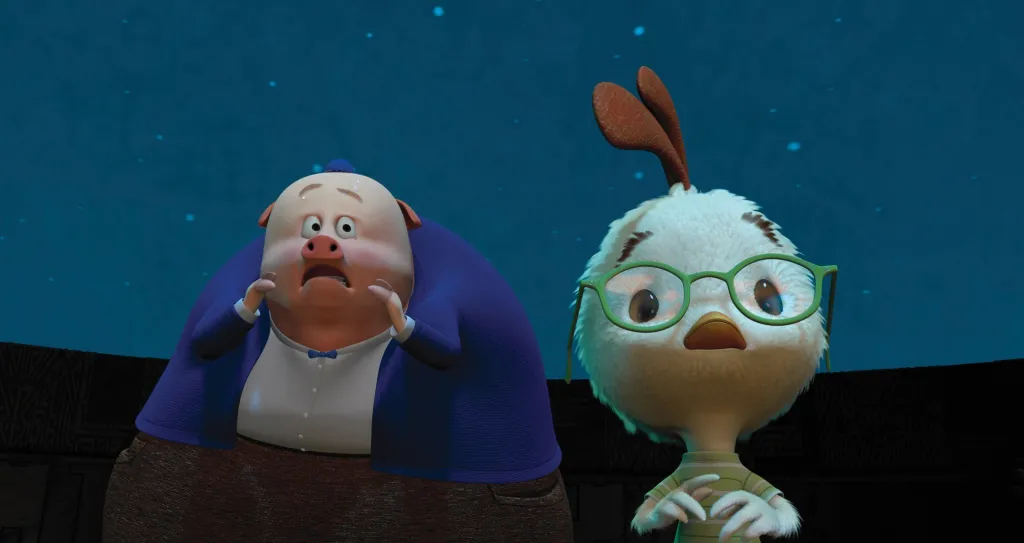
Being active on Twitter, now X, has exposed me to the big population of Chicken Littles among us. I expect negativity and doom from the left; it’s built into every one of their little petty Marxist genes, but seeing it so widely on the right is terribly annoying. I’ve come across the word panicans which some creatively use for such people, which captures well the story of Chicken Little, the story of the little doomer chicken. It isn’t commonly taught to our children today, but it’s a helpful warning for not to being overly negative and pessimistic.

First published in the 1820s, It’s a fable or fairy tale of unknown origin with various versions, but the message is the same. Chicken Little, who goes by various names in the different versions, is walking in the woods when she is struck by an acorn falling from one of the trees. Convinced this is a sign the sky is falling in, she rushes from the woods to go and warn the king. On her way to see the king, she meets a number of her friends, who are also birds, usually with rhyming names: Henny Penny, Goosey Loosey, Ducky Lucky, Turkey Lurkey, and so on. As she meets each of them along the way, Chicken Little tells them the sky is falling in, and that she has first-hand evidence of this. All of these other birds join Chicken Little as she makes her way to the king, and soon there is a large group of them convinced that the sky is falling on them. On their way, they come across Foxy Loxy (a fox is not a good sign in a fairy tale), who asks them why they’re in such a hurry. Chicken Little explains to him the sky is falling and they’re on their way to notify the king. Foxy Loxy offers to take them to the castle where they will find the king, and the birds agree to accompany him. However, the cunning fox leads them not to the castle, but to his den, and the birds are never seen alive again.

I wish the panicans, the doom and gloomers, would take this cautionary tale to heart, but they won’t. Sinful human nature combined with a fallen world and certain personality types means we’ll always have Negative Nellies among us. But that doesn’t have to be us!

A more modern metaphor for this negative mindset comes from the 1999 hit movie, The Matrix. Neo, played by Keanu Reeves, is given a choice by Morpheus, Laurence Fishburne, of a red or blue pill. If he takes the blue pill he goes on his oblivious way and nothing changes, but if he takes the red pill his eyes are opened and he see reality for what it is, an awakening as it were. This metaphor has been extended to positive and negative outlooks. If you’re positive and optimistic, you’ve taken the white pill, but if you’re negative and pessimistic you’re black pilling. There seems to be an epidemic of people OD’ing on black pills in this second year of the Trump presidency, especially with the war in Iran. It seemed to get its start with the whole Epstein conspiracy, which in my mind was much ado about absolutely nothing. The black pillers, however, were convinced there was a vast deep state conspiracy and the evil doers were getting away with it. Whatever.

Be that as it may, or with anything else people complain and whine and moan about, the tendency to catastrophize is a fallen human nature thing, as well as a bad eschatology thing. I’m so naturally inclined to this it’s annoying, even though I’m generally not a conspiracy guy. I’m also naturally an optimist and a glass half full guy. I have to fight the tendency to the negative. Whatever it is, my mind will go right to catastrophe, whatever the worst case scenario is, and 99.9% of the time that isn’t the case at all. So I’ve learned to fight the inclination, and I repent at what I see as my lack of trust in God. To me everything about life, and death, comes down to whether I trust God or not, and far too much of the time I don’t. My aspiration in this regard comes from Isaiah 26:3:

You will keep in perfect peace him whose mind is steadfast, because he trusts in you.

If I have perfect peace I trust him, if I don’t, I don’t. In my almost five decades of attempting to live a Christ honoring life I’ve come to the conclusion my greatest sin is not trusting God, which is why repentance for it is a common feature of my prayer life.

Human Psychology and Doomerism-Conspiracy Theories
As we were enduring the stolen election of 2020 and the Covid debacle that contributed to it, I became a fan of conspiracy theories. The reason is that anytime anyone questioned the accepted establishment narrative, leftist media lackies would call them “conspiracy theorists,” as if that alone would disqualify them from being taken seriously. It didn’t take long to realize when they trotted out the conspiracy theory trope that whatever was being questioned must either be true or a threat to the establishment. As the early 2020’s progressed and life was moving more online, I began to notice a certain cynical type that actually embraced conspiracy theories, not just to discredit political opponents, but really believed in them. The word cynical is important because while it is a good thing to be skeptical about things going on in the world, cynicism is another level of distrust. For such people behind everything that’s happening they don’t like, there is a pernicious cabal of other people executing a plan to take over the world, or something like that.

As we know, human beings are messed up creatures. We Christians call that fallen, the result of original sin. Psychology is the study of the mind and behavior, and it can help us understand why individuals behave the way they do and how they interact with others. There are a million reasons why people think and act the way they do. Everyone is born with certain personality traits and dispositions. Then they are raised in certain cultures and familial environments that shape who they are and become. Nobody we encounter was raised in a vacuum. Whenever we encounter them in whatever context, they’ve lived through a history that has made them exactly who they are. In a way, although God still treats them as accountable beings, they really can’t help it. And this allows us to deal with them so they don’t drive us nuts. We can have the same effect on others, but we trust the work God is doing in us will teach us what it really means to love others.

Even as I understood all this, I started to see an extremely unappealing dark side to the conspiracy mindset. These people assume the red pill encounters they’ve had gives them insight into everything behind the Matrix. At their worst, they believe they can see things other people are too stupid and blind to see. They become arrogant and dismissive. I’ve encountered a lot of these people online, and some in real life. There is a close connection between the conspiracy minded and doomers. We might say all conspiracy minded people are doomers, but not all doomers are conspiracy minded. For both kinds of people, though, they are sure the worst is yet to come. It’s Chicken Little all the way to the fox’s den. Nothing good comes from a doomer pessimistic mindset. In addition to being a sin, it is impossible to accomplish anything, or build anything of lasting value, if we believe there are forces arrayed against us over which we are basically powerless. We give up our agency to forces we can’t even really be certain exist. When we are tempted to it, we must repent, and we’ll discuss below what we can replace it with.

At the other end of the mental spectrum is Donald Trump. You gotta love the guy (and I know plenty of people don’t, at all). For him, there is no obstacle that cannot be overcome. Everything he does or tries to do is the greatest, the most spectacular, nothing like it has ever been seen before. He also has never met an enemy, whether it be in real estate, the law, politics, entertainment, or as we’ve seen recently, in geopolitics, that he doesn’t believe he can’t overcome. Over time people have come to see his optimistic hyperbole as just who he is, but there is something to it. The man has accomplished a ridiculous amount in his life, and this mentality is part of the reason. He took the leg up his father gave him in the rough and tumble world of New York real estate, and transformed it, often against incredible odds, into an empire. When he entered politics in 2015, everyone, including me, thought it was a joke. He didn’t stand a chance. When he won in spite of the onslaught against him, the political and media establishment of both parties spent four years trying to destroy him. When they were afraid he’d come back, they tried to put him in prison. Yet again, he came back and won, and is reshaping the country and the world. Doomers don’t do that.

I bring up Trump not to affirm everything he says or does; far from it. I only do it to point out the contrast between the mentalities of those who accomplish things in life, and those who do not. Look throughout history, and we see men of action, and some women, changing the world, and not always for the better. It’s easy for sinners to be positive for sinful ends as well, but our goal as image bearers of God and followers of Christ is to advance God’s kingdom on earth. God himself wants us to do that, has given us his revelation and Spirit to do it, and Christ himself prayed we might actually accomplish it, on earth as it is in heaven.

The Christian Mindset-An Historical Overview
The word mindset captures well what I’m trying to convey. It’s an attitude or disposition in how we look at the world. Our theology will very much affect our mindset, how we see things. Life is largely about interpretation. We are confronted with situations and information that doesn’t have one inherent meaning; we must give it a meaning we choose, knowing we’ll never understand it perfectly. As Christians our God is the sovereign almighty Lord of history, which means we must have a providential view not only of history, but of every current and future event. I would argue that because of this a conspiracy minded doomer mentality is sin. Even if doom is our short term destiny as it has been for many Christians throughout history, a negative, pessimistic Chicken Little mindset is still terribly anti-Christian and dishonoring to God.

Looking back through Christian history is a helpful study to see how Christians in the past handled the inevitable challenges and suffering of life. I would challenge you to find a prominent doomer mindset that is common among them. It’s not. I cannot do much of an historical overview in a few words, but I am confident the examples to make my point are legion, or Christianity would have died out long ago. Our religion from the very beginning was always confronted with what seemed like insurmountable odds, but we have a God who controls every single thing on earth for our good and his glory. Reading through Acts at the moment, I think of the Apostles’ response in Acts 4 and 5 to these odds. You’ll notice it’s the exact opposite of doomer. Peter and John are called before the Sanhedrin and are told in so many words to shut up! No more of this talk of Jesus. Of course, they keep talking, then they are arrested again, but God frees them from prison via a helpful angel, and they go right back into the temple courts to “tell the people all about this new life.” They are again brought before the Sanhedrin and told to shut up! They want to put them to death, but are talked out of it by a more level headed member, and just have them flogged. Notice how the apostles respond:

41 The apostles left the Sanhedrin, rejoicing because they had been counted worthy of suffering disgrace for the Name. 42 Day after day, in the temple courts and from house to house, they never stopped teaching and proclaiming the good news that Jesus is the Messiah.

The entire Jewish religious establishment was against them, and soon that would include the entire Roman Empire. But they never stopped proclaiming the gospel and advancing God’s kingdom on earth in their lives. The result was eventual victory over all the forces trying to stop them, the development of Christian Western civilization, and the gospel going to the ends of the earth. All of this would have amazed the early Christians, but it would not have surprised them. They lived what Jesus taught them to pray:

Our Father which art in heaven, Hallowed be thy name.
10 Thy kingdom come, Thy will be done in earth, as it is in heaven.
11 Give us this day our daily bread.
12 And forgive us our debts, as we forgive our debtors.
13 And lead us not into temptation, but deliver us from evil: For thine is the kingdom, and the power, and the glory, for ever. Amen.

Theirs was not a Christianity of escape from a fallen world, but a Christianity of transformation of that world. I would suggest Chicken Little isn’t welcome in such a world, except that he and his followers are not going anywhere anytime soon. That means for those who refuse the doomer temptation must be eternally vigilant.

The ending of Jesus’ prayer, and ours, about God’s kingdom rule is the critical factor in the mindset Christians should have. The reason God’s kingdom will continue to advance on earth is because as Christ told the Apostles prior to his ascension that all authority in heaven and earth had been given to him. To what end? To disciple nations, not just individuals. I’ve recently written about what I think that means, but it can’t mean pessimism in any sense. In fact, when the Apostle Paul is teaching us about the Ascension in Ephesians 1, and tells us Christ was raised to the right hand of God, he tells us this meant Christ was far above all rule and authority, power and dominion, and every name that is invoked, not only in the present age but also in the one to come.

Notice that Paul assumes his readers take it for granted that Christ’s authority and rule is obvious for this age, but he feels he has to remind them it’s also for the age to come. That smells like victory to me, not doom, no matter how things look at the moment. Which is why we live by faith, and not by sight

The “Nazi” Label as a Rhetorical Kill Switch and Cultural Marxism

The “Nazi” Label as a Rhetorical Kill Switch and Cultural Marxism

The first part of this title came from a post I saw on Twitter by Joel Webbon, a pastor from Texas and leader on the dissident right, or New Christian Right, or whatever one calls that these days. Sadly, he was referring to other people on the right who use this “kill switch” to try to discredit and shut down conversation about possibly uncomfortable issues. Joel’s description of this rhetorical sleight of hand comes from a friend on Twitter:

It dehumanizes. It demonizes. It’s meant to silence, to isolate, to destroy reputations, and ultimately to frighten the next man in line from ever speaking up.

And that’s the real strategy. The left used to do this, but now the neocon right has adopted it. “We’ll smear you as a Nazi, and everyone else will take the hint.”

I’ve only been active on Twitter (X for the purists) for the last year and a half, and this kind of stuff only started popping up in the last year or so. We lived through peak woke during the Biden administration. Which is why it’s disconcerting, now that Trump has started the process of cleaning our societal house, to see people on the right use the same cancel tactics the left uses to stifle dissent and limit the scope of acceptable discourse. One phrase, for example, that annoys me because it is doing exactly this is “ethno-nationalism.” There are some who argue that an ethnic monoculture, i.e., not “diverse,” is better for societal flourishing than a cultural United Nations. I’ve read and listened to their arguments and find them plausibly persuasive, but when others call them “ethno-nationalists,” the implication is . . . Nazi! White supremecist isn’t far behind. They, it is implied, should be shunned. Uh, no they shouldn’t. Sure, some on the outer edges, the fringe, should be identified as lines must always and will be drawn in any society, but the Nazi line is weak and almost never justified.

I responded in a comment that it’s a shame most people have no idea where the rhetorical effectiveness of this “kill switch” came from, but I will tell you. It’s a tactic the left has used since shortly after World War II (and even some prior), and yet another of the woeful consequences of what Pat Buchanan called an “Unnecessary War.” (If that triggers you, I would suggest you read Buchanan’s book, Churchill, Hitler, and /The Unnecessary War: How Britain Lost Its Empire and the West Lost the World. Agree or not, his case is not a frivolous one.) Let’s see how we got here.

The Post-World War II Consensus
Seeing fascism as a phenomenon of the right is part of what some of us see as the toxic stew of the “post-World War II consensus.” I’ll get to that below, but we need to address this so-called consensus first. Worldwide tyranny and totalitarianism were the great fear coming out of the war, and the Western nations were united in their commitment to not allow its worldwide expansion. The Soviet Union, a product of the first Great War, which gave us the second, ended up dominating much of the world anyway because of Allied incompetence or treachery, take your pick. The Cold War was the result. Godless communism was the great enemy of the time, and there was a consensus for transnational cooperation to keep it at bay. Only Ronald Reagan thought Soviet Communism could be defeated, and it was. Another area of consensus is that fascism in the form of Nazism was the apotheosis of evil in the modern world, the apex of the apex, top of the mountain, never matched in the history of the world, and to be avoided at all costs. In this consensus it is assumed fascism is a phenomenon coming from the cultural and political right, and few question that. All agree, though, it must not be allowed to fester, thus the “rhetorical kill switch.”

Liberal democracy is also an unquestioned good in this consensus, and this is true on the left and right. I realized I was a conservative in 1980 with the election of Ronald Reagan, and I had no idea the conservative movement was a liberal movement. None, and for decades. I knew there was “something rotten in Denmark” for a long time, but I couldn’t identify it. All conservatives did was lose. At best, conservatism was committed to slowing down the gains of the progressive liberalism of Democrats since Woodrow Wilson, but reversing it didn’t seem to be part of the plan. Oh sure, they talked a good game, but when push came to shove, they didn’t do anything. I had learned about William F. Buckley and National Review magazine back at the beginning of my conservative journey, and he was a hero of mine for 35 years, then he wasn’t. In the very first issue of the magazine in 1955 he wrote of the mission of the magazine and by extension the fledgling conservative movement, “A conservative is someone who stands athwart history, yelling Stop.” At best conservatives became those who pleaded, “Please slow down a little.”

I struggled wondering in my disillusionment exactly what I was politically  if I wasn’t a conservative. Maybe a libertarian? I quickly realized that was basically evil; choice as the ultimate good is a stupid moral standard—one that leads to destruction. Thankfully, a New York billionaire real estate developer and reality TV star came down an escalator on June 16, 2015, to save me from myself. It just took a while to realize God had put my political salvation in the most unlikely package. Over the Trump years I’ve come to realize the conservative movement is basically filled with liberals in skirts, just another form of modern liberalism, classical liberalism some call it, but one that believes in tradition. Most conservatives buy into the secular political and cultural order just as much as liberals and most are not all that different than liberals. They all believe in the secular myth of neutrality, that pluralism is a positive good, and that no one religion should be privileged in government or the public square, including Christianity. The phrase Christian Nationalism is anathema to them, and a Christian nation an oxymoron. One of my favorite conservatives in the world actually said that, Hillsdale College President Larry Arnn, and I challenged that in a post last year. And they all believe fascism comes from the right.

I have discovered through my MAGA journey what I am politically, thanks in large part to Steve Bannon. I would now call myself a Christian populist-nationalist conservative who is deeply suspicious of the post-World War II consensuses. This also includes the accepted narratives of 20th century wars. I would again highly suggest Buchanan’s Unnecessary War, and at least you’ll know there are valid questions about the narratives, agree or disagree.

Because of Trump I began to question many things, and because of Covid came to question everything. I am determined not to turn into a cynic, which I believe is sinful, but to have a healthy skepticism about everything. Writing my last book I learned about the true origins of “the Nazi kill switch,” and it puts into perspective experiences those of us on the right are all too familiar with.

Adorno, Marcuse, Anti-Fascism, and Repressive Tolerance
We have cultural Marxism to thank for “the Nazi kill switch.” It goes back to the Frankfurt School in Germany in the 1920s which migrated to America prior to the war. The Marxist intellectuals in this movement realized traditional or “orthodox” communism based on class oppression wasn’t working, so a change in tactics was required. The primary insight of the cultural Marxists wasn’t that “orthodox” Marxism didn’t bring the fruit of revolution Marx promised, but that the revolutionary consciousness required would clearly not arise spontaneously; it must be assiduously cultivated via culture. They recognized Western societies produced cultures almost completely resistant to revolution. Marxist revolutionary consciousness had to find its way into the worldview of the average prosperous Westerner, and that could only happen through the transformation of the culture. Thus in due course arose the strategy of the “long march through the institutions.”

One of the cultural Marxists, Italian Antonio Gramsci (1891–1937), had developed the concept of “cultural Hegemony,” meaning the dominance of one group over another through cultural norms. This dominant position of a particular set of ideas leads to them becoming commonsensical and intuitive, especially traditional religion, and cultural Marxists were determined to take it all down, replacing specifically Christian and capitalist ideas with Marxism. Marxist revolutionary consciousness would then “naturally” develop, or what we know today as woke. The effectiveness of this strategy is remarkable, and through it we have “cancel culture,” only certain accepted speech can be tolerated. This mentality has been endemic to the left, but it took a while for the “long march” to make it widely acceptable in Western culture. We largely have Adorno and Marcuse to thank for that.

The rise of Hitler and National Socialism, and fascism thanks to Mussolini, was the narrative in which woke incubated. The Nazi rhetorical kill switch was already being used prior World War II as interventionists were trying to get America into the war. Since Hitler and Nazism were ultimate evil and soon to take over the world, those not sufficiently bellicose were called Nazi sympathizers. It wasn’t widespread because the vast majority of Americans had no interest in getting into another European war, but Roosevelt and his administration sure were. The war and the Holocaust seemed to prove the ultimate nature of Nazism’s evil, but that’s only because the allies and the left played down the wickedness of Stalin and communist atrocities. In a contest between totalitarian tyrant baddies, I’d vote for Stalin to get the grand prize, with Hitler getting the runner up. And one last World War II point. Hitler, despite claims to the contrary, never had designs on worldwide conquest, while Stalin sure did; it’s baked into the communist cake. The Cold War proved it. But nobody today, left or right, uses “Commie” as a “rhetorical kill switch” to stifle debate and discussion. Let’s see why.

Theodor Adorno (1903–69) – Adorno published a book in 1950 with the loaded title, The Authoritarian Personality. The default position ever since is that fascism is a phenomenon of the right, and communism of the left, a convenient distortion for our
cultural elites. Dinesh D’Souza in his book The Big Lie: Exposing the Nazi Roots of the American Left has a section titled, “The Deceitful Origin of ‘Anti-Fascism.’” He writes that after World War II, “Nazism became the very measure of evil. So Marcuse and Adorno knew that anything associated with Nazism or fascism would automatically be tainted. They set about putting this obvious fact to political use on behalf of the political Left.” Fascism in this distortion of reality would now be associated with capitalism and moral traditionalism, which a la Marx must be “abolished.”

D’Souza argues persuasively that Marxism and fascism are ideologies of the left, but because of Adorno they came to be associated with two different ends of the ideological and political spectrum. This has some plausibility because Hitler hated communism, but that doesn’t make National Socialism any less an  ideology of the left. In his book Adorno introduced the F(ascism)-Scale as D’Souza explains:

The basic argument was that fascism is a form of authoritarianism and that the worst manifestation of authoritarianism is self-imposed repression. Fascism develops early and we can locate it in young people’s attachments to religious superstition and conventual middle-class values about family, sex, and society.

So a la Marx, religion and the family must be “abolished.” The book and ideas were swallowed hook, line, and sinker by an already liberal academia and media, becoming the accepted perspective that fascism was a phenomenon of the right. It’s a complete lie, but that’s what Marxists do. Sadly, the right largely accepted this taxonomy, as if Nazism and communism were on opposite sides of a continuum of political totalitarianism. We should reject this, let alone use it to verbally tar and feather those on our side of the political, cultural, and religious spectrum.

Herbert Marcuse (1898–1979) – After the war Marcuse decided to stay in America. Adorno went back to Germany but returned to America in the early 50s for a time in order to not lose his American citizenship. Marcuse was the most significant figure to come out of the Frankfurt school. He became a naturalized U.S. citizen in 1940 and served as an intelligence analyst for the precursor of the CIA from 1941 to 1944. After the war, he continued in that work for another agency, and then made his way back into academia. He taught at Columbia and Harvard universities (1951 to 1954), Brandeis University (1954–65), and the University of California, San Diego (1965–76), where after retirement he was honorary emeritus professor of philosophy until his death.

He is most famously known as the father of the “New Left” and the counterculture of the 1960s and 1970s. The “Old Left” were those who embraced the old orthodox forms of Marxism, and especially that as practiced in the Soviet Union. Young Marxist radicals, by contrast, were disaffected with Soviet Communism and looking for new ways to bring down the capitalist West; the cultural approach of Frankfurt would come to dominate American Marxism through the pen of Marcuse. During his time in academia, he attracted young radical disciples like Angela Davis and Abbie Hoffman among many others.

Marcuse, a prolific author, wrote Repressive Tolerance in 1965. That counter intuitive title comes from his argument that tolerance is “repressive” when it tolerates ideas from the right. Written as part of a book called A Critique of Pure Tolerance, Marcuse argues that “tolerance today, is in many of its most effective manifestations serving as a cause of oppression.” From the perspective of a cultural Marxist, of course it is. The perverse Marxist logic of Marcuse has to be read to be believed. In this upside down, inside out world, tolerance “actually protects the already established machinery of discrimination.” Free speech and the First Amendment are considered dangerous; a common trope on the left is “speech is violence.” If that is true, of course it must not be tolerated, and we’ll see why from Marcuse’s perspective.

Adorno allowed Marcuse to develop “the Nazi argument.” It was a diabolically genius move paying cultural dividends to this day. First Marcuse lays his cards on the table:

Liberating tolerance . . . would mean intolerance against movements from the Right, and toleration of movements from the left.

Then he gives us the punch line:

In past and different circumstances, the speeches of the Fascist and Nazi leaders were the immediate prologue to the massacre. The distance between the propaganda and the action, between the organization and its release on the people had become too short. But the spreading of the word could have been stopped before it was too late: if democratic tolerance had been withdrawn when the future leaders started their campaign, mankind would have had a chance of avoiding Auschwitz and a World War.

It’s a short trip from this to “speech is violence,” and by definition it can only be speech from the right. This led to a common phrase the New Left used in their protests against the Vietnam War in the 1960s, “No free speech for Fascists.” Thus what we know as cancel culture is a necessity to keep the right from doing what Fascists and Nazi’s always do. Not cancelling people on the right and their speech would be a dereliction of duty, the First Amendment be damned. Of course, all the political violence is on the left, but that is justified violence because it’s used against the Fascist right. A group using violence today can be called Antifa, for anti-fascists, with a straight face. You can’t make this stuff up!

Now That We Know?
Since we now know where the “Nazi rhetorical kill switch” came from, can we use it in good conscience? Do threats from potential fascists and Nazi’s actually exist? Is the “dissident right” full of “angry young men” who are susceptible to the “the authoritarian personality”? While I conceded there are some angry young men who are rightly frustrated at the dominant globalist establishment manifested in the post-World War II consensus, is it valid to “cancel” them? To discredit them in a way that seeks to silence them? To ignore their concerns? Or discredit their arguments without at least understanding them? It seems to me the questions answer themselves.

When I see, for example, this tactic being use on, of all people, Stephen Wolfe, who wrote The Case for Christian Nationalism, I call garbage. I am deeply uncomfortable with the antisemitism among some of this crowd, but I’ve tried to engage with them and understand where they are coming from, while rejecting their fundamental premise that Jews are “the problem.” Outside of that, I have no problem with this slice of the conservative Christian right questioning the “consensus”, the accepted narrative of political and cultural reality since the end of the war. I myself once accepted the dominant narratives of everything from the Civil War on, then Trump. Covid then destroyed the credibility of all the supposed “experts,” and created millions of skeptics who were otherwise not inclined to question things. Even the Lord of Glory says, “Come now, let us reason together,” (Is. 1:18), so let us discuss things without assuming the worst motives of our interlocutors, and everyone will benefit as we continue bringing God’s kingdom on earth as Christ taught us to pray.


Christ and Culture Revisited

Christ and Culture Revisited

Way back in the mid-1980s when I was introduced to Reformed theology, my theological and intellectual mentor introduced me to an influential book I’d never heard of by H. Richard Niebuhr called, Christ and Culture. The Niebuhr brothers, Reinhold (1892–1971) and H. Richard (1894–1962), were prominent American theologians and ethicists. Reinhold was the more well-known of the two, but Richard’s Christ and Culture became a classic that put him on the mid-20th century intellectual map. Written in 1951, it analyzes five broad approaches Christians have taken to their interaction with culture in church history. For me it was significant because when I was introduced to the gospel in college at the ripe old age of 18, engaging culture was not a thing for the Christian group I was involved with. When I discovered Francis Schaeffer a couple years later I learned that Christians should indeed bring their faith to bear upon the culture, which expanded my vision of Christianity greatly. Niebuhr’s book explores how Christians thought about and practiced cultural engagement in the past, and what that might mean for us today.

Something became quickly apparent to me. Almost from the beginning, Christians have disagreed on how they ought to interact with the culture. One of the great church fathers, Tertullian, wrote a work called Prescription Against Heretics, in which he gave us one of the most famous rhetorical questions in church history, “What has Athens to do with Jerusalem?” He was questioning the value of Greek philosophy about which there was much disagreement. In Niebuhr’s phraseology, Tertullian would be Christ against culture. The culture in which the church was born was a thoroughly Hellenized culture with Greek influences everywhere, which some embraced, others rejected, and most were in between if they thought about it at all. We can file this under the more things change . . . .

Many Christians think cultural engagement, or what some pejoratively call, “the culture wars,” is a waste of time and a distraction from the important work of the gospel, as if the gospel had no implications for the culture. They’ll point to the New Testament and say, see, there are no exhortations of commends to “engage” or “transform” the culture, and they’ll say it dismissively as if it’s too obvious to need an explanation. Duh! They miss the salient fact that the New Testament church was only newly born into an exceedingly hostile world, and it would take some time to figure out how to interact with it. These culture engagement critics treat the early church as if it were a middle age career family man who has life pretty much figure out. In fact, none of those early Christians even thought they would reach middle age. Jesus was coming back soon, and they had better be prepared.

After the Apostles died, and the first turned into the second century, it became apparent Jesus wasn’t coming back so soon after all, and people like Tertullian realized they had to figure out how Christians and the culture were going to interact. All of the things the New Testament didn’t address, like politics and economics and law and art and architecture and education and entertainment had to be addressed from the Christian perspective—disagreements have been going on ever since. I can’t explore Niebuhr’s five categories in any depth in a blog post, so if you’re interested I would highly suggest the book.

Before he gets to those, his first chapter of introduction tells us there are no easy, obvious answers to what he calls the “enduring problem” of Christ and culture. Christians disagreeing about culture is nothing new because Christians disagree about everything all the time, always have and always will. Sinners, even saved ones, are finite creatures with limited knowledge who get as much wrong as they get right. That will never change. It’s good to know as you survey Christian history the bickering in our time is nothing new. God knew agreement for sinners would be rare, which is one reason the greatest commandment is love. The problem endures. But before we assess Niebuhr’s take on our interaction with culture, it might be good to define what culture is.

What Exactly Is Culture?
At its most basic level, culture is whatever human beings create. Culture is also an amorphous set of influences. Christian sociologist James Davison Hunter in his book, To Change the World, states that, “culture is a system of truth claims and moral obligations,” and that, “culture is about how societies define reality—what is good, bad, right, wrong, real, unreal, important, unimportant, and so on.” Culture affirms certain values and propositions, while it denies others, embraces certain beliefs, while it eschews others; culture is never neutral. Our modern concept of culture derives from a term first used in classical antiquity by the Roman orator, Cicero: “cultura animi.” In Latin, cultura literally means cultivation. We could say culture cultivates.

This seems obvious, but most people don’t realize how culture shapes not only what they believe, or what they like, or how they behave, but literally shapes who they are. Unfortunately, many Christians fail to think in a discerning way about the culture we inhabit; they are reactive rather than proactive. Culture is something we cannot take for granted or escape, so we must consider its effects, not only for us and our families and friends, but for everyone culture impacts.

As Christians, we must think about culture biblically, as opposed to sociologically or anthropologically. Christians define culture differently than non‑Christians because we start with the Bible, God’s story about his relationship with the human race, and not with something called culture that somehow exists independently of His story. The Bible has no word for culture, thus, no definition of it, but we can say culture is the imprint human beings put on God’s creation. In Genesis 1 and 2 we learn of God giving Adam and Eve the cultural or dominion mandate. He tells Adam and Eve to be fruitful and multiply to fill this earth, but also to subdue it, to rule over everything He has created. Most importantly for culture making and interaction, man is made in God’s image, male and female He created them. We are God’s visible representatives on earth! We reflect His likeness and attributes in every aspect of our human faculties, be it moral, intellectual, relational, etc. All of these attributes contribute to creating culture.

There is much more that can be said and that has been written on culture, an endlessly fascinating topic, but the takeaway for Christians is that we must realize culture and its influence is inescapable. We must as Christians cease to be reactive and become proactive, meaning a constant awareness of cultural messaging through the variety of ways it communicates to us. None of this messaging is neutral, so we have to learn how to interrogate the culture, like a skillful seasoned prosecutor in a courtroom drilling a defendant. What do these lawyers do? They ask questions, a lot of them, and we must be skilled prosecutors of the culture. Let’s get to Niebuhr.

Christ Against Culture—This might be the most intuitive of the categories, but the least justified. In this perspective, antipathy to culture makes sense in light of how fallen this world is and the people in it are. Niebuhr Identifies the first letter of John as “least ambiguous presentation of this point of view.” These well-known verses from chapter two make his point:

15 Do not love the world or anything in the world. If anyone loves the world, the love of the Father is not in him. 16 For everything in the world—the lust of the flesh, the lust of the eyes, and the boasting of what he has and does—comes not from the Father but from the world. 17 The world and its desires pass away, but whoever does the will of God lives forever.

This is an uncompromising either or, the world or the will of God. As Niebuhr says, “a clear line of separation is drawn between the brotherhood of the children of God and the world.” Culture is “the world” in John’s terms, and it is seen as a threat, something to be avoided or escaped. Christians are a separated people and must live like it. However, the number one rule of biblical interpretation, hermeneutics, is context determines meaning, and I John comes in the context of the entire Bible. We can only determine John’s meaning in light of the rest of Scripture.

When I first became a Christian in college I was exposed to a kind of fundamentalist Christianity that didn’t expressly teach “Christ against culture,” but it was sense I got, Christianity on one side, the world or the culture on the other. This “against” dynamic in American culture developed with the rise of so called liberal Christianity in the late 19th and early 20th century. A movement of fundamentalists pushed back against the liberals with a vigorous defense of supernatural Christianity in what are known as the fundamentalist-modernist controversies. The modernists won, and fundamentalism became a cultural backwater of Christians who were determined to separate themselves from a decaying culture. Nieburh identifies this mindset going back to Tertullian, and it expresses itself throughout church history, but the fundamentalists embodied the most well-known against culture Christian approach of modern Christianity. This was how I saw culture in my early Christian years, but came across Francis Schaeffer in college and moved more into other categories.

Christ of Culture—Rather than avoid it or see it as hostile, this approach embraces and accommodates Christianity to culture. As Nieburh says, “They feel no great tension between the church and the world,” the complete opposite of the against culture Christians. The liberal Christianity of the early 20th century and the once dominant mainline denominations fit this approach. In effect, liberal Christians, what we call progressive Christianity today, gets swallowed up by the dominant secular culture, and its values determined by it.

The next three are what Niebuhr calls “the church of the center” because they fall between the extremes, and this is where almost all Christians fall. Theologically, in assessing cultural issues, these three positions affirm Jesus Christ as Lord, and God the Father through the Holy Spirit as the Creator of all things. As such, creation reflected in cultural human products can’t be the “world” and the realm of godlessness because the “world cannot exist save as it is upheld by the Creator and Governor of nature.” All agree “about sin’s universality and radical character,” and to some extent “the primacy of grace and the necessity of works of obedience.” The “three families” as he names them, are “synthesis, dualists, and conversationists.” You, dear Christian, fall in one of these “families” whether you know it or not.

Christ above Culture—This approach affirms a synthesis of Christ and culture, that the two cannot be completely separated. Culture isn’t fully corrupt, but must be informed by revelation. They affirm “both Christ and culture as one who confesses a Lord who is both of this world and of the other.” The synthesis sees culture as “both divine and human in its origin, both holy and sinful, a realm of both necessity and freedom, and one in which both reason and revelation apply.” Nieburh puts it very well when he writes, we can’t say “’Either Christ or culture,’ because we are dealing with God in both cases.” The greatest representative in church history of this approach is Thomas Aquinas (1225-1274), the most influential philosopher and theologian of the Middle Ages. His influence today is as great as it was in the 13th century.

Christ and Culture in Paradox—The dualist differs from the synthesist in that Christ and Culture are in perpetual tension. Culture is a battle between sin and Grace, a holy God and sinful man, law and gospel. Sin pervades all human works, so while God’s creation is embraced as good, there can never be a synthesis that isn’t tainted by sin. In other words, any attempt at synthesis is a fool’s errand. Nieburh writes:

The dualist Christians differ considerably from the synthesists in their understanding of both the extent and the thoroughness of human depravity. As to extent: Clement, Thomas, and their associates note that man’s reason may be darkened, but is not in its nature misdirected; for them the cure of bad reasoning lies in better reasoning, and in the aid of the divine teacher.

For the dualist, however, the only hope is not in reason but in divine grace. We could use the phrase made popular by the rise of Calvinism in the 16th century—the total depravity of man. This corruption is inescapable in all human works of culture, so skepticism is the right approach to engagement with those works. The accommodation of the synthesist is effectively seen as compromise. The debate between the synthesists and dualists goes on strong and heavy today, especially among Evangelicals.

Nieburh believes Paul fits in here, but I think judging Paul’s approach to culture in the specific first century context is an anachronism; it doesn’t fit this historical context because the newly born church didn’t have the luxury of thinking critically of its interaction with a concept that hadn’t even been invented yet. A better representative is Luther; the man God used as the torch to set the reformational blaze in Medieval Europe. He says Luther has “a double attitude toward reason and philosophy, toward business and trade, toward religious organizations and rites, and well as toward state and politics.” Which makes sense when you believe in God’s good, created order, but also in the profound power of sin corrupting all things.

Christ the Transformer of Culture—For most of my Christian life I fit squarely between synthesis and dualist, ambivalent and often confused. When I first read this section of the book I wasn’t sure what to make of it because Nieburh isn’t clear about exactly what transforming means. I’ve always been for Christ transforming culture, at least since I found Francis Schaeffer in college, but I had no theological justification for it. It’s interesting to read this chapter from my relatively new perspective of postmillennialism, and see that Niebuhr got it more right than wrong after all. The point of the gospel isn’t just to change individuals, but to permeate, thus transform, everything they put their minds and hands to. Christ’s righteousness isn’t just to be imputed to Christians, but to be lived out and brings its influence everywhere sin has distorted God’s good, magnificent creation. Christ is King, and “culture is under God’s sovereign rule, and the Christian must carry on cultural work in obedience to the Lord.”

He calls these the conversionists, as opposed to the synthesists and dualists, although they would side with the latter in their understanding of the seriousness of sin, except they have a more hopeful attitude toward culture. What the dualist misunderstands, is that the transformation of culture while done by Christians active in cultural pursuits, is all about “the creative activity of God and of Christ-in-God,” and our actions are “under the rule of Christ and by the creative power and ordering of the divine Word.” The critics of postmillennialism, conversionists through and through as we are, are always claiming we think transformation comes merely through our own activity, as if we, without the power of the Holy Spirit, could transform anything—we cannot!

A key word that distinguishes the dualist from the conversionist is corruption. Human nature has become corrupted, but “it is not bad, as in something that ought not to exist, but warped, twisted, and misdirected.” Taking from Augustine, a primary example of the conversionist, the loves given man at creation are disordered, as in they are no longer ordered correctly, thus corrupted. “Hence his culture is all corrupted order rather than order for corruption, as it is for the dualist. It is perverted good, not evil; or it is evil as perversions, not badness of being.” Although not a conservative Evangelical as we would understand it today, he perfectly captures what we postmillennialists believe, that “The eschatological future has become for him an eschatological present. . . . Eternal life is a quality of existence in the here and now.” The conversionist is focused on “the divine possibility of a present renewal.” The “transformed human life in and to the glory of God” can now transform culture. To me that’s the point of the gospel, not merely to go to heaven when we die, but to bring heaven to earth here and now.

I will finish this with a long quote that perfectly captures the hopeful, optimistic theology that brings the end of all things into the here and now until the end:

The life of reason above all, that wisdom of man which the wisdom of God reveals to be full of folly, is reoriented and redirected by being given a new first principle. Instead of beginning with faith in itself and with love of its own order, the reasoning of redeemed man begins with faith in God and love of the order which He has put in all His creation; therefore it is free to trace out His designs and humbly to follow His ways. There is room within the Augustinian theory for the thought that mathematics, logic, and natura l science, the fine arts and technology, may all become both the beneficiaries of the conversion of man’s love and the instruments of that new love of God that rejoices in His whole creation and serves all His creatures. . . . Everything, and not least the political life, is subject to the great conversion that ensues when God makes a new beginning for man by causing man to begin with God.

Amen!


Response Post: Carl Truman and Two Kingdom Pietists

Response Post: Carl Truman and Two Kingdom Pietists

Sometimes I read something and I just can’t let it go. I have to tell somebody about it and share my reaction. Much of the time it’s my poor long suffering wife, and since I got active on Twitter early last year, that allows me an outlet, but you have to be pithy there, and I’m not really good at pithy. As a Christian in a dominant secular culture, I’m in the minority so there’s plenty to react to. But within Christian circles, I’m in the minority of the minority of the minority, and maybe a few more. I’m Reformed in my theological convictions, a Calvinist. Among these, I’m a Presbyterian, thus believe babies should be baptized as covenant children, while not believing baptism saves babies like Lutherans and Catholics do. That’s pretty solid for minority status, but I’m also postmillennial in my eschatological perspective, and you can’t get much more minority than that! So, there’s a lot I run across that drives me nuts, and I just have to get it off my chest. I came across a piece by Carl Truman I have to respond to, so he is going to be the first response-piece victim, so to speak, and a worthy one at that.

He wrote an article last year for First Things called, “How Pop Nietzscheanism Masquerades as Christianity.” How’s that for a provocative title! If you’re not familiar with Friedrich Nietzsche, he was a late 19th century atheist philosopher who declared God is dead, and prophesied the horror of the 20th century wars because of it. Even as an atheist, he knew the moral structure of Western civilization came from Christianity, and even though he despised it, he knew if you cut off the branch from the tree, it will die. Western intellectuals in fact cut down the entire tree! The term Nihilism, often associated with Nietzsche, means nothing, and those who embrace it believe exactly that, nothing. Nobody can consistently live that way, but without God that’s really all you got, nothing. We’ll have to see how Truman creatively weaves this into condemning certain Christians he disagrees with on politics, but I will make the point that whatever he’s trying to do, he fails miserably at it.

I won’t quote the entire piece, but let’s start here. This is enough to get the old Italian blood boiling.

I wrote the piece when Rod Dreher’s The Benedict Option was the talk of the town. At that time, the big threat to the faith was the emerging pressure on religious freedom, focused then on the issue of gay marriage. The threat to religious liberty remains and has indeed expanded, but a new one has also emerged: the temptation to combat this by fusing Christianity with worldly forms of power and worldly ways of achieving the same. For want of a better term, it’s a kind of pop Nietzscheanism that uses the idioms of Christianity. It’s understandable why such a thing has emerged. Many Christians think America has been stolen from them. And the path to political power today is littered with crudity, verbal thuggery, and, whatever the policies at stake, the destruction of any given opponent’s character. While the left may pose an obvious threat, there is also a more subtle danger in succumbing to the rules of the political game as currently played by both sides.

His first criticism is that this “pop Nietzscheanism,” is “fusing Christianity with worldly forms of power and worldly ways of achieving the same.” For an otherwise intelligent man to say something so inane is   something to behold, but two kingdoms Pietism will do that to a person.

Evangelical Elites’ Problem with Power
Notice the inherent dualism in Truman’s understanding of the world. Simply, dualism is the idea that there are two fundamental kinds or categories of things or principles of reality, and these are mutually exclusive, something on one side of the wall, another thing on the other. Pietism sees a dualistic world of competing forces, spiritual and material, spiritual and sinful. Truman believes there is something called “worldly power,” and clearly “worldly” means not “spiritual” power, which we presume is good. He assumes we agree with him that there is this kind of inherently bad “worldly” form of power, and that those who engage in it are somehow Nietzschean. If we are to have fruitful discussions with anyone about anything, we must define our terms. Assuming the meaning of the terms, and that others agree with you, is a very bad strategy for fruitful discussions. Regarding the word power, Britannica has an excellent definition to help us parse what Truman might mean:

Power, in political science and sociology, the capacity to influence, lead, dominate, or otherwise have an impact on the life and actions of others in society. The concept of power encompasses, but is not limited to, the notion of authority. Unlike authority, which implies legitimacy, power can be exercised illegitimately.

The reason this is so helpful is because power, like most anything else in God’s created order, can be used legitimately, and so is good, or illegitimately and thus bad. What use a thing is put to, and how it is used, determines its goodness or badness. Two kingdom Pietists believe there is something called “worldly power,” which I guess can be legitimately used for “worldly” ends by “worldly” people, but if Christians do the same thing, it’s bad, wrong, and possibly even sinful. It’s hard to tell exactly what Truman means. Power can also be exercised through coercion to exercise control over others, and I think that’s likely what’s lurking in Truman’s mind about those Christians exercising illegitimate “worldly” power. Coercion can also be good or bad depending on the circumstances and people involved.

What frosts me about what Truman is saying is that Christians are not allowed to exercise political power as Christians for Christian ends. That, to him, is apparently “worldly.” What’s even worse is that he accuses such people of being Nietzschean, which means like Nietzsche, they believe they can mold reality to their own wills by the exercise of their sheer, raw power, in Nietzsche’s phrase, “the will to power.” This is where Truman’s dualistic assumptions are most pernicious. He’s accusing fellow Christians of believing their power, their influence, is being exercised apart from God, that these Christians believe by their own power they can usher in the kingdom. Over the years I’ve heard two-kingdom Pietists hurl such accusations, all the while assuming their assessment of “worldly power” is the truth. That is what in logic we call begging the question.

Today that phrase has come to mean, “raise the question,” but it’s critical to be aware of its meaning in logic when we’re assessing people’s assertions. Truman begs the question when he says, “the temptation to combat this by fusing Christianity with worldly forms of power and worldly ways of achieving the same,” because he’s assuming all kinds of things he doesn’t feel the need to prove. That’s what makes it a logical fallacy. If something is a temptation it’s clearly bad. It assumes there is something called “worldly power,” the bad kind, and we guess a good kind of power which he doesn’t define, but we presume it’s spiritual power, the kind that depends on God. Who knows; he never bothers to explain himself.

He gives us a hint as to what he thinks this “worldly power” is:

And the path to political power today is littered with crudity, verbal thuggery, and, whatever the policies at stake, the destruction of any given opponent’s character. While the left may pose an obvious threat, there is also a more subtle danger in succumbing to the rules of the political game as currently played by both sides.

Given he wrote this in the middle of last year’s presidential campaign you know he’s got Donald Trump on the mind, and he is a card carrying member of the NeverTrump cabal. This again begs the question. Are we to believe all Christians do these things? And let’s stipulate that “crudity, verbal thuggery, the destruction of any given opponent’s character” can be in the eye of the beholder. Also in his mind I’m sure anyone associated with Trump is lumped in and likely guilty by association.

The Delusions of Third Wayism and Moral Equivalence
Commenting on these two sentences it is difficult for me not to be verbally incontinent, it’s that bad. Unfortunately, America’s Evangelical establishment, its elite, buy into a moral equivalence between left and right that is so morally obtuse you wonder if these people can think at all. Yet they are intelligent, often brilliant, but intellect has never equaled wisdom.

They also fail to understand in the old phrase, politics ain’t beanbag, and one might say something in the heat of political battle that is less than charitable toward the opponent. Andrew T. Walker captures this mentality well:

Third-wayism in politics is a form of political Gnosticism as it assumes that there is a platonic ideal to politics that does not require engaging the kingdoms of the world as what they fundamentally are: worldly, temporal, & creational ordinances designed for proximate justice.

Christians in the modern world have proved terrible at politics because they live in this idealized platonic world where they believe in some kind of third way that doesn’t exist, and never has.

As for Democrats, I’m not sure exactly when it started, but at some point they became the party of perpetual liars, and their media lackies tagged along. There can be no compromise, no in between, no third way, when you’re dealing with liars. What Jesus said of the Pharisees could be said of Democrats (John 8:44):

You belong to your father, the devil, and you want to carry out your father’s desires. He was a murderer from the beginning, not holding to the truth, for there is no truth in him. When he lies, he speaks his native language, for he is a liar and the father of lies.

I will say it bluntly: the Democrats are Satanic. Lying is effectively the language indicating where someone comes from, to which country or nation they belong. As someone who speaks Japanese is likely from Japan, so someone who speaks lies is from hell. I’m not talking about someone who tells a little white lie, or someone who gets caught doing something and lies under pressure, but someone who lies as his “native language.” Lies are the native language of the secular progressive left, a case that is not hard to make, and all Democrats, save possibly a few, are of the secular progressive left.

While all politicians may lie to one degree or another, this didn’t become a political strategy for the Democrats until Barack Obama came on the scene. What happened wasn’t so much about not telling the truth, but crafting a narrative. Whatever was required to drive “the narrative” was fair game, thus truth became optional. How do I know this? The media has always been biased, as I learned when I embraced conservatism as a young Christian in 1980. While the media always feigned objectivity, when Obama came on the scene, “the narrative” became priority number one.

In the Spring 2020 journal Academic Questions, Dr. David Rozado did a word frequency usage study on New York Times articles written between 1970 and the end of 2018. He was looking for progressive/Marxist buzzwords used by groups with an ideological agenda. He discovered in 2010 and the years following such words and phrases had exploded in frequency. There are numerous charts in the article graphically displaying the jump in terms such as climate change, sexism, patriarchy, transphobia, homophobia, white supremacy, and so on. Apparently, all these things became such critically important issues around 2010 that America’s “paper of record” found it necessary to endlessly report upon them. In fact, they were doing what the left always does, driving “the narrative,” but in this case it went into overdrive. Joseph Goebbels would have been impressed. Then when Trump came on the scene, they went from narrative driving to blatant lying. In fact, their hypocrisy was so blatant and in your face, that it was almost impressive. There can be no third way in response to such mendacity.

Do Church Things, The Rest Will Take Care of Itself
This is the basic message from Pietist two kingdom folks like Truman. Since the church is the kingdom of God where His redemptive work happens, everything else is a bit less than important. All Pietists of whatever stripe live in such a bifurcated reality, one branch being the spiritual, the eternal, which is the truly important stuff, and down the other branch everything else. I’ll quote one more paragraph where Truman embodies this mentality, and all Pietistic two kingdom thinkers do so as well:

And yet the sun also rises, to quote Ecclesiastes. Regardless of the political stakes, at ground level the births, marriages, illnesses, and deaths continue. Pastoral ministry goes on, day to day, year to year, whatever the political officer class, right and left, are debating. And so in this context, the Church must continue to do that to which she has been called: proclaim Christ in Word and sacrament. The big problems of life—sin and death—remain, whoever wins the election in November 2024. And so the Church needs to remain faithful to her appointed task and not become simply an arm of those vying for political power.

This doesn’t infuriate me like the previous paragraph, as much as sadden me. To take God’s kingdom redemptive work and truncate it to such a degree that it’s only narrowly applied to the ministry of word and sacrament, as they often say, is tragic. I’ve written in the past that the kingdom of God is not identical to the church, yet most Christians limit God’s kingdom work to the church. When Jesus taught his disciples to pray, Thy kingdom come thy will be done on earth as it is in heaven, they think that means the spiritual stuff, things pertaining to salvation and personal holiness. Grubby stuff like politics, that’s most certainly not “spiritual” nor kingdom work. In fact it is both.

We also notice another pernicious distortion in such sloppy thinking. He’s speaking about “the church,” but we’re not quite sure if he means the institution of the church, like a denomination, or individual Christians. He just assumes we know what he means. Clearly he has to mean the latter because no church denomination makes authoritative proclamations as a church body about public policy, and I doubt seriously any denomination has hired lobbyists in DC to push policy. So his target is individual Christians. For Truman, Christians who engage in politics are basically pawns of those greedy for political power, which he seems to infer is a bad thing, or at the last not a “spiritual” thing, as we’ve already discussed.

I wrote here recently about the history of Pietism and how this kind of dualistic thinking came to dominate the Evangelical church over the last several hundred years. Before Pietism, Christians saw God’s kingdom coming in Christ as applying to every square inch of life because declaring Jesus as Lord is an all-encompassing statement, including politics. King Jesus is just that, King of kings and Lord of Lords. I recently learned that when the Messiah was composed by Handel and Charles Jennens, they put The Hallelujah Chorus in the middle, and not the end where I always thought it was. We are so programmed to believe Jesus only really takes charge at his second coming and not his first, that of course Handel would have put the chorus at the end, where it belongs. But until Pietism took over, Christians didn’t think that way. They believed like the Bible teaches, that Christ was coronated as King of kings and Lord of Lords at his ascension to the right hand of God where he now reigns over all things, including all earthly power, and that Christians are his representatives on earth. That makes everything we do spiritual, not just the “spiritual” stuff.

So, contrary to Truman and all two kingdom Pietists, redemption accomplished by Christ in his life, death, resurrection, and ascension is meant to reverse the effects of the fall in every nook and cranny of life. As the great Dutch statesman and theologian Abraham Kuyper famously said,

There is not a square inch in the whole domain of our human existence over which Christ, who is Sovereign over all, does not cry, Mine!

This is not a theoretical authority, but a real, concrete, authority realized in the nitty gritty of life, be it in politics or anything else. And Christ exercises this authority, like it or not, through his body, the church as his people, not the church as an official institution that ministers word and sacrament. So Carl, you could not be more off base or wrong. Christians should be involved in “vying for political power,” and in our day that would be as part of the Republican Party. Learn it, live it, love it!


What and Why Boomers: The Generation Everyone Loves to Hate

What and Why Boomers: The Generation Everyone Loves to Hate

I was listening to Tucker Carlson interview Tim Dillon, a comedian I’d never heard of. He’s a funny guy, not surprising, but when he and Tucker went on a twelve-and-a-half-minute rant completely trashing boomers it was hilarious. I shared it on Twitter, and someone replied with this:

This is so true (broadly speaking). It’s been a bizarre observation to me how much wisdom people in their 80s and 50s have compared to those in their 60s and 70s. I don’t understand what happened with that generation, but the stereotype is so real. So many are like old children.

Given my handle on Twitter is The Based Boomer and I have a podcast of the same name, I suppose I’m the ideal person to speak to the phenomenon of the horribleness of the baby boomer generation. And from what I can gather, my woeful generation is responsible for every horrible thing that’s happened in the modern world, even, it seems, the stuff that happened before we were born!

There’s the rub at which I have a bit of a problem with the boomer blamers. No generation is born in a vacuum, and each generation is in some sense determined by what came before; they are the recipients of all the historical forces coming before and into which they were born. In fact, I would contend that boomers could no more help who they’ve become than any other generation. This process, a kind of historical determinism, is just baked into the generational cake.

The significance of the baby boom generation is not only their timing in history, but their size. They are a huge generation. Millions of men fought in the war and came home ready to procreate, and they did, thus the boom. As this generation, this demographic wave moved through society and years, they affected everything. It’s the law of big numbers. As consumers what they were interested in, the world became interested in, like it or not. Think of the Beatles and the popular music of the 60s and 70s (the best there has ever been, says this boomer), to fashion, to sex and changing moral standards, the boomers led the way. In the 80s and 90s as they were growing up, careers, raising the perfect children, and real estate became the thing, and as they neared retirement and health challenges increased, the medical industrial complex took over the world. Why do you think Big Pharma is the biggest advertiser on television? Boomers!

Culturally, we boomers have been bad enough, but politically we’ve been an unmitigated disaster. I’ll talk more about that below, but I think the worst part of this disaster has been the Civil Rights revolution that started in 1964. If you haven’t read Christopher Caldwell’s book, The Age of Entitlement: America Since the Sixties, I highly recommend it, especially if you want to know why America is in the sorry state she is in. I wrote about it last year, and called it “the most important book of the 21st century,” no hyperbole. When the Civil Rights Act passed in 1964, Caldwell called it a new Constitution, something that fundamentally changed the nature of the American experiment. It wasn’t intended as that, and wasn’t at the beginning, but it became that. The power of the demographic boomer wave made sure of it. Civil rights soon came to mean not just race, but as Caldwell says, “Racial integration turned into the all-embracing ideology of diversity.” And that, literally, changed everything. But let’s do a brief look back and see where boomers came from.

What Created the Modern World, And Boomers?
One of my passions is studying intellectual and cultural currents in history to see how they’ve flowed down to us in the present, and then how they’ve influenced who we are and what we think as a people and as individuals. Nothing happens in a vacuum, nor does anyone exist in one. We are the product, the result, of innumerable forces coming before we existed, and encompassing us at every level of our existence. This does not mean, in case you’re wondering, that I’m saying we are determined and have no choice about who we are or who we become. A fundamental Christian assumption is that we have agency, that we can change things, and that our choices matter and have consequences; we are accountable beings. Thus, as creatures made in God’s image we are not slaves to these forces, which is why we study them, so we don’t have to be.

We can go all the way back to the fall. Man, male and female God created them, rebelled against God, and introduced sin into the world. You might think it silly to even mention, but in the 18th century a French philosopher came up with the brilliant idea that man is born pure, and it is civilization that corrupts him. His name was Jean Jaques Rousseau, and he introduced the concept of the “noble savage” into the bloodstream of Western intellectual culture. If man is indeed born noble and corrupted by his environment, then all you have to do is change his environment and you will change the man. On the other hand, if man is born a sinner, corrupt from birth, you have to change the man before you can change the circumstances.

Historically, side by side God in his providence gave us these two views of man in juxtaposition so we can compare how they work in practice. Rousseau’s influence gave us the French Revolution, the triumph of reason, which gave the world a Reign of Terror. From September 5, 1793, to July 27, 1794, upwards of 1,400 people were summarily executed, having their heads mercifully lopped off by Madame Guillotine, and tens of thousands were executed over the course of the Revolution.  By contrast the American Revolution, steeped in Protestant, specifically Calvinistic, Christianity, gave us the American Revolution. Two diametrically opposite views of man, two diametrically opposite results.

What, you ask, has this to do with baby boomers? My fellow boomers are children of Rousseau, but coming through Kant and Hegel, Marx and Darwin, Nietzsche and Freud, and innumerable influences in between and since. Starting with French Philosopher Renes Descartes in the 17th century, and through all of these influences, as Marx said, the object of life became for man “so that he will move around himself as his own true Sun.” This had implications, as you can imagine, for both individuals and the societies they developed. Marx was just parroting Satan in the garden, that man could “be like God, knowing good and evil.” The boomers exploded onto the world scene in the dreaded “60s” at the apex of the hubris of man thinking he could “be like God.” On a personal level, this coincided with the triumph of the therapeutic, in the title of an important 1966 book by Philip Rieff. Even as a secular Jew, Rieff lamented the loss of religion by modern man. His religion had now become the therapeutic, his highest good a manipulatable sense of his own well-being. He explains it in the introduction:

In compensation, and in place of where faith once was, men are offered Art and/or Science. It is true that new religions are constantly being born. But modern culture is unique in having given birth to such elaborately argued anti-religions, all aiming to confirm us in our devastating illusions of individuality and freedom.

I’m not sure anything could better explain boomers, except as Rieff fills out the picture a few pages later:

Religious man was born to be saved; psychological man is born to be pleased. The difference was established long ago, when “I believe,” the cry of the ascetic lost precedence to “one feels,” the caveat of the therapeutic. And if the therapeutic is to win out, then surely the psychotherapist will be his secular spiritual guide.

And while boomers didn’t create psychotherapy, as with many other things they popularized, therapy became the religious replacement of our age. And when Rieff uses the word religion in his book, he’s speaking primarily of Christianity because his concern is the Western Christianized world. It was the development and dominance of Christianity that gave us the blessings of the modern world, and Rieff is lamenting its demise with the rise of secularism.

Being a boomer, albeit on the younger side, I grew up witnessing this societal convulsion in real time. Having been born in 1960, I could only experience the wild 1960s as a child, but as teenager in the 70s, I could participate in some of the more enjoyable aspects of the era, not having to think too much about the politics, or be worried about being drafted into the Vietnam War. Sex, drugs, and rock ‘n roll were our past time, but thankfully I wasn’t too successful on the sex part, and I was too much of a scaredy cat to do more than a few brief experiments with the heavier drugs. I mostly indulged in beer and the weak pot of the time, and loved it!. Rock n’ roll was my passion. Say what you will about boomers, but we gave the world the greatest era in popular music ever. I was going to be a rock star, but thankfully God had different plans.

It wasn’t until I became a born-again Christian in 1978 and then embraced conservative politics in 1980 that I began to look back critically at this era. I started learning about these forces that would create possibly the most consequential generation of the modern world, and it wasn’t just the implications for the personal and relational, but how my generation saw America and the world.

Boomers and the Progressive American Dream
As a generation, the boomers would be well-prepared to build a modern tower of Babel, and inherit the hubris to try. We are fortunate the Lord revealed any Babel like aspirations are not good (Gen. 11):

The Lord said, “If as one people speaking the same language they have begun to do this, then nothing they plan to do will be impossible for them.

Nothing will be impossible for them was pretty much the vibe of the post-World War II period. People in the 1950s and early 1960s pre-Vietnam believed anything was possible, and they prepared the way for the boomer generation. Kennedy’s administration was staffed with the “best and the brightest,” young guns who never doubted their ability to do great things with their power. Unlike the generations before them who went through a global conflagration that developed in them a certain kind of modesty, there was nothing modest about the boomers who believed they could use technology to create anything. This wouldn’t last.

Just as the sinking of Titanic was a blow to the spirit of optimism of the early 20th century, so too was Kennedy’s assassination a blow to the optimism of the early 1960s. This “we can do anything” dynamic combined with shattered dreams of greatness, would create a generation of schizophrenics, delusions of grandeur on the one hand, psychosis on the other. Looking back on the 60s and 70s, Christopher Lasch wrote a surprising best-selling book whose title explains this dynamic well: The Culture of Narcissism: American Life in An Age of Diminishing Expectations. Because of sin all human beings are self-centered, curved in on themselves, but the boomers especially so. The generation giving them birth were determined to give them a better life than they had, which when I was growing up was a common refrain. Of course you try to give your kids a better life than you had, but that created a rather self-absorbed generation, one of the common criticisms of my generation.

It turns out all of these many forces made the boomers the perfect generation to inherit the progressive American dream. I blame the Enlightenment for pretty much everything wrong with the modern world, but once reason was exalted as the ultimate means to knowledge, called rationalism, Babel builders were inevitable. Secularism was the unavoidable result of rationalism, which meant God was persona non grata, unwelcome at the societal table, and eventually unwelcome at the personal one as well. The boomers became the generation living out fully agnostic lives, God only an occasional player if at all. God, however, would not be completely ignored. So, he had to be taken out.

As secularism spread its tentacles throughout the Western world in the 19th century, German biblical scholars declared war on the credibility of the Bible with higher criticism. There are two forms of biblical criticism. Lower is an attempt to find the original wording of the text since we no longer have the original writings, and higher studies of the historic origins, dates, and authorship of the various books of the Bible. Biased German scholars approached the Bible with the anti-supernatural assumptions of the Enlightenment, so were looking for ways to explain away any such references with natural or scientific explanations. Because secularism had not completely engulfed Europe yet, the Germans wanted to keep their non-supernatural Christianity, out of which flowed what came to be called liberal Christianity.  Americans were enamored of all things European, especially all things German, and higher criticism made its way to America and blew up the mainline denominations.

The progressive movement of the late 19th century was also in many ways inspired by the Germans. Prussia, a state in northern Germany, was known for their commitment to efficient bureaucracy, and American progressives loved it. It is from the Prussians we get the idea of the rule by “experts.” For progressives, government was instrumental in creating the just society of America’s founding promise. Without government intervention the problems of the modern world would remain insoluble, and anarchy and suffering would reign. The government of America’s founding built for an agrarian society of primarily farmers and ranchers with a relatively small homogeneous population was no match for a modern industrial society. Holding the firm conviction that with science and technology no problem seemed too big to overcome, progressives were determined to apply this mindset to government. “Scientific” management or planning by “experts” would become the rallying cry of the 20th century.

Woodrow Wilson is the founding father of the American administrative state. As an academic, Wilson wrote a paper in 1887 arguing for “the science of administration,” which speaks to the rule by “experts.” This started with Wilson’s administration, and with Roosevelt’s New Deal, government became dominant in American society. But it wasn’t until the presidency of Lyndon Johnson in the 60s, and his Great Society and “War on Poverty,” that the progressive vision was fully realized. The greatest generation fought in World War II and saved the world from tyranny, but they also gave us the dreaded “post war consensus” of the modern liberal welfare state. You can’t blame that on the boomers. It was something they inherited, and they ran with it, liberals and conservatives alike. Government in some way was always their answer. Since the 1980s Con Inc. has been filled with boomer conservatives who I eventually came to see as just liberals in skirts. The conservative movement was adept at losing, going along with progressive gains all the while pretending they were against them. Then Trump, himself a boomer of a very different kind, came along and messed everything up.

Looking back, we can see the Covid disaster was the beginning of the end for the Babel building boomers. The “experts” didn’t come out looking so good, and it so happens people the world over prefer being governed more locally than by an unaccountable globalist elite. We’re just beginning to see what comes after the post World War II “consensus.”

The Boomers and the end of Secular History
The Greatest Generation grew up in the Depression and fought a world war, and as I said, they were determined to give their children a better life; they did, materially. The changes and economic growth in post war America meant boomers were the first generation to live with the illusion they could “have it all,” and it seems many parents didn’t disabuse them of this notion. With the explosion of feminism and the invention of the pill in the early 60s, the sexual revolution was off and running. Unfortunately, the boomers’ parents didn’t prepare them for the radical moral changes, and we got “the 60s.” Francis Schaeffer’s ministry was to these boomer kids whose parents in the 50s had a faith that was a mile wide and an inch deep. In the 1950s Christianity was dominant in America, but lacked substance. Schaeffer published The God Who is There in 1968 as a result of his ministry to these disaffected boomer children. He starts the book with his assessment of the problem:

The present chasm between the generations has been brought about almost entirely by a change in the concept of Truth. . . . Young people from Christian homes are brought up in the old framework of truth. Then they are subjected to the modern framework. In time they become confused because they do not understand the alternatives which they are being presented. Confusion becomes bewilderment, and before long they are overwhelmed.

That pretty much describes an entire generation who turned into relativists—what’s true for you is true for you and not for me. We’ve seen where that leads. Boomer kids saw hypocrisy in their parents and a faith that had no substance, so they rejected the faith of their fathers, and embraced a new faith of self-fulfillment.

Having said all this, I make the point I started with. Boomers are easy to hate, but they are a products of societal forces into which they were born and were in some sense determined by them. I see the boomer generation as the fulcrum generation. They were the final generation in Western history putting the finishing touches on the secular Berlin Wall. Like the physical one in Germany, it appeared impenetrable, but all along was made out of paper mâché. The cracks started appearing a while ago, but Covid revealed just how weak it was as people started pushing on it, and lo and behold, it fell! Younger generations are more conservative than older generations, which has never happened before in the modern world. This is because secularism has proved as hollow as the old East Germany and the Soviet Union that propped it up. As Dylan, not a boomer but of that generation, sang, the times they are achangin’.

If you’ve made it this far listening, I want you to listen to these lyrics by the late great Kevin Gilbert in his song Goodness Gracious from his album Thud. The album was released in 1995, so the boomer lament, as you’ll hear, is nothing new.

Goodness Gracious my generation’s lost
They’ve burned down all our bridges before we had a chance to cross
Is it the winter of our discontent or just an early frost?
Just an early frost


Goodness Gracious of apathy I sing
The baby boomers had it all and wasted everything
Now recess is almost over and they won’t get off the swing
Won’t get off the swing


Goodness Gracious we came in at the end
No sex that isn’t dangerous, no money left to spend
We’re the cleanup crew for parties we were too young to attend
Goodness Gracious me


The Secular Eschatology of Doom

The Secular Eschatology of Doom

For much of my Christian life I didn’t think eschatology mattered. That word comes from the Greek eschatos, which means last or farthest, so it means the study (ology) of last things. Since the Late Great Planet Earth 1970s, Christians have come to think of it as the study of “end times,” given the popularity of dispensational theology that believes the world is going to the proverbial hell in a handbasket; the ship is sinkin’ fast, so we have to save as many as we can, and prepare for the end. That view of eschatology isn’t as popular as it once was given the end is always around a corner never seeming to come, but it still informs much Christian understanding of “end times.” That, as the title implies, is not the subject of this post. Here I’m going to take on the secularists because in the title of the YouTube channel I contribute to, eschatology matters. In other words, how we see the end of things has an impact on how we live in the present, and everyone alive has some kind of vision in their mind of the end of things, even if most secularists suppress it with games and distractions. They want to enjoy their Nihilism until the bitter end.

What inspired this post is a TV series my wife and I recently watched on AppleTV+ called Silo (season 1 and 2). As with most of what we watch on streaming TV, it reveals the glories of secularism, or not. We enjoyed it, and I decided to read the book, the first of three in a trilogy. The story is a perfect example of something inevitable in a worldview where God is persona non grata: THE SECULAR ESCHATOLOGY OF DOOM. I don’t normally do all caps, but I want to emphasize the poverty of secularism as an exhausted vision for life. This is extremely important to understand as we do spiritual battle at the end of this secular age (see Eph. 6:12, but only in the context of Eph. 1:18-23). I write about this a lot in my work because we’re at a profound turning point in history, which is a culmination of almost 400 years of thinking and cultural change in the West (which is most of the world today). Intellectuals thought we could build societies and lives where God was a bit player, at best, and we could conquer reality to our indomitable will. It looks like reality isn’t so malleable after all; reality is winning. The liberal progressive secularists, the Western elites who ran things, the “experts,” thought they could mold reality to their wishes, but instead they have encountered the unmovable structure of God’s created order. Let’s take a look at how we got here.

A Brief History Secular Disappointment
From the beginning of the Enlightenment, and its development into secularism in the 17th century, until the early 20th century, everything was Mr. Roger’s Neighborhood. Sing it with me, “It’s a beautiful day in the neighborhood . . .” Uh, maybe not. Even as difficult as life could be in the 19th century, an infectious optimism gripped the imaginations of all but the most downtrodden. Industrialization brought a new kind of misery to cities exploding in growth, but the blessings of technology and knowledge were undeniable. To cite only one of those blessings, clean water was brought to the masses and saved untold lives from disease because of indoor plumbing and public sanitation.

A good example of the understandable hubris of the time was the 1893 Chicago World’s Fair. Held around the world annually, fairs showcased some of the world’s most revolutionary inventions and concepts known at the time, and the period between 1880 and World War I was the golden age of fairs. At the Chicago fair, known as the World’s Columbian Exposition celebrating Columbus’ arrival in the New World in 1492, the world-changing technology of electric light made its debut. It really seemed humanity could accomplish anything, and conquer the limits imposed by nature. Without God, however, as Nietzsche prophesied, disaster loomed.

Although a staunch atheist, Nietzsche realized Christianity had created the moral framework that made Christian Western civilization possible, and without something in its place, bad things were bound to happen. Branches can’t be cut from the tree and live. According to Walter Kauffmann, Nietzsche’s writings abound in prophecies of doom.

“If the doctrines . . . of the lack of any cardinal distinction between man and animal . . . are hurled into the people for another generation,” if mankind realizes the unique worth of the human being has evaporated, and that no up and down remains, and if the tremendous event that we have killed God reaches the ears of man—then night will close in,” an age of barbarism begins,” and “there will be wars such as have never happened on earth.”

Next to this paragraph in the book I wrote, “The 20th Century!!!” And remember, this comes from a convinced atheist, but one who realized the West wasn’t just cutting off branches, but cutting down the entire tree! It’s safe to say, no other thinker at the time would have said anything like this, and his prescient prophecies proved disastrously true.

I place the beginning of the end of modernism and its inevitable secularism with the sinking of RMS Titanic in April 1912. While the builders and White Star Line, the technological marvel’s operator, never actually declared it unsinkable, that was the impression in popular imagination. The sinking was a huge cultural blow to the dominant hubris of the time. A little more than two years later a war of unimaginable horror and carnage swept up the most educated and civilized nations in the world. This “war to end all wars” had many horrific unintended consequences, as all wars do, and two decades later led to an even more deadly and horrendous war. One of those consequences was the Russian Revolution, leading to Soviet communism and tens of millions more dead. The communists seemed to want to outdo each other in the mass murder sweepstakes, and Mao, Pol Pot, Castro and others gave the world by most estimates north of 100 million corpses. An “age of barbarism” only begins to describe it.

Ironically, despite all the carnage and destruction, Western cultural and political leaders were more confident than ever “progress” would continue. Technocratic man and “scientific management” would solve all problems sooner or later. The post-World War II period was an especially heady time. People in the 1950s and early 1960s pre-Vietnam believed anything was possible. Kennedy’s administration was staffed with the “best and the brightest,” young guns who never doubted their ability to do great things with their power. Kennedy’s promise of landing a man on the moon in 1961 was indicative of the can-do spirit. Under the surface, however, cracks were beginning to appear.

Technology, like anything sinful human beings create, can be used for good or evil. As Blaise Pascal put it so memorably:

Man’s greatness and wretchedness are so evident that the true religion must necessarily teach us that there is in man some great principle of greatness and some great principle of wretchedness.

The cracks leading to the eschatological doom I speak of started with the 1962 book by Rachal Carson called Silent Spring, which set the stage for the environmental movement. She exposed the hazards of the pesticide DDT, and questioned humanity’s faith in unlimited technological progress. In due course, environmental doom and gloom became a staple of the left’s worldview. Global warming transmogrified into “climate change,” and is only the latest catastrophe awaiting mankind if radical revolutionary changes are not enacted. The changes just happen to conveniently require globalist, leftist, tyrannical, anti-free enterprise solutions, always top down, never bottom up.

The Influence of Christian Eschatology
It’s important to remember the concept of eschatology, of history going somewhere with an inherent telos, or purpose, is a solely Jewish/Christian concept. Prior to God calling Abram out of Ur of the Chaldeans (Gen 12), history was literally going nowhere. Humanity’s conception of time and life itself changed that day.

Thomas Cahill in his The Gift of the Jews tells the story of that change. The subtitle isn’t hyperbole: How a Tribe of Desert Nomads Changed the Way Everyone Thinks and Feels. He explores the many ways Jewish belief and practice was completely unique in the ancient world. Here are just a few of these gifts:

  • Fate: Before the Hebrew people came along, life was viewed as something determined by inscrutable forces beyond any person’s control. There was nothing to be done about it but submit. That changed forever when God revealed through Scripture that He created man, male and female He created them, in His own image.
  • Time: Prior to the idea of “In the beginning God,” all peoples of the world viewed time cyclically, one season moving into another, a wheel turning forever going nowhere. The people of Israel, by contrast, introduced the concept of past, present, and future; that history was going somewhere, something inconceivable to all other ancient peoples.
  • A transcendent, personal Creator God: All other ancient peoples believed in gods who were visible (idols), and in fear of the forces of nature, believed they could manipulate the gods who presumably controlled those forces. The Hebrews introduced a concept no other peoples could conceive: a personal God, in some way like them, and the only true God. I can imagine an ancient person encountering these strange people saying, One God… who created everything? That’s crazy! Cahill writes that the God of Abraham, “no longer your typical ancient divinity, no longer the archetypal gesturer—is a real personality who has intervened in real history, changing its course and robbing it of predictability.”

Secularism hijacked the Jewish and Christian worldview, threw God out the door, and thought it could fly the plane of reality anywhere it wanted. Man was finally in control of his own existence without all the pesky divine interference. As Karl Marx said in his Communist Manifesto, man could now “move around himself as his own true Sun.” That was the plan anyway, but it hasn’t quite worked out as planned. Providence, however bastardized it becomes, is an inescapable influence of Christianity. Every worldview influenced by Christianity has an eschatology, a vision of the end of things, including secularism, and given the obvious dysfunction of the world, they inevitably tend towards the negative.

Which brings us to the Book of Revelation. Any providential discussion of history, as well as the present and that to come, can’t escape the most influential biblical book in Western history, eschatology or not. It’s instructive to consider the Greek word John uses for revelation as he begins his letter to “the seven churches in the province of Asia.” His first words are, “The revelation of Jesus Christ . . .” Revelation in Greek is apokálypsis and simply means unveiling, uncovering, revealing, revelation, and has no inherent positive or negative connotation. The word in English as it has come down to us, apocalypse, has only negative meaning when we see, hear, or use it ourselves. That is the influence of a certain interpretation of Revelation, but left or right, secular or religious, what often unites them all is the conviction the worst is yet to come.

The Inevitable Hopelessness of a God-Less World
One of the things Silo reminded me of is how important our fundamental assumptions are about the ultimate nature of reality, and in the Western mind there are only two mutually exclusive assumptions. Either God revealed to us in the first chapters of Genesis is real, or it’s all a cosmic accident, a product of chance. Charles Darwin and his theory of evolution is the creation myth for the secular eschatology of doom. If there is no God who sovereignly ordains all things for the good of is creation, then there is nothing upon which humanity can base their hope for a bright and positive future. Without God, there is nothing to counter human sin and its attendant evil. Dysfunction will always win in the end, inevitably leading to despair, and logically that leads to dystopia.

Speaking of dystopia, such a concept didn’t exist until Western culture fully embraced secularism. The idea is the flipside of “utopia,” which literally means no place, and was coined by Thomas More in his book Utopia in 1516. In it he describes a fictional island in the Atlantic Ocean that is a satire on the state of England. We think of it as an impossibly idealized place that cannot exist, and those who think they can achieve it on this earth generally end up in a very bad place. Inspired by More’s writings, the English philosopher John Stuart Mill coined the word dystopia, meaning ‘bad place’ in 1868 as he was denouncing the government’s Irish land use policy. As the 20th century developed, any kind of Utopia looked increasingly unlikely, and fiction started to embrace this concept of history inevitably going to this bad place, this dystopia. In a God-less universe man was ill equipped to overcome himself. The story behind the Silo series is a perfect example of this. I could probably write an entire post just listing the dystopian novels and movies of the last hundred years. Anyone reading or listening to this could pull numerous of them to mind. And this is only just the fiction. We’re almost daily reminded by the leftists in politics and culture that dystopia is inevitable if we don’t listen to them and give up all our freedoms and wealth so they can save us.

Why is it that God-less secular man is so given to a penchant to doom? I previously talked about the importance of ultimate assumptions for how people view the world, their worldview. Human beings are question raising animals specifically because we are not cosmic accidents, and fundamental questions about the nature of reality will be asked and answered. Nobody can remain a functional agnostic in their actual lives, and what they choose for entertainment will reflect that. I will briefly mention four that all people go through their lives asking and answering. This will of necessity be brief, but each could be developed in a post of its own, not to mention the tomes that have been written on them for thousands of years. Human beings can’t stand unanswered questions, but without God that’s all we got. Christianity is infinitely superior to secularism in the answers it provides to these questions.

  • Origin – Where do we come from? How did we get here? These questions are asked a lot in Silo because 10,000 people live in a hole in the ground and have no idea why. As mentioned above it’s either Darwin or God, either we’re merely animals, clever apes who fell out of the void, or creatures lovingly created and determined to exist by an Almighty Creator God who designed the world and everything in it specifically for us. The former is inherently hope-less; we are hurdling toward death in this mist of a life, and then it’s into the void, nothingness, it’s over. How inspiring! Or God and eternal life in paradise with no more sin, suffering, or death. Let me think about it.
  • Meaning – If all we are is matter in motion, so much lucky dirt, where does one get meaning? People try to squeeze it out of all kinds of things in life, but those things can’t give us ultimate meaning. Those are merely individual puzzle pieces that have no puzzle within which to fit, no big picture to give them meaning, and thus they never ultimately satisfy.
  • Morality – All human beings long for justice, for wrongs to be righted. They know intuitively, deeply, that right and wrong are not merely like preferences in ice cream. There has to be some kind of transcendent moral standard beyond matter, some kind of ultimate straight line that tells us when all the other lines are crooked and by how much.
  • Destiny – And finally, our destiny is either Utopia or Dystopia. It can be nothing in between. People read the book of Revelation and come to the wrong conclusion because they’re stuck on not only the wrong definition of the word apocalypse, but also on the wrong interpretation of the story. It doesn’t end in a bleak and dreary lifeless landscape, but a glorious place of God living with his people. We’re told what it will be like in Revelation 21:

Then I saw a new heaven and a new earth, for the first heaven and the first earth had passed away, and the sea was no more. And I saw the holy city, new Jerusalem, coming down out of heaven from God, prepared as a bride adorned for her husband. And I heard a loud voice from the throne saying, “Behold, the dwelling place of God is with man. He will dwell with them, and they will be his people, and God himself will be with them as their God. He will wipe away every tear from their eyes, and death shall be no more, neither shall there be mourning, nor crying, nor pain anymore, for the former things have passed away.”

Only God in Christ offers us answers to all our questions and satisfies all our deepest longings. As Augustine put in most memorably, “Thou hast made us for thyself, O Lord, and our heart is restless until it finds its rest in thee.”