Is Certitude a Christian Virtue?

Is Certitude a Christian Virtue?

I’ve had a complicated relationship with certitude over my many years as a Christian. I’m reminded of what an unpleasant character trait it can be. Being certain about things is good and fine, but I’ve interacted with absolutists on Twitter/X over the last couple years who take their certainty to another level, many of them Christians. These are people so convinced they are right about topic X, they won’t stop until you agree they are in fact right and you are wrong. Nothing less than complete victory and surrender will do, it seems. Obnoxious isn’t exactly the right word for such people, but they are terribly annoying. It’s amazing how difficult it is for them to accept that not everyone will see things as they do. When it gets to be too much I say, we’ll just have to agree to disagree, and even then some of them have a hard time letting go. Maybe the reason they’re so annoying is that they remind me a bit of who I once was.

It’s a personality trait some of us struggle with, and for me the realization of that struggle started when I was 18 years old, and obviously knew it all. Knowing is a very simple thing when you’re ignorant. It’s only as your knowledge grows that you realize maybe it’s not so simple after all. It becomes increasingly obvious, or should, that the more you know, the more you realize you don’t know. Man’s knowledge, all of it, from the beginning of time until now, is a thimble full in an ocean of infinite knowledge because all knowledge comes from the mind of our infinite God, and is thus a bottomless, never ending ocean of knowledge. Why any of us think we should have absolute certainty when we know so little is a mystery, but not really. Sinners believe and do all kinds of crazy things.

Unfortunately, many sinners miss the reality of our limitations and finitude, and they truly believe absolute certainty is attainable, even desirable. For them there is no question it’s a virtue. Some of these people come across as “know it alls,” and can be as obnoxious and tiring as “know-it-alls” tend to be. Such people come on a spectrum in how it’s expressed, but it’s usually not a terribly attractive character trait. It can be difficult for such people to truly love others because as Paul warned us in I Corinthians 8:1, “knowledge puffs up while love builds up.” It doesn’t have to, but it can. The secret to allowing our knowledge to be in the service of others in love is what he says in the next verse: “The one who thinks he knows something does not yet know as he ought to know.” It seems that Paul would not be a big fan of certitude, even as certain as he could be. He understood what is far more important to know, that “whoever loves God is known by God,” as he says in verse 3. My knowledge is nothing compared to the truth that God knows me, and if that doesn’t humble us, nothing will.

I’ll get into a bit of the history of how all this came to be, but I want to explain how complicated this relationship was for me. By nature I was a dogmatic sort who wanted to be right, and I thought it was important try to convince others they should agree with me if they wanted to be right too. I didn’t realize I had this not so attractive trait until one Saturday afternoon in college. I was with some people of the campus Christian student organization I was involved with at a swap meet. The ministry leader, also named Mike, said he’d like to drive back with me to campus. Uh oh, as I would find out. He confronted me about my certitude problem, although I didn’t know that’s what it was. He told me, bluntly, that I was an unpleasant person to be around exactly because this was who I was. As I remember him putting it, he said, you always want people to agree with you, and you make them feel bad if they don’t. I do?

It was one of the most difficult, and humbling, take downs I’ve ever had in my Christian walk, but also one of the most helpful. I’ve never forgotten it, and how I recovered from the attendant emotional devastation—God! After a very dark night of the soul, in church the next morning God told me in so many words not to worry about it, but to trust him and he would help me learn how to love others. I didn’t want to love others, and told him so. It’s hard, but I knew even at that early point in my Christian life that I had no choice. The very essence of Christianity is to love others and part of the greatest commandment.

Figuring out how not to be who I naturally am has taken a lifetime of what I call the pain of sanctification. When we become Christians God begins the process in us of transformation, and while it’s a wholly supernatural process by the power of the Holy Spirit, it happens in the mundane of everyday life. The Christian life is all about him creating a truly holy people who can obey the greatest commandment to love him and love others as ourselves, something that doesn’t come easy to we self-absorbed sinners. For me, it’s only been in the last several years that I can truly not care, at all, if someone has a different perspective on something than I do. I still have extremely strong convictions about things, and I can adequately defend them. I also love getting in conversations with others about things where we disagree, if they are  truly interested in my perspective, but I no longer feel any need to try to convince them how right I am and how wrong they are, thank God!

The History of Absolute Certainty
All of this goes back to an area of study that’s been a topic of much debate for millennia, epistemology, the study of how we know what we know. As I said, our knowledge is not so simple a concept after all. It’s also fascinating to me that our faith starts with an issue arising from epistemology, the tree of the knowledge of good and evil. Do not eat of that tree! They did, and our knowing thereafter became problematic and contentious. It took a long time, however, for epistemology to become an obsession for intellectuals in what we’ve come to call modern philosophy. Yes, the ancient Greeks debated and discussed it, but it wasn’t until one of my favorite whipping boys, René Descartes (1596‑1650), that knowledge began to take center stage in man’s grappling with existence. Prior to Descartes, ontology, or the study of being, was where philosophy started, which meant starting with the ground of being, or God. Now it would start with man’s knowledge, and thus man. Eventually God became superfluous.

Descartes was concerned about the growing skepticism in Europe, and as a pious Catholic he decided he had to do something about it. His approach was unique. First he would doubt everything that could be doubted, and from there decided the one thing he couldn’t doubt was his existence. In his Discourse on the Method, first published in 1637, he wrote how he came to this conclusion: “I think, therefore I am,” or as he would write in a later work the most famous words in the history of philosophy, in Latin, “cogito ergo sum.” If he was thinking, he must exist, and that he couldn’t doubt. This was the beginning of his search for absolute certainty, and how the idea such a thing was even possible entered the bloodstream of Western thinking.

R.C. Sproul in The Consequences of Ideas, writes that Descartes set up four rules that needed to be followed in the quest for truth. The first of which stated: “never accept as true anything that is not known to be true without absolute certainty.” Later in his life Descartes expanded those rules to twenty‑one, including this: “Direct your inquiries, not to what others have thought, nor to your own conjecture, but to what you can behold with clarity and deduce with certainty.” Because of Descartes, philosophers eventually came to believe that reason is the only means of knowing, as if knowing could be reduced to the laws of logic. That would be like thinking human beings can experience the world with only one of their five senses. Os Guinness in his book, In Two Minds, explains the helpful idea of limits, especially as we address the question of whether certitude is a Christian virtue:

Christianity is second to none in the place it gives to reason, but it is also second to none in keeping reason in its place. We never know the value of a thing until we know its limits. Put unlimited value on something and in the end you will exhaust it of all value. If we forget the limits of a thing, we fly in the face of reality and condemn ourselves to learn this simple ironic lesson: More without limits is less; less with limits is more.

Reason by itself, without revelation, is something like colorblindness. It can learn, apprehend, and know things, but it can never fully define these for what they are because only in Christ do all things hold together (Col. 1:17). Think of it in terms of universals and particulars, or puzzles and puzzle pieces. Without God in Christ, who is the ultimate universal, no particular can be defined in its fullness, for what God created it to be, its telos, or end. Reason alone without revelation is like muscles in the human body without tendons; there is nothing to hold everything together. All we got is puzzle pieces. But that didn’t stop people from believing the pursuit of absolute certainty is possible, even among Christians, and in my experience, maybe especially among Christians.

The subtitle of Sproul’s book says it all, “Understanding the Concepts That Shaped Our World.” Because of Descartes, reason was exalted as man’s most important faculty in the pursuit of knowledge, and the result is what we call rationalism. Not only was absolute certainty now possible, it was desirable. Finally man could fulfill what he’s longed for since the Garden, as the serpent put it, “you will be like God, knowing good and evil.” He might have said, “You, oh sovereign man, get to determine what reality is!” This refusal to accept our created nature makes perfect sense in light of what we read in Genesis 1‑3, that our Creator is God and we are not (shocking to some, I know). We learn that the fall from our esteemed created state was instigated by the temptation of wanting to be like God, to usurp his place as the one who defines reality. The insistence that we ought to have absolute certainty and can reason our way to perfect knowledge is an indication we are by nature rebels who refuse to accept that we are contingent beings. We are dependent on God, as the Apostle Paul told the Greek philosophers in Acts 17, for life, breath, and everything else, which pretty much covers it all.

Knowing, Certainty, and Finitude
This also leaves us with the most important enemy of absolute certainty—our finitude, that we are finite beings, limited in every way. That means the more we know, the more we realize we don’t know, or it should. When you’re a child your entire existence is mom and dad and your house. Then you’re exposed to your yard, and then your street. Soon you see that’s part of a town, and as you grow up you realize you’re part of a state, then a country and an entire world, then eventually part of an entire universe. You and mom and dad used to be your whole universe, now you’re a miniscule dot in it all. So it is with our knowledge.

That means the virtue is in realizing the limits to our knowledge, not thinking we have it all figured out because that’s impossible. The certainty we have about some things must always be tempered by the realization of our limits. This, I believe, is the context of the passage on knowledge in I Corinthians 8 I quoted above. Paul is telling us the answer to the question of our title, whether certitude, or absolute certainty, is a virtue—it is not. There are a lot of things I’m very certain about that intelligent people I highly respect see differently. In years past the less mature me would feel compelled to try to convince those people they were wrong and I was right. It truly bothered me they didn’t see or understand whatever it was like I did. Isn’t it obvious? How can they not see this or that or the other thing? G. K. Chesterton understood this dynamic well:

There are two kinds of people in the world: the conscious dogmatists, and the unconscious dogmatists. I have always found myself that the unconscious dogmatists were by far the most dogmatic.

The latter are the people I called absolutists above who don’t realize how unattractive and unnecessary such dogmatism is. That was the much younger me, but it still took decades to realize the wisdom of Chesterton’s statement.

I worked through all this in my journey to what I’ve come to call epistemic humility. That word comes from the Greek, epistḗm, which means knowledge. It’s where we get the word epistemology from. When we consider Paul’s caution, it’s clear from the context Paul isn’t saying that we can’t “know” things, that we can’t have some form of certainty. Only, I’m convinced, he’s saying not certainty of an absolute sort, as if we were not finite. He affirms in verse 1 that we do possess knowledge, but this knowledge becomes problematic when we become puffed up with it. In the Greek that word means arrogant, inflated, to make proud or haughty. Earlier in Corinthians, chapter 4 Paul says something apropos to this discussion:

7 For who makes you different from anyone else? What do you have that you did not receive? And if you did receive it, why do you boast as though you did not?

Does not this apply to our knowledge as well? Our knowledge can only make us haughty and arrogant if we think it’s ours, as if we possess it and did not discover it by the grace of God. That’s why the context of chapter 8 is so important. Paul is talking about food sacrificed to idols, and how those who have knowledge that idols are nothing, don’t even exist, shouldn’t be used to harm our brothers for whom it’s a problem. In other words, our knowledge and knowing should always be used in love in the service of others, not to prove them wrong, or how right we are. I know it’s shocking to some, but we could even be wrong! And of that, I am certain.

Is Jesus God? The Testimony of Scripture

Is Jesus God? The Testimony of Scripture

This has to be one of the easiest theological questions in Christianity to answer given it’s so obvious in our Bibles, at least for those God has given eyes to see. I was inspired to write this post because since we’ve lived where we do now, I’ve encountered Jehovah’s Witnesses (JWs) at our door numerous times. I never have or make the time to engage them, and decided I would write something that could help me should I ever decide to do that. I know exactly why I believe in the divinity of Christ, but it always helps me to get things down on paper to really cement them in my mind.

You’re already guessed if you don’t know that JW’s don’t believe Jesus is God. What do they believe? The Witnesses came out of a time, the 1840s, and an area many cults did, called the Burned-Over District of upstate New York. So many revivals swept through the area that eventually it became “burned over” with the exhaustion of it all. This was the time when the Erie Canal, completed in 1825, was transforming the upper Great Lakes region. As the population grew, so grew the revivalism of the Second Great Awakening, which along with liberal Christianity created numerous new religious and utopian movements, basically heretical variants of Christianity, including Mormonism, and the Millerites, out of which came the JWs.

The JWs were started by Charles Taze Russell (1852–1916), a Presbyterian who had become disillusioned with mainstream Christian doctrines like hell and the Trinity, and decided to study the Bible on his own. Out of this in 1872 he developed the International Bible Students Association, which eventually came to be called the Jehovah’s Witnesses in 1931. They can sound like Christians because they are Bible focused and mimic many orthodox beliefs, but like Russell they reject the Trinity, and distort many other orthodox doctrines. Like many cults, Russell and the JWs wanted to get back to the pure, unadulterated Christianity of the Apostles before, as they believe, it was all distorted after they died.

As we seek to defend the Trinity and the deity of Christ, it is important to understand how it developed in the early church specifically after the Apostles departed to be with Christ.

What to Make of Jesus of Nazareth
Judaism is a monotheistic religion. What came to be called the Shama is cited daily, and often multiple times a day in prayer services, by observant Jews as an affirmation of the oneness of God. It comes from Deuteronomy 6:4:

Hear, O Israel: The LORD our God, the LORD is one.

We’ll remember that the Hebrew people became a nation declaring this amidst a sea of other peoples who worshipped many gods. Israel’s God was the almighty Creator God who made all things, and he was One. When Jesus came on the scene and started doing things that were the prerogative of God only, it didn’t sit well with the monotheistic Jewish culture of the day. We can add to that Jewish Messianic expectations. In the 400 years from Malachi when the prophets ceased to speak, expectations of who the Messiah would be were all over the place. All Jews could agree on was that there would be a Messiah, a Savior king figure, and he would be a human being, exalted in some way, but still human. In fact, because of their conceptions about God they could conceive of nothing else.

Then came “the Conundrum that was Jesus,” as I title of a chapter in my book, Uninvented. What he did and said confused everybody, friend and foe alike. One of the primary reasons I believe Christianity is true is because there is no way first century Jews make up a Messiah like Jesus. I could cite examples all day, but let’s look at a few.

The healing of the paralytic (Matthew 9:1–8; Mark 2:1–12; Luke 5:17–26)
Massive crowds had come to see Jesus because word had spread that he was a great healer, so a paralyzed man was brought for him to heal. Instead Jesus did the unexpected as he always did, and he said, “Take heart, son; your sins are forgiven.” The Pharisees and teachers of the law were horrified because to them Jesus was blaspheming. They were right if Jesus wasn’t who he claimed to be because as they rightly said, only God alone can forgive sins. Then to prove he is exactly that, he heals the paralyzed man to demonstrate he did have the authority to forgive sin. To the religious leaders that made no difference. Jesus was a blasphemer and the penalty is death by stoning, which they tried to do several times but didn’t succeed—the cross was his destiny.

Jesus Calms the Storm (Matthew 8:23–27; Mark 4:36–41; John 6:16–21)
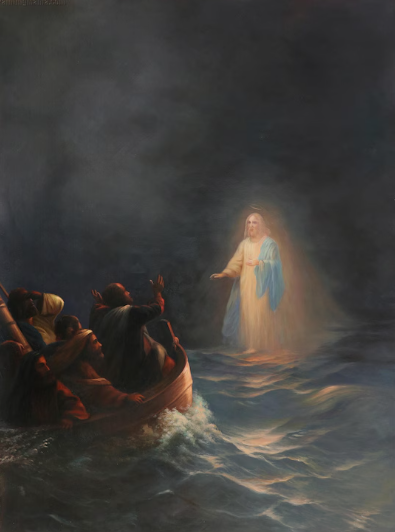
Jesus’ power over nature, including healing the sick and raising the dead, was not something the expected Messiah would do. Ironically, even though that is the case, it was exactly these things that eventually convinced his disciples he was God incarnate, God in human flesh. One of my favorite scenes in the gospels is when Jesus calms the storm on the Sea of Galilee, which is in fact a lake. We read this story in the synoptic gospels, each with a slightly different take. In Mark and Luke, Jesus tells his disciples that they need to go to the other side of the lake, so they got a boat and took off. Notice he didn’t say, let’s go to the middle of the lake and drown. As the storm comes up and the waves are breaking over the boat, that’s exactly what they thought was going to happen. And what is Jesus doing? Sleeping! Being Israel’s Messiah was exhaustive work.

Of course the disciples are terrified, and they wake up Jesus. In Mark the disciples exclaim, “Teacher, don’t you care if we drown?” That’s almost funny. In Luke and Matthew they just say, “We’re going to drown.” Uh, no we’re not! And of course Jesus says and does the unexpected, from Matthew:

26 He replied, “You of little faith, why are you so afraid?” Then he got up and rebuked the winds and the waves, and it was completely calm.

Why are we so afraid? Oh, I don’t know, we’re in the middle of the lake in the dark and there’s a furious storm, that’s why. The point Jesus is making is that since he’s with them there is no reason to be afraid. Then he does the completely unexpected: he rebukes the winds and the waves, and I imagine in a manner like they’re petulant children. Then it’s immediately calm. They are of course blown away, and Mark’s version I think captures how most people would respond.

41 They were terrified and asked each other, “Who is this? Even the wind and the waves obey him!”

Exactly! The Messiah was supposed to do great things, but not this. The implications were indeed terrifying. When Moses and Elijah and Elisha did miracles, they prayed and looked to God to do them, but not Jesus. He spoke directly to the wind and waves, and they obeyed.

Jesus Raises the Dead (Luke 7:11–17; Luke 8:40–56; John 11)
Needless to say, bringing dead people back to life was also not on the Messiah’s to-do list. The first time was a widow in the town of Nain whose only son had died. When Jesus tells the dead man to get up, and he does, the people are amazed and think Jesus is a great prophet. But when Elijah and Elisha raised the dead, they prayed to God. Jesus simply spoke to the dead person. The same thing happens with Jairus’ daughter; when he tells her to get up, she does. And the most spectacular and amazing of these events, of Jesus having power over death itself, is the raising of his friend Lazraus. The difference here, though, was that he allowed Lazarus to be dead for four days. The body was, as his sister said, already decomposing, but he tells them to roll away the stone. Then he calls out in a loud voice, “Lazarus, come forth!” And he does! A mere human Messiah doesn’t have that power.

The Sayings of Jesus
It isn’t just what Jesus did that compels us to believe he is divine, but the things he said. Not only does a normal human being not say the things he did, no Jew in the first century could have put those words in his mouth. Everything Jesus said and did to them was inconceivable, as in they could never conceive of the coming Messiah making such claims. Like his deeds, we’ll just look at a few. The first that comes to my mind comes from John 14:6. Jesus is trying to comfort his disciples as the crucifixion grows near, and tells them he is going to prepare a place for them in his Father’s house. He says they know the place where he is going, but Thomas replies that they don’t even know the way.

6 Jesus answered, “I am the way and the truth and the life. No one comes to the Father except through me. 7 If you really know me, you will know my Father as well. From now on, you do know him and have seen him.”

Who says things like this? Certainly not a normal human being. No other religious figure in history ever claimed to be the truth and the life because none of them were God! Then Jesus makes it clear to them what he’s saying. Philip says, “Lord, show us the Father and that will be enough for us.” Jesus is clearly frustrated with them, so says it straight.

9 Jesus answered: “Don’t you know me, Philip, even after I have been among you such a long time? Anyone who has seen me has seen the Father. How can you say, ‘Show us the Father’?

Jesus also claimed that he alone deserved absolute loyalty, he did, not his ideas. In Matthew 10 Jesus is preparing to send out the twelve, giving “them authority to drive out impure spirits and to heal every disease and sickness.” He is asserting the loyalty he is owed, then says this:

37 “Anyone who loves their father or mother more than me is not worthy of me; anyone who loves their son or daughter more than me is not worthy of me. 38 Whoever does not take up his cross and follow me is not worthy of me. 39 Whoever finds his life will lose it, and whoever loses his life for my sake will find it.

Who says things like this? No other religious figure in history save Jesus has come close. Then there is the cross, the most horrendous, shameful, means of torture and death ever devised by sinful man. Yet here is Jesus telling his closet followers that it is a symbol of their loyalty to him. Later in Matthew 16 he reiterates his charge to his disciples making clear what he means:

24 Then Jesus said to his disciples, “Whoever wants to be my disciple must deny himself and take up his cross and follow me. 25 For whoever wants to save his life will lose it, but whoever loses his life for my sake will find it. 

You can imagine people hearing or discussing this saying, the cross, seriously? What does that even mean? As C.S. Lewis said, Jesus was either Lord, lunatic, or liar.

Jesus also used the Sabbath as an important teaching tool in his ministry. The Jewish religious leaders were appalled Jesus would heal on the Sabbath, and in Matthew 12 we see such a scene play out, and Jesus said something they would have considered blasphemous:

8 For the Son of Man is Lord of the Sabbath.”

They knew Jesus was referring to himself because Son of Man was a common self-designation of Jesus, even though he always used it in the third-person, and all Jews knew it was a Messianic designation coming from Daniel 7. For Jesus to say he himself was the ultimate ruler, Lord, over the Sabbath was crazy, and blasphemous, which is why they sentenced him to death.

The Jewish religious leaders understood very well what Jesus was proclaiming at his trial before the Sanhedrin. In Matthew 26 we see the seriousness of what he’s saying, and how the Jewish religious leaders took it. Jesus has been arrested and is now on trial before the Sanhedrin.

The high priest said to him, “I charge you under oath by the living God: Tell us if you are the Messiah, the Son of God.”

64 “You have said so,” Jesus replied. “But I say to all of you: From now on you will see the Son of Man sitting at the right hand of the Mighty One and coming on the clouds of heaven.”

65 Then the high priest tore his clothes and said, “He has spoken blasphemy! Why do we need any more witnesses? Look, now you have heard the blasphemy. 66 What do you think?”

“He is worthy of death,” they answered.

That Jesus was condemned to death for blasphemy means everyone knew Jesus was declaring himself equal with God. Everyone who heard him say this was thinking of Daniel’s dream. In it he sees the Ancient of Days seated on his throne in what is in effect a courtroom setting of coming judgment.

13 “In my vision at night I looked, and there before me was one like a son of man, coming with the clouds of heaven. He approached the Ancient of Days and was led into his presence. 14 He was given authority, glory and sovereign power; all nations and peoples of every language worshiped him. His dominion is an everlasting dominion that will not pass away, and his kingdom is one that will never be destroyed.

I’m not sure how Jews would have processed this passage, but the Son of Man figure has all the attributes of divinity, but he is not the Ancient of Days, God himself. But however they processed it, in condemning Jesus to death for blasphemy, they are declaring him to have made himself divine, equal with God. And for that, he deserved to die.

The Historical Development of the Trinity and the Divine Jesus of the Gospels
It’s impossible for me to believe anyone could read the gospels and come away thinking they don’t present Jesus as a divine figure. Critical scholars and skeptics over the last two hundred years have done just that. They come to the text with an anti-supernatural bias and discount anything portrayed as miraculous, or discount what Jesus said and its implications. But for anyone who comes to the text without that bias, Jesus’ divinity is apparent throughout.

As most Christians know, the triune nature of God took several hundred years for the church to understand after Christ rose from the dead. Since Jesus never said, hey everybody, I’m God, it had to be inferred from his actions and words, as we saw above. The Apostles and most of the  earliest followers of “the way,” were Jews, so this was complicated and difficult to wrap their minds around. If you read Acts and the epistles, though, it’s clear they all considered Jesus God in human flesh, but it took a while through several heresies for the church to declare God Triune, which was officially done at the Council of Nicaea in 325. Movements had developed that Jesus was various things, but not as he in fact was, fully God and fully man, a mystery we call the Trinity. It was in response to these movements that the church was able to finally affirm the true nature of Jesus of Nazareth our Savior God.

How We Can Know Christianity is True?

How We Can Know Christianity is True?

That’s the question, isn’t it. Nobody wants to live or believe a lie, yet most people refuse to consider the radically exclusive claims of Jesus Christ who claimed to be the way the truth and the life, and that nobody could come to the Father except through him. Then his followers continued to preach those exclusive claims. If they are true, then most people live or believe a lie. If he is the truth, then every other religious, or secular, claim that doesn’t include the truth is a lie.

Despite the exclusive nature of his claims, ironically, every religion wants a piece of Jesus, but only a piece. They reject the Jesus of the exclusive claims, the Lamb of God who takes away the sins of the world. Having just a piece of Jesus never made sense to me. It’s a basic either/or proposition, and I knew that even as a teenager. Either Jesus is who he and his followers said he was, or it’s all a lie and I’ll throw the Bible in the trash, thank you very much. And if it’s all a lie, based on the claims it makes, it’s a horrible, terrible, nasty lie, and Jesus a devil. C.S. Lewis, as usual, said it best in Mere Christianity:

A man who was merely a man and said the sort of things Jesus said would not be a great moral teacher. He would either be a lunatic—on a level with the man who says he is a poached egg—or else he would be the Devil of Hell. You must make your choice. Either this man was, and is, the Son of God; or else a madman or something worse. You can shut Him up for a fool, you can spit at Him and kill Him as a demon, or you can fall at His feet and call Him Lord and God. But let us not come away with any patronizing nonsense about His being a great human teacher. He has not left that open to us. He did not intend to.

Yet the Bible’s critics for the last couple hundred years tell us what a great guy Jesus is. No, if it’s not true, he would be a monster

Even as an ignorant 18-year old I knew it was an either/or choice. I would only embrace Christianity for one reason: I believed it was true. If it wasn’t, I wanted nothing to do with it. As I was presented with the gospel and the claims of Christ, I contemplated whether to run away from God or fully embrace the Christian message. All during those months I had one thought always at the forefront of my mind. If this thing is real, if God actually exists, then he deserves my all. There are no halfway measures here. As I was reading my Bible, going to church, and listening to Christian radio, especially John MacArthur, I eventually came to the conclusion that it is real, the ultimate truth about reality, and I was all in. I didn’t have had any substantive apologetics reasons for believing this, I just did. That would come with my introduction to apologetics, the defense of the Christian faith, through Francis Schaeffer.

Sometime in my sophomore or junior year I happened upon his book, The God Who is There, and it was a revelation to me. He introduced me not only to a Christian worldview, how to view everything in life through Christian lenses, but to apologetics proper, and that there were substantive, logical, rational reasons to believe Christianity is true. The Christianity I was involved with then was a type of fundamentalism, and it wasn’t concerned with evidence for the veracity of Christianity. They believe it was true, but didn’t seem to see the need to prove it. I learned a lot about apologetics in the next several years and in seminary as well, but as life went on it wasn’t a focus, although I have always been of a mind to defend the faith. Then in 2009 I dove back in, and was amazed at the explosion of apologetics resources that had developed since the 80s. There are an incredible number of reasons for us to believe Christianity is true.

The Factual Foundation of Our Faith
I was reminded of all this as I was reading I John 1 recently, and why I so I appreciate the Bible and the Christian faith’s declaration that it is true. It is also the exact opposite of what the skeptic, the atheist, agnostic, and apathetic claim it is, made up stories of so much wishful thinking. On the contrary, it is historical, fact based, eye-witness, event oriented with an undeniable verisimilitude, accepting its veracity or not. Here’s how the Apostle John, one of the first three followers of Jesus, starts his first epistle:

That which was from the beginning, which we have heard, which we have seen with our eyes, which we have looked at and our hands have touched—this we proclaim concerning the Word of life. 2 The life appeared; we have seen it and testify to it, and we proclaim to you the eternal life, which was with the Father and has appeared to us. 3 We proclaim to you what we have seen and heard, so that you also may have fellowship with us. And our fellowship is with the Father and with his Son, Jesus Christ. . . . 5 This is the message we have heard from him and declare to you: God is light; in him there is no darkness at all.

We are immediately confronted with the either/or choice. John is declaring that they have seen, heard, even touched this man, Jesus the Jewish Messiah, God’s Son, which got him killed because the Jews rightly understood Jesus was making a claim to divinity. In their book that was blasphemy, but in reality it is the truth. John is either lying, or just making up that Jesus is “the Word of life.” Who makes such claims? There is no in between here; either it’s true or it’s not.

Another of the first followers of Jesus tells us the the same factual, historical nature of the claims (2 Peter 1):

16 For we did not follow cleverly devised stories when we told you about the coming of our Lord Jesus Christ in power, but we were eyewitnesses of his majesty. 17 He received honor and glory from God the Father when the voice came to him from the Majestic Glory, saying, “This is my Son, whom I love; with him I am well pleased.” 18 We ourselves heard this voice that came from heaven when we were with him on the sacred mountain.

The Greek for stories is fables, myths, tales. Peter is referring to the transfiguration in the Synoptic gospels where Jesus takes Peter, James, and John up on a mountain and he is transfigured before them. His glory as a divine being was revealed, and Moses and Elijah appeared talking with Jesus, representing the law and the prophets. Again, the choice. Either Peter is lying, or this really happened. He was willing to endure a terrible death at the hand of the Romans because it really did happened, and it was not made up. Nobody lies for what they know to be a lie.

Then all we need to do is read the gospels and we’ll see exactly what John and Peter are talking about; stories about real people in real life doing real things. Luke introducing his gospels confirms what Christianity is proclaiming:

Many have undertaken to draw up an account of the things that have been fulfilled among us, 2 just as they were handed down to us by those who from the first were eyewitnesses and servants of the word. 3 With this in mind, since I myself have carefully investigated everything from the beginning, I too decided to write an orderly account for you, most excellent Theophilus,  4 so that you may know the certainty of the things you have been taught.

Without any anti-supernatural bias, the stories read real. I used the word verisimilitude above, something having the appearance of being real and true. The gospels have it in spades; they don’t read like myths or fairy tales, at all. C.S. Lewis was an academic steeped in medieval 1literature, and he had this to say about the gospels: “I have been reading poems, romances, vision‑literature, legends, myths all my life. I know what they are like. I know that not one of them is like this.” The Apostles were always concerned with asserting the factual nature of the message, that it was all the truth, and that we can rely on it, and trust in it.

Evidence and the Christian Faith: Consideration of the Alternative
There’s no space to get into the plethora of historical, archaeological, textual, philosophical, and other evidence; it’s massive and all easily available in books and online. For me, though, whenever I doubt whether this whole Christian thing can be true, I look outside. I see what we call nature, and thank God for his revelation in creation. Then I turn and look at my Bible, and thank God for his revelation in Scripture, which is even more amazing to me than in creation. And then finally thank him for what is therein revealed to us, his revelation in Christ. That is a revelatory trifecta making it impossible for me to believe it’s not true. The evidence for God’s existence in each is overwhelming and to me undeniable.

The way my mind grapples with this as I wrestle with doubts, and I’ll admit it’s not much of a contest, is what I’ve come to call the consideration of the alternative. If something isn’t true, some alternative must be, and from basic logic we know two contradictory things can’t be true at the same time in the same way. There is no true for you but not for me in the real world.  Only one view of reality, one religion, one set of ultimate answers to the Big Questions is true—who are we, why are we here, what does it all mean, why is their suffering, evil, and death, and what is our destiny? If I’m going to believe in something, commit my life to something, it needs to give realistic, plausible answers to these questions that make sense of the reality I inhabit and experience every day. Here’s a brief look at the trifecta of revelation from my perspective.

First creation. In order for me to believe Christianity is not true, I would have to believe some alternative explanation for the material world is true. I would have to believe, be required to believe, the universe and everything in it is a cosmic accident, a product of chance, and everything came from nothing for no reason at all. That would be a blind leap of faith entirely too far. If it’s not all a product of chance, I am compelled to believe the God revealed to us in the Bible is what it says he is, the all-powerful, almighty Creator God who in the beginning made the heavens and the earth by the power of his word, “And God said let there be . . . . “ I look at the preposterous complexity, fine tuning, astonishing engineering, and breathtaking creativity of creation and I know God is, doubt vanquished.

Then looking at my Bible, to me it’s as amazing as creation, even if not as obvious at first blush. We’ve been told for over 300 years that the Bible is a product of human beings. People, not God, are the authors, and since we read of supernatural works of God in it, we are compelled to believe what is not verifiable straight forward history, is a product of human imagination, so much fiction. I don’t buy it. In my study of apologetics, I came across the idea that stories in the Bible could not have been made up, inventions of people. The more I read the Bible, the more I realized how true that is, and the result was my book, Uninvented: How the Bible Could Not be Made Up, and the Evidence that Proves It. Now I realize the burden of proof is on those to believe and insist that it is made up. As I write in the book and am convinced, that is impossible.

Because the Bible is God’s inspired verbal communication to his creatures, theologically we get the phrase, verbal plenary inspiration, or that every word is literally breathed out by God (2 Tim. 3:16). That means the Bible takes epistemic priority. The foundation for whatever we know or can know must first come from the Bible. There is knowledge to be had in God’s general revelation or creation (i.e., nature and other human beings), but we must submit that knowledge to what God has revealed in Scripture. In there we learn of the apex of his revelation, the Lord Jesus Christ. It is only in him that all other revelation, and all of reality makes any sense. C.S. Lewis, as usual, said it best:

I believe in Christianity as I believe that the sun has risen: not only because I see it, but because by it I see everything else.

In apologetics terms this is called explanatory power. No other view of reality can so compellingly explain all of reality. With this revelatory trifecta, it becomes literally impossible for me to not believe Christianity is The Truth.

Transformation as Christian Apologetic
What ties up all the evidence and revelation in a beautiful compelling big red bow is the personal and societal transformation always coming in the wake of the influence of Christianity. Where Jesus shows up, transformation takes place. This only happens if Christianity is The Truth. Mere psychology and ideas do not have this power to transform the crooked human heart in such a way as would make a butterfly jealous.

I started to develop this conviction a number of years ago when I started coming across Christians sharing their testimonies of personal transformation online. By this point I’ve listened to hundreds of them, and the verse that always comes to mind is Matthew 1:21 when Jesus is given his name by the angel to Joseph in a dream. He tells him, “She will give birth to a son, and you are to give him the name Jesus, because he will save his people from their sins.” Jesus is the Greek form of Joshua, which means the Lord saves. His death on the cross, the payment for the guilt and penalty of our sins, accomplished our transformation before we were ever born! Jesus didn’t come to try to save us, but actually saved us. In Ezekiel the transformation is metaphorically compared to turning stone to flesh (Ez. 36)

26 I will give you a new heart and put a new spirit in you; I will remove from you your heart of stone and give you a heart of flesh. 27 And I will put my Spirit in you and move you to follow my decrees and be careful to keep my laws.

The contrast could not be any greater, dead, cold, inert stone, to an alive, beating, heart of flesh. This is confirmed in Jeremiah 31 when we’re told about the New Covenant when he will forgive our wickedness and remember our sins no more. He says in this process (v. 33):

“I will put my law in their minds
and write it on their hearts.
I will be their God,
and they will be my people.

I see this miracle of transformation in every story, each one as unique as their fingerprint. God is infinitely creative in how he saves his people from their sins. Again, to me this is impossible to explain away as mere ideas. Something real is happening, and it is the work of God in the souls of his people. This then explains the power of Christianity to shape civilizations as it has done in the last 2,000 years, turning the ancient pagan world into the modern world of innumerable blessing because of the gospel being embraced throughout the world.

Man Shall Not Live by Bread Alone

Man Shall Not Live by Bread Alone

All Christians are familiar with these famous words from Jesus in Matthew 4 as he rejects the temptations of the devil. Jesus had been fasting for 40 days and nights, and with understatement Matthew says, “he was hungry.” So Satan, called “the tempter,” knowing the power Jesus has tells him since he’s so hungry, why doesn’t he just tell the stones to become bread, which he should easily be able to do if he’s the Son of God. Jesus is having none of this.

4 Jesus answered, “It is written: ‘Man shall not live on bread alone, but on every word that comes from the mouth of God.’”

Jesus is quoting from Deuteronomy 8 where Moses is telling the Israelites they need to “follow every command” Moses is giving them specifically so they “may live and increase and may enter and possess the land the Lord promised on oath” to their ancestors. He tells them the Lord was testing them in the wilderness to humble them, causing them to hunger and then feeding them with manna, a food nobody had ever seen before. He did that specifically to teach them “that man does not live on bread alone but on every word that comes from the mouth of the Lord.”

Notice the connection between living on “every word that comes from the mouth of God” to being blessed by God. God’s will for his people is that they “may live and increase” and enter his land of promise. We might metaphorically see this land as God’s kingdom rule Jesus brought to earth and our entering into it as God through his Holy Spirit saves us from our sins. But the key phrase in Moses’ exhortation is “possess the land.” When we possess something we own it, we live it, we experience and enjoy it. The only way to fully live and increase and possess the blessings of the Christian life is living on God’s word. Every word of God specifically to and for us has been inscripturated in what we call our Bibles, which in our day makes it very easy to live on.

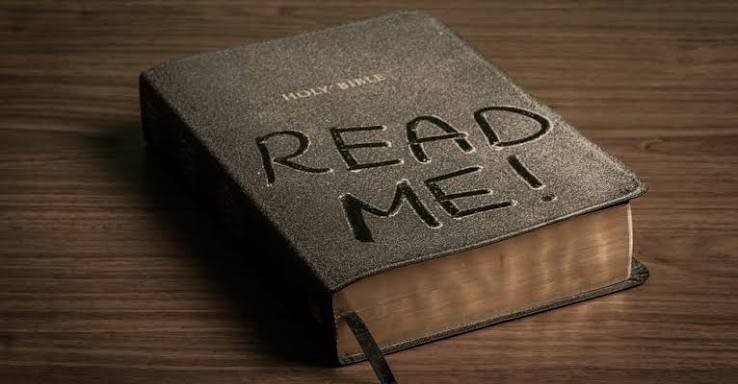
As my kids were growing up, and I still do it as they’re adults, I would push this metaphor to help them understand why daily spending time in God’s word is so important. It is no coincidence that Moses and Jesus, God himself, compares his word, the communication that comes from his mouth, as food. Try living without food. It’s not easy. If you do it for too long, you die. Which is why we think about and obsess over food all the time. It’s a requirement for our continuing to exist. Why don’t we do that with God’s word, our Bibles? Simply, we don’t believe that. I want to try to convey here why we should.

The Transformational Power in The Word of God
We often refer to our Bibles as “the word of God,” the phrase itself coming from that word. The whole is a representation of its authority in our lives and over the world, visible and invisible, while each word is its living, practical power in our lives to overcome the world, the flesh, and the devil. Many of us are familiar with this passage in Hebrews 4:

12 For the word of God is living and active. Sharper than any double-edged sword, it penetrates even to dividing soul and spirit, joints and marrow; it judges the thoughts and attitudes of the heart.

If we eat God’s word, daily live on his every word, it’s going to reveal our deepest thoughts and attitudes, and bring them into conformity to God’s way of doing life, so we may live long and increase and possess the land. In other words, be blessed. An Old Testament passage that captures this without reference to the word is in Psalm 139:

23 Search me, God, and know my heart;
test me and know my anxious thoughts.
24 See if there is any offensive way in me,
and lead me in the way everlasting.

I would suggest that praying this without daily meditating upon God’s word will never allow us to truly live in the way Jesus is using the word, specifically quoting Moses and referring back to live long and increase and possess the land. If we truly want our lives blessed, in good times and bad, in joy and suffering, then it can only come in two-way communication with our living and Savior God, Scripture and prayer.

Jesus is also revealing something to us in his encounter with Satan about the spiritual reality Paul writes about in Ephesian 6:

12 For our struggle is not against flesh and blood, but against the rulers, against the authorities, against the powers of this dark world and against the spiritual forces of evil in the heavenly realms.

We’re not talking about mere psychology here, about learning good ideas and putting them into practice. We’re involved in a mystery, a spiritual reality, one we can’t comprehend, but in which we are involved nonetheless. The dynamic of God’s word and the power of the Holy Spirit within us means as Paul lays out in that passage, we can put on the full armor of God and, as he says, “be strong in the Lord and in his mighty power.” How we change, become different people, is not because of our will or choices or determination or discipline, but because of God. The power of transformation is in his hand, but all of those things are required. It’s fascinating to me as I look back in my life that I finally learned this liberating truth that living the Christian life is ultimately not up to me, but is a supernatural work of God in my soul.

Learning How To Live on Every Word That Comes from the Mouth of God
Back when I was in my 40s I went through a bit of a dry spiritual time, for a lack of a better way to put it. We still went to church every Sunday and I still brought my children up in the nurture and admonition of the Lord. I continued to defend the Christian faith every chance I got, including to our children, but had an encounter in 2009 that made me realize I wasn’t very good at it. I look back at this time as the beginning of my realization that I had been trying to live on bread alone, but I had no idea that’s what I was doing. I don’t remember how much or often I was reading my Bible, but I know it wasn’t daily. I am sure I was severely spiritually malnourished. I call it my plausibility insanity phase where Christianity, even though I believed it true like I had most of my life, just didn’t seem as real to me as it once did.

The change to becoming the full on Jesus Freak I am today started when I got a new car in 2009 that had an auxiliary jack. I decided I was going to start studying and learning apologetics again so I would get better at defending the faith. I bought a little MP3 player and started downloading recordings from talks and podcasts, which were just starting to grow at the time, and listened to those in the car or on EarPods when I was taking my daily walk. Somewhere around this time we also started attending a church called Christ Church of Oak Brook (we lived outside of Chicago), and in early 2012 we decided to become members. As a requirement we had to write a short overview of our testimony, and when I read that today I don’t recognize that person. I’ll quote from that letter:

When I first became a Christian my faith was so dynamic and fresh and exciting. After 10 years or so went by it seemed like any relationship goes after a period of time, not as intimate and real. I continued to go to church as our family grew, read the Bible and prayed here and there, but it was nothing like those early days. I suppose every relationship can’t always be novel and exciting, where it moves into a type of maturity that requires love that takes a decision and commitment. God doesn’t always seam “real,” but I can’t help but believe in a living God who is actually there. Creation compels me to continue to believe; I can understand why some people find believing in God and the veracity of the Christian faith hard to accept, but both the evidence for Christianity and the creator God always amaze me, and brings me real joy.

But it would be nice if I could capture more of those early days when God seemed so real, when my faith fired my imagination and drove me to seek God with all my heart.

I did capture those early days and I’m going to share my “secret” with you right here, right now.

Reading the Bible and Praying Every Day Changes Everything
At some point in 2012 I guess I’d gotten tired of this spiritual malaise, the plausibility insanity, and one day made a commitment to God that no matter how I felt, every morning I was going to read the Bible and get on my knees and pray. That, as I look back on it, changed everything; I’ve been doing it every day ever since, if not always praying on my knees. When the writer to the Hebrews says God’s word is “living and active,” he means it! I know it’s just ink on a page (or pixels on a screen), but there is power in them through the inspiration of the Holy Spirit in our hearts. It’s a mystery how we “live on every word that comes from the mouth of God,” but that is the only way we can truly live. The Apostle James tells us how we can make this powerful dynamic a reality in our lives (James 1):

25 But whoever looks intently into the perfect law that gives freedom, and continues in it—not forgetting what he has heard, but doing it—he will be blessed in what he does.

First, we are to look intently. It means, to look “in a fully engaged or determined way that shows strength of purpose.” This isn’t mere browsing like you’re looking over the news of the day; it’s serious business. Next, we are to “continue in it,” meaning do it consistently and persistently. Since we don’t eat food every once in a while, we should not eat God’s word only once in a while. That’s the whole point of the metaphor. And lastly, we are to do what it says. If we do this, James is telling us, we’ll know a freedom from the bondage to sin and meaninglessness, and that God will favor us, we’ll be blessed. That means as difficult and challenging as life can be we can have a life full of meaning, hope, and purpose. Life will actually make sense, instead of being a meaningless cosmic joke because all we are is atoms in motion, so much lucky dirt.

At church during the services we’ve been reading a couple questions from the Westminster Shorter Catechism, and recently we read question 90 which builds on the exhortations of James:

90. How is the Word to be read and heard, that it may become effectual to salvation?A. That the Word may become effectual to salvation, we must attend thereunto with diligence, preparation, and prayer; receive it with faith and love, lay it up in our hearts, and practice it in our lives.

Have you ever  read a story or seen a movie about a lost or hidden treasure that someone will move heaven and earth to find? That treasure is in our Bibles, and for those “who receive it with faith and love,” it will pay temporal and eternal dividends. Going back to the exhortations of Moses to the people of Isarael, if we do what James and the Westminster Divines say, treat our Bibles and God’s word as the precious, life giving resource they are, we will be able to truly “live and increase and enter and possess the land the Lord promised.” This land, this abundant life is what Jesus died to give us, the eternal, forever, spiritual, God-life, on this earth, in this fallen world, even in our fallen bodies living among fallen people.