The Cleansing of the Temple and God’s Coming Judgment on Israel

The Cleansing of the Temple and God’s Coming Judgment on Israel

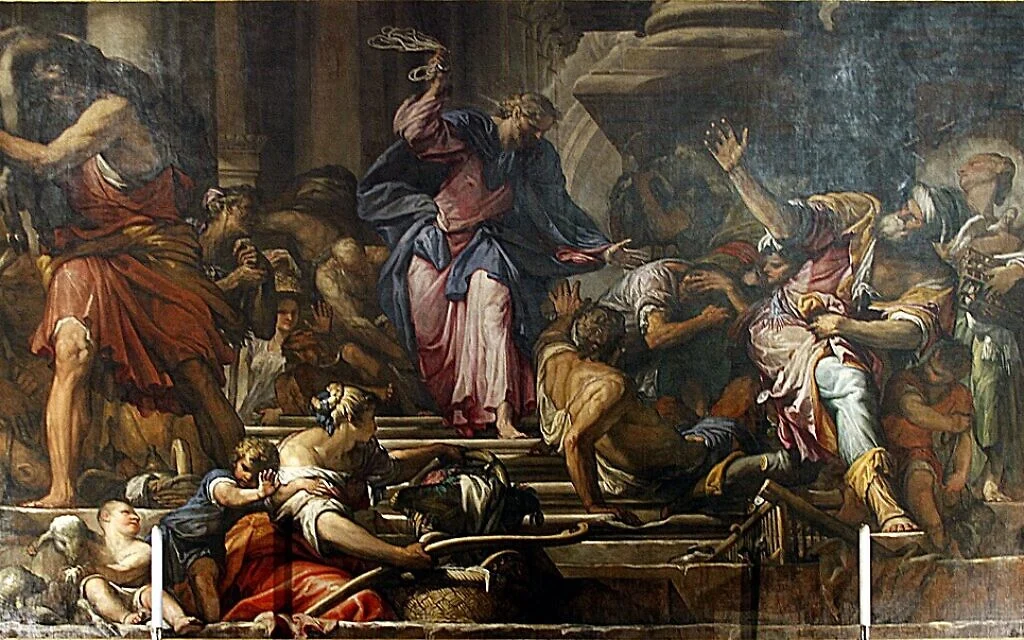
I’m currently writing a book about AD 70, which if you’re not familiar with that date, is why I’m writing the book. Every Christian should be taught the theological and redemptive-historical significance of the destruction of Jerusalem, which Jesus predicted in the Olivet Discourse (Matthew 24, Mark 13, Luke 21). I’m working on a chapter which I’ve titled, “Jesus’ War with the Jewish Religious Professionals”; they didn’t get along very well. One story I’m looking at in this contentious relationship is Jesus’ cleansing of the temple, its theological and redemptive-historical significance.

I discovered an interesting connection of the temple cleansing with the Old Testament from a sermon by Doug Wilson about Leviticus 14 where the Lord tells Moses and Aaron how they are to cleanse a house from mold after they enter the Promised Land. It’s fascinating how the Lord prefaces his instructions: “and I put a spreading mold in a house in that land.” Mold just doesn’t show up “naturally,” but God is sovereign even over mold! Sin and sinful human beings are under God’s sovereign control as well, not in any way we could understand or that mitigates personal responsibility, but nothing or no one happens outside of his dominion, that he in some way causes or allows; nothing surprises him.

We read of three significant redemptive-historical events in Matthew 21, Mark 11, and Luke 19: the Triumphal Entry, the cleansing of the temple, and Jesus cursing a fig tree. Jesus was teaching in the temple courts and the chief priests and elders confront him, ““By what authority are you doing these things?” they ask. “And who gave you this authority?” Jesus, as he often did, asked them a question, and he would only answer them if they would answer him:

 25 The baptism of John, from where did it come? From heaven or from man?” 

They don’t answer because they feared the people who consider John a prophet, so Jesus won’t answer them; but in fact he does in two parables targeting the religious leaders. The first is the parable of the two sons, only one who in the end does his father’s will. The other is the parable of the tenants. Jesus is declaring judgment upon the Jewish religious leaders, and by extension Jerusalem itself and the entire Jewish religious context, the Old Covenant, which will be carried out in AD 70.

It’s important to place those parables and the judgment Jesus is declaring through them in context. We are getting to the culmination of Jesus’ three years of ministry, and the case he is bringing against the Jewish religious leaders. Just prior, Jesus had entered Jerusalem for his final Passover week in the Triumphal Entry where the people were proclaiming him Messiah. From a prophetic perspective, Jesus is clearly proclaiming himself king of the Jews, and Matthew to emphasize it quotes Zecheriah 9:9 predicting Israel’s king will be coming riding on a donkey. Then as king he cleanses the temple. In The Life and Times of Jesus the Messiah, the great nineteenth century Jewish Christian convert, historian Alfred Edersheim, compares the first temple cleansing at the beginning of Jesus’ ministry (John 2) with the second one, and calls the latter a “final judicial sentence.” Some scholars think there is only one temple cleansing, and John has a different reason for putting it early in Jesus’ ministry, but I’m inclined to think there are two. John’s gospel was written later, and maybe he sees no need to address something that was already so well known among Christians.

The other reason I think it’s likely two is because a plausible connection can be made between the temple cleansing and the cleansing of a house in Leviticus 14. There was a very specific process If someone sees something like mold in his house, he must go to the priest who will inspect the house and it must be closed for seven days. If the mold spreads the stones must be taken out and discarded, and clean stones put in their place. Then we read:

43 “If the defiling mold reappears in the house after the stones have been torn out and the house scraped and plastered, 44 the priest is to go and examine it and, if the mold has spread in the house, it is a persistent defiling mold; the house is unclean. 45 It must be torn down—its stones, timbers and all the plaster—and taken out of the town to an unclean place.

In the initial cleansing in John 2 Jesus cleaned out the house, but when he came back three years later, the mold had returned so the house is unclean, and now it must be torn down, as indeed it will be, not one stone left on another. Here’s what Jesus says about the temple at the beginning of Matthew 24:

Jesus left the temple and was walking away when his disciples came up to him to call his attention to its buildings. “Do you see all these things?” he asked. “Truly I tell you, not one stone here will be left on another; every one will be thrown down.”

Something unclean had defiled both the house and the temple, and since it is unable to be cleansed, the house, and the temple, must be torn down.

The Perversion of The Temple
The temple was the center of Jewish religious life. From the beginning of their inception as a people, the Hebrews, eventually called Jews during the Babylonian exile, were instructed by God to build a tabernacle where God’s presence would dwell with them. All the god’s of the ancient pagan peoples were visible in idols made by human hands. Nobody had ever heard of an invisible God, a God nobody could see, until the Hebrews were rescued by him from their slavery in Egypt. In Exodus 25-30 they were given very detailed instructions on how to build a portable tabernacle where God would dwell with his people; it would represent the visible presence of the invisible God on earth. Prior he had given them his law. He was building a unique people in the world, a holy people set apart for service to and worship of him.

Initially given the Israelites would spend 40 years wandering in the wilderness, the tabernacle would be torn down and reassembled each time to start the journey again and stopped. Once they crossed the Jordan and finally made it into the promised land it settled in Gilgal for a time near Jericho, and then to Shiloh for three hundred years during the time of the Judges, and after several other moves eventually during the time of David made it to Jerusalem. David wanted to build a temple honoring God so he would not dwell in what was basically a tent, but it was not to be. He was given instructions by God which he passed on to his son Solomon who built what we now know as the first temple. It was destroyed some four hundred years later in 586 BC by the Babylonians, and then when the newly called Jews (people from Judea) returned to Jerusalem they started to rebuild it, what came to be known as the second temple. That was finished later that century, and stood as is until Herod in about 20 BC greatly expanded and renovated it. Herod’s grand temple was one of the wonders of the world and the one standing when Jesus lived.

I provide this very brief history lesson on the temple to give us some sense of how important it was to the identity of the Jewish people as Jews. The tabernacle, where God dwelled among his people, once housed in a tent but now in this magnificent building, defined everything about them. Multitudes of Jewish people would stream to Jerusalem several times a year during the Jewish festivals to worship there, and it was inconceivable that it would not always be a presence among them, as indestructible as they were as a people. This was why the disciples of Jesus were so shocked when he told them it would be utterly destroyed, and why as we’ll see his predication lived on in the New Testament church

By the time of Jesus’ ministry, the holiness of the temple had been compromised, or how else could it be turned into a “den of thieves.” Edersheim says the buying and selling taking up much of the temple precincts during Passover was deeply unpopular with the people. He tells us the reason why:

The whole of this traffic—money-changing, selling of doves, and market for sheep and oxen—was in itself, and from its attendant circumstances, a terrible desecration; it was also liable to gross abuses.

The people were stuck and easily ripped off. There was a lot of business going on that week, and likely a lot of people being taken advantage of.

The temple complex is huge, covering about thirty acres divided into several different courts, or sections, with each court getting more restrictive about who could enter it. The largest part opened to everyone was called “the Court of the Gentiles,” and where the vendors set up shop. This is why Jesus in rebuking the Jewish leaders who have allowed this to happen quotes two Old Testament passages speaking specifically to his “judicial sentence” against the Jews (from Is. 56 and Jer. 7):

17 And as he taught them, he said, “Is it not written: ‘My house will be called a house of prayer for all nations’? But you have made it ‘a den of robbers.’”

Nations in Greek is ethnos, peoples, Gentiles, so non-Jews. They’ve basically shut out the Gentiles from coming close to God in the most holy season on the Jewish calendar, and Jesus is furious. In John as the disciples witness the first cleansing, they remembered what David said in Psalm 69, that “Zeal for your house will consume me.” All the way back to Abram in Genesis 12 the entire purpose of their religion was to bless all peoples on earth. So in addition to Jews being taken advantage of, the traders are keeping Gentiles from coming near to God on the holiest season of the Jewish year.

After he has declared his message to the masses, he’s with his disciples and gives a more symbolic picture of what’s to come in the withering of the fig tree. It was rich with leaves, but without fruit. Edersheim comments:

And the judgment, symbolically spoken in the Parable, must be symbolically executed in this leafy fig-tree, barren when searched for fruit by the Master.

Luke who doesn’t address this event, tells us that even before Jesus got to the city, he declared judgment and wept (Luke 19), predicting exactly what would happen in 40 years: 

41 As he approached Jerusalem and saw the city, he wept over it 42 and said, “If you, even you, had only known on this day what would bring you peace—but now it is hidden from your eyes. 43 The days will come upon you when your enemies will build an embankment against you and encircle you and hem you in on every side. 44 They will dash you to the ground, you and the children within your walls. They will not leave one stone on another, because you did not recognize the time of God’s coming to you.”

Specifically, God coming to the Jewish nation in the person of Jesus of Nazareth.

God’s Judgment is Coming Upon the Jews

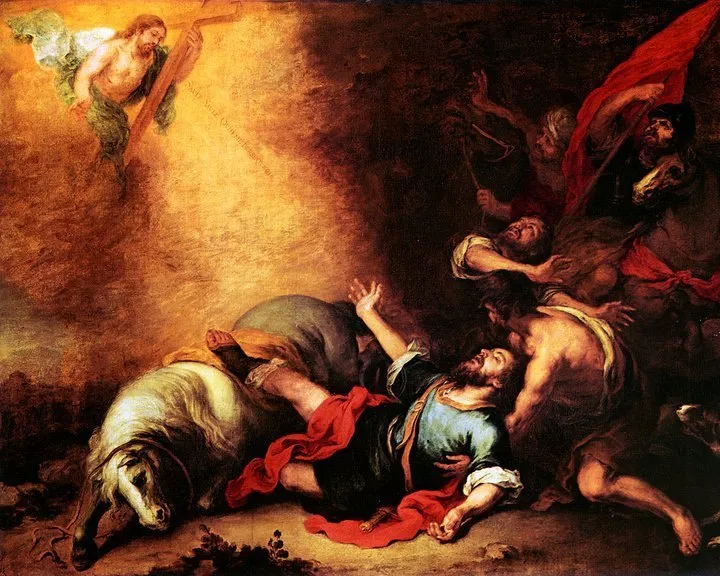
The Christian church was born into a temple dominated Jewish culture, and initially built in that environment as we see in Acts. It took the stoning of Stephen to force their vision beyond Jerusalem. As Luke tells us, “On that day a great persecution broke out against the church in Jerusalem, and all except the apostles were scattered throughout Judea and Samaria.” Many Jewish Christians had a difficult time seeing Christianity beyond their Jewish faith, as we also see in Acts. It would take something dramatic to finally break Christianity from Judaism, and Jesus spent his entire ministry warning the Jews, especially the Jewish religious leaders, that judgment was coming upon them. Nobody, until it happened, could fathom it would take the destruction of the temple to accomplish this. The Old Covenant and the old dispensation of relating to God would have to be ripped from them brick by literal brick. We read in Matthew 24 how the disciples were marveling at the grandeur of the temple, and Jesus burst their very substantial bubble:

“Do you see all these things?” he asked. “Truly I tell you, not one stone here will be left on another; every one will be thrown down.”

Then he gives a breakdown of how this will come to pass. You have to imagine they were incredulous. Surely, they must have thought, not the temple. But they all knew the first temple had once been torn down by the Babylonians 600 years previously, so it wasn’t a concept completely foreign to them, but still, it had to be shocking.

When we read Matthew 24 and the other passages in Mark and Luke about it, it’s clear Christians took Jesus’ warning seriously. I came across something making this point I hadn’t noticed before. I’ve read it many times over the years, but being like most Christians, AD 70 didn’t hold much theological significance for me as it now does. When Stephen is seized and brought before the Sanhedrin, he is accused of something indicating Jesus’ teaching about the temples’ destruction is something the early church took very seriously.

12 And they stirred up the people and the elders and the scribes, and they came upon him and seized him and brought him before the council, 13 and they set up false witnesses who said, “This man never ceases to speak words against this holy place and the law, 14 for we have heard him say that this Jesus of Nazareth will destroy this place and will change the customs that Moses delivered to us.” 

They meant the temple. So by that time in the earliest days of the church it was common knowledge among the followers of Jesus. His predicting the destruction of the temple was so shocking, that people not only couldn’t forget it, but told other people about it. It would take many years after it happened for Christians to understand the full redemptive-historical significance of the fall of the temple. In Matthew 26 as he stands before the Sanhedrin, Jesus confirms what he’s been warning the Jews of for three years—he will be returning in judgment. The high priest asks Jesus if he is the Messiah, the Son of God, and he answers:

64 “You have said so,” Jesus replied. “But I say to all of you: From now on you will see the Son of Man sitting at the right hand of the Mighty One and coming on the clouds of heaven.”

To his interlocutor, Jesus had spoken blasphemy, and he would be right if he wasn’t in fact the Messiah, but he is. They all knew Jesus didn’t mean literal clouds because from their Old Testament framework, and Jesus’s, clouds were symbolic of judgment. Many Christians think Jesus is predicting his second coming, but he is telling the men listening to him that they will see this. And in forty years they will.

God is Doing A Glorious Work in You, and in the World!

God is Doing A Glorious Work in You, and in the World!

Some weeks back our pastor preached on these verses in Colossians 2:

Therefore, as you received Christ Jesus the Lord, so walk in him, rooted and built up in him and established in the faith, just as you were taught, abounding in thanksgiving.

The sermon was tremendous, especially because it was framed from a Reformed perspective that puts our hope in this walk with Jesus firmly in God’s sovereign power, not our own striving. As I wrote recently, the Christian life is one of pursuit; we must ask, seek, and knock, but it is God himself who roots and builds us up in Christ, who establishes us in the faith. That is a supernatural work of God beyond our abilities, and as the pastor rightly said, “Christ is building something glorious in you!” He is the builder of this new temple by the power of his Holy Spirit. But for me, something in the sermon was lacking, which brings me to a consistent bogey man of mine: Pietism.

As I always have to remind people, I’m not talking about piety, but about a movement started in Lutheran Germany in the 17th century that developed as a response to a cold and overly intellectualized Christian faith. The intentions were good, but in teaching a more passionate faith it turned it into a completely personalized one which ended up turning Christianity into an irrelevant cultural force in the West. What was once a Christian Western civilization out of which flowed innumerable blessings, became a secular West where those blessings disappeared. So, given my perspective when the pastor said Christ is building something glorious in us, in my mind I shouted, and in the world! Unfortunately, for the Pietistic mindset Christian influence in the world, in culture and society in general, is if not irrelevant, because every Christian would love a better more peaceful God-honoring world, but beside the point. And for many, working for Christian cultural influence is a distraction from the only thing that counts, our relationship with God through Christ.

Pietism makes the focus of our faith almost totally on the individual and our personal salvation, justification and sanctification. It completely enervates Christianity’s cultural influence because lay people have no vision whatsoever of cultural transformation, that their faith is supposed to transform the world, thy kingdom come . . . Enervate is the perfect word for the Pietistic effect on the church because it means to deprive of force or strength; to destroy the vigor of; to weaken. Over the last several hundred years the church and Christianity have become completely culturally irrelevant in the West and there has been much suffering because of it. With Christianity comes blessing, as God promised Abram 4,000 years ago, that through his offspring, i.e., Christ, all peoples on earth would be blessed. When Christianity’s influence wanes, suffering follows.

Russian dissident, novelist, and historian, Aleksandr Solzhenitsyn knew first-hand the consequences of the waning of Christian cultural influence in his country. In an address accepting the Templeton Prize for Progress in Religion in 1983, he identified what happens when God disappears from a society and culture. Speaking to the death and destruction wrought by communism in Russia in the twentieth century “that swallowed up some 60 million of our people,” he said he “could not put it more accurately than to repeat: ‘Men have forgotten God; that’s why all this happened.’” He used phrases like, “deprived of its divine dimensions . . .” and “lacking all divine dimensions . . .” and “our Godless age . . .” and “The entire twentieth century is being sucked into the vortex of atheism and self-destruction.”

A better description of secularism, and its implications, and lack of Christian cultural influence, could not be found: “Men have forgotten God . . .” Speaking of Russian history he said:

Russia felt the first whiff of secularism; its subtle poisons permeated the educated classes in the course of the nineteenth century and opened the path to Marxism. By the time of the Revolution, faith had virtually disappeared in Russian educated circles; and amongst the uneducated, its health was threatened.

Later in the talk, he spoke of “the destructive spirit of secularism.” Destructive indeed.

Which brings me to a phrase that came to my mind as I was leaving church that day.

Where There is No Vision, The People Perish
If you’ve been a Christian any length of time this verse will sound familiar. It comes from Proverbs 29:18. The entire chapter is filled with warnings and reminders of two directions a person and a people can go, one filled with peace and righteousness and justice and blessing, or the opposite. What I quoted is from the King James Version, and is the first half of the verse. Here is the entire verse, and also in several different versions.

KJV
Where there is no vision, the people perish: but he that keepeth the law, happy is he.

NASB
Where there is no vision, the people are unrestrained,
But happy is one who keeps the Law.

ESV
Where there is no prophetic vision the people cast off restraint,
but blessed is he who keeps the law.

NIV
Where there is no revelation, people cast off restraint;
but blessed is the one who heeds wisdom’s instruction.

These four English translations capture well the nuance of the meaning in Hebrew. The word vision comes from a word meaning a mental sight, seeing with the mind. One of the frustrating things I learned very early in my Christian life is how most of the Evangelical church sees the Christian faith solely in personal terms. What counts, what is important, is that the gospel is all about my personal relationship with Jesus and my personal holiness. Of course it is very much about that, but it’s not only about that. The point of the gospel, of Jesus coming to earth, God becoming man to die for the sins of the world, wasn’t just to transform individual people, but to transform the entire world. Yes, I know, that will only happen fully at the Second Coming and Christ returning for the consummation of all things, the final enemy to be defeated being death. And prior to that, Paul tells us what Christ will be doing, is doing since he ascended to the right hand of God (I Cor. 15):

25 For he must reign until he has put all his enemies under his feet.

Paul is confirming what the Lord revealed through the Psalmist in Psalm 110:

The Lord says to my lord:

“Sit at my right hand
until I make your enemies
a footstool for your feet.”

Peter further confirms this started happening at Christ’s first coming by quoting this verse in the very first Christian sermon in history in Acts 2. Christ isn’t just reigning in our hearts or in the church, but in the world! The world the Father gave him all authority over, in heaven and on earth. Victory is the vision, not fruitless battle against evil, and the justification for victory is God’s covenant promises to his people.

I am convinced of the centrality of the covenant in God’s dealing with humanity. The Triune God made a promise to himself in eternity that when the fall happened, he himself would redeem his creation, and turn it from the Devil’s playground to the means of his blessing the nations, paradise restored. Because I see the Christian faith through this lens, I always go back to the promises God made upon which we are to stand, to live and proclaim. Our confidence isn’t in us or our abilities, but in God who blesses those to bear fruit for his glory and our good.

These verses should constantly come to our mind as we “contend for the faith once for all delivered to the saints” (Jude 3).

Genesis 3
God to Satan:
15 And I will put enmity
between you and the woman,
and between your offspring and hers;
he will crush your head,
and you will strike his heel.”

Genesis 12
God to Abram:
I will bless those who bless you,
and whoever curses you I will curse;
and all peoples on earth
will be blessed through you.”

Genesis 15
God to Abram:
And he brought him outside and said, “Look toward heaven, and number the stars, if you are able to number them.” Then he said to him, “So shall your offspring be.”

Genesis 18
17 Then the Lord said, “Shall I hide from Abraham what I am about to do? 18 Abraham will surely become a great and powerful nation, and all nations on earth will be blessed through him.

Genesis 22
The Lord to Abraham after he sacrificed Isaac:
17 I will surely bless you and make your descendants as numerous as the stars in the sky and as the sand on the seashore. Your descendants will take possession of the cities of their enemies, 18 and through your offspring all nations on earth will be blessed, because you have obeyed me.”

Genesis 26
God to Isaac:
4 I will make your descendants as numerous as the stars in the sky and will give them all these lands, and through your offspring all nations on earth will be blessed.

The word bless or it’s variations is used some 65 times in the first book of Scripture, the foundational work upon which our faith is based. And as these verses indicate, it’s not merely blessing to God’s people, to the church in New Testament terms, but to nations. Never was our faith meant to be solely for us. Even Jesus in giving his disciples a charge before he ascended to the right hand of God indicated what he had accomplished was not merely for individuals or the church, but for the nations. We’re all familiar with it:

18 Then Jesus came to them and said, “All authority in heaven and on earth has been given to me. 19 Therefore go and make disciples of all nations, baptizing them in the name of the Father and of the Son and of the Holy Spirit, 20 and teaching them to obey everything I have commanded you. And surely I am with you always, to the very end of the age.”

And no, this does not mean to just disciple individuals within nations, but to baptize the nations themselves, to see Christianity permeate every nook and cranny of the society and culture.

A Vision of Victory
We can look at this in any variety of ways. If we want our nation to truly be blessed, then evil must be defeated. And I will qualify this yet again, all evil will not be defeated on this side of the Second Coming, but Christ is even now putting all his enemies under his feet. As Christians, we don’t look at the suffering, dysfunction, and sin in our world as if it’s inevitable, and there is nothing we can do about it. That’s called defeatism. God’s covenant promise is blessing, not the proliferation of evil and it’s horrible effects. Over the last several hundred years because of the rise of Pietism, Christianity has become insular and culturally irrelevant, and our societies have suffered for it. The sexual revolution of the 1960s happened because while Christians were primarily attending to their souls, secularism became the dominant worldview of the West, and our societies went to the proverbial hell in a handbasket. Proverbs 29:18 tells us why.

Let me ask you a question. Do Christians want societies with crime and poverty and broken families, suffering, misery, and premature death? What is the answer to this, so societies are not disarray? The gospel! Christ, God’s law, a Christian worldview, Christians loving and serving others, men leading their families and building things, all men and women fighting for goodness, beauty, and truth, because where they are, so Christ is whether the people in every instance acknowledge him as their author. We must have a vision of all these blessings as fruit of the gospel. We have to learn as I said above how to develop the mental sight, seeing these blessings with our minds as the inevitable fruit of the gospel. We’re not here to lose, to give the devil the default victory because things look a bit challenging at the moment. It’s like your team is down a bunch of runs, and since you’re a time traveler you know the outcome of the game already, and your team wins. Are you going to pout and cop an attitude when everything is going wrong and everyone is thinking defeat is inevitable? No! You know without a shadow of a doubt it’s not, even if at the moment things look bad. So you fight on, work, play, proclaim, create, and be a source of blessing to those in your circle of influence.

Let’s not settle for half a gospel that applies only to the narrow sphere of our personal lives. I read a wonderful book by Ken Gentry called, The Greatness of the Great Commission. He explains how the discipling work of the Great Commission goes beyond just us:

[It] aims at the comprehensive application of Christ’s authority over men through conversion. As the numbers of converts increase, this providentially leads to the subsuming under the authority of Christ whole institutions, cultures, societies, and governments.

The authority of Christ isn’t just for the church! The proclamation that Jesus is King in the New Testament church had political and cultural ramifications.

Because our commission is great, we know God isn’t just doing a glorious work in us, but in the world. The fallen world was never meant to remain the same after Christ came, rose from the dead, ascended to heaven, and sent his Holy Spirit to earth in his people. And it isn’t. The reason is that Christians throughout history never saw their mission as merely personal, and their lives reflected that. In writing his book about the greatness of the Great Commission, Gentry asks some questions hoping his answers would “be hope inducing, vision expanding, and labor encouraging.” As Christians we would should have a theology of great expectations. For me that’s postmillennial eschatology, but regardless of our eschatology, we must see ourselves as part of something as big as it gets, even if our part in the process is tiny, as for most of us it is. The Puritans were world changers because they believed, as Ian Murray writes in The Puritan Hope “that the church, despite all the odds set against her, was yet to be an instrument of blessing on a scale far surpassing all that has been previously seen in history.” The expectation of success drove their missionary efforts. As Murray writes:

With this belief in the church’s future the Puritans gained energy and resolution. Had they adopted the short-term view, the problems of the church in their day might justifiably have seemed hopeless, but they faced them with an unflinching sense of their duty toward posterity.

That says it splendidly, “an unflinching sense of their duty toward posterity.” That is our call as Christians because God is indeed doing a glorious work in us, and in the world.


The Black Pill and the Psychology of Doomerism

The Black Pill and the Psychology of Doomerism

Being active on Twitter, now X, has exposed me to the big population of Chicken Littles among us. I expect negativity and doom from the left; it’s built into every one of their little petty Marxist genes, but seeing it so widely on the right is terribly annoying. I’ve come across the word panicans which some creatively use for such people, which captures well the story of Chicken Little, the story of the little doomer chicken. It isn’t commonly taught to our children today, but it’s a helpful warning for not to being overly negative and pessimistic.

First published in the 1820s, It’s a fable or fairy tale of unknown origin with various versions, but the message is the same. Chicken Little, who goes by various names in the different versions, is walking in the woods when she is struck by an acorn falling from one of the trees. Convinced this is a sign the sky is falling in, she rushes from the woods to go and warn the king. On her way to see the king, she meets a number of her friends, who are also birds, usually with rhyming names: Henny Penny, Goosey Loosey, Ducky Lucky, Turkey Lurkey, and so on. As she meets each of them along the way, Chicken Little tells them the sky is falling in, and that she has first-hand evidence of this. All of these other birds join Chicken Little as she makes her way to the king, and soon there is a large group of them convinced that the sky is falling on them. On their way, they come across Foxy Loxy (a fox is not a good sign in a fairy tale), who asks them why they’re in such a hurry. Chicken Little explains to him the sky is falling and they’re on their way to notify the king. Foxy Loxy offers to take them to the castle where they will find the king, and the birds agree to accompany him. However, the cunning fox leads them not to the castle, but to his den, and the birds are never seen alive again.

I wish the panicans, the doom and gloomers, would take this cautionary tale to heart, but they won’t. Sinful human nature combined with a fallen world and certain personality types means we’ll always have Negative Nellies among us. But that doesn’t have to be us!

A more modern metaphor for this negative mindset comes from the 1999 hit movie, The Matrix. Neo, played by Keanu Reeves, is given a choice by Morpheus, Laurence Fishburne, of a red or blue pill. If he takes the blue pill he goes on his oblivious way and nothing changes, but if he takes the red pill his eyes are opened and he see reality for what it is, an awakening as it were. This metaphor has been extended to positive and negative outlooks. If you’re positive and optimistic, you’ve taken the white pill, but if you’re negative and pessimistic you’re black pilling. There seems to be an epidemic of people OD’ing on black pills in this second year of the Trump presidency, especially with the war in Iran. It seemed to get its start with the whole Epstein conspiracy, which in my mind was much ado about absolutely nothing. The black pillers, however, were convinced there was a vast deep state conspiracy and the evil doers were getting away with it. Whatever.

Be that as it may, or with anything else people complain and whine and moan about, the tendency to catastrophize is a fallen human nature thing, as well as a bad eschatology thing. I’m so naturally inclined to this it’s annoying, even though I’m generally not a conspiracy guy. I’m also naturally an optimist and a glass half full guy. I have to fight the tendency to the negative. Whatever it is, my mind will go right to catastrophe, whatever the worst case scenario is, and 99.9% of the time that isn’t the case at all. So I’ve learned to fight the inclination, and I repent at what I see as my lack of trust in God. To me everything about life, and death, comes down to whether I trust God or not, and far too much of the time I don’t. My aspiration in this regard comes from Isaiah 26:3:

You will keep in perfect peace him whose mind is steadfast, because he trusts in you.

If I have perfect peace I trust him, if I don’t, I don’t. In my almost five decades of attempting to live a Christ honoring life I’ve come to the conclusion my greatest sin is not trusting God, which is why repentance for it is a common feature of my prayer life.

Human Psychology and Doomerism-Conspiracy Theories
As we were enduring the stolen election of 2020 and the Covid debacle that contributed to it, I became a fan of conspiracy theories. The reason is that anytime anyone questioned the accepted establishment narrative, leftist media lackies would call them “conspiracy theorists,” as if that alone would disqualify them from being taken seriously. It didn’t take long to realize when they trotted out the conspiracy theory trope that whatever was being questioned must either be true or a threat to the establishment. As the early 2020’s progressed and life was moving more online, I began to notice a certain cynical type that actually embraced conspiracy theories, not just to discredit political opponents, but really believed in them. The word cynical is important because while it is a good thing to be skeptical about things going on in the world, cynicism is another level of distrust. For such people behind everything that’s happening they don’t like, there is a pernicious cabal of other people executing a plan to take over the world, or something like that.

As we know, human beings are messed up creatures. We Christians call that fallen, the result of original sin. Psychology is the study of the mind and behavior, and it can help us understand why individuals behave the way they do and how they interact with others. There are a million reasons why people think and act the way they do. Everyone is born with certain personality traits and dispositions. Then they are raised in certain cultures and familial environments that shape who they are and become. Nobody we encounter was raised in a vacuum. Whenever we encounter them in whatever context, they’ve lived through a history that has made them exactly who they are. In a way, although God still treats them as accountable beings, they really can’t help it. And this allows us to deal with them so they don’t drive us nuts. We can have the same effect on others, but we trust the work God is doing in us will teach us what it really means to love others.

Even as I understood all this, I started to see an extremely unappealing dark side to the conspiracy mindset. These people assume the red pill encounters they’ve had gives them insight into everything behind the Matrix. At their worst, they believe they can see things other people are too stupid and blind to see. They become arrogant and dismissive. I’ve encountered a lot of these people online, and some in real life. There is a close connection between the conspiracy minded and doomers. We might say all conspiracy minded people are doomers, but not all doomers are conspiracy minded. For both kinds of people, though, they are sure the worst is yet to come. It’s Chicken Little all the way to the fox’s den. Nothing good comes from a doomer pessimistic mindset. In addition to being a sin, it is impossible to accomplish anything, or build anything of lasting value, if we believe there are forces arrayed against us over which we are basically powerless. We give up our agency to forces we can’t even really be certain exist. When we are tempted to it, we must repent, and we’ll discuss below what we can replace it with.

At the other end of the mental spectrum is Donald Trump. You gotta love the guy (and I know plenty of people don’t, at all). For him, there is no obstacle that cannot be overcome. Everything he does or tries to do is the greatest, the most spectacular, nothing like it has ever been seen before. He also has never met an enemy, whether it be in real estate, the law, politics, entertainment, or as we’ve seen recently, in geopolitics, that he doesn’t believe he can’t overcome. Over time people have come to see his optimistic hyperbole as just who he is, but there is something to it. The man has accomplished a ridiculous amount in his life, and this mentality is part of the reason. He took the leg up his father gave him in the rough and tumble world of New York real estate, and transformed it, often against incredible odds, into an empire. When he entered politics in 2015, everyone, including me, thought it was a joke. He didn’t stand a chance. When he won in spite of the onslaught against him, the political and media establishment of both parties spent four years trying to destroy him. When they were afraid he’d come back, they tried to put him in prison. Yet again, he came back and won, and is reshaping the country and the world. Doomers don’t do that.

I bring up Trump not to affirm everything he says or does; far from it. I only do it to point out the contrast between the mentalities of those who accomplish things in life, and those who do not. Look throughout history, and we see men of action, and some women, changing the world, and not always for the better. It’s easy for sinners to be positive for sinful ends as well, but our goal as image bearers of God and followers of Christ is to advance God’s kingdom on earth. God himself wants us to do that, has given us his revelation and Spirit to do it, and Christ himself prayed we might actually accomplish it, on earth as it is in heaven.

The Christian Mindset-An Historical Overview
The word mindset captures well what I’m trying to convey. It’s an attitude or disposition in how we look at the world. Our theology will very much affect our mindset, how we see things. Life is largely about interpretation. We are confronted with situations and information that doesn’t have one inherent meaning; we must give it a meaning we choose, knowing we’ll never understand it perfectly. As Christians our God is the sovereign almighty Lord of history, which means we must have a providential view not only of history, but of every current and future event. I would argue that because of this a conspiracy minded doomer mentality is sin. Even if doom is our short term destiny as it has been for many Christians throughout history, a negative, pessimistic Chicken Little mindset is still terribly anti-Christian and dishonoring to God.

Looking back through Christian history is a helpful study to see how Christians in the past handled the inevitable challenges and suffering of life. I would challenge you to find a prominent doomer mindset that is common among them. It’s not. I cannot do much of an historical overview in a few words, but I am confident the examples to make my point are legion, or Christianity would have died out long ago. Our religion from the very beginning was always confronted with what seemed like insurmountable odds, but we have a God who controls every single thing on earth for our good and his glory. Reading through Acts at the moment, I think of the Apostles’ response in Acts 4 and 5 to these odds. You’ll notice it’s the exact opposite of doomer. Peter and John are called before the Sanhedrin and are told in so many words to shut up! No more of this talk of Jesus. Of course, they keep talking, then they are arrested again, but God frees them from prison via a helpful angel, and they go right back into the temple courts to “tell the people all about this new life.” They are again brought before the Sanhedrin and told to shut up! They want to put them to death, but are talked out of it by a more level headed member, and just have them flogged. Notice how the apostles respond:

41 The apostles left the Sanhedrin, rejoicing because they had been counted worthy of suffering disgrace for the Name. 42 Day after day, in the temple courts and from house to house, they never stopped teaching and proclaiming the good news that Jesus is the Messiah.

The entire Jewish religious establishment was against them, and soon that would include the entire Roman Empire. But they never stopped proclaiming the gospel and advancing God’s kingdom on earth in their lives. The result was eventual victory over all the forces trying to stop them, the development of Christian Western civilization, and the gospel going to the ends of the earth. All of this would have amazed the early Christians, but it would not have surprised them. They lived what Jesus taught them to pray:

Our Father which art in heaven, Hallowed be thy name.
10 Thy kingdom come, Thy will be done in earth, as it is in heaven.
11 Give us this day our daily bread.
12 And forgive us our debts, as we forgive our debtors.
13 And lead us not into temptation, but deliver us from evil: For thine is the kingdom, and the power, and the glory, for ever. Amen.

Theirs was not a Christianity of escape from a fallen world, but a Christianity of transformation of that world. I would suggest Chicken Little isn’t welcome in such a world, except that he and his followers are not going anywhere anytime soon. That means for those who refuse the doomer temptation must be eternally vigilant.

The ending of Jesus’ prayer, and ours, about God’s kingdom rule is the critical factor in the mindset Christians should have. The reason God’s kingdom will continue to advance on earth is because as Christ told the Apostles prior to his ascension that all authority in heaven and earth had been given to him. To what end? To disciple nations, not just individuals. I’ve recently written about what I think that means, but it can’t mean pessimism in any sense. In fact, when the Apostle Paul is teaching us about the Ascension in Ephesians 1, and tells us Christ was raised to the right hand of God, he tells us this meant Christ was far above all rule and authority, power and dominion, and every name that is invoked, not only in the present age but also in the one to come.

Notice that Paul assumes his readers take it for granted that Christ’s authority and rule is obvious for this age, but he feels he has to remind them it’s also for the age to come. That smells like victory to me, not doom, no matter how things look at the moment. Which is why we live by faith, and not by sight