What is Sin? The Key to Unlocking the Meaning of the Universe

What is Sin? The Key to Unlocking the Meaning of the Universe

That’s quite a claim for such a little word, but it’s a word that contains multitudes, a phrase coming from Walt Whitman’s famous poem, “Song of Myself,” in a collection called Leaves of Grass. It comes specifically from this passage which will make a good introduction to our topic:

Do I contradict myself?
Very well then I contradict myself,
(I am large, I contain multitudes.)

Whitman gets at something about the nature of sin connected to the nature of man: it is a mystery, one human beings have been trying to solve since the beginning of recorded history. We know it as the problem of evil.

Most people think this is a problem primarily for Christianity, but in fact it’s a problem for every person trying to make sense of our messed up world. Human beings have been asking the same question for all of history: why? Why is there evil, suffering, and death? Why does it exist? What does it mean? How can we solve it? Every religion and philosophy has tried to find answers, speculating endlessly because without revelation, without God the Creator giving us the answers, all we’ve got is guesses, conjecture based upon conjecture, speculation upon speculation. Only Christianity via Judaism tells us why sin and evil exist, and only Christianity offers us a solution to our dilemma that is not a dead end, which we’ll explore below. A correct understanding of the problem will help us make sense of our existence, and finding real answers will also help us live better lives amid the chaos and turmoil. That is the key to which I refer in the title.

Unfortunately, we live in a thoroughly secular culture where God has been disinvited from the societal dinner table. The cultural messaging is that at best we can either rage against the meaningless machine of existence, or just ignore it, and do our best to mitigate the suffering brought about by evil, but there are no answers. Evil just is, a brute fact of existence, deal with it. That people have not been satisfied with such a non-answer throughout all of history tells us it’s not a satisfying one. In our day I believe we’ve reached the end of the road for the usefulness of secularism and its lies. Western man thought he could create a society without God, and it hasn’t worked out so well. Living in a universe with no transcendent reality or reference point is deeply unsatisfying to most people. Every human being knows there has to be something beyond our material existence, something above, outside of it that gives some kind of meaning to it all.

The metaphysical poverty of secularism is like lukewarm water, or flat soda, or another blockbuster movie sequel; it’s unfulfilling and disappointing. People are thirsty and hungry for meaning, purpose, and hope, yet secularism is dead end. That realization is driving many people who are currently looking for answers to find them in Jesus. As I never tire of quoting ex-atheist C.S. Lewis in this regard,

I believe in Christianity as I believe the sun has risen: not only because I see it, but because by it I see everything else.

While we will never fully understand everything, something impossible for finite creatures with limited knowledge, Christianity does offer us real answers and real solutions. As an atheist, Lewis realized it offered no answers at all, and in fact made the problem worse. Eventually he realized Christianity had the answers he was looking for, and the nature of Christianity as a revealed religion will tell us why.

The Christian Idea of Revelation
If we’re to truly unlock the meaning of the universe in our understanding of sin and the suffering it brings, we’ll have to assume the concept of revelation from God is possible. This is critical. Think of it like this. The universe is a room, and we live inside the room. That’s easy enough to imagine. But we have to make a decision about this room, and in our scenario we have only two choices. One option is a room with no opening, no door, no windows; just four walls and a ceiling. No matter which way you look, bare walls, ceiling, and a floor. That is the no revelation option; we’re stuck in the room with no way to know what if anything is outside of the room, and no way to know what anything inside the room means or why it exists. One guess is as good as another. The other option is a room with a door and windows so we can get answers from outside the room despite our limited view of things. In fact, we’re dependent on the answers from outside the room.

Which brings us to something we need to understand about the nature of Christianity: it is a religion of revelation. The answers are not something we can discover on our own; they must be revealed to us, shown to us. They must come from outside the limits of our minds and experience, outside of the guesses we come up with being stuck inside the room. So we start with a biblical fact, a biblical assumption, that as human beings we don’t find God, or the answers. We don’t work our way to him, but rather God is the one revealing and disclosing himself, and the answers, to us, or else he and the answers could not be found.

The reason it works this way is because as sinful human beings we do not seek God. As guilty sinners, both before our own consciences and before a perfectly holy God, he is our judge, jury, and executioner. No wonder we want nothing to do with him in our natural, sinful state. Rather, we hide when God shows up, as Adam and Eve did after the fall. Revelation itself tells us why, but human experience makes this perfectly clear as well; we can’t live up to our own standards, let alone those of a holy God. That doesn’t keep people from trying to find meaning in the conundrum that is existence, as we see in every permutation of religion throughout human history. By contrast, many Enlightenment thinkers wanted to rid the world of religion, so they insisted we could find meaning without revelation; human reason was all we needed. But Christianity counters that the only way we can understand the true nature of reality is revelation; we can’t get that from man-made religion or reason alone. God must take the initiative to tell us the nature of things, or life is endless confusion.

The history of philosophy is a testimony to such confusion—endless speculation and conjecture that contradicts and confuses, as do all world religions, save one. As Winston Churchill said of the Soviet Union, life without revelation is a riddle wrapped in a mystery inside an enigma. B. B. Warfield in The Inspiration and Authority of the Bible tells us why:

The religion of the Bible announces itself, not as the product of men’s search after God, if haply they may feel after Him and find Him, but as the creation in men of the gracious God, forming a people for Himself, that they may show forth His praise. In other words, the religion of the Bible presents itself as distinctively a revealed religion. Or rather, to speak more exactly, it announces itself as the revealed religion, as the only revealed religion; and sets itself as such over against all other religions, which are represented as all products, in a sense in which it is not, of the art and device of man.

We must also understand the nature of biblical revelation. According to Herman Bavinck, revelation is God’s self-revelation. “He is the origin, and he is also the content of his revelation.” This is an important point because if we primarily see revelation as mere knowledge, God revealing certain things to us, we will miss what makes biblical revelation so, well . . . . revelatory. God has primarily revealed himself, and continues to reveal himself, his being and nature, in three ways: creation, Scripture, and Christ. We see all three in the first two verses of the book of Hebrews:

In the past God spoke to our ancestors through the prophets at many times and in various ways, but in these last days he has spoken to us by his Son, whom he appointed heir of all things, and through whom also he made the universe. 

God’s ultimate revelation, that which defines everything else, is Christ. He spoke to us not only through the prophets, but also through the apostles, our New Testament. We also notice that revelation is spoken communication. God speaks, which shouldn’t surprise us given we’re made in His image; and we too speak. Revelation comes to us primarily in the words of God’s redemptive acts in history. We learn this in the first sentences of the gospel of John:

In the beginning was the Word, and the Word was with God, and the Word was God. He was with God in the beginning. Through him all things were made; without him nothing was made that has been made.

God’s words speak through the Word that speaks through creation even as He speaks through the stories, propositions, and reasoning we find in Scripture. The Bible is a profoundly human book precisely because it is a profoundly divine one—not a book (or 66 books by 40 different authors) of mere human invention, despite what the critics claim.

Those who reject this possibility have no ground on which to stand. Theirs is a completely arbitrary assumption based on nothing but a rank anti-supernatural bias. Christians, on the other hand, have solid logical, rational reasons to believe in the possibility of revelation. Sadly, I can’t establish that here, but trust me, revelation is not only possible, but actual, and because it makes sense of everything a la Lewis, sin, evil, and suffering are no longer a mystery we just have accept. If there is no revelation, sin and the suffering associated with it, make of life an absurdity. With it we’re given meaning, purpose, and hope in the midst of it. Let’s take a deeper look at sin from God’s perspective.

The Nature of Sin and Its Answer
We might think this is obvious, but unless God tells us what it is, what the nature of the problem is, we’ll always see sin as all about us. The best definition I’ve come across is from Agustine and Luther who define it as, Incurvatus in Se, or Latin for being turned or curved inward on oneself. We are by nature inveterate navel gazers—it’s always about us. Or as it’s perfectly described in a song by George Harrison, I Me Mine.  But in fact, sin is fundamentally an offense against Almighty God. Even our sin against others or ourselves is primarily a sin against God, or else it has no meaning. We can see this most clearly in King David’s committing adultery with Bathsheba and having her husband killed to try to cover it up. He says in Psalm 51:

For I know my transgressions,
and my sin is always before me.
Against you, you only, have I sinned
and done what is evil in your sight;
so you are right in your verdict
and justified when you judge.

What is striking is David saying it is only against God that he’s sinned. Surely it was also against Bathsheba and her husband, which it was, but the point is that sin has no meaning, evil is not evil and morally wrong, apart from it ultimately being against God. He defines what is good and what is evil in his very nature.

A very lot could be written, and has been written, about sin and its nature, but I want to focus on one thing that infects our understanding of sin more than any other in our day. . . . . happiness. You might wonder what sin has to do with happiness, or happiness with sin. If we go back to the definition of sin as being curved in on ourselves, our tendency will be to see sin as about what makes us happy or not. In other words, we define our life by our circumstances. If they are to our liking, then we think God likes us, if not, God must hate us. Everything becomes about us, and we fail to understand what David said, that in fact it’s all about God.

In the end, we have two stark choices in life. We either start with our desires and work up toward God, which distorts everything, or from God’s being, his character, to our desires. Charles Hodge explains these choices wonderfully:

Order and truth depend on things being put in their right relations. If we make the good of the creature the ultimate object of all God’s works, then we subordinate God to the creature, and endless confusion and unavoidable error are the consequence. It is characteristic of the Bible that it places God first, and the good of the creation second.

Hodge zeroes in on the heart of the issue and argues something that will not go over well with sinful human beings, especially with we moderns who live in the ubiquitous iEverthing culture:

Few principles . . . have been so productive of false doctrine and immorality as the principle that all virtue consists in benevolence, that happiness is the highest good, and that whatever promotes happiness is right.

He further says, that if we live this way, with this orientation, “every question which comes up for decision, is answered, not by a reference to the law of God, or to the instincts of his moral nature, but to the calculations of expediency.” In other words, we become calculating and manipulative, and the only issue is how it affects me, whether it makes me happy, whether it’s something I want or not. In the worst cases, the most important issues becomes how something makes me feel. Whether it’s right or wrong, whether God has commanded it or not, is irrelevant.

If we go back to the title, and sin helps us unlock the key to the meaning of the universe, what we see in human nature is exactly what we would expect to find if the story we read in our Bible is true. Right from the very beginning it all becomes so predictable. After man rebels against God in the garden, wanting to be his own God, to call the shots, what happens? Everything goes to hell. In the very next chapter, Genesis 4, Cain becomes jealous and angry and kills his own brother! Ultimately his anger is against God, but since he can’t kill God, he takes it out on his poor brother who hasn’t done anything wrong. Thankfully, in the biblical story God himself provides the answer. In other religions we have to work our way up to God, but in Christianity God himself came down to solve the problem of us ruining our lives with the fatal inward curve. Now we can practice true love that blesses us and others, and glorifies God.

What is the Gospel? More Than You Might Think

What is the Gospel? More Than You Might Think

That seems like a simple question. Every Christian knows what the gospel is, right? Jesus died for our sins, we believe it and are saved. As Paul says in Romans 10:

If you declare with your mouth, “Jesus is Lord,” and believe in your heart that God raised him from the dead, you will be saved. 10 For it is with your heart that you believe and are justified, and it is with your mouth that you profess your faith and are saved. 

We’re now reconciled to God and we’ll spend eternity with Him instead of separated from Him in hell. We’re no longer enemies of God, hostile to Him and dead in our sins, but reconciled children of God. That is “the good news,” and indeed it is. However, that is not all the news there is.

The modern Evangelical’s view of the gospel is extremely reductionistic, meaning our tendency is to reduce it to something narrow and simple, as if it applied only to our salvation from sin and our own relationship with Jesus. While, we think, it might have an impact on the wider world, our society and culture, that’s a spillover from out transformed personal lives. For most Christians, cultural and societal transformation is not the purpose of the gospel. Any other impact it has on the world is nice and all, but it’s beside the point, and really a distraction from the main thing. I believe God begs to differ.

The gospel in fact was like a spiritual Big Bang. An infinitely dense point of spiritual light and blessing that 2,000 years ago exploded when Jesus rose from the dead, ascended to the right hand of God, and sent his Holy Spirit at Pentecost. The gospel is an entirely new spiritual universe transforming this material world because Jesus’s mission was to transform it, as he himself tells us in John 3:

16 For God so loved the world that he gave his one and only Son, that whoever believes in him shall not perish but have eternal life. 

The idea of the world is pretty expansive in English, but the Greek word for it, our word cosmos, is more so. According to Strong’s, it is “properly, an “ordered system” (like the universe, creation); the world.” We as modern, individualistic Westerners tend to equate world with whosoever believes, and leave it at that. God loves people, he came to save them from their sin, that’s it. But that’s not all he was saying. The Apostle Paul gives us a picture of the expansive and all-encompassing nature of Christ’s mission, of the influence of the kingdom of God in the world, in 2 Corinthians 5:17, another verse Christians individualize but shouldn’t. The NIV has the best translation:

17 Therefore, if anyone is in Christ, the new creation has come: The old has gone, the new is here! 

Yes, the new creation refers back to the pronoun anyone, but there is no pronoun directly attached to “new creation,” no “he is a new creation.” Strong’s is again helpful with the adjective attached to creation: “properly, new in quality (innovation), fresh in development or opportunity – because “not found exactly like this before.” Christ accomplished redemption, redeemed not only his people (Matt. 1:21), but when it was applied by the Holy Spirit, the end goal, the telos in Greek or purpose, was the entirety of creation, the cosmos.

An Expansive and Transformational Gospel
There is a reason most Christians miss the world transformational vision of the mission of God in Christ—Pietism. I’ve written about it here many times, and I go into it in great depth in my forthcoming book, so I won’t do that here. Briefly, I’m speaking of a German Lutheran movement that started in the 17th century and eventually came to dominate modern Evangelical Christianity. I always have to clarify what I mean for those who might think I mean Christian piety, as in a committed devotional relationship with God through Christ in daily Bible reading and prayer. Pietism, while it often includes that, is not the same as that kind of piety. It is, rather, an over spiritualized, other worldly orientation of the Christian life. The primarily personal nature of the faith I mentioned above is part of it.

If we’re to challenge this narrow, constricted vision of the Christian life, we must ask ourselves an important question: What makes the Great Commission great? Is it merely that individuals will be saved so when they die they can go to heaven? Or is it more than that? I will argue, as I do in my upcoming book, that what makes the Great Commission great is that it’s a mandate of dominion from King Jesus, as Christians being salt and light was never meant to be limited to us and our personal holiness or just the church.

If you read those parables in Matthew 5, Jesus says we “are the salt of the earth,” and “the light of the world.” By using earth and world Jesus is surely extending the scope and extent of the gospel’s influence through us to everything we do as creatures made in his image, to everything defining us as human beings and the cultures and societies we create. Yet for the last two hundred years the scope and extent of God’s kingdom influence has been a point of contention among Christians, most limiting it in the various ways I’ve mentioned.

Christians tend to see the gospel and soteriology, our salvation from sin, as the end of God’s plan for man, instead of the means to an end. Andrew Sandlin in his book, A Postmillennial Primer: Basics of Optimistic Eschatology, explains the fuller orbed biblical view of God’s redemptive plans:

The actual end is the subordination of all things to God through Christ by means of the earthly dominion of the godly. God’s purpose is not chiefly to save man and fit him for heaven, but to restore him to covenant-keeping submission and his calling as God’s dominion agents in the earth. Heaven on earth in eternity is the blissful culmination of this task faithfully prosecuted by the redeemed.

The gospel restores everything it touches because it is fundamentally a restoration project. The point of the gospel is new creation, in that the old creation, fallen and distorted, becomes paradise restored. David Chilton in his book, Paradise Restored, describes the difference between an eschatology of victory and one of defeat

We must not look upon the world with eyes that see only the Curse; we must look with the eyes of faith, enlightened by God’s word to see the world as the arena of His triumph. History does not end with the Wilderness. World history will be, on a massive scale, that of Sodom: first a Garden, lovely and fruitful; then corrupted into a Wilderness of Death through sin; finally restored by God’s grace to its former Edenic abundance.

 Throughout Isaiah we see intimations of such restoration, as in Isaiah 35:

The desert and the parched land will be glad;
    the wilderness will rejoice and blossom.
Like the rose, it will burst into bloom;
    it will rejoice greatly and shout for joy.
The glory of Lebanon will be given to it,
    the splendor of Carmel and Sharon;
they will see the glory of the Lord,
    the splendor of our God.

For most of my Christian life I saw this restoration as reserved for the new heavens and earth after Christ returned, but postmillennialism turned my gaze earthward.

Per the Lord’s Prayer, we are to pray and work for, “Thy kingdom come, thy will be done on earth as it is in heaven.” The entire earth is our mission field. Our eschatological assumptions will determine how we view the impact of God’s kingdom coming on earth. These assumptions will further determine how we interpret history, as well as the present and future, including our own lives. Prior to embracing postmillennialism, I didn’t realize how our theology of “end times” determines how we interpret everything about the times in which we live, whether negatively or positively. In a phrase from the name of the YouTube channel I’m associated with—eschatology matters. This was put well by Greg Bahnsen’s son, David:

The cause of an optimistic eschatology has never been one of enlightening one’s view of the future as much as informing their activity in the present.

He’s speaking specifically of postmillennialism, but the point he makes about eschatology informing a person’s “activity in the present” applies to all eschatological views, even those claiming to be irreligious, like secularists. How we view the end matters in the present. For the secular, they can only look forward to an eschatology of doom, as the multitude of dystopian movies demonstrate. Christians, however, shouldn’t embrace an eschatology of doom; unfortunately most do.

As Christians there is much we agree on about what happens after Christ returns. We also agree that part of the Great Commission is to bring the gospel throughout the earth to all peoples, and build Christ’s church. What separates us are the implications of the gospel and Great Commission for this fallen world and the peoples and their cultures and their societies, prior to Christ’s return.

An Optimistic Eschatology for Gospel Transformation
Over the last several years I’ve become convinced an optimistic eschatology is necessary if Christianity is again going to influence the direction of America and the Western world, and the entire world Jesus died for. As Chilton rightly observes:

The fact is that you will not work for the transformation of society if you don’t believe society can be transformed. You will not try to build a Christian civilization if you do not believe that a Christian civilization is possible.

Or if it’s even important, which most Christians don’t think it is. Again, it is the Pietism. If we are to have a meaningful impact as salt and light in the larger culture and nation, we have to build with a reasonable expectation of success; postmillennialism gives us that whereas the other eschatological options do not.

The most important thing I’ve learned and what changed my perspective from negative to positive, from pessimistic to optimistic, is that there is biblical warrant for doing so. The most surprising thing to me about postmillennialism when I first learned about it, is that the case is completely exegetical, and thoroughly biblical. In other words, the case is made solely from Scripture. This depends, of course, on which eschatological glasses you have on. Two different sets of glasses give us two completely different interpretations of a passage. Take the passage from Isaiah 35 I quoted above. I used to believe the desert would only bloom after Christ returned. Prior to my eschatological awakening, I believed sin and the devil had the upper hand in this fallen world. After I realized that Christ’s first coming made the blooming possible now. Christ’s righteousness, the Holy Spirit working in and through us, and his authority exercised from the right hand of God now makes it possible to push back sin and evil “far as the curse is found.”

Too many Christians view the purpose of the gospel more as a means of escape from this horrible world, than as a means of transforming this into a blessed world. As I think about this specifically, how I convince others of my eschatological optimism, I go back to the very beginning and God’s covenant promises that started His reclamation project, His reclaiming the earth back from Satan. As soon as the fall happened and the curse declared, God told Satan that the woman’s seed or offspring would strike or crush his head. Then after the Lord scattered the people over the whole earth and confused their languages, he called one man, Abram, through whom he would bless all peoples on earth. The offspring of the woman, Christ, would eventually diminish Satan’s power on earth, and would come in the form of blessing.

The beauty of Christianity is that it isn’t just personally transformational but transformational in every way, societal, technological, relational, material, etc. It effects every single thing human beings put their minds and efforts to in the light of God’s word, the gospel, and His law, for our good and His glory. These blessings will eventually leak out from God’s people to bless society. And we are never under the illusion these blessings are solely due to us, but they can’t happen without us either. Jordan Peterson, one of the most important Christian apologists of the twenty-first century even though his Christianity isn’t fully formed as we would understand it, sees Christianity as essential to bringing order out of the natural chaos of life. He’s studied evil probably more than any person alive, and he sees Christianity as the answer. As Christians we should oblige him by bringing our faith into every nook and cranny of life and “infect” the people around us with a positive vision for the future.

Lorraine Boettner puts the postmillennial perspective in its definitive terms:

We hold that Christ is not merely the potential victor, but the actual victor over sin. During the interadvental reign He is steadily putting into effect the victory that He has won, gradually overcoming the forces of evil, until all His enemies shall have been made the footstool of His feet (Acts 2:35).

He also speaks of purposefully using “the word ‘conquest,’ rather than ‘conflict,’ for Christ is not merely striving against evil, but progressively overcoming it.” We are all familiar with the passage from Matthew 16:18 when Jesus says He will build His church, “and the gates of hell will not overcome it.” I never realized I was interpreting this incorrectly all my Christian life. I thought Satan and his minions and the evil they perpetuate were on the offensive, and it was Christians and the church who are on the defensive. That is exactly backward! Gates in the ancient world were defensive mechanisms. It is the church enabled by God the Holy Spirit that is on the offensive—Satan and his kingdom don’t stand a chance!

I don’t know about you, but I’m excited to be on the winning team! That is the gospel, winning and victory over sin on this earth, in this life. Quoting Psalm 8 and referring to Psalm 110, the most quoted Psalm in the New Testament, Paul says in I Corinthians 1:

 25 For he must reign until he has put all his enemies under his feet. 26 The last enemy to be destroyed is death. 

That process of subduing his enemies, sin, disease, chaos, disorder, and eventually death, started at his first advent. That is the good news, that is the gospel we proclaim for this age, and the age to come.

He Came to His Own, and His Own Received Him Not: Jesus, the Religious Professionals, and AD 70

He Came to His Own, and His Own Received Him Not: Jesus, the Religious Professionals, and AD 70

One thing many Christians seem to miss is that Jesus was the Jewish Messiah, that he came first exclusively to his own people. There is a tendency to see all of Jesus’ words as written to us and universally applicable, and ignoring the historical context in which the story takes place. We’ll notice as we read through the gospels Jesus uses the word generation a lot, specifically in the Synoptic gospels of Matthew, Mark, and Luke where Jesus uses the word twenty-six times. Each time he uses it he is referring to the generation currently living. Even in John where that specific word is not used, John starts his gospel saying that Jesus “came to that which was his own, but his own did not receive him.” That statement is a good synopsis of the entire story of the gospels and Jesus’ ministry, which is the foundation upon which is built the Apostle Paul’s ministry eventually taking the gospel to the Gentiles and the entire world.

First, Jesus has to deal with the Jews and what the Jewish religion had become by the time he started his ministry. We have to look at the gospels in the context of the flow of redemptive history, and what God’s ultimate purposes were in creating a people for Himself in the first place. This requires us to go back to the very beginning. Adam was given a charge in the garden to take the world God had given him, and in effect to civilize it. Once he created man, both male and female, he gave them this charge:

28 God blessed them and said to them, “Be fruitful and increase in number; fill the earth and subdue it. Rule over the fish in the sea and the birds in the sky and over every living creature that moves on the ground.”

We call this the dominion mandate coming from the word the King James Version used for rule, dominion. Expanding on the meaning, it indicates prevailing against, to reign and rule over, to take. Adam was given a world of raw material with which to create a world of blessings for the people he would co-create with God. Needless to say, he blew it. When sin entered the world taking dominion would become a very mixed blessing, but the blessings were there to be had. Sin just complicated things. Eventually God chose Abram, one man out of all the people’s on earth to bring his blessings to every nation, to all peoples, through him and his seed or offspring, which is Christ (Gal. 3:16).

The Jews by the time of Jesus seemed to miss this message, that their religion wasn’t just for them, but for all peoples on earth. Judaism had gotten so insular, so exclusive, that Jews were not even allowed to eat with Gentiles, or to go into their houses and visit. Since God had stopped speaking through the prophets 400 years prior, the Jewish religious professionals had turned their religion into something completely foreign to what God had intended it to be. Jesus came to rectify that.

The Misunderstood Jesus
For those of us who’ve been Christians for a while and have read and heard the gospels preached many times, they don’t shock us, or even cause us to wonder what the heck is going on. Part of the reason is that we don’t realize the gospels were not written to us, but for us. In my early Christian years I thought the Bible was God speaking directly to me divorced from the historical context in which the stories took place. Needless to say that is not the most solid biblical hermeneutic, or interpretive framework. It’s impossible to understand what’s going on unless we see it as the culmination of Jewish history, as the turning point, the pivot in redemptive history.

Jesus was a corrective, and because of that completely misunderstood. His ministry, those three short years, might best be described in Isaiah 53:3, “He was despised and rejected by men.” Despite all he said and did to prove he had come from God, he was continually rejected, even by his own family! In Mark 3 Jesus is making a ruckus, and Mark tells us his family “went to take charge of him, for they said, ‘He is out of his mind.’ In Mark 6 Jesus visited his hometown, and the response of those who knew him best isn’t exactly welcoming. They say,

Isn’t this the carpenter? Isn’t this Mary’s son and the brother of James, Joseph, Judas and Simon? Aren’t his sisters here with us?” And they took offense at him.

As the old saying goes, familiarity breeds contempt. And as Jesus said, “A prophet is not without honor, except in his hometown and among his relatives and in his own household.”

In chapter 5 Mark gives us two stories of how how widely Jesus was misunderstood. In the first story, a demon-possessed man everyone must have known about because of his prodigious strength came to Jesus. No wonder the demons who spoke through him gave the name Legion. They plead with Jesus not to send them out of the area, so he gives them permission to go into a very large heard of pigs, who then immediately rush down a bank into a river and drown themselves. The people’s response is to plead with Jesus to leave their region. He had cost them a lot of money and they wanted nothing to do with him. The fact that Jesus commanded demons and they obeyed him was irrelevant.

The other story of rejection in this chapter is about Jesus raising a young daughter of one of the synagogue leaders named Jairus. He pleads with Jesus to come and heal his daughter, which he promptly does. When they arrive at his house, they tell him he’s too late, she’s already dead. Jesus tells them she’s not dead but asleep. The response of the people?  “But they laughed at him.” This is what reminded me of John’s observation in the first chapter of his gospel:

11 He came to that which was his own, but his own did not receive him.

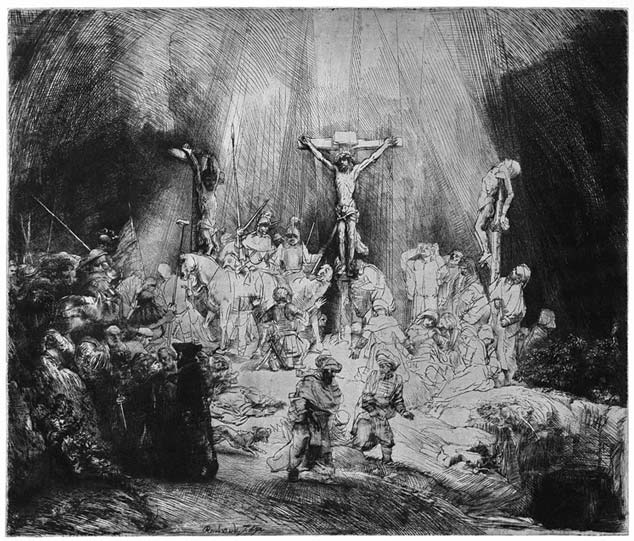
Jesus had already done amazing works of healing throughout the region, yet they still doubted. Moral of the stories? No matter what Jesus did, many, most Jews, would never believe. In fact, at the very end of his life he is completely alone, hung on a tree, a Roman cross, as a crucified criminal, enemy of the state. Only a handful of women are there in his final hours. He was truly despised and rejected by men. He came to bring good news to that generation, that man could be reconciled to God, that the blessings promised to Abraham and the Patriarchs could be theirs, that the dominion mandate could finally be fulfilled in him, and they wanted nothing to do with it.

Jesus’ War with the Religious Professionals and the Covenant
The ministry of Jesus is the culmination of 2,000 of Jewish history starting with God calling Abram to go from his home to Canaan to the land of promise (Gen. 12):

“I will make you into a great nation,
and I will bless you;
I will make your name great,
and you will be a blessing.
I will bless those who bless you,
and whoever curses you I will curse;
and all peoples on earth
will be blessed through you.”

The expansiveness of this promise is the point, and it goes back to the Dominion Mandate. God always intended to bless the entire earth, his creation and everyone in it, and that blessing would come through His people. The Jews forgot that, and turned this welcoming religion into an insular legalistic affair for only the few. Witness the early church’s struggle with Jewish Christians welcoming Gentiles into the church. When Peter had his vision of the clean and unclean animals and was sent to the centurion Cornelius, the Jewish Christians “were astonished that the gift of the Holy Spirit had been poured out even on Gentiles” (Acts 10). That wasn’t supposed to happen!

But if we’re going to understand the full redemptive-historical meaning of Jesus and his contentious interaction with the Jewish religious professionals, we have to see it in its legal-historical context in God’s dealing with His people. This requires some understanding of Ancient Near Easter religion, and for modern people that’s not easy to imagine. What we see in our Bibles isn’t some petulant God frustrated with His people and lashing out at them. The heretic Marcion even went so far as to see the Old Testament God as a different God. Far from it. Rather, God established a legal relationship with His people typical of an ancient Near Eastern Suzerain-Vassal relationship. A Suzerain was a superior ruler, a king, or great power who exercised dominance over a subordinate ruler or state, known as the vassal. The relationship was formalized through suzerain-vassal treaties (or a word we’re familiar with, covenants), which were common diplomatic and political instruments. These were not generally agreements between equals, although such did exist, but hierarchical relationships imposed by a stronger party on a weaker one, often after conquest, alliance, or submission.

This started with God’s unilateral covenant agreement with Abram in Genesis 15, a bizarre ritual to us, where God puts Abram into a deep sleep. He tells Abram the story of what will become his descendants’ slavery and deliverance that happens 400 years into the future, and then in the form of a firepot, a blazing torch passes between cutup animals as a ceremony to formalize the suzerain-vassal relationship between God and His people. This relationship was unique, though, because it was unilateral, only one party, the suzerain, God, declaring he would fulfill both parts of the covenant. These covenants or agreements, like our contracts today, were always established between two parties. Not with God and His people. Those who would become the Hebrews and then the Jews would never be able to keep their end of the bargain.

God rescuing His people from slavery in Egypt began to formalize this relationship as we can see from the intricate details required of the people to maintain it. God lays out the conditions and consequences most starkly in Deuteronomy 28. There are detailed blessings for obedience, and curses for disobedience, more of the latter than the former. We must notice the number one stipulation, a warning at the end of the list of blessings:

14 Do not turn aside from any of the commands I give you today, to the right or to the left, following other gods and serving them.

The turning aside, turning away from their God, was a function of their following other gods and serving them. That is the essence of the human struggle with sin. It isn’t primarily our behavior that is the issue, but which god or gods we will serve. Our behavior always flows out of that. The final result of the cursing, which would prove prophetic in Israel’s history, is destruction. It’s a sobering read knowing what happened three times in Israel’s history. First with the Assyrians destroying the northern kingdom in 722 BC, then the Babylonians destroying Judah and Jerusalem in 586 BC, and finally the Romans destroying Jerusalem and the temple in 70 AD. All this was a result of Israel’s unfaithfulness, of their turning aside to follow other gods and serve them.

Israel’s Marriage Covenant with God
In the Old Testament the covenant, i.e., legal, relationship between God and His people is depicted as a marriage, and Israel is often portrayed as an unfaithful wife who had committed spiritual adultery by turning to idols, yet God remains faithful and promises restoration. God had warned Israel of the exact consequences of the agreement, and they responded to Moses three times that, “We will do everything the Lord has said; we will obey” (Exodus 19 and 24). They willingly entered into this agreement, and would have to live with the consequences. This is the ultimate context of Jesus’ ministry and mission to the Jewish people.

If we go back through Jewish history in the Bible we see a double minded people who are not sure if they want to remain faithful to their God or follow the ways of the other heathen pagan nations. God called His people to be holy, set apart and not contaminated by those heathen pagan cultures, and by the time of Jesus the Jewish religious professionals, the Pharisees, Sadducees, and Teachers of the Law, had perfected a narrowly exclusive version of Judaism that bore little resemblance to what God intended in his promise to Abram. God’s design was that the nations wouldn’t infect His people, but rather that His people would influence the rest of the world with His blessings. After 2,000 years it was clear that just wasn’t going to work, and Jesus is bringing his message of warning to his people who instead of heeding it, kill him. Yet the Apostle Peter says in Acts 2 this was all part of the plan:

23 This man was handed over to you by God’s deliberate plan and foreknowledge; and you, with the help of wicked men, put him to death by nailing him to the cross. 24 But God raised him from the dead, freeing him from the agony of death, because it was impossible for death to keep its hold on him.

Israel’s history was one long object lesson in failure, that without God the Holy Spirit dwelling in His people, the kingdom of God could never advance on earth, or Satan’s dominion be destroyed. That would take the man who would come to be called the Messiah, who in himself would fulfill all three offices of mediator that sinful humanity required, prophet, priest, and king. As prophet, Jesus was truth teller, speaking messages the people often didn’t want to hear. It was as prophet that Jesus’ contentious relationship to the Jewish religious leaders is best understood. They chaffed at everything he said and did because it condemned them. As Jesus lamented (Matt. 23):

37 “Jerusalem, Jerusalem, you who kill the prophets and stone those sent to you, how often I have longed to gather your children together, as a hen gathers her chicks under her wings, and you were not willing.

They were determined to do the same to him. As priest, Jesus would atone for the sins of the people he spent three years condemning. Sadly, they completely missed that Jesus was himself the Passover lamb, who willingly took the wrath they deserved. And finally as King, he would be their ruler, the one to whom they owed unquestioned loyalty and obedience. Instead, they proclaimed that they had no king but Caesar.

The Jews would not accept Jesus’ atonement for their sin and unfaithfulness, and him as their Messiah, so as Jesus warned them, their house would be left to them desolate. Jesus had warned the teachers of the law and Pharisees in Matthew 23 with seven woes that judgment was coming, and in Matthew 24, what is called the Olivet Discourse, he prophesies the coming destruction of Jerusalem and the temple in AD 70. God would send an unmistakable message to the Jews and the world that there was a new way to the Father, the only way, and it was Jesus, Savior of the entire world.