
Aug 13, 2017 | Theology

I bet those are two words you’ve likely never encountered in church before. What in the world do indicative and imperative have to do with Christianity? You won’t find the words in the Bible, but you will sure find what they represent, and if they get mixed up all kind of problems will creep into a Christian’s life. First let’s start with definitions, and we’ll do it in order because it matters very much which one comes first and which second in the Christian’s life.
Indicative: of, relating to, or constituting a verb form that represents the denoted act or state as an objective fact
Imperative: of, relating to, or constituting the grammatical mood that expresses the will to influence the behavior of another, expressive of a command, entreaty, or exhortation
In short, the indicative states something that has happened, e.g., Jesus died for our sins, and the imperative exhorts us to do something, e.g., be holy. In Christianity the former always comes before the latter because the fundamental fact of Christianity is the gospel, the good news that we are saved apart from obedience to the law. If we let the indicative come first, the law for us becomes like an unpleasant drill sergeant.
(more…)
Jul 31, 2017 | Theology
I guess this will be the last part of my little trilogy (previous two posts here and here) on the wages of sin, which Paul tells us is death. I made the claim that over the years my conviction of how we are saved has had a powerful impact on keeping our kids Christian. I previously explained the traditional Reformed tradition on soteriology (how we are saved), that we are actually spiritually dead in our sins, and that we unable to believe on the Lord Jesus until God does a supernatural work in our soul to raise us spiritually from the dead. This means that our salvation is not up to us, but to God. It is the unilateral work of our sovereign, Almighty God in Christ for us. He does not ask our permission. And thank God for that! Can you imagine if our salvation was ultimately up to us? As I argued in my last post, our sinful human nature compels us to run and hide from God, like Adam and Eve did, and the Scripture is clear that nobody seeks God.
Why is what I’ll call a God-centered perspective so powerfully persuasive to me, and to our kids? My impression of Christianity for the first six years of my faith journey was that the quality of my relationship with God was primarily dependent on what I did or didn’t do. In a positive thinking phase of my life I learned that, “If it’s to be, it’s up to me!” While certainly true in many areas of life, I’ve learned it most definitely is not true in my relationship to a holy God. Please note, though, the word “primarily.” The God-focused faith I was introduced into at 24 did not imply that what I did or didn’t do wasn’t important, or that my choices weren’t real. God’s sovereign work with human beings doesn’t destroy their nature, make of their freedom an illusion, or turn them into robots. What it does do, though, is put our confidence in the right place: him!
(more…)

Jul 28, 2017 | Theology

In my previous post I talked about the wages of sin as it related to the movie Dunkirk. In this post I want discuss how the wages of sin relates to our salvation from sin, and specifically what in theology is called the doctrine of soteriology. Over the years I’ve found that my conviction of how we are saved has had a powerful impact on keeping our kids Christian.
Most Evangelical Christians are not well versed in theology in general, and likely not soteriology. The basic idea taught overtly and implied in most conservative Christian Protestant churches is that we are saved from sin because we believe on the Lord Jesus. This is of course true, as Paul declares in Romans 10:
If you declare with your mouth, “Jesus is Lord,” and believe in your heart that God raised him from the dead, you will be saved.
But a question arose over the course of Church history about the nature of this belief: Where does the power or ability to believe come from? Many of my brothers and sisters in Christ would think this is if not a silly question, then at least an unnecessary one. Who cares, they might think. We’re presented with the gospel, then we either believe or we don’t. But it’s not that simple.
(more…)
Jun 24, 2017 | Theology

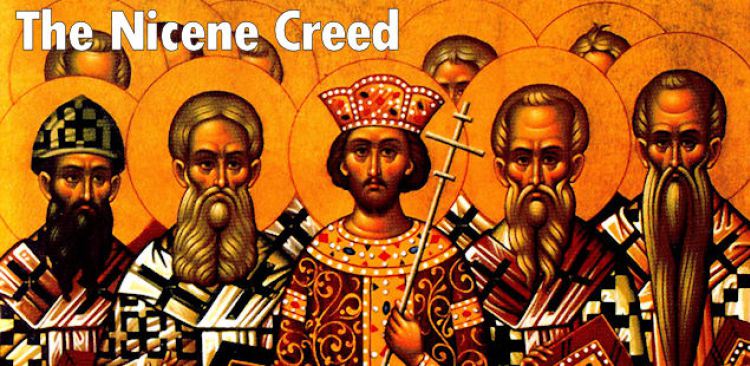
Who Jesus is, is the central question of human existence. If he was who he said he was, and if he is who the Council of Nicea in 325 said he was and declared by orthodox Christians ever since:
God from God,
Light from Light,
true God from true God,
begotten, not made;
of the same essence as the Father.
Then all of existence is determined by this fact. Jesus commands our allegiance, and our worship, because he is God, not just a great moral teacher or religious leader.
(more…)

May 11, 2017 | Theology

The Bible, the most influential book in American history, has fallen on hard times. According to a recent Lifeway Research survey, while Americans respect and many venerate the bible, it seems most never open one.
Americans have a positive view of the Bible. And many say the Christian scriptures are filled with moral lessons for today.
However, more than half of Americans have read little or none of the Bible.
Less than a quarter of those who have ever read a Bible have a systematic plan for reading the Christian scriptures each day. And a third of Americans never pick it up on their own, according to a new study from Nashville-based LifeWay Research.
You might see in these words, if you are a Christian, that the problem is that most Americans don’t read the Bible. Even more disconcerting, however, is that people think the Bible is about “moral lessons,” which isn’t surprising given people generally equate religion with morality.
(more…)
Apr 23, 2017 | Theology

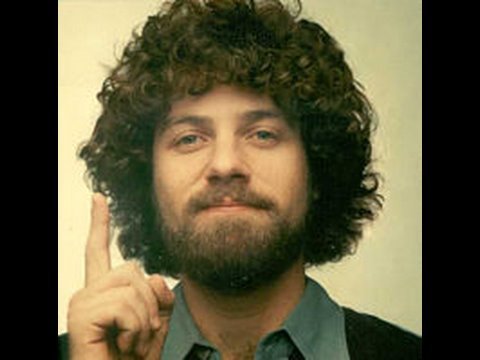
Every Evangelical or “born-again” Christian of the boomer generation knows of Keith Green, a fervent evangelist (some would say almost prophet) musician who died way too young. When I was in college in the late 70s and early 80s, Keith Green’s music was a large part of the soundtrack of my Christian life. On my way to my first job out of college on July 28, 1982, the day before my birthday, I heard on the radio that Keith Green had died in a plane crash. He was all of 28 years old.
I was thinking of him on Easter morning because I couldn’t get his Easter Song out of my mind, especially where he sings, “He is risen, hallelujah.” So I decided to take a little nostalgia trip reading about him and listening to some old songs. I came across his bio at the website of the organization he and his wife, Melody, founded called Last Days Ministries. A quote from Keith there reminded me of the type of Christianity I was “born-again” into, and why I am so grateful I was introduced to Reformed Theology a couple years out of college. Here is the quote, and I’ll explain why:
Loving Him is to be our cause. He can take care of a lot of other causes without us, but He can’t make us love Him with all our heart. That’s the work we must do. Anything else is an imitation.
(more…)


Recent Comments