The Resurrection is the Only Explanation for Christianity

The Resurrection is the Only Explanation for Christianity

This weekend we celebrate what we’ve come to call Easter, but what is in fact the celebration of the death and resurrection of the Savior of the world, who has been saving His people from their sin (Matt. 1:21) since he rose from the dead. When we come to that claim we have two options: either it is true, or it is not. If it is true, it is the most important historical fact in all of history, and we ought to treat it that way. If it is not, then it is completely irrelevant and should be ignored. It’s just fiction, something conjured up by mere human imagination, and in effect a lie. I don’t know about you, but I don’t want to base my entire life on a lie. So I want to lay out here some brief arguments why I believe it is in fact true, and why you should too.

Something has to explain the rise of Christianity. Unserious people can blow it off as, whatever, but something that has transformed the world in the way it has needs to be explained. Tom Holland lays out the transformational influence of Christianity in his wonderful book, Dominion, as the only thing that can explain the modern world. However, Holland has not yet embraced Christianity as Truth, and therefore believes this transformational influence was the result of a lie. Of course he wouldn’t say that, I presume, and might wiggle out of his dilemma by saying, well, Jesus didn’t really, literally, physically come back to life after being brutally tortured to death on a Roman cross, but his followers maybe thought he did, they believed it, and that is what changed the world. That’s laughable and absurd, but many people still believe it.

1. Jews don’t make up the resurrection – First, Jews in the first century do not make up a resurrection in the middle of history. That was literally inconceivable to them, both theologically and eschatologically. There was only one general resurrection of the dead at the end of time when sin and death would be dealt with once for all (see Martha’s response to Jesus at Lazarus tomb in John 11). That one man in the middle of history would be resurrected from the dead, and sin and death go on as they always have was to them ridiculous. It would have made no sense. People do not make up what is inconceivable to them.

2. The fearless and bold proclomation of the resurrection – There is also the fact that the Apostles proclaimed Jesus’ physical, bodily resurrection from the beginning at the threat of their safety and lives, and argued for the truth of Christianity based on it. Here is Paul’s declaration of the historicity of the event in I Corinthians 15:

For what I received I passed on to you as of first importance: that Christ died for our sins according to the Scriptures, that he was buried, that he was raised on the third day according to the Scriptures, and that he appeared to Cephas, and then to the Twelve. After that, he appeared to more than five hundred of the brothers at the same time, most of whom are still living, though some have fallen asleep. Then he appeared to James, then to all the apostles, and last of all he appeared to me also, as to one abnormally born.

Doesn’t much sound like a fairy tale to me, or just a “spiritual” experience. They ate with the risen Jesus and touched him. When Doubting Thomas finally encountered the risen Lord he declared, “My Lord and my God!

3. The Jewish religion transformed – An actual physical, bodily resurrection is the only thing that could have gotten first century Jews to alter their beliefs in such a fundamental fashion. Jews only believed in physical, bodily resurrections, not “spiritual ones.” Mere religious experiences don’t have the power to do what happened to those first Jewish followers of Jesus. The immediate, drastic changes in their religious convictions can only be explained by the resurrection, and Jesus proving it beyond a shadow of a doubt.

J.P. Moreland says anyone “who denies the resurrection owes us an explanation of this transformation which does justice to the historical facts.” Skeptics don’t like these historical facts because, well, resurrections can’t happen! Let’s confuse them with these facts they have no ability to explain apart from the supernatural. According to Moreland, the first Christians, strict Jews all, immediately gave up these Jewish convictions that defined everything about their religion:

  1. The sacrificial system.
  2. The importance of keeping the law.
  3. Keeping of the Sabbath.
  4. Non-Trinitarian theism.
  5. A human Messiah.

The skeptic says, “Yeah, so what. No big deal; happens every day of the week.” Well, if it does, I’m waiting for concrete evidence. Instead, we generally get anti-supernatural bias disguised as above-it-all, supposedly objective assertions with little basis in historical fact. As Moreland says in a bit of understatement, “The resurrection offers the only rational explanation.”

4. Altnernet explanations of the resurrection fail – Honest non-Christian scholars agree that some explanation is required to explain the explosive rise of Christianity. Almost all scholars and historians today believe the tomb was empty, but also agree an empty tomb is not enough to explain the explosive growth, and I would add, against all odds. They had everything against them, the entire Jewish establishment, the power of the Roman Empire, and initially very small numbers. What they did have, though, was the truth and the Holy Spirit. Those two things transform the world, lies do not.

The only options to an actual physical resurrection are a stolen body, or the swoon theory (he really didn’t die), or Jesus’ disciples thought they saw Jesus as mentioned above. These appearances of Jesus, while not real, had the effect as if they were real, and boom—Christianity exploded! German higher critics of the 19th century, and liberal Christians of the early 20th, were fond of arguing for this spiritual Jesus somehow appearing, and the disciples having what they called a “resurrection experience.” The historicity of the event was beside the point; and we all “know” people don’t come back from the dead, especially after the Romans got done with them. Jesus’ followers were so distraught, the argument goes, and so longing for the crucified Messiah to come back to them somehow, their minds conjured up a Jesus who came back from the dead. Then, because of this “spiritual” experience, they went throughout the Roman Empire proclaiming a resurrected Lord. The problem with this explanation however it was explained—by dreams, visions, or mass hallucinations—it all comes up against the same cold hard truth I mentioned above: For Jews, a resurrection of one man in the middle of history was inconceivable, as was a resurrection not bodily and physical.

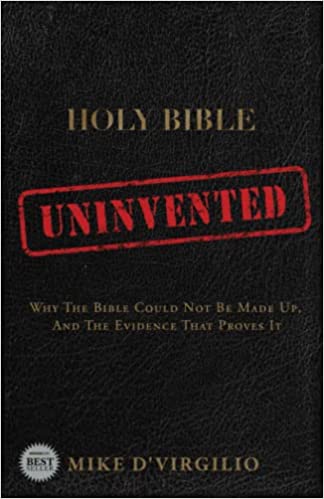
As I argue in Uninvented, if someone comes to the text without a question-begging anti-supernatural bias, they will be able to see the verisimilitude in the resurrection account and all the events surrounding it. The gospels are all about Jesus’ death and resurrection because it is those events that happened in real space and time, in what we call history, and everything turns on whether they actually did or not happen. As I also argue in the book, the burden of proof is every bit on those who reject the resurrection and that it could have made up. My claim is that is not possible. Thus we declare this Easter Sunday the Year of our Lord 2023:

He is risen, He is risen indeed!


My Post Mill Story and Isaiah 2

My Post Mill Story and Isaiah 2

I’ve always thought I could do anything I put my mind to if I only worked hard and long enough. When I was a teenager I was convinced I could become the greatest guitar player in the world; Eddie Van Halen had nothing on me. Then when my interests changed to golf, I not only wanted to be the greatest golfer in the world, but the greatest golfer of all time. I know, it’s hilarious, especially because Tiger Woods has more talent in his pinky finger than I have in my entire body. But I’ve always been a big thinker. When I became a Christian, that didn’t change. I thought maybe I would be a missionary and Christianize the world. When my vision of Christianity expanded and I got into politics, I thought I would change the world that way. Next I thought I would become a scholar and change the world through academics and teaching. Whatever it was, I always wanted to “change the world.”

At some point along my Christian journey I realized that was impossible, or so I thought. I didn’t become a pessimist or cynic, but what I thought was a realist. This is a fallen world filled with fallen people, and it will always be so. Wanting to change it is a pipe dream, so much spitting into the wind. The best we could do is fill up the holes in the dikes, bale water in the sinking ship, and keep our eyes on our heavenly home and eternity. Things will go on like they always have, likely just getting worse until Jesus finally comes back and puts all things right in the final judgment. Then last year I realized this mentality was profoundly unbiblical, not to mention dishonoring to God. That was when much to my surprise I came upon post millennialism without looking for it, and then against my will concluded it is indeed the biblical eschatological position.

I’ve written about that here before so I won’t repeat it. What I want to write about is the phrase I used above, “change the world.” From my new perspective I no longer believe that is a futile fool’s errand, but a biblical imperative. Prior to my post mill conversion I believed that while God is sovereign and in control of all things, this world as fallen pretty much belongs to Satan. Isn’t it obvious? There are various verses that give the impression this is the case. One of the most direct assertions is 1 John 5:19: “We know that we are from God, and the whole world lies in the power of the evil one.” Other versions say in control of the evil one. Paul says our citizenship is in heaven, and Peter tells us as God’s elect we are exiles. The writer to the Hebrews says the Heroes of the faith “were longing for a better country—a heavenly one.” And what serious Christian doesn’t often feel that this world just isn’t our home; we belong somewhere else.

I discovered, however, that my thinking along these lines often became escapist because it was defeatist. The devil and his kingdom are on the offensive in this world, and the best we can do is defend ourselves against his ever-advancing onslaught. That’s what I used to believe. No more. I can’t give a full biblical exposition for the post millennial case in a blot post, but I will share my new perspective on two verses critical to it, both in Matthew. First the Great Commission of Jesus in Matthew 28:

18 Then Jesus came to them and said, “All authority in heaven and on earth has been given to me. 19 Therefore go and make disciples of all nations, baptizing them in the name of the Father and of the Son and of the Holy Spirit, 20 and teaching them to obey everything I have commanded you. And surely I am with you always, to the very end of the age.”

First, Jesus has all authority, not some, so every single thing that happens in this fallen world is either allowed, controlled, or caused by him. The devil has no autonomous power. I basically used to look at this messed up world like he did. I mean, how could things be so messed up and Jesus actually be in control? Then when Jesus said baptizing and teaching them to obey everything, he is speaking of nations, not just isolated individuals in nations. And if they are being taught to obey everything Jesus commanded, then the culture will inevitably be Christianized. How can it not be!

The other Matthew passage is in chapter 16 after Peter declares that Jesus is “the Messiah, the Son of the Living God”:

18 And I tell you that you are Peter, and on this rock I will build my church, and the gates of Hades will not overcome it.

This rock is not Peter, but Peter’s declaration, and that declaration will drive the inevitable growth and advance of Jesus’ church. I used to look at the church as on the defensive, and hell on the offensive. Doesn’t that seem the way it is most of the time, if not all the time? But that’s not what Jesus says. Gates in the ancient world were defensive instruments, not offensive. So in fact, it is the church that is on the offensive, and the gates of hell will not be able to hold back its advance in this fallen world. That means Satan’s kingdom influence must inevitably shrink and the Kingdom of God spread its influence throughout the world. I must ask the question: Do we act like we’re on the winning team? That our victory is inevitable?

What has this to do with Isaiah 2? When I read that chapter this time through it was a jolt to realize how differently I used to read it. I’m speaking specifically of the first five verses. I won’t quote them here, but before in knee jerk fashion I automatically assumed this depiction was eschatological, meaning these events would surely never happen in this fallen world, but only in the new heavens and earth after Jesus returns. No more. I will quote one verse and pose some questions:

He will judge between the nations
and will settle disputes for many peoples.

Will there be disputes in the age to come when sin doesn’t exist? How exactly in this present age would the Lord “judge between the nations” so in due course “they will beat their swords into plowshares and their spears into pruning hooks”? May I suggest that is by the “descendants of Jacob” who “walk in the light of the Lord”? (Verse 5) You and me? His people, his body on earth, and he as its head seated at the right hand of God ruling over all things?

These kind of passages indicate, in a phrase I first heard from N.T. Wright, inaugurated eschatology, or the already and the not yet. In other words, the transformation that will be fully realized when Christ returns in the renewed and redeemed heavens and earth, is now partially realized in this fallen world through his church. In reading through Isaiah I found such passages over and over that in the past I instantly thought, well that’s not happening in this world! Oh yes it is, and yes it will. As Jesus said, Thy Kingdom come, thy will be done on earth as it is in heaven.

Song of Songs and the Bride of Christ

Song of Songs and the Bride of Christ

Some Christians in church history, and maybe even today, are a bit embarrassed by the Song of Songs because it is so overtly sexual. Some try to allegorize it; the early church fathers were especially fond of this approach, or they might completely spiritualize it because they were uncomfortable with human sexuality. It’s kind of hard not to be because of all the good gifts God has given his creatures, sex is very often perverted and abused, and in ways that cause so much pain and misery. But human sexuality is an unqualified good meant for our pleasure and the propagation of the species, and there is nothing shameful about it in the proper, marital context between a man and a woman. It is a beautiful, private experience that creates pleasure and life. Although it creates more of the former than the latter, I believe we must never divorce one from the other, but that’s a topic for another post. For this one I want to focus on its meaning for Jesus and his Church.

That doesn’t mean I’m spiritualizing the text. My reading through it this time profoundly impressed upon me both the creational (I was tempted to write “natural” but I try not to use that word anymore because secularism has made it imply “without God.”) and the spiritual aspects of the text. The theme of the book is love, depending on the translation used 25 to 50 times, between a lover and his beloved. It reminded me of something I was fortunate enough to experience in my life, but thankfully no longer have to—infatuation, being gratefully married for almost 36 years. The lover and beloved are obsessed with one another, can’t help but think about each other all the time. If you are not currently in that state of distraction, do you remember the times in life you were? If the other person reciprocated, wasn’t the sky bluer, the grass greener, wasn’t your step lighter, didn’t you wake up quicker in anticipation of seeing that person who you were thinking about all the time? How wonderful is that!

Thankfully, the giddiness is temporary. Who could live that way their entire life! Novelty always wears off when reality sets in, which is of course when true I Corinthians 13 love begins. True love, long lasting love, love that works, is a verb, not an emotion, as wonderful as the emotion can be. God in the Song of Songs is letting us know that giddiness is a good thing! To be enjoyed in its fleeting joy. And the sexual consummation of that giddiness in marriage, and only in marriage, is beautiful, holy, and good. Solomon leaves no doubt right out of the gate:

Let him kiss me with the kisses of his mouth—
for your love is more delightful than wine.
Pleasing is the fragrance of your perfumes;
your name is like perfume poured out.
No wonder the young women love you!
Take me away with you—let us hurry!
Let the king bring me into his chambers.

And he’s only getting started! I won’t delve further into the details of the text, but suffice it to say, the lovers will enjoy carnal knowledge before the night is out.

But that’s only the obvious meaning of the book. What may not be so obvious is the spiritual meaning. Solomon uses the word bride six times, but doesn’t use husband or groom once. And each time he uses the word bride, he says, “my bride,” as if she is his possession, which indeed she is, as is the husband of the bride. But in the Christian understand of marriage and the family, the man is in effect the owner of the relationship, and the one primarily responsible for its success. I wonder if saying something like that might get me banned from Twitter. I sure hope so because it’s as counter cultural in our secular woke day as can be. To our woke leftist elites patriarchy is repressive and toxically masculine. How dare you say the man is the man of the house, the leader, the one God has tasked with the success and safety and support of the marriage and the family. Well, I say it, loudly and proudly! It is biblical, God ordained. And it is the way marriages and families work best, the way they flourish and produce solid citizens.

But this is much more significant than what works and is counter cultural in the moment (we need to make it cultural again!). It is a metaphor for Christ and his marriage bride, the church. The idea of marital faithfulness between the Lord and his people is a consistent theme throughout the Old Testament so it doesn’t surprise it is carried into the New. Paul addresses this most directly in Ephesians 5 as he discusses the relationship between wives and husbands:

31 “For this reason a man will leave his father and mother and be united to his wife, and the two will become one flesh.” 32 This is a profound mystery—but I am talking about Christ and the church. 33 However, each one of you also must love his wife as he loves himself, and the wife must respect her husband.

There is something about the union of a man and a woman in marriage who in some way become spiritually one being, one flesh, and this in some way communicates the relationship between Christ and his church. It’s almost like when Paul uses the phrase “great mystery” he knows something that is in mere human terms impossible to communicate. As a man and woman become one being, so does Christ with his church. We are part of him, and he is part of us. Even as we are unique beings, we are a united being who becomes one entity share in the essence of the other. In writing this I feel the futility Paul must have felt trying to convey this mystery.

Which brings me back to Solomon’s Song of Songs. The giddiness of infatuation we experience in a novel romantic relationship that is consummated in marriage is like our relationship to Christ. As a man pursues a maiden, Jesus pursued us, and loved us with a love unto death. It is the kind of love men are called to for their wives as Paul says in Ephesians 5. In a way, Jesus is infatuated with us! I know, it’s hard to fathom, but it’s true. Remember what the writer to the Hebrews said, that for the joy set before him Jesus endured the cross. We are that joy! This is something to remember next time you go to a wedding.


School Shootings: The Triumph of Secularism

School Shootings: The Triumph of Secularism

It has happened again, this time at a Christian grade school in Nashville. When I first heard about it, and it was reported a female was the shooter, that didn’t compute. Women are never mass shooters. Then I learned this:

 Three adults and three children were killed and the shooter has been identified as a female, which has shocked many people. She was killed on the scene.

However, unfortunately, things turn even darker. The unconfirmed, but widely reported story is that the shooter is a biological female who identifies as a male. Her name is reportedly Audrey Hale.

The three children were nine years old, one the daughter of the pastor of a PCA church I believe was associated with the school. It is heart breaking and distressing. The Revolver piece I linked to above points out that people who suffer from gender dysphoria, or who are culturally bullied into it, are mentally ill. The woke left pushes the transgender mania as the civil rights issue of our time, and lives are destroyed, mentally, emotionally, and physically. But according to woke leftists, guess who the victim is in this tragedy? That’s a rhetorical question. There is reporting the shooter, who attended the school, was driven by resentment against Christianity. Supposedly she penned a manifesto the authorities have in their possession. We’ll see if they have the guts, and integrity, to release it. Resentment, anger, rage, hate, poison is what the left stokes 24/7, and not just against Christianity, but against any traditional value based on it, and anything associated with Christian Western civilization.


As I had finished this post I came across this video of Tucker Carlson on his show talking about how the trans movement is targeting Christians. It’s only nine minutes and I very much encourage you to watch/listen to it. It’s kind of shocking YouTube hasn’t deleted it.

I thought as I prayed for God’s comfort and grace upon that community, and repentance per Jesus himself as the proper response for those who don’t know him, I was angry. This didn’t used to happen in America! Then I thought of our church, which used to be a PCA church, calling for a prayer time last night. I appreciate that, and of course prayer is always necessary, but it’s not enough. I’ve heard our pastor and an elder/teacher disparage the so-called “culture wars,” and that always bothers me. Once in a sermon preaching on the importance of regeneration, the pastor said if we’re focused on the culture wars, we’re just rearranging the deck chairs on the Titanic. Frankly, that infuriated me. It does so even more now as more senseless violence cut short three precious children’s lives, and three adults in the prime of their lives. Christians lost the culture wars, this is what happens. When Christianity’s influence dominated American culture, “school shootings” did not happen.

The regeneration of the human soul and fighting for the health and flourishing of American culture are not mutually exclusive goals, and I would argue, naturally compatible. Culture wars are not a distraction, but modern conservative Evangelical Christians tend to over spiritualize everything. The great Francis Schaeffer’s life and ministry was dedicated to fighting against a two-story Christianity, the upper story or spiritual reality, and the lower story, the mundane stuff of everyday life. In this take, the upper story is the important area of life where we should focus on spiritual, eternal things. The lower story is not spiritual and thus less important. There is a long history to why we are tempted to view reality and culture this way, Schaeffer even goes back to Thomas Aquinas in the thirteenth century. Arguably, it was the Second Great Awakening in the nineteenth century when saving souls became divorced from Christianizing culture. In fact, the saving of souls should lead to a culture becoming more Christian, whatever culture it is, wherever it is.

The great lie of secularism, however, is the myth of neutrality, that there is a space in culture and politics where religious values are irrelevant, unnecessary, and must be only private because they lead to antagonism and violence. In case we haven’t noticed, all secularism seems to give us is antagonism and violence. Not to mention how secularism gave us progressivism which eventually embraced cultural Marxism that we now call wokism. For decades the left accused conservatives and Christians with being obsessed about sex, about what goes on in people’s bedrooms. That’s a lie. It’s the left that has been obsessed with sex for almost sixty years. From the so-called “sexual revolution” to no-fault divorce to gay “rights” to redefining marriage and now the evil insanity of the transgender mania, it’s always about sex for the left

At the 1992 Republican National Convention Pat Buchanan gave what came to be called “the culture war speech.” He had run against President Bush in the primary because Bush came from the moderate wing of the Party, what we used to call Country Club Republicans. Culture War issues embarrassed them, and Buchanan would have none of it:

Friends, this election is about more than who gets what. It is about who we are. It is about what we believe and what we stand for as Americans. There is a religious war going on in this country. It is a cultural war, as critical to the kind of nation we shall be as the Cold War itself. For this war is for the soul of America.

Even though Buchanan endorsed Bush, that wing of the party mocked and ridiculed Buchanan, along with Democrats and their media allies. Guess which word was used most against Buchanan? Divisive. Because he simply identified what had been a fact for decades, a worldview-religious war in this country, he was the bad guy, a narrow-minded religious bigot.

Less than seven years later we had the first of what has come to be called mass school shootings at Columbine High School in Colorado in April, 1999. According to that ABC news piece I linked to,

If a mass shooting is defined as resulting in the death of four or more people, not including the perpetrator, 175 people have died in 15 such events connected to U.S. schools and colleges.

Buchanan was mocked and ridiculed by American elites on the left and right, but he was absolutely correct: the contest in which we are engaged is for the soul of America. As he says, this culture war is about the kind of nation America shall be. It will either be a Christian nation, as we once were, or we will be a nation where we have to fear for the lives of our children every day we send them to school. There is no in between.