
This has to be one of the easiest theological questions in Christianity to answer given it’s so obvious in our Bibles, at least for those God has given eyes to see. I was inspired to write this post because since we’ve lived where we do now, I’ve encountered Jehovah’s Witnesses (JWs) at our door numerous times. I never have or make the time to engage them, and decided I would write something that could help me should I ever decide to do that. I know exactly why I believe in the divinity of Christ, but it always helps me to get things down on paper to really cement them in my mind.
You’re already guessed if you don’t know that JW’s don’t believe Jesus is God. What do they believe? The Witnesses came out of a time, the 1840s, and an area many cults did, called the Burned-Over District of upstate New York. So many revivals swept through the area that eventually it became “burned over” with the exhaustion of it all. This was the time when the Erie Canal, completed in 1825, was transforming the upper Great Lakes region. As the population grew, so grew the revivalism of the Second Great Awakening, which along with liberal Christianity created numerous new religious and utopian movements, basically heretical variants of Christianity, including Mormonism, and the Millerites, out of which came the JWs.
The JWs were started by Charles Taze Russell (1852–1916), a Presbyterian who had become disillusioned with mainstream Christian doctrines like hell and the Trinity, and decided to study the Bible on his own. Out of this in 1872 he developed the International Bible Students Association, which eventually came to be called the Jehovah’s Witnesses in 1931. They can sound like Christians because they are Bible focused and mimic many orthodox beliefs, but like Russell they reject the Trinity, and distort many other orthodox doctrines. Like many cults, Russell and the JWs wanted to get back to the pure, unadulterated Christianity of the Apostles before, as they believe, it was all distorted after they died.
As we seek to defend the Trinity and the deity of Christ, it is important to understand how it developed in the early church specifically after the Apostles departed to be with Christ.
What to Make of Jesus of Nazareth
Judaism is a monotheistic religion. What came to be called the Shama is cited daily, and often multiple times a day in prayer services, by observant Jews as an affirmation of the oneness of God. It comes from Deuteronomy 6:4:
Hear, O Israel: The LORD our God, the LORD is one.
We’ll remember that the Hebrew people became a nation declaring this amidst a sea of other peoples who worshipped many gods. Israel’s God was the almighty Creator God who made all things, and he was One. When Jesus came on the scene and started doing things that were the prerogative of God only, it didn’t sit well with the monotheistic Jewish culture of the day. We can add to that Jewish Messianic expectations. In the 400 years from Malachi when the prophets ceased to speak, expectations of who the Messiah would be were all over the place. All Jews could agree on was that there would be a Messiah, a Savior king figure, and he would be a human being, exalted in some way, but still human. In fact, because of their conceptions about God they could conceive of nothing else.
Then came “the Conundrum that was Jesus,” as I title of a chapter in my book, Uninvented. What he did and said confused everybody, friend and foe alike. One of the primary reasons I believe Christianity is true is because there is no way first century Jews make up a Messiah like Jesus. I could cite examples all day, but let’s look at a few.
The healing of the paralytic (Matthew 9:1–8; Mark 2:1–12; Luke 5:17–26)
Massive crowds had come to see Jesus because word had spread that he was a great healer, so a paralyzed man was brought for him to heal. Instead Jesus did the unexpected as he always did, and he said, “Take heart, son; your sins are forgiven.” The Pharisees and teachers of the law were horrified because to them Jesus was blaspheming. They were right if Jesus wasn’t who he claimed to be because as they rightly said, only God alone can forgive sins. Then to prove he is exactly that, he heals the paralyzed man to demonstrate he did have the authority to forgive sin. To the religious leaders that made no difference. Jesus was a blasphemer and the penalty is death by stoning, which they tried to do several times but didn’t succeed—the cross was his destiny.
Jesus Calms the Storm (Matthew 8:23–27; Mark 4:36–41; John 6:16–21)
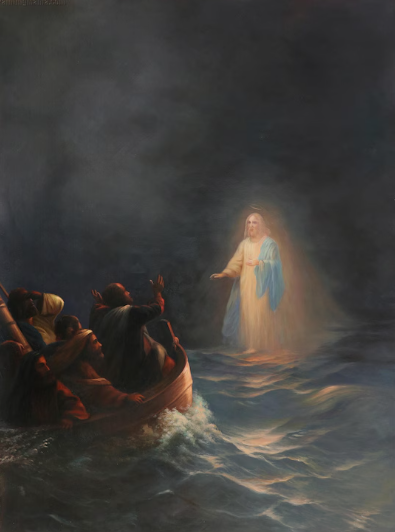
Jesus’ power over nature, including healing the sick and raising the dead, was not something the expected Messiah would do. Ironically, even though that is the case, it was exactly these things that eventually convinced his disciples he was God incarnate, God in human flesh. One of my favorite scenes in the gospels is when Jesus calms the storm on the Sea of Galilee, which is in fact a lake. We read this story in the synoptic gospels, each with a slightly different take. In Mark and Luke, Jesus tells his disciples that they need to go to the other side of the lake, so they got a boat and took off. Notice he didn’t say, let’s go to the middle of the lake and drown. As the storm comes up and the waves are breaking over the boat, that’s exactly what they thought was going to happen. And what is Jesus doing? Sleeping! Being Israel’s Messiah was exhaustive work.
Of course the disciples are terrified, and they wake up Jesus. In Mark the disciples exclaim, “Teacher, don’t you care if we drown?” That’s almost funny. In Luke and Matthew they just say, “We’re going to drown.” Uh, no we’re not! And of course Jesus says and does the unexpected, from Matthew:
26 He replied, “You of little faith, why are you so afraid?” Then he got up and rebuked the winds and the waves, and it was completely calm.
Why are we so afraid? Oh, I don’t know, we’re in the middle of the lake in the dark and there’s a furious storm, that’s why. The point Jesus is making is that since he’s with them there is no reason to be afraid. Then he does the completely unexpected: he rebukes the winds and the waves, and I imagine in a manner like they’re petulant children. Then it’s immediately calm. They are of course blown away, and Mark’s version I think captures how most people would respond.
41 They were terrified and asked each other, “Who is this? Even the wind and the waves obey him!”
Exactly! The Messiah was supposed to do great things, but not this. The implications were indeed terrifying. When Moses and Elijah and Elisha did miracles, they prayed and looked to God to do them, but not Jesus. He spoke directly to the wind and waves, and they obeyed.
Jesus Raises the Dead (Luke 7:11–17; Luke 8:40–56; John 11)
Needless to say, bringing dead people back to life was also not on the Messiah’s to-do list. The first time was a widow in the town of Nain whose only son had died. When Jesus tells the dead man to get up, and he does, the people are amazed and think Jesus is a great prophet. But when Elijah and Elisha raised the dead, they prayed to God. Jesus simply spoke to the dead person. The same thing happens with Jairus’ daughter; when he tells her to get up, she does. And the most spectacular and amazing of these events, of Jesus having power over death itself, is the raising of his friend Lazraus. The difference here, though, was that he allowed Lazarus to be dead for four days. The body was, as his sister said, already decomposing, but he tells them to roll away the stone. Then he calls out in a loud voice, “Lazarus, come forth!” And he does! A mere human Messiah doesn’t have that power.
The Sayings of Jesus
It isn’t just what Jesus did that compels us to believe he is divine, but the things he said. Not only does a normal human being not say the things he did, no Jew in the first century could have put those words in his mouth. Everything Jesus said and did to them was inconceivable, as in they could never conceive of the coming Messiah making such claims. Like his deeds, we’ll just look at a few. The first that comes to my mind comes from John 14:6. Jesus is trying to comfort his disciples as the crucifixion grows near, and tells them he is going to prepare a place for them in his Father’s house. He says they know the place where he is going, but Thomas replies that they don’t even know the way.
6 Jesus answered, “I am the way and the truth and the life. No one comes to the Father except through me. 7 If you really know me, you will know my Father as well. From now on, you do know him and have seen him.”
Who says things like this? Certainly not a normal human being. No other religious figure in history ever claimed to be the truth and the life because none of them were God! Then Jesus makes it clear to them what he’s saying. Philip says, “Lord, show us the Father and that will be enough for us.” Jesus is clearly frustrated with them, so says it straight.
9 Jesus answered: “Don’t you know me, Philip, even after I have been among you such a long time? Anyone who has seen me has seen the Father. How can you say, ‘Show us the Father’?
Jesus also claimed that he alone deserved absolute loyalty, he did, not his ideas. In Matthew 10 Jesus is preparing to send out the twelve, giving “them authority to drive out impure spirits and to heal every disease and sickness.” He is asserting the loyalty he is owed, then says this:
37 “Anyone who loves their father or mother more than me is not worthy of me; anyone who loves their son or daughter more than me is not worthy of me. 38 Whoever does not take up his cross and follow me is not worthy of me. 39 Whoever finds his life will lose it, and whoever loses his life for my sake will find it.
Who says things like this? No other religious figure in history save Jesus has come close. Then there is the cross, the most horrendous, shameful, means of torture and death ever devised by sinful man. Yet here is Jesus telling his closet followers that it is a symbol of their loyalty to him. Later in Matthew 16 he reiterates his charge to his disciples making clear what he means:
24 Then Jesus said to his disciples, “Whoever wants to be my disciple must deny himself and take up his cross and follow me. 25 For whoever wants to save his life will lose it, but whoever loses his life for my sake will find it.
You can imagine people hearing or discussing this saying, the cross, seriously? What does that even mean? As C.S. Lewis said, Jesus was either Lord, lunatic, or liar.
Jesus also used the Sabbath as an important teaching tool in his ministry. The Jewish religious leaders were appalled Jesus would heal on the Sabbath, and in Matthew 12 we see such a scene play out, and Jesus said something they would have considered blasphemous:
8 For the Son of Man is Lord of the Sabbath.”
They knew Jesus was referring to himself because Son of Man was a common self-designation of Jesus, even though he always used it in the third-person, and all Jews knew it was a Messianic designation coming from Daniel 7. For Jesus to say he himself was the ultimate ruler, Lord, over the Sabbath was crazy, and blasphemous, which is why they sentenced him to death.
The Jewish religious leaders understood very well what Jesus was proclaiming at his trial before the Sanhedrin. In Matthew 26 we see the seriousness of what he’s saying, and how the Jewish religious leaders took it. Jesus has been arrested and is now on trial before the Sanhedrin.
The high priest said to him, “I charge you under oath by the living God: Tell us if you are the Messiah, the Son of God.”
64 “You have said so,” Jesus replied. “But I say to all of you: From now on you will see the Son of Man sitting at the right hand of the Mighty One and coming on the clouds of heaven.”
65 Then the high priest tore his clothes and said, “He has spoken blasphemy! Why do we need any more witnesses? Look, now you have heard the blasphemy. 66 What do you think?”
“He is worthy of death,” they answered.
That Jesus was condemned to death for blasphemy means everyone knew Jesus was declaring himself equal with God. Everyone who heard him say this was thinking of Daniel’s dream. In it he sees the Ancient of Days seated on his throne in what is in effect a courtroom setting of coming judgment.
13 “In my vision at night I looked, and there before me was one like a son of man, coming with the clouds of heaven. He approached the Ancient of Days and was led into his presence. 14 He was given authority, glory and sovereign power; all nations and peoples of every language worshiped him. His dominion is an everlasting dominion that will not pass away, and his kingdom is one that will never be destroyed.
I’m not sure how Jews would have processed this passage, but the Son of Man figure has all the attributes of divinity, but he is not the Ancient of Days, God himself. But however they processed it, in condemning Jesus to death for blasphemy, they are declaring him to have made himself divine, equal with God. And for that, he deserved to die.
The Historical Development of the Trinity and the Divine Jesus of the Gospels
It’s impossible for me to believe anyone could read the gospels and come away thinking they don’t present Jesus as a divine figure. Critical scholars and skeptics over the last two hundred years have done just that. They come to the text with an anti-supernatural bias and discount anything portrayed as miraculous, or discount what Jesus said and its implications. But for anyone who comes to the text without that bias, Jesus’ divinity is apparent throughout.
As most Christians know, the triune nature of God took several hundred years for the church to understand after Christ rose from the dead. Since Jesus never said, hey everybody, I’m God, it had to be inferred from his actions and words, as we saw above. The Apostles and most of the earliest followers of “the way,” were Jews, so this was complicated and difficult to wrap their minds around. If you read Acts and the epistles, though, it’s clear they all considered Jesus God in human flesh, but it took a while through several heresies for the church to declare God Triune, which was officially done at the Council of Nicaea in 325. Movements had developed that Jesus was various things, but not as he in fact was, fully God and fully man, a mystery we call the Trinity. It was in response to these movements that the church was able to finally affirm the true nature of Jesus of Nazareth our Savior God.
Recent Comments