I Chronicles 29:10-13: David’s Life Transforming Praise for God

I Chronicles 29:10-13: David’s Life Transforming Praise for God

In my current jaunt through Scripture, much quicker than last time, I recently read this passage in I Chronicles and reflected on how significant it has been in the last five years or so of my life. When we moved from the Chicago area to Florida in early June of 2017, these verses were in the bulletin in the second church service we attended. I remember thinking how heavy it was, and decided I needed to memorize it. I couldn’t have realized how significant the truths David proclaims would be for me in the coming years.

The context is near the end of David’s life. He had developed plans and provided the resources for the Temple. Since the Lord would not let him build it because of all the blood he had spilled, he passed those on to his successor, his son Solomon, and he would be the one to build it. Then we read his effusive words of praise for the Lord his God:

10 David praised the Lord in the presence of the whole assembly, saying,

“Praise be to you, Lord,
the God of our father Israel,
from everlasting to everlasting.
11 Yours, Lord, is the greatness and the power
and the glory and the majesty and the splendor,
for everything in heaven and earth is yours.
Yours, Lord, is the kingdom;
you are exalted as head over all.
12 Wealth and honor come from you;
you are the ruler of all things.
In your hands are strength and power
to exalt and give strength to all.
13 Now, our God, we give you thanks,
and praise your glorious name.

As we know, David had quite the tumultuous life, and while he sinned greatly, the Lord declared that he was a man after his own heart. The two are not mutually exclusive, which I why think his life is such a powerful object lesson, in addition to being a prophetic type of King Jesus.

We all sin greatly to one degree or another because the standard is the perfectly holy Creator God of the universe. Sure, compared to Hitler, Stalin, and Mao I’m a pretty good guy, but compared to God the only thing I deserve is the wages of the sins I commit, death. As I often say to anyone who will listen, I deserve to be a pile of smoldering ashes on the ground, so anything other than that is gravy.

What separated David from the average king was his laser like focus on God. Even when he sinned against Bathsheba and her husband, he said to God, “Against you, you only, have I sinned and done what is evil in your sight.” Most of us, dare I say none of us, would have said such a thing, but David realized the essence of sin isn’t my sin against others or others against me, but ours against God. All the personal and interpersonal misery and dysfunction flows out of that. If we get that backward we don’t get the gospel.

For me, David’s praise, especially at that time in my life, helped sharpen my focus on the God he is so effusively praising. The temptation all sinful humanity has is to focus on our circumstances or other people. It’s terribly easy to do because, well, it’s all we can see! So, instead of living by faith, i.e., trust, we live by site, the opposite of what Paul says we should do.

Speaking of trust, that is the I Chronicles 29:10-13 lesson of these last five years, and the focus of the rest of my life; trusting God who worthy of my trust. The lack thereof is my greatest sin, and something for which I repent daily. I know I don’t trust him if I allow fear, worry, anxiety, doubt, frustration, and anything else that cannot be defined as “perfect peace” into my life. I didn’t say it would be easy!

I realized how important this was for me as I began to understand the word faith or belief in the New Testament. When we come across those, or any variations thereof, they do not mean intellectual assent. The Greek word used for both English words is pistis-πίστις, so it is far more than merely intellectually accepting that something is true. We can “believe” something is true, and it make absolutely no difference in our lives. Will that airplane get me to Tuscaloosa, Alabama safe and alive? Trust gets me on it. Or ice fishing. I don’t quite get the appeal (probably because I was born and raised in L.A.), and I believe the ice will hold up, but you would never get me out on the ice. I believe, but don’t trust.

What David’s declaration of praise did for me was convince me the ice will hold up no matter how thin it looks, no matter how many cracks appear. I learned how addicted I am to circumstances, how easily I treat them as more sovereign and powerful than Almighty God. It’s kind of pathetic when you think about it, but the problem is we don’t often think about it; we react. Our peace of mind isn’t determined by who God is, a la David’s accurate declaration, but by how we interpret our circumstances. When the trust challenge comes, as it did for me so often in the early years of our time in Florida, I didn’t pass the test. But in due course because I was determined to focus on this God and his power and glory and majesty and splendor, I slowly developed my trust muscle. You can too!


Our Granddaughter Eleanor Geline Lewis Was Baptized Today!

Our Granddaughter Eleanor Geline Lewis Was Baptized Today!

When I was born-again a long, long time ago, in a galaxy far, far away, by default I became a baptist. I was born and raised a Catholic and so baptized as an infant, but born-agains don’t do infant baptism, so I got re-baptized. It made sense to me at the time because in this new form of Christianity I had embraced, the way you became a Christian was by making a personal decision for Jesus. Only then could you be baptized. Infants can’t make such a decision, so I reasoned they should not be baptized. I remained a baptist until I was introduced to Reformed theology when I was 24.

There are Reformed baptists, and that’s what I guess I was initially, until I went to a Reformed baptist church service. The gentlemen who introduced me to this strange new theology was a paedobaptist, so he had his children baptized. This new theology seemed upside down enough without me having to change that too, so I resisted it initially. Then I went to that service.

It so happens that Sunday morning they had an infant dedication. I had seen plenty of those in my five and a half years of being a Christian, so didn’t think anything of it. Then when they called up the parents with their children, a phrase snuck its way into my brain, I know not how, but it was disturbing to me. I thought, these children are strangers to the covenant! That didn’t sit well with me. I had been learning how important the covenant was in this new theology, and this dedication process was telling me the children had nothing to do with it. I became a paedobaptist on the spot!

The reason why is as simple as it is difficult for most Evangelical Christians to accept. Most don’t embrace it not because they’ve grappled with the texts and the theology, but because it’s so common to be a baptist that it just seems right. It could be right because my being wrong about something wouldn’t surprise me in the least, but for now I’m convinced baptizing our infant children is what we should do. I’ll give a very brief and probably not very persuasive case for why I believe this.

When I was praying this morning before we left for church, I was marveling that little Eleanor was part of God’s covenant promises to Abraham. She, literally this beautiful energetic little 9 month-old baby was in God’s mind when he said that Abraham’s offspring would be like the sand on the seashore and the stars in the sky. She is one of those! Then I thought, well, she’s really part of God’s covenant promise to Adam and Eve in Genesis 3 when he said to the serpent:

15 And I will put enmity
    between you and the woman,
    and between your offspring and hers;
he will crush your head,
    and you will strike his heel.

Then I realized, she was actually part of God’s covenant promise to himself, which is known in Reformed theology as the covenant of redemption. In the words of RC Sproul:

The covenant of redemption is intimately concerned with God’s eternal plan. It is called a “covenant” inasmuch as the plan involves two or more parties. This is not a covenant between God and humans. It is a covenant among the persons of the Godhead, specifically between the Father and the Son.

That this eternal covenant is revealed and fulfilled in redemptive history is strongly implied by Jesus in John 6:37:

All those the Father gives me will come to me, and whoever comes to me I will never drive away.

We believe as Peter preached in the first Christian sermon in Acts 2, that the promise is for us and our children. Not just when they grow older and put their trust in Christ as their Lord and Savior, but now when they pretty much can’t do anything at all. I love the way Moses puts it in Deuteronomy 29:

29 The secret things belong to the Lord our God, but the things revealed belong to us and to our children forever, that we may follow all the words of this law.

. . . . and to our children forever . . . . Our children are part of the covenant! And praise our Almighty God and Savior for it.

Jordan Peterson Leaves Atheist Sam Harris SPEECHLESS on God!!!

Jordan Peterson Leaves Atheist Sam Harris SPEECHLESS on God!!!

Jordan Peterson has become one of the most effective apologists for Christianity in the 21st century. This is quite something to say about a man who has yet to embrace a version of Christianity we might consider orthodox. His wife is a strong Catholic Christian, and his daughter embraced an Evangelical version of Christianity last year. I’m not sure what Peterson would say today about his faith status, but he’s far closer to the Christ of Scripture than he has ever been.

What makes him so effective is his background as a clinical psychologist and scholar. He can see deeply into the nature of things on a psychological level that I have found fascinating and instructive for my own Christian worldview. He’s so attracted to Christianity because of its explanatory power, although I’ve never heard him use this phrase. Simply put, Christianity explains the nature and structure of reality far better than any other faith or worldview, which gives it its psychological power both on an individual as well as a societal level (because societies and cultures are filled with people!). He would probably agree with the ex-atheist CS Lewis who said:

I believe in Christianity as I believe the sun has risen, not because I see it but becasue by it I see everything else. 

This is wonderfully apparent as he takes down atheist Sam Harris. The lack of explanatory power of the atheistic materialist worldview could not be more apparent in these short exchanges. The juxtaposition is powerfully compelling for the plausibility and power of Christianity. Dr., Steve Turley does a terrific analysis of the interaction between the two, and it is well worth a watch/listen. As my wife tells me, Peterson is not an easy listen, but he’s worth a careful one.


Rock of Ages and The Double Cure for Sin

Rock of Ages and The Double Cure for Sin

One reason we’ve always gone to churches where hymns are sung is because the best hymnody is theology in song, meaning the study (ology) of God (theos) set to music. Much modern praise music unfortunately is more anthropology, more about man (anthropos), than God. And for my wife and I, something about two or three hundred year-old music lends itself to the sacred. The theology, though, is what we appreciate most, and I often learn or am reminded of truths about our astonishing faith that allow me to marvel all over again at our great God and Savior.

One recent Sunday we sang the theologically rich old hymn every Christian has heard of, Rock of Ages. The author, with one of the best hymn writer names in history, Augustus Toplady (1740-1778), knew his theology. The theme of the Hymn comes from Exodus 33 where Moses asks the Lord to show him his glory, who he really is. In reply, The Lord declares his name, and adds, “I will have mercy on whom I will have mercy, and I will have compassion on whom I will have compassion.” The Lord alone determines who will receive his mercy, or not. This truth is foundational to the revelation of God to his people about who he is. We can’t earn his mercy, or grace; he alone grants it as he will.

The beauty of the salvation for those to whom he grants it, his people, is that it is a complete and total salvation. Thus, in the first stanza, Toplady writes:

Rock of Ages, cleft for me,
let me hide myself in thee;
let the water and the blood,
from thy wounded side which flowed,
be of sin the double cure;
save from wrath and make me pure.

This double cure saves us from God’s wrath, and at the same time makes us pure. In other words, the salvation granted to us in Christ is for sin’s guilt and power. The problem is that sin’s power over us seems, well, powerful. We fight it, but we often feel like a pummeled boxer down for the count.

The Apostle Paul can relate. He confesses in Roman 7, “I do not do the good I want to do, but the evil I do not want to do—this I keep on doing.” Who can’t relate to that! In his frustration he cries out:

 24 What a wretched man I am! Who will rescue me out of this body of death?

The English doesn’t do justice to Paul’s emphasis in Greek because emphasis is determined by where words are placed unlike in English. He starts, “Wretched I am man.” In other words, he is emphasizing just how wretched he is. The extended meaning of that word captures well our struggle against sin: (beaten-down) from continued strain, leaving a person literally full of callouses (deep misery) – describing a person with severe side-effects from great, ongoing strain (significant hardships). If we haven’t felt that way about our sin, we haven’t really struggled against it.

I’ve heard it said, any dead fish can float downstream; it’s easy to go with the sinful flow because, well, we’re sinners! It’s really hard to fight against our natural sinful inclinations. As soon as we’re spiritually raised from the dead by the power of the Holy Spirit, however, the fight begins; but we are not in this fight alone. Paul answers his question, and affirms Toplady’s double cure:

 Thanks be to God, who delivers me through Jesus Christ our Lord!

Amen!

Most Christians have no problem believing God saves us from the guilt of sin, justification, but we tend to think the pure part, sanctification, is our job. The good news is that Jesus is both! I never really got this until maybe 10 years ago. Deep down I was under the impression my relationship with God was in some way determined by what I did or did not do.

First, I seemed to believe God would like me more if I was a good little boy, and less if I wasn’t. At some point I realized that wasn’t true at all because God’s wrath was fully satisfied in Christ, the whole enchilada. On the cross, Christ paid for the penalty and guilt of my sin, all of it, past, present, and future. In Isaiah 53 we learn he was pierced for our transgressions, crushed for our iniquities; and “the punishment that brought us peace was on him.” So absolutely nothing we do or don’t do can make us any more acceptable to God than we are in Christ, ever.

But Christ is not only our justification, as Paul says in I Cor. 1:30, but he is also our sanctification. We’re not left to deal with the power of sin in us on our own, as if defeating it was up to our choosing, our will, our decisions. It is not!  These are obviously part of the process of our sanctification, but they do not determine it. We tend to think we just need to try harder. Then I can finally live, as it used to be called, the victorious Christian life. Technically we call that hooey.

I want you to chew on something God made apparent to me: we can’t transform ourselves. That’s God’s job. As we read in Zechariah 4:6, “Not by might nor by power, but by my Spirit,” says the Lord Almighty. As Julia Ward Howe wrote in the Battle Hymn of the Republic, Christ “died to make us holy.” The Apostle John tells us how instead of letting sin defeat us, we trust that Christ too is our sanctification:

 If we confess our sins, he is faithful and just and will forgive us our sins and purify us from all unrighteousness.

This is the double cure! Not only are we forgiven for the guilt, but God promises to purify us from the power of sin. That is his job not ours! It’s even gooder news than I ever thought!

Uninvented: Elijah, Elisha and the Believable Miracles of the Bible

Uninvented: Elijah, Elisha and the Believable Miracles of the Bible

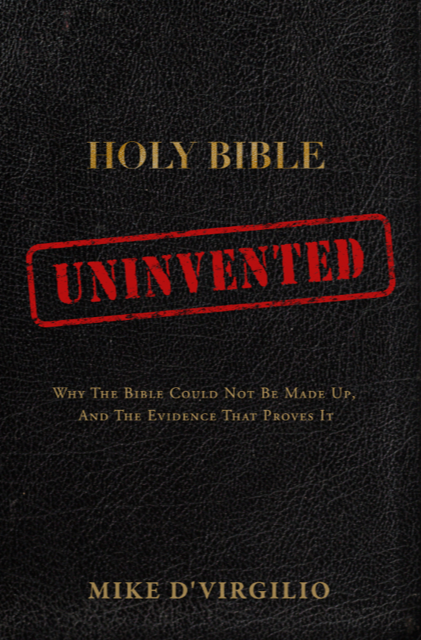
Miracles keep many from accepting the historicity of the Bible. As I argue in Uninvented, that is a an unjustified bias. In fact, the rarity of miracles and how they are portrayed lends more credibility to the text and makes the Bible more believable. That’s why if you’re dealing with an open-minded skeptic instead of arguing for miracles philosophically, it’s often best just to get them to read it. Especially the gospels because there they will encounter the most amazing miracle of all, Jesus himself!

The depictions of miracles are so powerful and compelling exactly because they are so muted, so matter of fact, so simple. This combined with the psychology of the those encountering the miraculous lends them a persuasive verisimilitude.

I was initially going to call Uninvented psychological apologetics, but nobody would have known what the heck it was about. Simply put, the people in the text encounter the divine and the miraculous as real people would who encounter what doesn’t make sense to them. Since fiction as a concept was unknown in the ancient world, making miracles appear real (like good fiction would) both in portrayal and psychologically would have been a tough trick to pull off. Not to mention that the portrayals span 1500 years and numerous authors.

Which brings me to the stories we read about these two significant prophets in I and II Kings. In Exodus 4, Moses asks the Lord what he’s to do if the Israelites (let alone Pharaoh and the Egyptians) don’t listen to him. The Lord replies that he’ll do the miraculous “so they may believe that the Lord, the God of their fathers—the God of Abraham, the God of Isaac and the God of Jacob—has appeared to” to him. The Lord got a lot of mileage out of those miracles. Not only did the he defeat the Egyptian army, which Moses declared repeatedly to the people in their wilderness journeys, but for those 40 years and into the promised land, he supernaturally guided and sustained them.

Once in the land, the overt displays of miracles ended. There is debate about dates (one timeline), but let’s say Joshua leads the Israelites into Canaan around 1400 BC. It isn’t until the late 800s where overt miracles are again seen in Israel with the prophets Elijah and Elisha. Why then and them?

Since the Old Testament is about Jesus, one reason is to introduce the prophetic ministry by God’s miracles through the prophets, as the Lord had done through Moses, so his people may believe. They point forward to the most prodigious miracle worker in history, Jesus of Nazareth, and confirm his prophetic ministry. It would be another 800 years before miracles again become common in Israel.

There had been judges and kings to whom the Lord spoke prior to these two prophets, but we’re not told how, and it’s not something the average Israelite would have experienced or been aware of. When Solomon died, the monarchy started a quick slide downhill to idolatry and rebellion. Someone with the authority of Yahweh needed to call the rebellious kings to account, and the Lord used prophets to do that. The miracles were evidence prophets were from Yahweh, so Elijah and Elisha introduced the prophetic ministry to God’s people. We could say three millennia before “the Sixties” these two prophets were the very first to “speak truth to power.”

Anyway you look at it, being a prophet in ancient Israel was a tough and thankless job. Suffering and death always seemed to be right around the corner because the people in power to whom they were declaring truth didn’t want to hear it. Some things never change.

We’re introduce to “Elijah the Tishbite” in I Kings 17:1, and he makes his big miracle debut in the next chapter when he single handedly takes on 450 prophets of Baal. Evil King Ahab and Queen Jezebel were not happy. I encourage anyone who isn’t familiar with these passages to read them and consider how the miracles are portrayed, and the psychology of those involved.

Elisha is introduced in chapter 19, becomes Elijah’s protégé and successor as a prophet of Israel, and works more miracles than his mentor. I only want to focus on one to make my point, and strangely enough that happened after Elisha died. We read about this bizarre event in 2 Kings 13:

20 Elisha died and was buried.


Now Moabite raiders used to enter the country every spring. 21 Once while some Israelites were burying a man, suddenly they saw a band of raiders; so they threw the man’s body into Elisha’s tomb. When the body touched Elisha’s bones, the man came to life and stood up on his feet.

I laugh incredulously to myself when I read this. Really? Why in the heck is this in the Bible? Why did God find it necessary to put such a story in his revelation to his people?

First, Elisha is alive and well doing his prophetic work, then abruptly we’re told he dies, but his miracle working apparently isn’t done. This is the last overt miracle of the Old Testament, and it’d say it’s an 11 on a strangeness scale out of 10. Is that what you would pick for the last miracle for 800 years? Seriously, it has to be real. Why put it in the historical record otherwise. To me it’s perfectly uninvented.

I know the skeptic is going to say, that’s dumb. Maybe they thought the guy they was dead, threw him into the tomb, and he comes back out alive (as if ancient people didn’t know the difference between alive and dead). Then over the years the story, like the ever-growing fish, turns into miraculous bones. Maybe, but why put a story in a book of history that is so on the face of it ridiculous? Even to ancient people. Especially if you want readers to believe it’s history.

If we believe Genesis 1 is true, then this story is credible, and to me the bizarreness makes it even more believable.  Especially because the writer sees no need to explain it. It just happened, let’s move on, a portrayal that lends authenticity to the narrative. This certainly fits under; you just can’t make this stuff up!