My Testimony on the One80 Podcast

My Testimony on the One80 Podcast

Francis Thomson wrote a poem in 1890 called The Hound of Heaven that perfectly captures the story of my Christian journey. We don’t read poetry much anymore, but if you read the poem you may find it describes your journey too. Being a Christian of the Reformed perspective, I believe that Jesus came to earth specifically to “save his people from their sins,” as the angel of the Lord told Joseph in his dream when he was commanded to give Jesus his name (Matt. 1:21). Having listened to hundreds of testimonies over the last several years, it is amazing to me the infinite variety of ways he is able to accomplish this. As I look back over these forty four and a half years(!), it’s clear I didn’t stand a chance, thanks be to God. He was going to have me whether I wanted Him or not! He is faithful, even when we are not because his covenant promise to his Son will never fail. It was an amazing honor to share my story after so many years. (I really need a new “publicity” photo. This one was six years and over 20 pounds ago!)

Tim Keller RIP

Tim Keller RIP

The Lord took another one of his faithful servants all too soon. We all know time is a mist and passes more swiftly than we have the ability to convey or comprehend, but that doesn’t make the end of it any easier to convey or comprehend, or accept, but we have no choice. Death sooner or later comes for us all, and all of us feel it comes way too soon no matter when it comes, at one or one hundred-and-one. As Christians, though, our encounter with the Grim Reaper, for us and the ones we care about, is different than those who don’t trust Christ. As the Apostle Paul says in I Thessalonians 4:

13 But we do not want you to be uninformed, brothers, about those who are asleep, that you may not grieve as others do who have no hope. 14 For since we believe that Jesus died and rose again, even so, through Jesus, God will bring with him those who have fallen asleep.

Paul gives us further Christian perspective in Philippians 1 on this most unpleasant and unnatural fact of life when he tells us about his own inevitable coming encounter with death:

21 For to me, to live is Christ and to die is gain. 22 If I am to go on living in the body, this will mean fruitful labor for me. Yet what shall I choose? I do not know! 23 I am torn between the two: I desire to depart and be with Christ, which is better by far; 24 but it is more necessary for you that I remain in the body. 25 Convinced of this, I know that I will remain, and I will continue with all of you for your progress and joy in the faith, 26 so that through my being with you again your boasting in Christ Jesus will abound on account of me.

How many of us can say, honestly, we are “torn between the two.” I’ll confess, I’m not terribly torn, although I pray to learn how to be as that encounter comes ever closer. When contemplating my own departure, my “falling asleep,” I always go to Jesus’ words to Martha at the tomb of her brother Lazarus whom Jesus would bring back to life only moments after he said these words (John 11):

 25 Jesus said to her, “I am the resurrection and the life. Whoever believes in me, though he die, yet shall he live, 26 and everyone who lives and believes in me shall never die. Do you believe this?”

I do! The word for believe in Greek is trust, and trust requires faith. All human beings live by faith, or trust in some things and some ones, and it’s a requirement for daily existence for finite human beings. For ultimate things, as well as our everyday mundane life, Christians trust in our Almighty sovereign Creator God, and that makes all the hardness a little less hard.

Speaking of trust, I often think of the father in Mark 9 whose son was possessed by an evil spirit when he asked Jesus if he could do anything to help heal his son. Jesus’ response was priceless and speaks to our natural lack of trust in God’s almighty power on behalf of his people: “‘If you can’! All things are possible for one who believes.” I love how Jesus gently rebukes him, although it’s impossible to know the tone of the rebuke when he gave it. He’s basically saying, you can trust me! If you do, anything is possible. Yet the man knows his weakness and with tears pleads with Jesus (in the poetic King James version): “Lord, I believe; help thou mine unbelief.” I love that! It’s so hard to trust, but I so badly want to trust!

For those who know me, I attended Westminster Seminary in Philadelphia where I met my future wife, Sarah. It so happens that Tim Keller was a professor there at the time, and prior to our getting married he was our premarital counselor. I still remember, and recite to others, little gems of marital wisdom he gave us in those sessions. The most common and often repeated by me are the very first words he spoke to us after we sat down for our first session: The only sinner bigger than the one you’re marrying is you! That’s a hard one to forget because it is so obviously true. How many marriages have failed because one spouse thinks the other is the bigger sinner? A lot!

But it isn’t just that personal connection that makes Keller’s life special to us. His theological and apologetics teaching over the years has been a profound help in us maturing in our Reformed faith. It’s a testimony to his vision and persistence that he could go into the heart of the secular Christian hating Gotham and build not only a successful church (he preferred the word fruitful), but a world-wide church planting movement. I’ll never forget visiting New York City for a business trip in 2016 and visiting one of his churches. I was hoping to see him, but Redeemer Presbyterian didn’t advertise which church he would be preaching at, so I attended one closest to my hotel. The sermon by another pastor on the righteousness of God by faith in Romans 3 brought me to tears and the amazing depth of God’s grace for me. It didn’t surprise me coming from a Keller led church because the gospel of God’s good news of unmerited favor in Christ was his north star. Even though I had a problem with his thinking and writing on political and cultural engagement in recent years, he will be sorely missed.


Let’s Not Forget: Christmas is About Easter

Let’s Not Forget: Christmas is About Easter

Given how big the celebration of Christmas is compared to Easter, it might come as a surprise that for much of Christian history it wasn’t celebrated at all. One reason is the gospels where only two address Jesus’ birth, but all four his death. There is no indication that Jesus’s birth should be celebrated, but specific teaching (including Paul in I Cor. 11) by Jesus himself (e.g., Matt. 26) that his death should be. So it isn’t surprising it took three hundred years before his birth would be celebrated.

During those centuries the church didn’t think the incarnation was holiday (in the literal meaning of the term, holy day) material. At this time of year they celebrated the feast of Epiphany which is where the idea of the twelve days of Christmas comes from. We know this as the three kings, the Magi, visiting Christ (which probably happened when he was two years old) symbolizing that salvation was for all people. In those centuries of the church, births were not celebrated by Christians, rather it was the death or martyrdom of saints that was celebrated because of the death and resurrection of the Savior of the world.

As the centuries went on, some early church fathers thought the day of Christ’s birth should be celebrated, and “December 25, 336, marks the day Christians officially celebrated the first Christmas on Earth.” We know pagans in those early centuries had mid-winter celebrations in December, December 25 being specifically the day of “natalis solis invict” (the Roman birth of the unconquered sun), and the birthday of Mithras, the Iranian “Sun of Righteousness.” But when the Roman Empire became officially Christian, the church decided to appropriate these holidays for Christianity. In fact, Augustine (354-430) wrote, “We hold this day holy, not like the pagans because of the birth of the sun, but because of him who made it.” Is that beautiful or what!

There was a fourth century Bishop named Saint Nicholas, but it was a very long time before he became associated with Christmas and Santa Clause. It’s a fascinating history how the celebration of a generous saint became connected with jolly Old Saint Nick that slowly became Santa and the holiday we celebrate. It developed in the 19th century with a significant push from Charles Dickens who wrote A Christmas Carol 1843 and took his show on the road reading it to packed houses in America in the coming decades. (I learned a movie came out in 2017 called The Man Who Invented Christmas, which I am looking forward to watching this Christmas season.)

J. Gresham Machen, one of the great saints of the church (1881-1937) just five days before his death gave a radio address about the atonement. In it he expresses his gratitude about the celebration of Christmas:

[T]hank God for the Christmas season; thank God for the softening that it brings to stony hearts; thank God for the recognition that it brings for the little children whom Jesus took into His arms; thank God even for the strange, sweet sadness that it brings to us together with its joys, as we think of the loved ones who are gone. Yes, it is well that we should celebrate the Christmas season; and may God ever give us a childlike heart that we may celebrate it aright.

Then he discusses the contrast in the New Testament related to Christ’s birth and death, and why that contrast exists:

I think the answer is fairly clear. The birth of Jesus was important not in itself but because it made possible His death. Jesus came into this world to die, and it is to His death that the sinner turns when He seeks salvation for his soul.

This Christmas season as we give gifts with loved ones, let us remember the greatest gift was God becoming man to die in our place to reconcile himself to his people. He was given the name Jesus before he was born specifically for that reason because as Joseph was told, “he will save his people from their sins.”

Nehemiah’s Hopeful Frustration and the Gospel

Nehemiah’s Hopeful Frustration and the Gospel

The book of Nehemiah takes us to the end of Old Testament history in the early 5th century BC. The last of the Old Testament prophets, Malachi, lived during that time and spoke a message of hope and judgment, and he points to the hope in Nehemiah’s frustration. The Lord declares through this messenger (what his name means) another one to come (3:1):

“I will send my messenger, who will prepare the way before me. Then suddenly the Lord you are seeking will come to his temple; the messenger of the covenant, whom you desire, will come,” says the Lord Almighty.

The final verse says it will be the prophet Elijah whom he will send “before that great and dreadful day of the Lord.” It ends with the promise of something God will do, or else he “will come and strike the land with a curse.”  When I finished reading Nehemiah, I realized the answer to Nehemiah’s frustration lay in the promise of God through Malachi.

First, a brief historical background. Jerusalem had been destroyed by the great empire of Babylon in the late 500s, and most of the people of Judah, the southern kingdom, were taken to Babylon (modern day Iraq). Because they were from Judah they were first called Jews in Babylon. The northern kingdom, called Israel, had been destroyed in 722 BC by the Assyrians, and the 10 tribes who lived there were scattered throughout the Middle East never to be identified again by their tribal association, thus called the lost tribes of Israel. By contrast Judah, consisting of the tribes of Judah and Benjamin, was also conquered and exiled, but because the Messiah was to come through Judah, God brought them back to Israel.

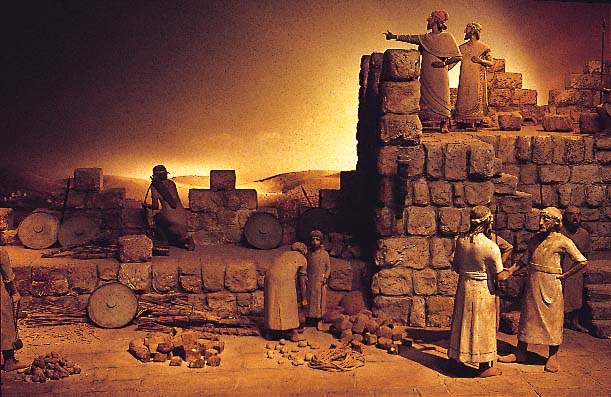
After the Persians conquered the Babylonian empire, King Cyrus who ruled from 539-530 let the remnant of Jews go back to Israel and rebuild the temple. This is recounted in the book of Ezra. When we get to Nehemiah, we’re in the mid-400s, and learn Nehemiah is a personal cupbearer to King Artaxerxes (ruled 465-425). When he learns the remnant in Jerusalem that survived the exile is suffering because the walls of the city had been broken down and its gates burned with fire, he asked the king if he could go and help his people, promising to return to his job when he did. When he arrives and inspects the damage, he tells the leaders his idea to rebuild the wall, and they get about doing it.

There is predictable opposition that comes along with anything the people of God do in a fallen world, but they eventually accomplish the task. Ezra the scribe was told to get the Book of the Law of Moses and read it to the people, and they weep and repent, and are told to then celebrate before they confess their sins. In 9:38 we read of the peoples’ agreement:

“In view of all this, we are making a binding agreement, putting it in writing, and our leaders, our Levites and our priests are affixing their seals to it.”

So far so good. Nehemiah has to head back to Babylon to keep his word to the king, and sometime later he asked to visit Jerusalem again. You can read what the people did, and Nehemiah’s final reforms in chapter 13, but what struck me was the hopeful frustration of Nehemiah. Using the phrase, “O my God,” he asks four times for God to remember, three for himself, and one for those who “defiled the priestly office and the covenant of the priesthood and the Levites.” It seems Nehemiah is aware of the futility of his own actions, and that God alone is the answer to sin. This is why reading Malachi helps us to understand the redemptive historical context of the end of Old Testament history that points directly to the New. The final words, after which the prophets went silent, tell us what to expect:

“Behold, I will send you Elijah the prophet before the great and awesome day of the Lord comes. And he will turn the hearts of fathers to their children and the hearts of children to their fathers, lest I come and strike the land with a decree of utter destruction.”

These verses and 3:1 point directly to the coming of Jesus and the gospel, the answer to Nehemiah’s frustration. He doesn’t want to be forgotten by God for what had “so faithfully done for the house of” his “God and its services,” but the Old Testament ends in apparent futility. Nehemiah’s hope, however, is in the right place, not in his own efforts, but the God who can make his efforts ultimately fruitful.

As 3:1 and here both say, it is the Lord himself who is coming, and who came in the person of Jesus of Nazareth. And we notice it is the coming Lord who turns hearts, in the image of Ezekiel, from stone to flesh. And the hearts being turned are the heart of the family, the very foundation of civilization. When peace, and righteousness, and wisdom in Christ reign there, society will be blessed.

As I say, ad nauseum, it all comes down to trust, but what exactly is trust. One definition: assured reliance on the character, ability, strength, or truth of someone or something. In all we do, fruitful or not at the moment, we pray and trust in the God whose kingdom is even now coming. He promises to keep us in perfect peace who trust in him.


Jesus and Animal Sacrifice in the Old Testament

Jesus and Animal Sacrifice in the Old Testament

I recently read of Solomon’s dedication of the Temple in Jerusalem in 2 Chronicles 7, and the celebration was massive. Part of the process was a mass slaughter of animals for sacrifice:

Then the king and all the people offered sacrifices before the Lord. And King Solomon offered a sacrifice of twenty-two thousand head of cattle and a hundred and twenty thousand sheep and goats. So the king and all the people dedicated the temple of God.

Have you ever wondered what happened to all those animals? I figured a long time ago they would never waste the meat, and we’re told in the Pentateuch the Levites were given meat from the sacrifices to eat. But they could never eat the meat of all the sacrificed animals, especially during the high holy days. Archaeological exploration has found that animal sacrifice at temple powered ancient Jerusalem’s economy, and it “confirms visions of the temple depicted in historical Jewish texts and suggests the economic heart of the city was its slaughtering operation.”

Something struck me, though, as I thought about this sacrificial operation.

My son away at college recently called me about a strange story in Numbers that didn’t make any sense to him. I asked what the Old Testament is about? And he knows the right answer: Jesus! As we discussed the passage in light of the ultimate Old Testament biblical hermeneutic, it’s surprising how the strangeness of the passage no longer appears so strange. In the context of the redemptive history in the Lord Jesus and the gospel, many Old Testament passages don’t appear so strange. 

With this fresh in my mind, I asked myself the same question about the animal sacrifices in 2 Chronicles. Knowing the answer is Jesus is Christianity 101, and our primer is the book of Hebrews. All Christians of every theological stripe know Jesus is the atoning sacrifice for the sins of his people, or the propitiation, which means a sin offering by which the wrath of the deity shall be appeased. We see in the Old Testament sacrificial system a type of Christ’s atoning work turning away the wrath of God against our sin, only in him God’s wrath was fully and completely satisfied. As Jesus said on the cross moments before his death, it is finished.

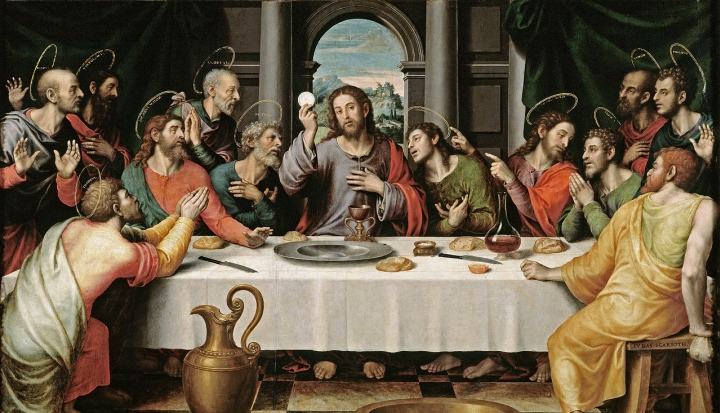
Again, this is basics, as the writer to the Hebrews might say, baby’s milk. But as I was reading about the sacrifices I thought, that’s a lot of meat for the people to eat! Then a phrase of Jesus very strange to first century Jews, but one we rarely think about today, came to mind: “eat my flesh.” In John 6 as Jesus is declaring he is the bread of life, he declares that his “flesh is real food.” Because of the last supper Jesus shared with his disciples we know this as communion where Jesus says of the bread, “this is my body.” There is also something mystical in partaking of his death as we eat and experience a real spiritual union with the Word of God that we might also partake in his resurrection.

What I had never done before in my 44(!) years as a Christian was connect the Israelites of the Old Testament eating the flesh of sacrificed animals to our eating the flesh of Christ. If the Old Testament is all about Jesus, it makes total sense, yet it never occurred to me until now.

As the meat of the sacrifice to atone for their sins sustained the Israelites as they ate, so the flesh of Christ we spiritually eat sustains us spiritually but in a very real way physically. Spiritual health, i.e., peace with God through our Lord Jesus Christ, has psychological and emotional effects which have real implications for our physical health. All those things we should not do because we fully trust in God, like worry, doubt, fear, anxiety, anger, etc., cause stress which dishonors our Almighty Savior God, and is not healthy.

This became even more clear to me later in 2 Chronicles 35 when under King Josiah the people celebrated the Passover in Jerusalem. It’s amazing how it echoes communion in the Lord’s Supper.

11 The Passover lambs were slaughtered, and the priests splashed against the altar the blood handed to them, while the Levites skinned the animals. 12 They set aside the burnt offerings to give them to the subdivisions of the families of the people to offer to the Lord, as it is written in the Book of Moses. They did the same with the cattle. 13 They roasted the Passover animals over the fire as prescribed, and boiled the holy offerings in pots, caldrons and pans and served them quickly to all the people. 14 After this, they made preparations for themselves and for the priests, because the priests, the descendants of Aaron, were sacrificing the burnt offerings and the fat portions until nightfall. So the Levites made preparations for themselves and for the Aaronic priests.

This is all a bloody business (thousands upon thousands of animals), which is what I always focused on as it is obviously connected to the blood of our slain Savior. But the Passover wasn’t just about killing animals to cover sin, but was about eating and being sustained by God’s mercy and grace in the eating. Remember the wages of sin? The only reason we are not a smoldering pile of ashes on the ground is because of his mercy and grace. As I often say, if our sin is akin to jaywalking, God’s forgiveness is not that big of a deal. If, on the other hand, it’s akin to genocide, that’s a whole other thing. 

That it is the latter, is the reason untold millions of animals had to die in order for us to understand the suffering and death of the Son of God. The only reason we don’t have to go through the bloody business of sacrificing animals today is because God himself in the person of Jesus of Nazareth died to set us free from sin and death. As I wrote recently, he is the double cure for sin!

How To Do Evangelism Without Doing Evangelism

How To Do Evangelism Without Doing Evangelism

For many Christians, being a full-on Jesus freak like me doesn’t come naturally. For many reasons I’m kind of obsessed with this whole God thing, and I can’t help thinking about him all the time and about how he is related to everything, literally. You might think this would make me, as “they” say, so heavenly minded I’m no earthly good, but it would in fact be just the opposite. I’m so heavenly minded that I am able to be of some earthly good. When we live life in light of eternity, knowing this life is not all there is, that this life is in fact just the beginning of our forever life with our Creator, then our lives can be lived as he intended for them to be lived. As Jesus said:

 The thief comes only to steal and kill and destroy; I have come that they may have life, and have it to the full.

The Greek for “to the full” means all-around, “more than” (“abundantly”); beyond what is anticipated, exceeding expectation; “more abundant,” going past the expected limit (“more than enough . . . “). That is the life Jesus, God himself in Christ, wants for us. And it is only in him, and in the gospel, the good news he came to bring us in his death and resurrection, that such a life “to the full” is possible. Sure, anyone can live a passably fine life without him, on the surface, but a kind of amazing fulfillment and joy about just being alive to everything can only be found in Him. Even as incredibly challenging and frustrating and disappointing, and sometimes downright terrible as life can be, in Him, in Christ Jesus, life is incredible often beyond the ability to convey. As is my habit of not getting right to the point, you must be wondering what this has to do with doing evangelism without doing evangelism. Well, hold your horses, and I’ll tell you!

While I am not an evangelist by trade (Ephesians 4:11), one who is called by profession to proclaim the good news of the gospel, I can’t seem to help wanting to talk about this good news all the time. What separates me from what I think many tend to think of when they see or hear the word evangelism, is that my sharing the good news is not restricted to a certain set of propositions about how we are to be saved from our sin. We might think of these propositions as the core of the gospel out of which radiates our perspective on all things, and that core is our reconciliation to our Creator.

It is quite obvious we are born fallen, or in theological terms, in original sin, which is alienation or estrangement from our Creator. In biblical terms, we are enemies of God, by nature openly hostile to and animated by a deep-seated hatred for him. Most Christians, let alone non-Christians, don’t realize the depth of this alienation. We tend to see sin as something akin to jay walking, when in fact it is more like genocide, an almost infinite difference. That’s why the gospel is so profound. As the Apostle Paul puts it:

For if, while we were God’s enemies, we were reconciled to him through the death of his Son, how much more, having been reconciled, shall we be saved through his life!

Again, what has this to do with doing evangelism without doing evangelism? Everything. When we get this, I mean really get it, we can’t help it affecting how we see everything, how we encounter and engage and feel about everything. C.S. Lewis, as he always seemed to do, captured this wonderfully:

 I believe in Christianity as I believe that the sun has risen not only because I see it, but because by it I see everything else.

And Lewis was an ex-atheist, which in his 30s he realized explained absolutely nothing about reality, while Christianity explained everything. We call that serious explanatory power!

Christianity, which is the gospel, which is our reconciliation to our Creator, affects how we define and experience every single thing every single moment of every single day of our lives. It gives definition and meaning to all things. It allows us to understand the puzzle pieces that fit into the puzzle of existence. In philosophical terms, puzzle pieces are the particulars (each fact or experience of existence), and they can only make sense because they are part of the universal, the big picture, which is God himself in Christ. How does this comprehensive understanding of existence in Christ help us do evangelism without doing evangelism?

Every person we encounter every day is looking for meaning in their lives. They are looking for hope, purpose, dignity, fulfillment, significance, accptance, love, you name it, none of which can be had in the particulars, in the puzzle pieces by themselves. But oh how people try! We need to understand this, to really buy it, because it is true! Why do you think in the most prosperous periord in the history of the world there are so many suffering from depression and anxiety, frustration and despair? Something like 40,000 people every year in America kill themselves! How pathetic and sad is that. And we have the answer! The gospel! Not the four spiritual laws, or the Romans Road, as helpful as such things can be, but in Christ, and in reconciliation to our Creator in him!

What this means is that everything in some way, some how, comes back to the gospel. It comes back to the Creator of all things who has revealed himself in his creation, in Scripture, our Bibles, and in Christ. So, we can speak this to those we encounter without being obnoxious, or “religious.” We can proclaim the hope, meaning, purpose, love, all of which comes from the reconciliation to our Creator in the one who reconciled us and all things to himself on a Roman cross and came back from the dead to prove it was all true. This is what people are looking for! They just don’t know it yet. We never have to say another person has to believe all this, only that we do, and it just happens to be the truth! Far from being obnoxious or annoying, this makes us winsome and attractive to people who are likely dying in a desert of existence and don’t know they’re really looking for an oasis of water named Jesus!