
We human beings are a conundrum, often more of a mystery to ourselves than to others. It’s clear there is something terribly wrong with us, and we’ve been trying to figure it out since the dawn of time. There is also something amazing about us, something very much more than the sum of its parts. Some people given their assumptions about the nature of the world just see us as more or less clever apes, so much lucky dirt, a product of matter plus time plus chance. That, however, is a weak explanation for the glory and wreckage that is man. Seventeenth century mathematician, physicist, and Christian apologist Blaise Pascal put similar thoughts in a much more poetic way:
What kind of freak is man? What a novelty he is, how absurd he is, how chaotic and what a mass of contradictions, and yet what a prodigy! He is judge of all things, yet a feeble worm. He is repository of truth, and yet sinks into such doubt and error. He is the glory and the scum of the universe!
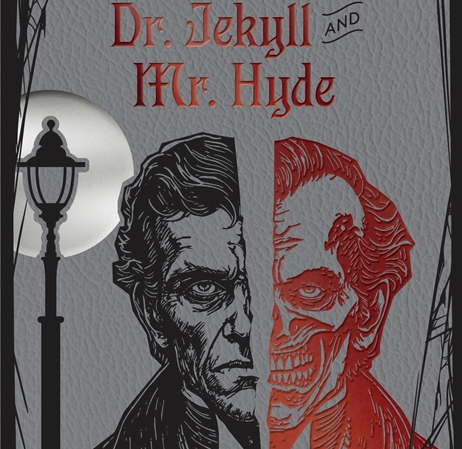
A biblical anthropology, or how we understand what we are, is consistent with what we experience of human nature. All of us, if we’re honest, can see Dr. Jekyll and Mr. Hyde in ourselves. Throughout our lives the proverbial little devil on one shoulder, and the angel on the other, are constantly at war as to which we’ll listen to, and the little devil wins more than he should.
Christianity is like a nuclear bomb of explanatory power, except instead of destruction it brings clarity and hope everywhere it goes. Everything in life has to be explained. It’s a very dull person who goes through life never wondering what the heck is going on, why it all exists, what it all means. Most people want some kind of explanation, or the world would not be such an endlessly religious place. Even secularism and those who claim no religion, are religious to the bone. They believe in something, even if they think it’s nothing. Everyone lives by faith.
When we come back to anthropology, Christianity in every way nails it. Man was created in God’s image, male and female he created them. Without sin, man was given a mandate to fill and subdue the earth, in effect to civilize it. Then giving into the temptation to usurp his maker’s place in the universe thinking he could become like God, he rebelled and fell into the deplorable state of sin and death. Everything changed in a moment, and difficulty, struggle, and frustration would be the lot of man ever thereafter. As God says to Adam:
“Cursed is the ground because of you;
through painful toil you will eat food from it
all the days of your life.
18 It will produce thorns and thistles for you,
and you will eat the plants of the field.
19 By the sweat of your brow
you will eat your food
until you return to the ground,
since from it you were taken;
for dust you are
and to dust you will return.”
Who cannot attest to the accuracy of that curse! When our kids were growing up we had a favorite saying around our house when things inevitably went sideways: thorns and thistles. Jesus in John 16:33 makes what must be one of the great understatements of history: “In this world you will have tribulation.” No kidding! All because of what sin did to us and our world.
What exactly is a proper understanding about human nature and why is it so important? With our limited space we will look at two concepts of man that developed in the West because of Christianity, and the implications of each.
Rousseau and Man Born Good
Swiss born French philosopher Jean Jacques Rousseau (1712-1778) started a transformation in the Western understanding of man giving us a bountiful harvest of misery, suffering, and death. Yes, how we look at human nature has life or death consequences.
Rousseau came up with an idea about human nature that nobody in the history of philosophy or religion had ever conceived, that man is born good but is corrupted by society and civilization. The reason no one had ever conceived of something like that before is because it’s obvious human beings are nothing of the sort. If you have children, or know any, you’ll understand. Rousseau, however, made the idea that people are naturally good the cornerstone of everything he wrote. He believed people in the original state of nature were healthy, happy, good, and free. Human vices, he argued, started to develop from the time when societies were formed. Rousseau thus exonerates man and blames society. Passions that generate vices hardly existed in the state of nature but began to develop as soon as people formed societies. This had inevitable political consequences as our anthropology always does.
In his book, The Social Contract, his opening sentence has become famous, or infamous depending on one’s perspective: “Man is born free, and everywhere he is in chains.” It follows then if you want to make human beings better, you make their environment or society better. Once circumstances improve, people will improve. Thus began the slow development in Western history of the left side of the political/cultural spectrum. Roger Kimball in his book, The Long March: How the Cultural Revolution of the 1960s Changed America explains why this went so wrong:
Rousseau’s ideas about freedom and virtue are a recipe for totalitarianism. “Those who care to undertake the institution of a people,” Rousseau wrote in the Social Contract, “must feel themselves capable, as it were, of changing human nature, . . . of altering the constitution of man for the purpose of strengthening it.”
This, he thought, could be accomplished by one of of his most disastrous concepts, the “general will.” People in society developed what he called a “social contract” where people act as a group that never falters so that each person acts to further the public or common good and national interest. In such an environment, individual liberty is a threat to the general will, and all dissent must be silenced. The individual will must be brought in conformity to the general will. Who determines what that will is, he doesn’t says, but Kimball calls this idea, “surely one of the most tyrannical political principles ever enunciated.” History bears out the accuracy of that statement.
Thus we see here the seeds of the modern totalitarianism that turned the French Revolution into a bloody terror. It won’t surprise us that Rousseau was a great inspiration for that failed Revolution, and every failed revolution thereafter. As I’ve heard it put, for the left nothing succeeds like failure. If it doesn’t work, try it again, harder. We’ll contrast the fruit of the French with the American Revolution below, but you can see the seed of many of the modern political disasters in this simple concept that man is born good, and if we want better human beings we just have to create a better environment.
The Fruit of the French Revolution and Totalitarianism
As we look back at the modern world from the vantage point of the 21st century, we can see the seeds of much of the political upheaval in the bloody reign of terror known as the French Revolution. The root of the terror can be found in the Enlightenment project started by a pious French Catholic, Renes Descartes, back in 1637. As a Christian, Descartes was distressed at the growing skepticism among intellectuals in Europe, and he decided to address it head on. Unfortunately, his solution became the problem. He decided to doubt everything that could be doubted and realized the only thing he could not doubt were his own thoughts. With that conclusion he came up with the famous, or infamous, phrase, I think therefore I am, or Cogito Ergo Sum in Latin.
Descartes’ solution would become the problem of the modern world and lead to untold misery. That would be his basic assumptions about knowing, or how we come to knowledge, what’s called epistemology. First he assumed we could know without revelation, that all we need for us to know anything is our mind and reason. That came to be known as rationalism. Of course we can have some level of knowledge without revelation, but without it when it comes to questions about ultimate things, we’re stuck with speculation and conjecture. Witness the history of philosophy and religion.
Eventually Western intellectuals decided that not only didn’t we need the Bible and God’s revelation to know, but that it was all myths and made up stories, and God didn’t exist anyway. That was bad enough, but to add insult to injury, Descartes assumed we could attain knowledge of an absolute sort. In other words, we could attain absolute certainty. For whatever reason, he never put two-and-two together, and realized that meant man would be accepting Satan’s temptation in the garden, that we could “be like God knowing good and evil.” No we can’t! Finite beings like we us are by definition limited beings, and thus can only have knowledge of a limited sort. Needless to say, man hasn’t done a real great job being God. The French Revolution was the first real world example of rationalism in practice, and it wasn’t pretty. It would not be the last.
The stage was now set for communism, and Karl Marx stepped onto it in the mid-18th century putting into theoretical practice all the ideas of Rousseau and the French Philosophes and their revolution. By the middle of that century atheism was fully flourishing, and Darwin came along to provide the creation myth they needed to give their views some intellectual credibility, evolution. This entire intellectual and cultural stew produced men of amazing feats of intellectual legerdemain, or sleight of hand meant to manipulate or deceive, like Frederich Nietzsche and Sigmund Freud, among many others. They weren’t purposefully lying, of course, but stuck in a box without revelation, guessing is the best they could do, and the result was the 20th century and its mass horrors. It all started with the Great War, which gave birth to the Russian Revolution in 1917 and a century of communist tyranny. Marx was a Utopian, as have been all communist movements he inspired, and mere human beings would never be allowed to get in the way of creating their perfect communist society on earth. Hitler was just a different kind of Utopian, and after he and other assorted communists got done with things, north of one hundred million people were killed in the 20th century. Ain’t life without God grand! Now let’s take a brief look at the alternative.
The American Revolution and Christian Society
Unlike the French Revolution, the American version was driven by the Christian faith. Robert Curry in his book, Common Sense Nation, says “the Great Awakening prepared the way for the American Revolution in too many ways to be counted.” Pulpits across America, influential in a way modern Americans can’t comprehend, were aflame with justifications for liberty and revolution. The colonies were steeped in the Protestant Christian faith. That meant the founding generation, and every founder had a Christian worldview, whether they were orthodox Bible believing Christians or not. Instead of rejecting tradition and Christianity and the church as the French radicals did, they embraced it as necessary for their Revolution to succeed.
As evidence for this, the most quoted book of the founding wasn’t some philosophical tome about liberty, but the Bible! And the most quoted book of the Bible was Deuteronomy, and the most quoted chapter was 28 on the blessings and curses. If their Revolution was to be blessed and honored by God, it would come through obedience to him. Of the many quotes referencing Christianity, one of the most famous is by John Adams who said, “Our Constitution was made only for a moral and religious people. It is wholly inadequate to the government of any other.” By which he meant a Christian people. The founders knew nothing of a generic “religious people,” as if any old religion would do. It doesn’t work that way. False gods and false religion do not bring the blessings of the God of Israel, the God and Father of our Lord Jesus Christ.
One reason for this is Christianity and the Bible give us the true understanding of human nature. Only a truly biblical anthropology could produce the American Republic. When we juxtapose these two revolutions, holding them side by side, the differences could not be more stark. Revolutions always include suffering and death, but what counts is what comes after the guns go silent. The French assumed the anthropology of Rousseau, while the Americans assumed the anthropology of the Bible via Calvin. Calvinism was the most dominant of the Protestant traditions in the colonies.
That meant those men putting together a government believed people were sinners and couldn’t be trusted with power. In Calvinistic theology that is called total depravity, which doesn’t mean everyone is as evil as they can be, but that every part of man is corrupted. There could be no Utopian vision in such a people or such a government. Thus if the liberty the Americans fought for was to be achieved, no one person or group of people could be entrusted with power. Everything about American government was to be limited so that the people could govern themselves. Government’s job is not to make people good; that is the job of their God, and government represents the people. Unlike in tyrannical governments where power is concentrated in one man, or a group of people, the American government is accountable to the people, and power shared among the different branches of government.
Secularists over the last century have tried to take credit for America’s founding saying it was primarily an Enlightenment project and a secular republic. While there were certainly Enlightenment influences, they were not of the radical Enlightenment that drove the French. Rather, the primary influences of the founding generations came from the history of a thoroughly Christian England. Starting with Alfred the Great in the 9th century, England’s Christian heritage defined everything about America’s founding. He developed a law based on the Ten Commandments that became foundational for English law thereafter. The founders looked back to Magna Carta in 1215, the first time in history limits were put on a king’s power, to the English civil war of the 1640s, to the Glorious Revolution of 1688 and the English Bill of Rights the next year which served as the inspiration for the U.S. Bill of Rights. They saw themselves as simply defending their rights as Englishmen.
A Christian nation isn’t just about the moral standards, but about a full orbed understanding of reality from a Christian perspective, including the nature of the human person. There is no neutral way to govern a country, let alone is secularism neutral. As an increasing number of Christians are realizing, that is a myth, and affirming that God will bless a nation to the degree it looks to Christ.
Recent Comments