
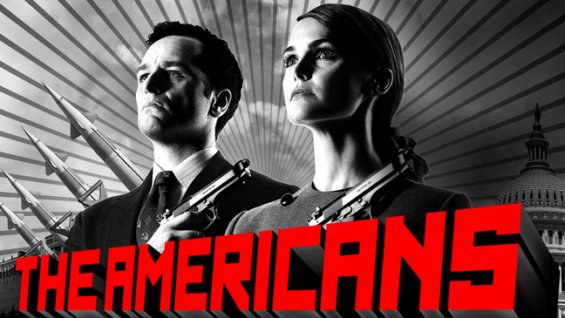

The FX show The Americans is set in the Reagan era Cold War 80s. Two Soviet intelligence agents, Keri Russell and Matthew Rhys, pose as a married couple to spy on the American government. They didn’t know each other prior to meeting in America, and are tasked with living a completely normal suburban American life, helped along with their two kids who have no idea mom and dad are agents of America’s sworn enemy.
For those too young to remember life in a Cold War world, The Americans an excellent pop culture introduction to the time. For those old enough to remember, it’s a great nostalgia trip. And for those who like solid drama with a lot of moral ambiguity, there’s plenty of that too.
The reason I wanted to write something about the show isn’t to necessarily promote it, although for adults not squeamish about television portrayals of sex and violence it’s well worth the time. Rather, I came across a piece at an online (generally liberal) publication called Vox that affirms one of the central tenants of my book about keeping your kids Christian: “The Americans has always been a show about faith.” Having watched the show over four seasons, it is about anything but “faith,” as most Americans would understand the term; i.e. it’s not about religion. A liberal version of Christianity is part of the show, but the show itself if focused on two communists who are atheists. When I read the piece I was pleasantly surprised by the case the author was making: Everyone lives by faith.
The messaging of the dominant secular culture through education, media, and entertainment consistently tells us that religious people need “faith,” which is defined as belief without evidence. Isn’t that convenient. They define “faith” so that non-religious people don’t need it. Such people supposedly use reason and logic to make sense of the world, while religious people use “faith.” To use a technical term, that’s poppycock! Not to mention untrue. In fact, to be human is to live by faith, which I define as trust based on adequate evidence. Because some people believe things without evidence doesn’t mean that becomes the definition of faith. We can trust with more or less evidence, but we still have to trust because our knowledge is always limited.
The author of the Vox piece shows how this idea of faith works itself out throughout the show, and she concludes with these words:
We are all born into some belief system. Today we can swap one for another with minimal consequences, but we know we’re doing it, rebelling against our upbringing, and we spend our whole lives figuring out how to live with two sets of values and voices in our heads. As the culture and religion scholar David Dark likes to say, some of us are raised capitalist. Some are raised communist. Some are raised Christian. There are dozens of other possibilities. The Americans places those belief systems into conflict and asks an important question of its viewers: In whom, or what, do you believe? And why?
And what if you are wrong?
Good questions. Communism hasn’t worked out so well, and has left death and misery in its wake. Capitalism has proven the best means of producing prosperity and liberty of any other system of economics, so it’s proven trustworthy, but not as an explanation for ultimate reality. It’s only a means to a practical end, not an end in and of itself. Of all the religions and worldviews available, Christianity has proven a powerful explanation for ultimate reality. I like the way C.S. Lewis put it:
I believe in Christianity as I believe that the Sun has risen not only because I see it but because by it I see everything else.
Recent Comments