

Yes, Experience is Evidence for the Truth of Christianity
I recently heard John Lennox say that Christian experience is a real way to prove the truth of Christianity. If Christianity doesn’t in some way reveal its truth in lived experience, then it can’t be true. For those of us who distrust the subjective, the emotional, the ego and the id, in Freudian terms, this is not an easy thing to buy into. But it stuck with me, and it wasn’t long before I exclaimed to myself, of course, he’s right! If God in Christ is some theoretical construct that doesn’t transform lives in an obvious way proving Himself to the person in the process, then Christianity’s not worth much.
One reason I was open to Lennox’s declaration at this time in my life is because I’ve been listening to Christian testimonies consistently over the last three or four years, hundreds of them by this point. I’ve concluded we have two choices when considering their experiences. Either they are real, and God ordained, or they are not. If they are not, then it’s just human psychology. I would argue that mere human psychology can’t explain the consistent transformation of lives for the last 2000 years of Christian history. I think of the Apostle Paul. The phrase “road to Damascus experience” has come down in Western history to mean conversion because his was so radical. The only plausible explanation for his complete 180 on Christianity, from persecuting Christians to the great Apostle to the Gentiles, is that the risen and ascended Jesus Christ really did appear to him on that road, as he testified for the rest of his life. Mere psychology doesn’t do that.
What’s even more remarkable about all the transformed lives over all that time is that they come from every corner of the earth, from every language and nation and tribe. As Yahweh promised to Abraham, all nations of the earth would be blessed through him. I learned something from Tim Keller that should have been obvious to me before, that Christianity is the only universal religion on earth, which also profoundly speaks to its truth.
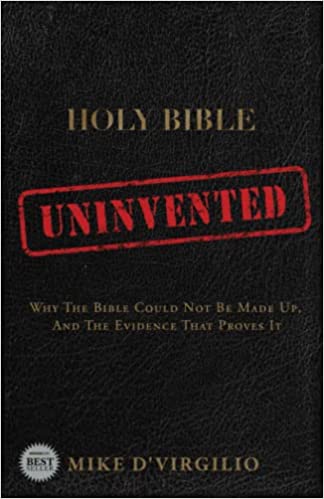
And it’s not just that human psychology alone can’t account for all these transformations, but if it’s not real, then what transformed all these lives, and Western civilization itself, are lies. Christianity makes some astounding claims and declares them to be truth; if they are not, they are lies. And it is literally impossible for lies to do what we’ve seen Christianity do for people since Jesus’ disciples claimed they witnessed Him resurrected from the dead and were transformed by that fact. As I argue in my book, Uninvented, only a real, actual, historical bodily resurrection of Jesus of Nazareth from the dead can account for pious Jews completely changing their religion overnight. Consider these radical changes of what they gave up because they claimed Jesus’ resurrection:
- The sacrificial system.
- The importance of keeping the law.
- Keeping of the Sabbath.
- Non-Trinitarian theism.
- A human Messiah.
Lies or made-up stories do not do this.
Skeptics are fond of claiming there is little or no evidence for the veracity of Christianity. In fact, we have an embarrassment of riches of evidence, as the history of apologetics makes abundantly clear. Transformed lives, including those of the very first Christians, and civilizations, add to that embarrassment of riches (Tom Holland, a non-Christian, in Dominion: How the Christian Revolution Remade the World argues that Christianity is the only explanation for the modern world). If Christianity isn’t true, then what’s happened in these lives, including yours and mine, has to either be explained away or explained some other way. But as my book argues for the historicity of the biblical accounts, and their divine origin, I would also argue for the divine origin of transformed Christian lives: they can’t be our own inventions. That they are of God is a more plausible explanation than it’s wishful thinking, or in Marx’s phrase, the opiate of the masses to help us deal with the difficulties of life.
Keep in mind that changed lives don’t prove Christianity is true, but if Christianity is true, it will change lives. This makes sense when you look at the entire scope of redemptive history. Something is very wrong with the world and the humans who in inhabit it, and it culminates for each one in the ultimate indignity of death. Followers of religions and philosophies have been grappling with the why and how of this for thousands of years, but the best you get from them is speculation and conjecture, that is until Judaism and Christianity. There we learn that God is a transcendent all-powerful Creator who made the world good, in fact, very good. Then man rebelled by disobeying God, and was instantly alienated from his Creator, which was how all the suffering, misery, and death came into the world. Alienate is a perfect description of the consequences of that rebellion:
to cause to be estranged: to make unfriendly, hostile, or indifferent especially where attachment formerly existed
In Genesis 3 we read of this rebellion, and because of it the man and woman hid from God when he visited them in the garden. Something had gone terribly wrong. He tells them because of their disobedience, their lives will now be very hard (painful toil, sweat of the brow, thorns and thistles), and in the end they turn to dust. Sounds promising. Then in the very next chapter, Cain kills Abel, and the misery of human existence is off and running. All of history proves that because man is alienated from his Creator, he’s alienated from himself and others, as well as the created order he was meant to have dominion over.
In that same Genesis 3 account of what we call the fall, God shares the solution, and what would become redemptive history begins. God told the man and his wife the seed of the woman will crush the serpent’s head which was accomplished by Christ in his life, death on the cross, resurrection, and ascension to the right hand of God. He accomplished the redemption of his people (in Matthew 1:21, Jesus is given his name because He will save His people from their sins, not try, but will), and he sent the Holy Spirit at Pentecost to apply it in their lives. When it is, Christians are no longer alienated from their maker, their God, who has become their Savior, and that begins a healing from all the other alienations in their lives wrought by sin.
If this is true, and it is, then the lives of Christians will reflect the transforming power of reconciliation, first with God, then themselves, then others, and finally all of creation. We call this love. When Jesus was asked what the most important commandment was, he answered that the entirety of the law and the prophets, the whole Old Testament, is about love, first loving God with all our heart, soul, mind, and strength, and loving our neighbor as ourselves. Love is efficacious, and because he first loved us, we too can love. That is the biggest miracle of all, that self-absorbed, self-interested, self-obsessed sinners can love others, the 1 Corinthians 13 impossible type of love. Only something very real does something like that.


Recent Comments