Uninvented: Jeremiah Doesn’t Make Up the New Covenant

Uninvented: Jeremiah Doesn’t Make Up the New Covenant

There are so many angles to the uninvented argument, and one of the most important is theological, something I don’t get into much in the book. The Bible looked at in 20/20 Jesus Hindsight is theological genius (see Luke 24), and I would argue impossible to be made up by human beings and mere human imagination. It is stunning when you consider the consistency of Genesis to Revelation written over approximately a 1500-year timespan by 40 or so different authors. Most of the Old Testament was written in Hebrew, with a bit of Aramaic thrown in (the language of the Babylonians similar to Hebrew that became the language of the Jews by Jesus’ time), and the New Testament in Greek. Yet through all that time and with all those differences, the coherence of the message is astonishing. It’s almost as if there was a “conspiracy” of an Almighty all-knowing God who decided to reveal himself and his plans to his creatures this way through the words of men. In fact, it is the only logical and plausible explanation for the Bible. Mere human invention doesn’t read this way, and it’s not even close.

Which brings me to Jeremiah 31. In my reading through this time I was struck by how impossible it would have been for these words to have been made up by Jeremiah or anyone else:

31 “The days are coming,” declares the Lord,
    “when I will make a new covenant
with the people of Israel
    and with the people of Judah.
32 It will not be like the covenant
    I made with their ancestors
when I took them by the hand
    to lead them out of Egypt,
because they broke my covenant,
    though I was a husband to them,”
declares the Lord.
33 “This is the covenant I will make with the people of Israel
    after that time,” declares the Lord.
“     and write it on their hearts.
I will be their God,
    and they will be my people.
34 No longer will they teach their neighbor,
    or say to one another, ‘Know the Lord,’
because they will all know me,
    from the least of them to the greatest,”
declares the Lord.
“For I will forgive their wickedness
    and will remember their sins no more.”

To understand how impossible it would be for a human being to make this up you have to be familiar with redemptive history. It is critical for Christians to know their redemptive history because it is only that context that gives all the details their psychological, emotional, and transforming power in our lives. The main subject of the Old Testament is Israel, or God’s covenant people. Their entire 1500-year history would point forward to the true Israel, Jesus (Matt. 2:13–15). Jesus was also the second or the last Adam (1 Cor. 15:45-49). What these two, Adam and Israel, had in common was that they failed the test, which points to why a Jeremiah 31 type of salvation was necessary, one that would be inner, spiritual, and transformational verses one based on external obedience to the law.

 Man, created as man and woman, was given a dominion mandate to rule over God’s abundant, and good, created order (Gen. 1:26-28). This is also called the cultural mandate, and the purpose whichever term is used, is to bring God’s kingdom rule (thy kingdom come thy will be done (Matt. 6:9-13), to earth. Adam failed miserably in his assignment (it was his fault the serpent was in the garden and able to tempt the woman in the first place), as we read about the fall in Genesis 3. The seed that would crush the serpent’s head was God’s promise of the good news to come in his Son, who would be God himself come to save His people from their sins (Matt. 1:21). First, there would be a period of time leading eventually to God calling Abram from Ur of the Chaldeans, and founding the people of Israel through his offspring.

 After the little blip of 430 years in Egypt (God is never in a hurry), most of that time in slavery, God in the Exodus rescued his people from slavery to bring them into a land of their own and introduce them to His law. They were also introduced to the blessings of obedience and curses of disobedience (Deut. 11) to God’s law. That didn’t turn out well. Starting with the book of Judges, it’s all downhill. But what’s the point of the miserable failings of the Israelites? To show us just what horrible sinners they were? No! They are us! That is the message of Israel, that our own obedience to God’s perfect law is impossible for fallen sinners alienated from God. But God wants to bless His people, so He in the person of Christ obeyed God’s law perfectly in our place, so that we by mere faith, by trust in Jesus, can have Christ’s righteousness, God’s very own righteousness as our righteousness! (Rom. 3)

 Which brings us to Jeremiah 31. The two covenants are fundamentally different, but the same. They are the progressive outworking of one eternal covenant in the Triune God, one promise to Adam and Eve, eventually leading to one legal, covenant agreement between God with Abram in Genesis 12. Since Abram was childless, he asked the Lord God how he could know His promises would come true. He, like all of us, needed some sign, some evidence. So the Lord told him to get some animals and He performed a ceremony with Abram showing He would accomplish both sides of the covenant promise since no human being or group of human beings could attain what was required, which was the perfect righteousness of God. That would require, as we see here in Jeremiah 31, the forgiveness of sins, the reconciliation of a holy God and sinful man. That was accomplished in Christ’s body given for us on a tree. We are told through Isaiah (53) 700 years before it happened how this would be accomplished:

5 But he was pierced for our transgressions,
    he was crushed for our iniquities;
the punishment that brought us peace was on him,
    and by his wounds we are healed.

 And some 600 years before anyone would have a clue what this meant, God through Jeremiah tells us. God himself in and because of Christ by the power of the Holy Spirit (given to the church, His people at Pentecost, Acts 2) would transform their the hearts and minds, completely changing their inner being from one of hostility to God to love for Him and His law (I John 4:19, we love because he first loved us). The only way this inner transformation could take place is if our sin was paid for, and God’s wrath fully satisfied (propitiation). God would now no longer be hostile toward us because our sin, our offense against him, was wiped away, Christ become our righteousness, sanctification, and redemption (1 Cor. 1:31).

 None of this could have been known or predicted until Jesus rose from the dead. He rebuked the disciples on the road to Emmaus on the first Easter Sunday because they didn’t understand that the entire Old Testament was about Him, and told the rest of the disciples the same thing later as he ate with them (Luke 24). Now we know from Jeremiah that our affections have been completely changed from self to God, from our desires to His law, and we now know Him in Christ our Savior and Lord. And we all want to now go tell it on the mountain, over the hills and far away!


Isaiah 61: A Planting of the Lord

Isaiah 61: A Planting of the Lord

In a recent post I made the case that the Lord is our salvation because He is our righteousness, that we can’t save ourselves. Isaiah 61 makes that same point beautifully, that our salvation is wholly the work of God. This Christian theological fact is what separates Christianity from every other religion on earth because they are man-made religions. When human beings invent a religion, man works his way to God and acceptance with God (or the gods), and thus puts God in his debt. God then owes man acceptance because of what he’s done. Because we are born sinners, we are all born “religious,” meaning we think we can earn God’s favor with our works. Christianity, however, declares we are born dead in our sin, alienated and hostile to God and can do absolutely nothing to attain his favor unless God takes the initiative to save us and transform our dead stone hearts to living hearts of flesh (Ezekiel 36:25-27).

The first words of Isaiah 61 have profound significance in redemptive history because they are spoken by Jesus near the beginning of his ministry to accomplish the salvation of His people. We read in Luke 4 that he visited his hometown of Nazareth where he had been brought up and was teaching in the synagogue. News about him had spread throughout the whole countryside of Galilee, so we have to imagine there was great anticipation to see what the hubbub was all about. He gets up to read and the scroll of this passage in Isaiah is providentially given to him:

18 “The Spirit of the Lord is on me,
    because he has anointed me
    to proclaim good news to the poor.
He has sent me to proclaim freedom for the prisoners
    and recovery of sight for the blind,
to set the oppressed free,
19     to proclaim the year of the Lord’s favor.

When he hands the scroll back to the attendant and sits down, Luke says, “The eyes of everyone in the synagogue were fastened on him.” It feels dramatic and we’re waiting for something to happen, and his next words seem to indicate this is it: “Today this scripture is fulfilled in your hearing.” But the people don’t respond to these astonishing words. Maybe the words were not seen as directly Messianic, I’m not sure, but what he says next really gets them ticked off. For some reason, we’re not told, he says, “no prophet is accepted in his hometown,” and then uses the story of Elijah doing miracles only for non-Jews. They were so furious they ran him out of town and tried to throw him off a cliff! You just don’t make stuff like that up!

Jesus had only started his ministry so he walked right through them and left, but his words to these Jews in his hometown were prophetic. You will notice he had stopped the Isaiah quotation mid-sentence and left out these words: “and the day of vengeance of our God.” That vengeance would come against the Jews who will reject their Messiah 40 years later with the destruction of Jerusalem in AD 70, and will come at the end of time with the judgment of the living and the dead. Until then it’s all good news, the gospel of the kingdom, of reconciliation and forgiveness of sins, of mercy and grace in Christ. And all of this is of God as we read in verse 3: 

They will be called oaks of righteousness,
    a planting of the Lord
    for the display of his splendor.

Oaks of righteousness is an interesting phrase. If we think of Oak trees it brings to mind strength and stability, something not easily moved. If our salvation was our doing, we would be weeds, not oaks. As it is, our helplessness is more than clear in the passage. The “they” referred to are those Jesus came to proclaim this good news to, those who are poor, prisoners, blind, and oppressed. What is it that has people in such a state? Sin. Alienation from God, their Creator and ours.

These words indicate what Calvinists call total depravity, the utter inability of sinners to save themselves. We’re not sick in our sin, we’re dead in our sin. Big difference. Being poor and oppressed is something we could possibly address by our own efforts, but if we’re blind, there is nothing we can do to make ourselves see, and if we’re in prison, nothing we can do to set ourselves free. It’s all God, all of it, including our faith, our decisions, our will, our affections, He transforms our entire being by the almighty power of his Holy Spirit that our lives might be “for the display of his splendor.”  

In New Testament hindsight we know there is a direct connection between “the year of the Lord’s favor” and being an oak of righteousness, “a planting of the Lord.” The Apostle Paul tells us how in Romans 3:

21 But now apart from the law the righteousness of God has been made known, to which the Law and the Prophets testify. 22 This righteousness is given through faith in Jesus Christ to all who believe.

We trust in Jesus, and the very righteousness of God is ours! That is why we are at this very moment “oaks of righteousness.” It literally has nothing to do with us! Is that the best news ever or what! This is no longer something we have to try to attain by our own efforts and works, the “religion” I spoke of above. The pressure is off. We no longer have to worry about measuring up to something we can never measure up to anyway. He himself will plant us for our good and his glory. No human beings could ever make up such a religion because it goes against the grain of every inclination of the human religious heart. All grace and mercy? That makes no sense! It is revealed to us that it is true, praise be to God.

The last two verses of the chapter are the icing on God’s sovereign salvific cake:

10 I will greatly rejoice in the Lord;
    my soul shall exult in my God,
for he has clothed me with the garments of salvation;
    he has covered me with the robe of righteousness,
as a bridegroom decks himself like a priest with a beautiful headdress,
    and as a bride adorns herself with her jewels.
11 For as the earth brings forth its sprouts,
    and as a garden causes what is sown in it to sprout up,
so the Lord God will cause righteousness and praise
    to sprout up before all the nations.

Isn’t it incredible that instead of fearing God and always worrying that we’re just not good enough, that we’re not pulling this Christian thing off like we think we should, we can rejoice in the Lord God because He clothes and covers us? The right answer is yes! It turns “religion” on its head, upside down, inside out, and why Christianity could never, ever, be invented, be a figment of human imagination, mere fiction. If we did make it up, we would never, ever make it this easy. We are completely His work for the display of His splendor, thanks be to God!


The Lord Himself is Our Salvation

The Lord Himself is Our Salvation

I’ve concluded over these four plus decades as a Christian talking and listening to many Christians, that no matter what tradition they come from or their theological convictions, they are all Calvinists. What I mean by that is they all realize, every single one of them, they can’t save themselves from their sins; it is God alone who has saved them and is saving them. It’s just too obvious to any honest person who has a real relationship with Christ through the power of the Holy Spirit, that they are sinners, hopeless, pathetic sinners in need of a Savior who actually saves, not a Savior who just makes salvation possible or theoretical. That is Calvinism. There is no need to try to figure out God’s sovereignty and free will. They’re both true and well beyond our ability to comprehend. Every Christian knows, every one of us, that “the Son of Man came to seek and to save the lost,” (Luke 19:10), and that he was given the name Jesus “because he will save his people from their sins” (Matt. 1:21). He will not try, he will.

This has become even more clear to me reading through the Old Testament again, now into Jeremiah. The message God is communicating loud and clear is the inability of God’s people to save themselves, the premise of the entire Calvinist theological system. Over and over God commands, and his people do the opposite. They are pathetic. As I wrote recently, the stories of the people of Israel have to be of God and true because no ancient people make themselves look so horribly bad unless it was true. And before we get all judgmental and feeling superior, those stories are about us! And deep down every true Christian knows it. The reason is because at Pentecost Jesus sent the Holy Spirit to “convict the world concerning sin and righteousness and judgment” (John 16:8). His job is to reveal to us the guilt of our sin and that we can’t save ourselves, that we need a Savior. I’ve never met a true Christian in my life who thinks they are their own Savior. I’m not too concerned about how they think that all works, unless they’re interested in my opinion. I just know if Jesus is their Savior, if they realize they can’t save themselves from their own sin, we’re on the same team.

From the very beginning when God promised the seed or offspring of the woman would crush the serpent’s head (Gen. 3), the plan was for God to save his people from their sins, not make salvation possible for all people. Since He saved me, raised me from the dead when I was at the bottom of the spiritual ocean, I trust His salvation. I couldn’t choose Him, He chose me. Therefore, my confidence is wholly in Him. No matter how wretched I am, I know He has saved me from my sins, all of them, past, present, and future. I am Israel! I like them get to the end of the story in Malachi, and then silence. Until the messenger comes and points to the One, the Lamb of God who takes away the sins of the world.

Isaiah points forward to Jesus as God our Savior in Isaiah 7. The Lord is telling King Ahaz to trust him to save them from their geopolitical enemy, and to ask Him for a sign. Ahaz refuses to “put the Lord to the test,” and the Lord rebukes him saying, alright then, I’ll give you a sign whether you ask for it or not!

14 Therefore the Lord himself will give you a sign: The virgin will conceive and give birth to a son, and will call him Immanuel.

When you read these few verses about this son they seem completely out of place, but God is always interspersing prophetic utterances about a spiritual salvation to come with geopolitical Israel. The name given to this son the virgin conceives means “God with us,” and we now know this was the Messiah Jesus who was God himself in human flesh. Jews would never, ever have interpreted the name that way. The Messiah had God with him, along side him in battle like any king—he would never be God himself. That’s why Jews don’t make up Jesus of Nazareth, the word made flesh.

Then in a brutal passage in Isaiah 63, verses 1-6, the Lord is proclaiming himself coming in judgment “mighty to save.” A salvation of wrath drenched in blood is a very strange salvation, as He says, “the day of vengeance.” That doesn’t make any sense until you realize in Christian hindsight that the spiritual salvation to come includes both judgment, wrath, and righteousness. Here the Lord tells us only He can pull that one off:

I looked, but there was no one to help,
I was appalled that no one gave support;
so my own arm achieved salvation for me,
and my own wrath sustained me.

Notice the past tense. In the eternal sovereign council of the Triune God this salvation has already been accomplished. His prophetic words through His prophets are as good as already done.

Then in Jeremiah 23 we get a glimpse into the full picture of the nature of this salvation when we read of a Righteous Branch. The Lord condemns “the shepherds who are destroying and scattering the sheep of” his pasture, and says He in effect will become their shepherd, of course pointing forward to Jesus, the good shepherd who lays down his life for his sheep. Then we read:

“The days are coming,” declares the Lord,
“when I will raise up for David a righteous Branch,
a King who will reign wisely
and do what is just and right in the land.
In his days Judah will be saved
and Israel will live in safety.
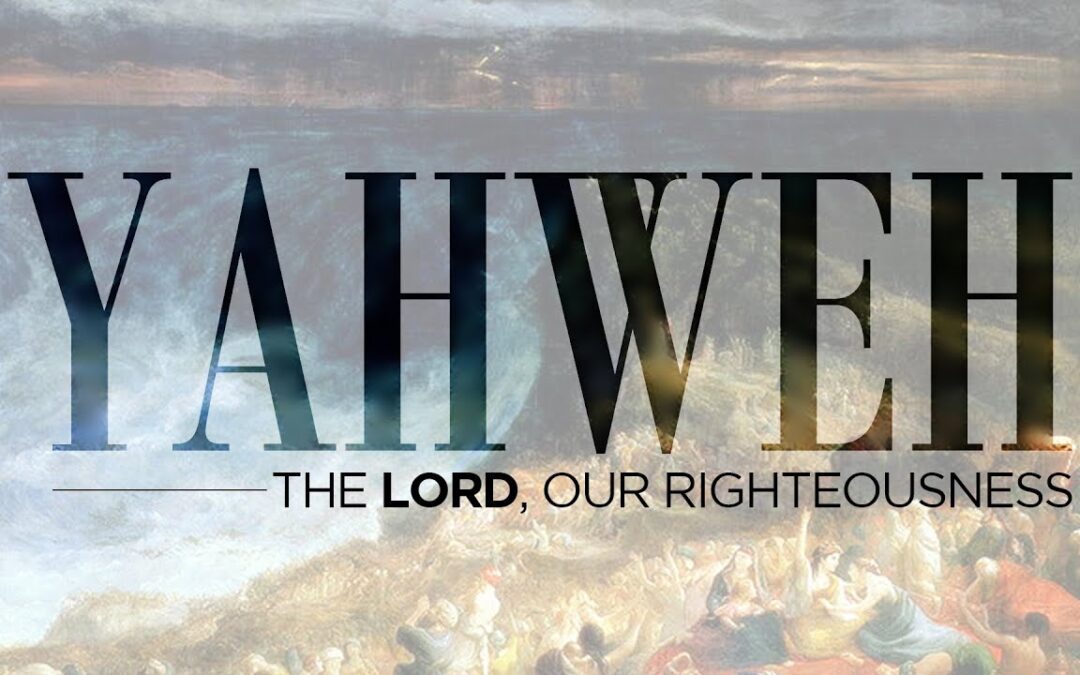
This is the name by which he will be called:
The Lord Our Righteousness.

No Jew could conceive that Yahweh himself would be the atonement, or propitiation, for our sins, even though Isaiah 53 gives a very strong hint of just that. And it isn’t only that he will pay the penalty for our sins, i.e., death, and take God’s wrath for us, but that he will be “our righteousness.” What does that mean?

I heard Tim Killer say many times, Jesus died the death we should have died, and He lived the life we should have lived. Jesus not only died for us, but He also lived for us. Just as our sin was imputed to Christ on the cross, his perfect sinless life was imputed to us as well. This is why the Apostle Paul says in I Corinthians 1:

30 It is because of him that you are in Christ Jesus, who has become for us wisdom from God—that is, our righteousness, sanctification and redemption.

This became the most important verse in my life after more than three decades as a Christian when I finally realized I am Israel! No matter how hard I try, no matter what I do, I can’t pull it off. I fail over and over and over again. I am, I know it’s shocking, a sinner! And being a sinner I sin, also shocking. Sinning is what sinners do. But we are born that way, all of us. Isn’t it obvious? This is what makes “The Lord Our Righteousness” so powerful.

Here is the realization I came to: I can never be more acceptable to God than I am in Christ my righteousness no matter what I do or don’t do. I used to think, sort of, that God would like me a little bit more if I did this or didn’t do that. Nope! And I found that the gratitude that flows out of this grace, this unmerited favor, makes me want to be more righteous! I’m just not very good at it, but I keep trying. So I repent daily, and thank God that I don’t have to save myself.


Song of Songs and the Bride of Christ

Song of Songs and the Bride of Christ

Some Christians in church history, and maybe even today, are a bit embarrassed by the Song of Songs because it is so overtly sexual. Some try to allegorize it; the early church fathers were especially fond of this approach, or they might completely spiritualize it because they were uncomfortable with human sexuality. It’s kind of hard not to be because of all the good gifts God has given his creatures, sex is very often perverted and abused, and in ways that cause so much pain and misery. But human sexuality is an unqualified good meant for our pleasure and the propagation of the species, and there is nothing shameful about it in the proper, marital context between a man and a woman. It is a beautiful, private experience that creates pleasure and life. Although it creates more of the former than the latter, I believe we must never divorce one from the other, but that’s a topic for another post. For this one I want to focus on its meaning for Jesus and his Church.

That doesn’t mean I’m spiritualizing the text. My reading through it this time profoundly impressed upon me both the creational (I was tempted to write “natural” but I try not to use that word anymore because secularism has made it imply “without God.”) and the spiritual aspects of the text. The theme of the book is love, depending on the translation used 25 to 50 times, between a lover and his beloved. It reminded me of something I was fortunate enough to experience in my life, but thankfully no longer have to—infatuation, being gratefully married for almost 36 years. The lover and beloved are obsessed with one another, can’t help but think about each other all the time. If you are not currently in that state of distraction, do you remember the times in life you were? If the other person reciprocated, wasn’t the sky bluer, the grass greener, wasn’t your step lighter, didn’t you wake up quicker in anticipation of seeing that person who you were thinking about all the time? How wonderful is that!

Thankfully, the giddiness is temporary. Who could live that way their entire life! Novelty always wears off when reality sets in, which is of course when true I Corinthians 13 love begins. True love, long lasting love, love that works, is a verb, not an emotion, as wonderful as the emotion can be. God in the Song of Songs is letting us know that giddiness is a good thing! To be enjoyed in its fleeting joy. And the sexual consummation of that giddiness in marriage, and only in marriage, is beautiful, holy, and good. Solomon leaves no doubt right out of the gate:

Let him kiss me with the kisses of his mouth—
for your love is more delightful than wine.
Pleasing is the fragrance of your perfumes;
your name is like perfume poured out.
No wonder the young women love you!
Take me away with you—let us hurry!
Let the king bring me into his chambers.

And he’s only getting started! I won’t delve further into the details of the text, but suffice it to say, the lovers will enjoy carnal knowledge before the night is out.

But that’s only the obvious meaning of the book. What may not be so obvious is the spiritual meaning. Solomon uses the word bride six times, but doesn’t use husband or groom once. And each time he uses the word bride, he says, “my bride,” as if she is his possession, which indeed she is, as is the husband of the bride. But in the Christian understand of marriage and the family, the man is in effect the owner of the relationship, and the one primarily responsible for its success. I wonder if saying something like that might get me banned from Twitter. I sure hope so because it’s as counter cultural in our secular woke day as can be. To our woke leftist elites patriarchy is repressive and toxically masculine. How dare you say the man is the man of the house, the leader, the one God has tasked with the success and safety and support of the marriage and the family. Well, I say it, loudly and proudly! It is biblical, God ordained. And it is the way marriages and families work best, the way they flourish and produce solid citizens.

But this is much more significant than what works and is counter cultural in the moment (we need to make it cultural again!). It is a metaphor for Christ and his marriage bride, the church. The idea of marital faithfulness between the Lord and his people is a consistent theme throughout the Old Testament so it doesn’t surprise it is carried into the New. Paul addresses this most directly in Ephesians 5 as he discusses the relationship between wives and husbands:

31 “For this reason a man will leave his father and mother and be united to his wife, and the two will become one flesh.” 32 This is a profound mystery—but I am talking about Christ and the church. 33 However, each one of you also must love his wife as he loves himself, and the wife must respect her husband.

There is something about the union of a man and a woman in marriage who in some way become spiritually one being, one flesh, and this in some way communicates the relationship between Christ and his church. It’s almost like when Paul uses the phrase “great mystery” he knows something that is in mere human terms impossible to communicate. As a man and woman become one being, so does Christ with his church. We are part of him, and he is part of us. Even as we are unique beings, we are a united being who becomes one entity share in the essence of the other. In writing this I feel the futility Paul must have felt trying to convey this mystery.

Which brings me back to Solomon’s Song of Songs. The giddiness of infatuation we experience in a novel romantic relationship that is consummated in marriage is like our relationship to Christ. As a man pursues a maiden, Jesus pursued us, and loved us with a love unto death. It is the kind of love men are called to for their wives as Paul says in Ephesians 5. In a way, Jesus is infatuated with us! I know, it’s hard to fathom, but it’s true. Remember what the writer to the Hebrews said, that for the joy set before him Jesus endured the cross. We are that joy! This is something to remember next time you go to a wedding.


Psalm 112 and the Man Who Will Never Be Shaken

Psalm 112 and the Man Who Will Never Be Shaken

Reading through the Psalms is a wonderful experience. You could park on one for days mining the depths for nuggets of truth into the greatness of our God. And God is the point of all 150 of them. One of the reasons the Psalms have been so beloved over the millennia is because sinful, fallen human beings can relate to the pathos we read there. The struggles of the writers are familiar to us as we go through the often painful experiences of living life in a fallen world among fallen people in a fallen body. But we mistake the power of the Psalms if we think they are about us. The words connect with us because they are profoundly about God which then puts our struggles into perspective.

When I wrote my first book, The Persuasive Christian Parent, I was introduced to a metaphor that became my favorite way of  explaining living in the messy world as I described it above: a puzzle. The fallen human tendency is to focus obsessively on the puzzle pieces. Until we grow older we imagine the pieces are all that exist; there is no puzzle into which each piece fits to make the picture of life make sense. Then depending on our level of maturity, or not, will we be able to keep the individual puzzle pieces of our lives in perspective with all the others we encounter.

Our secular Western culture, however, expects us to believe that in a universe filled with profound particulars (puzzle pieces), like sunsets, and birth, and music, and taste buds, and love, and sex, and DNA, that nothing transcends the pieces to give them ultimate meaning (the universal). We’re expected to believe the puzzle doesn’t even exist! We’re just stuck with the pieces. Christian Philosopher Douglas Groothuis in his wonderful book Truth Decay puts this exquisitely:

It is as if a stained‑glass window, which offered a pictorial message of a reality beyond itself when illuminated by the sun, were shattered into countless fragments, which a bemused onlooker is now rearranging into every pattern but it’s lost original.

Brilliant! Why do you think film maker Woody Allen always looks so miserable? He’s rid the universe of the only universal that can give particulars meaning—God! Every movie he makes is a different pattern, but nothing comes close to the original. Inevitably there is despair, dissatisfaction, or the blind leap—I’ll just pretend I found the original and ignore the vacuum in my soul.

It isn’t only atheists like Woody Allen who tend to see the world this way, that the particulars are where our true meaning and hope and purpose are found—we are too! Where do you think worry and doubt and fear and anxiety and frustration and anger come from? They come from thinking the pieces are sovereign and God is not! Shame on us, but it’s a constant temptation for every single one of us, and it requires constant vigilance to not fall into the clutches of this perniciously appealing temptation. Once we give in, it can turn into a sink hole growing bigger and bigger until it completely envelopes us. Which brings me to Psalm 112.

The answer to these ubiquitous temptations is found in the words of Jesus: “Man shall not live on bread alone, but on every word that comes from the mouth of God.” That and prayer and praise and thanks to God can make us the person to whom this Psalm refers, the blessed man:

 Praise the Lord!
Blessed is the man who fears the Lord,
who greatly delights in his commandments!

The right God-honoring attitude in all things we encounter is, Praise the Lord! How about that being our knee-jerk reactions to the “stuff” happening in our lives instead of complaining and moaning and whining. I know, I’m convicted too. But the promise is that we’ll be blessed if we do it. The blessings, i.e., the happiness and contentment that comes with praising the Lord is outlined in the next several verses, and what stands out to me are the following words:

He is not afraid of bad news;
his heart is firm, trusting in the Lord.
His heart is steady; he will not be afraid,
until he looks in triumph on his adversaries.

Oh, to live this way! Instead of living in fear we are steady; the Hebrew literally means to be established and is interpreted as to lean, lay, rest, or support. This person, which can be you and me, is stable, unmovable, reliable. Notice in verse two the impact this kind of life has on his children:

His offspring will be mighty in the land;
the generation of the upright will be blessed.

Living a truly Godly life of the blessed has a generational influence; it can’t be helped!

If we consider the “adversaries,” it is all those things in our lives that cause the opposite of triumph in the puzzle pieces of life. It’s treating those things as if they somehow had a power beyond the reach of Almighty God, as if in Christ all things did not work for our good, according to the Apostle Paul which is the promise of God himself. And notice the kind of person it is who lives in this reality of God’s ever-present goodness and power. He is gracious, merciful, and righteous, he deals generously and, conducts his affairs with justice. Those who are righteous in Christ—they who trust him in all things—will never be shaken.


Psalm 73: When I Tried to Understand All This . . . Circumstances People

Psalm 73: When I Tried to Understand All This . . . Circumstances People

Christians love the Psalms because we can relate to how they portray the messiness of life in a fallen world, and Psalm 73 is one of the most relatable. It starts with the fundamental Christian perspective on all things:

 Surely God is good to Israel,
to those who are pure in heart.

Our sinful tendency when things go south is to wonder if God has it out for us. In the novel The Magnificent Ambersons, the protagonist is having an especially tough day: “After that, the whole world seemed to be one solid conspiracy of malevolence.” Who hasn’t felt like this at times! The much younger me often threw a pity party for me, myself and I, but nobody seemed interested in joining the party. I’ve taught my kids all their lives, and still do, that nobody cares how we feel; they care about how they feel. It’s best to keep whatever those feelings are between me and God, and a few close loved ones.

I hate to confess this for all the world to see, but it wasn’t until I got into my 40s that I was able to effectively counter the natural inclination to victimhood in my sinful heart. It took me a long time and much misery to realize God is good to his people (Israel), i.e., me, no matter what the circumstances look like. God’s goodness is not a function of our assessment of circumstances, as if from our limited perspective and knowledge we can assess the ultimate goodness of anything. It wasn’t too many years ago, five to be exact (September of 2017 to be even more exact) that I prayed to God something like, “It would be ideal if . . . “ And one day as I was praying I heard God say to me, almost audibly, “What a moron! How would you know what ‘ideal’ is?” Good question. Only God knows ideal, and that eternally. I now pray what I think I want, but always in the context of, “Thy will be done,” God’s good, pleasing and perfect will in Christ.”

Paul in I Thessalonians 5:17 commands us to give thanks in all circumstances because having a grateful perspective on things “is God’s will for us in Christ Jesus” (compare Eph. 5:20, always and for everything doesn’t leave us any wiggle room). By giving God thanks we acknowledge his goodness and sovereign power over all things, and in Christ means we are all in his eyes “pure in heart.” Romans 8:28 is the ultimate truth of our lives. Paul says we know, not think or hope or wonder, but “we know that in all things God works for the good of those who love him, who have been called according to his purpose.”

This doesn’t mean the knowing through all the vagaries, vicissitudes, pain, and suffering of life will be easy. Nothing is easy! But it gives our lives a hope and purpose and stability the circumstances people can never have, Christians or not.

The question is will we live by sight or by faith, i.e., by circumstances or trusting God. The Psalmist, Asaph, rooted in knowing the goodness of God, still struggled because life is, well, life:

But as for me, my feet had almost slipped;
I had nearly lost my foothold.
For I envied the arrogant
when I saw the prosperity of the wicked.

Living by sight he almost lost it, but only almost because he didn’t let the circumstances determine whether God was good, or not. He was even tempted to believe obedience to God was worthless:

13 Surely in vain I have kept my heart pure
and have washed my hands in innocence.

But he knew that would be a betrayal to God’s people (v. 15), yet he still made the fatal mistake all sinners make:

16 When I tried to understand all this,
it was oppressive to me.

It’s insane to think we can understand God and his ways, as if comprehending the nature of God is more important than trusting him. Trusting him is what it’s all about. If we make this mistake it creates, in the Hebrew, trouble, labor, or toil. In other words, trying to figure out God is a miserable way to live. Asaph didn’t quite understand this until he realized God is God, and we are not:

17 till I entered the sanctuary of God;
then I understood their final destiny.

Only when we look to the place where God dwells, understand who he is in all his glory and goodness and power, will we understand who we really are, and the destiny of those who belong to him, and those who do not. Otherwise, we will be senseless and ignorant, a brute beast before God (v. 22). The “secret” to a truly fulfilling life is as easy as it is hard:

23 Yet I am always with you;
you hold me by my right hand.
24 You guide me with your counsel,
and afterward you will take me into glory.
25 Whom have I in heaven but you?
And being with you I desire nothing on earth.
26 My flesh and my heart may fail,
but God is the strength of my heart
and my portion forever.

It’s either this, or we will be circumstances people.