
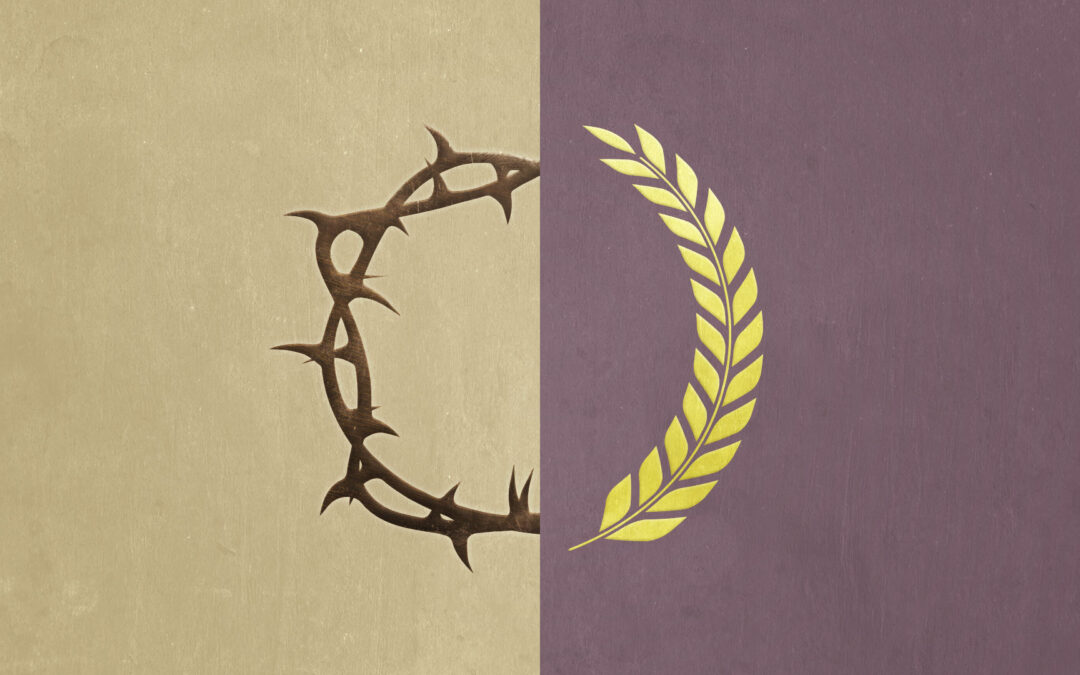
Christ Or Caesar? Theonomy or Autonomy? Liberty or Tyranny?
These stark choices confront us like a brick in the face as they haven’t for a long time in Western history. They offer us a moral clarity that comes from the blessing of leftist, woke cultural Marxist overreach that began when Barack Obama assumed the presidency in January 2009. That’s not exactly true because the seeds of our current discontents go back to the fall with Satan’s temptation that if we just disobey God we can ourselves become God being able to call the shots about the nature of reality (“knowing good and evil”). That is man, we, could be a law unto ourselves, autonomy, sovereign self-rulers who get to sit on our own little thrones in our own little kingdoms. How’s that working out for us? The more proximate origins of the radical leftism of Obama that began to infect government in America and dominant the culture goes back to the Enlightenment out of which inevitably was to come the current secular Utopia of the modern West. Ain’t it grand!
I say blessing because the constant overreach of the left (they can’t help themselves) is opening eyes to the truth (and I would argue the Truth as well) like no mere words ever could. Events have a persuasive power all their own. When America and the West was nominally Christian as it was since World War II, it was easy for people to live in the mushy middle where the above questions were invisible, as if they were not the ultimate choices that confront us every day. Every person and society must choose Christ or Caesar (the state), God’s law or self-law, and those choices will determine whether we get liberty or tyranny. Christ and God’s law (theonomy) is the only true source of liberty as developed in the West through English common law and the “rights of man” eventually brought to fruition in America. The state ruled by man’s law apart from God can only lead to slavery and tyranny as we see all around us.
Christian Western civilization and the liberty it brought should have never happened. Of course, I’m speaking from a merely human perspective, but it’s a compelling one. The odds of a ragtag crew of manual laborers in a small corner of the Roman Empire eventually turning the world upside down, or should we say right side up, were as close to zero as it is possible to get. From God’s perspective, it was inevitable, baked into the salvific cake. The entire life, death, resurrection, and ascension of Jesus to the right hand of God was the inflection point in human history. Literally everything changed, only it didn’t look like it, at all. On a societal level we witness a specific moment in Jesus’ ministry with mustard seed significance (Matt. 13:31-32).
Jesus is confronted by his enemies (Mark 12, Matt. 22) with what they thought was a question that would land him in hot water with the Jews and Romans; there should have been no third option. Jesus’ reply was completely unexpected, as was normal with Jesus. They asked if the Jews should pay tax to Caesar knowing if he said yes, he would be condemned by Jews, and if no, by Roman authorities. It was one or the other, they thought. But Jesus surprised them by asking whose likeness and inscription was on the coin, which he obviously knew. When they told him Caesar’s, he replied: “Render to Caesar the things that are Caesar’s, and to God the things that are God’s.” Thus political reality changed forever in the Western world. Yes, it took the slow outworking of this principle for almost 1,800 years to finally see what the full fruition of this principle would look like, but it started that day.
Jesus was saying the state (the ruler, the king, the Caesar) could no longer be the ultimate source of authority because the state is accountable to God and whose role is to dispense justice based on God’s law. Prior to that moment everything belonged to Caesar. The entire messy history of Western civilization is the story of the triumph of Christianity and God’s law over paganism and man’s law, and justice based on the rule of law or the will to power, might makes right. We’ve come full circle in the twenty first century where the modern form of paganism, secularism, makes the same claims as Caesar did: everything belongs to the state. There are some Christians who think the Christian faith is not or doesn’t have to be “political,” that somehow it can exist apart from the political, how we are governed and by what standard. That is impossible.
We see an example of why it is when Christians of the early church refused to say, “Caesar is Lord,” and many paid with their blood. To say, “Jesus is Lord” is ultimately political because he is the Lord over all of reality, as Paul tells us in Ephesians 1, “far above all rule and authority, power and dominion, and every name that is invoked, not only in the present age but also in the one to come.” All means kings and presidents and prime ministers and governors, you name it, all. This was accepted and not in the least controversial in all of Western Christendom until the twentieth century when the Pac Man of secularism gobbled everything up and declared, thou shalt have no other gods before me! I wrote about Joe Boot’s response to the CBC hit piece against the Ezra Institute in my last post, and so loved his conclusion I wanted to share it here. Few Christians, let alone non-Christians, understand what Christ’s Lordship looks like over all of life, including the state and its laws and how we are governed. Boot does a great of distilling this in two paragraphs, and it applies not just to Canada or America or the West, but to the nations, all of them, as the Bible consistently declares.
The West has long been in revolution against God’s law, repealing it from the statute books for about seventy years i.e., divorce law, family law, sabbath law, blasphemy law, marriage law, abortion law, laws about euthanasia, murder, rape, taxation etc. Faithful Christians prophetically propose, not impose, a return to the Ten Commandments and the guidance of God in all Scripture for civil governments, which takes us right back to the first codification of English law and beginnings of the English Common law tradition under Alfred the Great. We do not believe that biblical truth and law can be imposed on a secular non-Christian culture unwilling to hear or obey. We believe in the need to evangelize, teach, engage and reshape socio-cultural and political life in faithfulness to Christ so that, over time, civil law will return to its biblical foundations as a Christian people insist on righteous laws.
Theocracy simply means ‘God’s rule,’ and the living God has always dealt with humanity in terms of a true or false theocracy – the worship of God or idols – in terms of the standards of His Word. As the Scripture says, “righteousness exalts a nation, but sin is a reproach to any people” (Prov. 14:34). Today’s Canada is the theocracy of a false god where ‘man enlarged’ in the state is the ‘divine voice’ and pretended source of all law and authority, redefining life, marriage, family, identity and sexuality by political fiat. If to oppose that pagan religious ideal makes us dangerous fundamentalists, so be it. Take your stand with Christ or Caesar.




Recent Comments