
Sep 19, 2021 | Notable Quotations
 When I was a young man early in my intellectual journey searching for truth, I came across Idols for Destruction; Christian Faith and It’s Confrontation with American Society. It was published in 1983, and I was just beginning to expand my understanding of faith to all of reality beyond my own religious experience. I remember being awed by the author’s learning and insight, and how he took a Christian worldview and critiqued everything, it seemed, about the modern world. It was, to me, a tour de force, especially because as a 23 or 24 year-old I was just beginning to exercise my intellectual chops. It was from a universe of learning I could only marvel at. The author, Herbert Schlossberg, was an historian who seemed to know everything. I decided after lo these man years to read it again, and it amazes me now just as much as I remember it amazing me then. It’s now a classic in Christian intellectual history. What is striking as I read it in 2021 is how prophetic it was. He died a couple years ago before the world went mad with COVID, and Trump drove the woke left into complete madness, but he predicted with uncanny accuracy the destruction of the idols of our age we are experiencing right now. (more…)
Jun 26, 2021 | Notable Quotations

Most modern histories of mankind begin with the word evolution, and with a rather wordy exposition of evolution . . . . There is something slow and soothing and gradual about the word and even about the idea. As a matter of fact, it is not, touching these primary things, a very practical word or a very profitable idea. Nobody can imagine how nothing could turn into something. Nobody can get an inch nearer to it by explaining how something could turn into something else. It is really far more logical to start by saying “In the beginning God created the heaven and earth” even if you only mean “In the beginning some unthinkable power began some unthinkable process.” For God is by it’s nature a name of mystery, and nobody ever supposed that man could imagine how a world was created any more than he could create one. But evolution really is mistaken for explanation. it has the fatal quality of leaving on many minds the impression that they do understand it and everything else; just as many of them live under a sort of illusion that they have read the Origin of Species.
—G.K. Chesterton, Heretics (1905)
Dec 23, 2020 | Notable Quotations

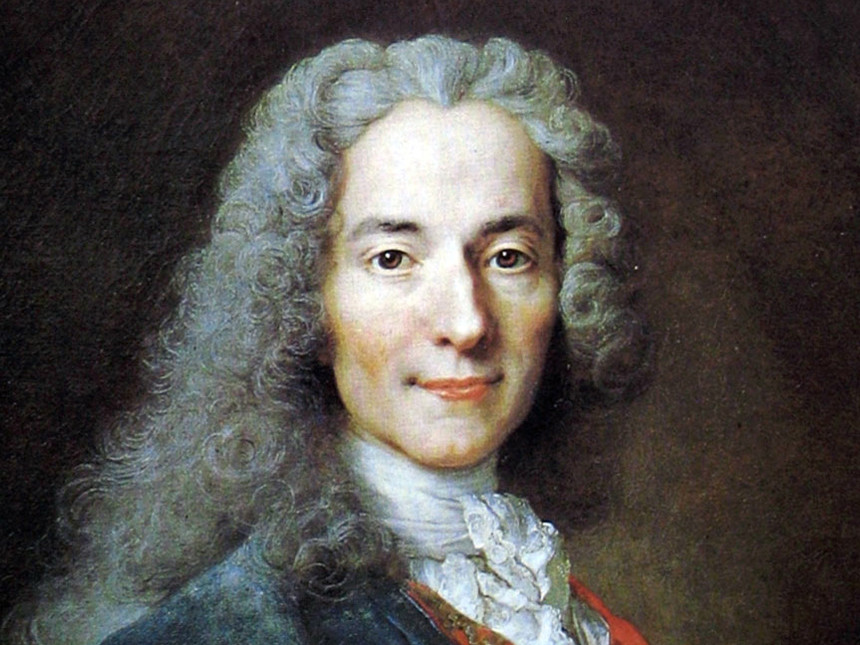
These medieval attitudes contrast sharply with our own. We have fewer plagues but more wars and of a far bloodier nature. Our approach is to hide death. It is another of our new secrets. There is absolutely no general conviction that death is something to be faced. Instead we place our quest for eternity on the material level. Life is devoted to working, preparing, saving, driving ourselves towards something undefined. The process of our movement through the system gives us the sense of being somehow here forever.
Since our age is technological, most people add to their material obsession a devotion to defeating disease. In the background lurks the idea of immortality. If five years can be added to a life, why not ten? And if ten, why not . . . ? The culture surrounding old age has been changed to the point where its vocabulary is filled with the promise of a new youth. Phrases such as “the golden age” have emerged to obscure the realities of physical decline. Charles de Gaulle, as always out of step with the conventions of his time, said old age was a shipwreck. Of course, the individual must attempt both to survive and to make use of survival. It is the obscuring of the inevitable process which is so new and so peculiar. Not only, it seems, should we not prepare our minds for termination, we should, as the moment approaches, create a whole new set of illusions in order to avoid the relevant thoughts.
—John Ralston Saul, Voltaire’s Bastards, p. 350

Jul 14, 2020 | Notable Quotations
Of all religious beliefs in the world, past or present, none have more thoroughly based themselves on history than Judaism and Christianity. The divine-human encounter in the biblical faiths always involves claims about real people, living in real places, who acted in real events of the past, many of which are also cited in secular ancient history. Both testaments of the Bible use the past tense of narrative prose—more than any other form of language.
Because Judeao-Christianity has so thoroughly influenced Western culture, we are prone to imagine that all other world religions have a similarly solid historical base. This is by no means the case. It can, in fact, be argued that every religious system before or since Judaism and Christianity has avoided any significant interaction with history, and instead has asked its followers to believe, by sheer faith alone, the claimed revelation of its founder(s). This is true of the mythologies of yesterday and the cults of today, the religions of the East or of the “New Age” of the West.
Or, whenever links with genuine history are claimed—as in several modern belief systems today—these are never verified by secular history or the findings of archaeology. Typically, a single founder claims divine revelation, which is subsequently written down as a holy book for his or her following. The founder may well have been historical, of course, but one looks in vain for true correlations with secular history in the founder’s holy book. Rather than any private, once-for-all-time revelation, Judeo-Christianity’s Scriptures encompass a two-thousand-year-plus period—two millennia in which its holy books constantly interlaced themselves with history.
—Paul L. Maier, In the Fullness of Time: A Historian Looks at Christmas, Easter, and the Early Church

Jul 7, 2020 | Notable Quotations
Turning and turning in the widening gyre
The falcon cannot hear the falconer;
Things fall apart; the centre cannot hold;
Mere anarchy is loosed upon the world,
The blood-dimmed tide is loosed, and everywhere
The ceremony of innocence is drowned;
The best lack all conviction, while the worst
Are full of passionate intensity.
Surely some revelation is at hand;
Surely the Second Coming is at hand.
The Second Coming! Hardly are those words out
When a vast image out of Spiritus Mundi
Troubles my sight: somewhere in sands of the desert
A shape with lion body and the head of a man,
A gaze blank and pitiless as the sun,
Is moving its slow thighs, while all about it
Reel shadows of the indignant desert birds.
The darkness drops again; but now I know
That twenty centuries of stony sleep
Were vexed to nightmare by a rocking cradle,
And what rough beast, its hour come round at last,
Slouches towards Bethlehem to be born?

Jul 4, 2020 | Notable Quotations
About the Declaration there is a finality that is exceedingly restful. It is often asserted that the world has made a great deal of progress since 1776, that we have had new thoughts and new experiences which have given us a great advance over the people of that day, and that we may therefore very well discard their conclusions for something more modern. But that reasoning can not be applied to this great charter. If all men are created equal, that is final. If they are endowed with inalienable rights, that is final. If governments derive their just powers from the consent of the governed, that is final. No advance, no progress can be made beyond these propositions. If anyone wishes to deny their truth or their soundness, the only direction in which he can proceed historically is not forward, but backward toward the time when there was no equality, no rights of the individual, no rule of the people. Those who wish to proceed in that direction can not lay claim to progress. They are reactionary. Their ideas are not more modern, but more ancient, than those of the Revolutionary fathers.
President Calvin Coolidge, Speech on the 150th Anniversary of the Declaration of Independence
July 5, 1926

Recent Comments