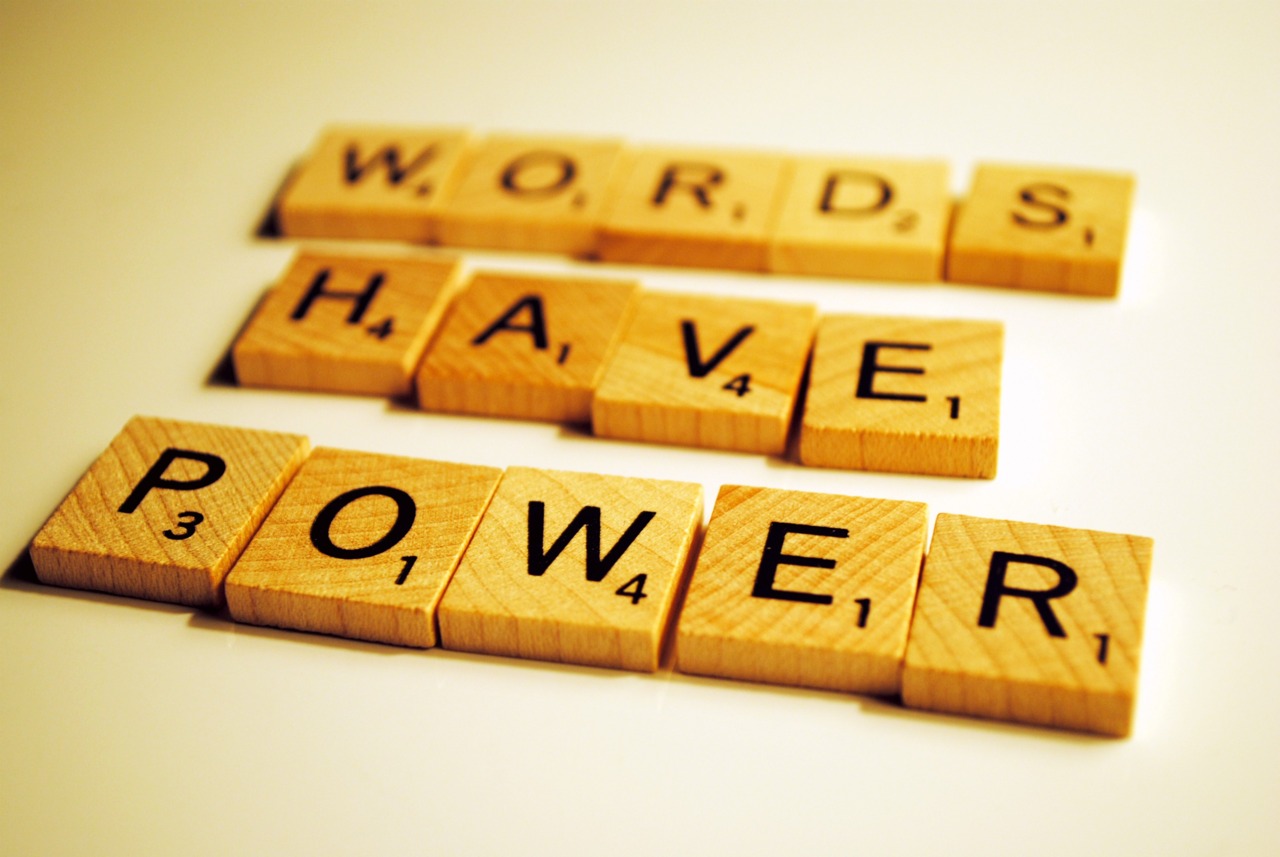
Words mean things . . . This little phrase is one my kids have heard numerous times over the years, probably more than they’d like. And words are among the most profound things about human existence because they allow us to think and communicate.
The profundity of language is built into the nature of the Christian faith. In the first chapter of the first book of our Bible we read, “And God said,” nine times, all in the context of God creating “the heavens and the earth.” Think of the power of one single atom, from which can arise immense forces of destruction. You will maybe then have some sense of the power in the words, “And God said.” He created an entire universe filled with atoms!
In a previous post on the The 4 Horsemen of the Philosophical Apocalypse, I mentioned that Truth in our secular age is a casualty of various ism’s, like , scientism, and relativism. After 50 plus years of Western secular culture watering down Truth with such ism’s, we’ve gotten to the point where they finally get the Word of the Year: Post-Truth. The Oxford Dictionaries decided that we are not much interested in Truth anymore, especially when it relates to shaping public opinion. Their definition of the word:
After much discussion, debate, and research, the Oxford Dictionaries Word of the Year 2016 is post-truth – an adjective defined as ‘relating to or denoting circumstances in which objective facts are less influential in shaping public opinion than appeals to emotion and personal belief’.
If you are not familiar with the phrase, “down the rabbit hole,” it comes from the 19th Century Lewis Carroll book, Alice’s Adventures in Wonderland. Young Alice goes down a rabbit hole and experiences a world that is upside down, inside out, and awfully confusing. According to Google, the phrase has come to “refer to a bizarre, confusing, or nonsensical situation or environment, typically one from which it is difficult to extricate oneself.” I was reminded of the world down the rabbit hole as I was recently having a conversation with a quintessential postmodernist.
In 2012 my wife, fed up with the public school system where she worked and where our kids went to school, was determined that our youngest would somehow escape before he got to middle school. My attitude at the time was that we, and our other two kids, survived the public school system, so he can too. She was having none of that, and boy am I glad she didn’t!. It wasn’t too long after her declaration that a new local Christian classical school was having a fundraiser featuring Christian guitar virtuoso Phil Keaggy. I missed the concert because of a business trip, but when I got back she was all fired up. It took me a while to understand exactly what classical education was, and get as excited as my wife, but now I’m a full-on evangelist!
“Comrade, your statement is factually incorrect.” “Yes, it is. But it is politically correct.”
The notion of political correctness came into use among Communists in the 1930s as a semi-humorous reminder that the Party’s interest is to be treated as a reality that ranks above reality itself. Because all progressives, Communists included, claim to be about creating new human realities, they are perpetually at war against nature’s laws and limits. But since reality does not yield, progressives end up pretending that they themselves embody those new realities. Hence, any progressive movement’s nominal goal eventually ends up being subordinated to the urgent, all-important question of the movement’s own power. Because that power is insecure as long as others are able to question the truth of what the progressives say about themselves and the world, progressive movements end up struggling not so much to create the promised new realities as to force people to speak and act as if these were real: as if what is correct politically—i.e., what thoughts serve the party’s interest—were correct factually.
One of the best things about growing up is that, if you can learn from experience, you come to the realization that two things matter more than anything else, truth with a lowercase t and Truth with an uppercase T. You have to tell the truth, demand the truth from others, recognize lies and refute them; you’ve got to see the world as it is, not as you want it to be, not as others who wish to dominate you might say it is. Embracing truth frees you from false expectation, fruitless pursuits, disappointment, pointless anger, envy, despair. And the bigger kind of Truth, that life has meaning, is the sure source of happiness, because it allows you to recognize your true value and potential, encourages a humility that brings peace. Most important, the big-T Truth makes it possible for you to love others for who they are, always without consideration of what they might do for you, and only from such relationships arise those rare moments of pure joy that shine so bright in memory.



Recent Comments