Jul 3, 2017 | Plausibility

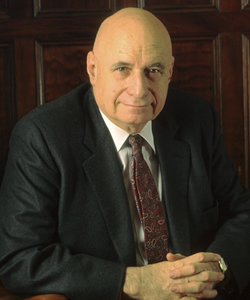
Peter Berger, a hugely influential Austrian-born American sociologist, died last week at the age of 88:
On June 27, Berger passed away at his home in suburban Boston, concluding a lifetime of scholarly influence and a career that made him one of the most notable scholars of his generation.
The influence of Berger certainly extended to me. In one of the chapters of Keeping Your Kids Christian, on the concept of plausibility in the life of faith, I quote extensively from two early books by Berger, The Social Construction of Reality: A Treatise in the Sociology of Knowledge (with Thomas Luckmann), and The Sacred Canopy: Elements of a Sociological Theory of Religion. I first learned the concept of Plausibility Structure from reading The Sacred Canopy back in the mid-1980s, a term most Christians have never heard, let alone are familiar with. They should be, as I argue extensively in the book.
(more…)
Apr 2, 2017 | Plausibility

Modern “New” Atheists (there is nothing “new” about them) are fond of painting Christians as wishful thinking Neanderthals who may as well believe in Unicorns and leprechauns. A Creator God, parted seas, resurrection, and various and sundry other miracles are no different, they confidently assert. I would say this is a prime example of the pot calling the kettle black, but I don’t want to insult kettles.
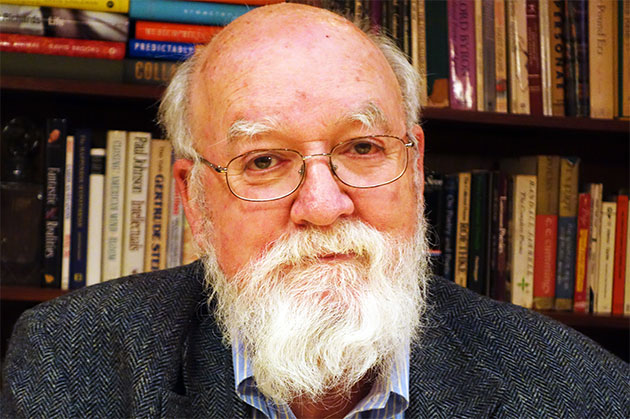
I came across a version of an atheist creation story at Evolution News that is typical of the illogical leaps atheists have to make to imagine a universe and life springing up without a Creator God. The guilty part in this case is famous atheist and “materialist philosopher” Daniel Dennett. These paragraphs come from a New Yorker profile on the man and his thought, and specifically how life evolved:
Four billion years ago, Earth was a lifeless place. Nothing struggled, thought, or wanted. Slowly, that changed. Seawater leached chemicals from rocks; near thermal vents, those chemicals jostled and combined. Some hit upon the trick of making copies of themselves that, in turn, made more copies. The replicating chains were caught in oily bubbles, which protected them and made replication easier; eventually, they began to venture out into the open sea. A new level of order had been achieved on Earth. Life had begun.
The tree of life grew, its branches stretching toward complexity. Organisms developed systems, subsystems, and sub-subsystems, layered in ever-deepening regression. They used these systems to anticipate their future and to change it. When they looked within, some found that they had selves—constellations of memories, ideas, and purposes that emerged from the systems inside. They experienced being alive and had thoughts about that experience. They developed language and used it to know themselves; they began to ask how they had been made.
(more…)

Jan 13, 2017 | Plausibility

Donald J., now President-Elect, Trump has never been and is not now seen by conservative Christians, Evangelicals among them, as one of their own, to say the least. But in an important way, he is very much one of us.
For the last 50 plus years, the dominant cultural apparatus (education, media, and entertainment) has grown increasingly strident in its secularism and hostility to Christianity. No longer can conservative Christians be accepted in polite company; they must be shamed and demonized because they believe in something as archaic as objective morality, absolute standards of right and wrong, and even worse, Truth!
(more…)

Jan 4, 2017 | Plausibility

Plausibility is a word we don’t often hear in church (ever?), but the concept plays a crucial role in helping us keep our kids Christian. A familiar word, it is defined thus: having an appearance of truth or reason; seemingly worthy of approval or acceptance; credible; believable. One of the basic premises of my book, The Persuasive Christian Parent, is that most people reject the Christian faith, or drift away from it, not because they’ve studied all the evidence, worked through the logic of it, and come to a conclusion, but because it doesn’t seem real to them. It is not plausible to them. If we add structure to the word, we get a building, a structure, of belief in our minds such that certain things seem real and credible to us, and others don’t. The culture we inhabit contributes to that conceptual edifice.
(more…)

Dec 23, 2016 | Plausibility

The short answer: plausibility structures.
Have you ever been watching a movie or a TV show and something happens that completely takes you out of the flow of the story because it is patently absurd? You may not use the word, but you could easily be thinking, that’s just not plausible. If the scene is not too over the top, we may be able to suspend our disbelief and enjoy the story. Good fiction depends on it.
Plausibility, or that which seems credible or believable to us, isn’t just important for fiction, though. It’s a natural part of everyday existence, and critical to understand if we’re to correctly assess religious faith, or the lack thereof, in a secular post-Christian culture.
(more…)
Oct 25, 2015 | Apologetics, Explanatory Power, Plausibility
 We live in a secular age, at least in the West, in which the dominion of science for all the good it has done has essentially replaced God for many people who find religion untenable. If “Science” says it, people believe it, few questions asked. In a little discussion with a co-worker recently the issue of religion came up, and being the consistent agnostic she is she said, “I’ll stick with science.” I guess she thinks science can answer the questions and address the issues religion and philosophy address. It can’t. She obviously hasn’t thought deeply about any of this. No surprise. Most Americans don’t.
Many atheists misuse the authority of science as a battering ram against belief in God, as if science itself makes belief in God a relic of a bygone era of simplistic faith. One reason they do this is because they define faith in a perversely self-serving way. Faith, which for them only applies to religious belief, is either believing something when evidence is lacking, or believing something we know is not true. If that is what faith actually is, I wouldn’t be religious either! (more…)


Recent Comments