This weekend we celebrate what we’ve come to call Easter, but what is in fact the celebration of the death and resurrection of the Savior of the world, who has been saving His people from their sin (Matt. 1:21) since he rose from the dead. When we come to that claim we have two options: either it is true, or it is not. If it is true, it is the most important historical fact in all of history, and we ought to treat it that way. If it is not, then it is completely irrelevant and should be ignored. It’s just fiction, something conjured up by mere human imagination, and in effect a lie. I don’t know about you, but I don’t want to base my entire life on a lie. So I want to lay out here some brief arguments why I believe it is in fact true, and why you should too.
Something has to explain the rise of Christianity. Unserious people can blow it off as, whatever, but something that has transformed the world in the way it has needs to be explained. Tom Holland lays out the transformational influence of Christianity in his wonderful book, Dominion, as the only thing that can explain the modern world. However, Holland has not yet embraced Christianity as Truth, and therefore believes this transformational influence was the result of a lie. Of course he wouldn’t say that, I presume, and might wiggle out of his dilemma by saying, well, Jesus didn’t really, literally, physically come back to life after being brutally tortured to death on a Roman cross, but his followers maybe thought he did, they believed it, and that is what changed the world. That’s laughable and absurd, but many people still believe it.
1. Jews don’t make up the resurrection – First, Jews in the first century do not make up a resurrection in the middle of history. That was literally inconceivable to them, both theologically and eschatologically. There was only one general resurrection of the dead at the end of time when sin and death would be dealt with once for all (see Martha’s response to Jesus at Lazarus tomb in John 11). That one man in the middle of history would be resurrected from the dead, and sin and death go on as they always have was to them ridiculous. It would have made no sense. People do not make up what is inconceivable to them.
2. The fearless and bold proclomation of the resurrection – There is also the fact that the Apostles proclaimed Jesus’ physical, bodily resurrection from the beginning at the threat of their safety and lives, and argued for the truth of Christianity based on it. Here is Paul’s declaration of the historicity of the event in I Corinthians 15:
3 For what I received I passed on to you as of first importance: that Christ died for our sins according to the Scriptures, 4 that he was buried, that he was raised on the third day according to the Scriptures, 5 and that he appeared to Cephas, and then to the Twelve. 6 After that, he appeared to more than five hundred of the brothers at the same time, most of whom are still living, though some have fallen asleep. 7 Then he appeared to James, then to all the apostles, 8 and last of all he appeared to me also, as to one abnormally born.
Doesn’t much sound like a fairy tale to me, or just a “spiritual” experience. They ate with the risen Jesus and touched him. When Doubting Thomas finally encountered the risen Lord he declared, “My Lord and my God!
3. The Jewish religion transformed – An actual physical, bodily resurrection is the only thing that could have gotten first century Jews to alter their beliefs in such a fundamental fashion. Jews only believed in physical, bodily resurrections, not “spiritual ones.” Mere religious experiences don’t have the power to do what happened to those first Jewish followers of Jesus. The immediate, drastic changes in their religious convictions can only be explained by the resurrection, and Jesus proving it beyond a shadow of a doubt.
J.P. Moreland says anyone “who denies the resurrection owes us an explanation of this transformation which does justice to the historical facts.” Skeptics don’t like these historical facts because, well, resurrections can’t happen! Let’s confuse them with these facts they have no ability to explain apart from the supernatural. According to Moreland, the first Christians, strict Jews all, immediately gave up these Jewish convictions that defined everything about their religion:
- The sacrificial system.
- The importance of keeping the law.
- Keeping of the Sabbath.
- Non-Trinitarian theism.
- A human Messiah.
The skeptic says, “Yeah, so what. No big deal; happens every day of the week.” Well, if it does, I’m waiting for concrete evidence. Instead, we generally get anti-supernatural bias disguised as above-it-all, supposedly objective assertions with little basis in historical fact. As Moreland says in a bit of understatement, “The resurrection offers the only rational explanation.”
4. Altnernet explanations of the resurrection fail – Honest non-Christian scholars agree that some explanation is required to explain the explosive rise of Christianity. Almost all scholars and historians today believe the tomb was empty, but also agree an empty tomb is not enough to explain the explosive growth, and I would add, against all odds. They had everything against them, the entire Jewish establishment, the power of the Roman Empire, and initially very small numbers. What they did have, though, was the truth and the Holy Spirit. Those two things transform the world, lies do not.
The only options to an actual physical resurrection are a stolen body, or the swoon theory (he really didn’t die), or Jesus’ disciples thought they saw Jesus as mentioned above. These appearances of Jesus, while not real, had the effect as if they were real, and boom—Christianity exploded! German higher critics of the 19th century, and liberal Christians of the early 20th, were fond of arguing for this spiritual Jesus somehow appearing, and the disciples having what they called a “resurrection experience.” The historicity of the event was beside the point; and we all “know” people don’t come back from the dead, especially after the Romans got done with them. Jesus’ followers were so distraught, the argument goes, and so longing for the crucified Messiah to come back to them somehow, their minds conjured up a Jesus who came back from the dead. Then, because of this “spiritual” experience, they went throughout the Roman Empire proclaiming a resurrected Lord. The problem with this explanation however it was explained—by dreams, visions, or mass hallucinations—it all comes up against the same cold hard truth I mentioned above: For Jews, a resurrection of one man in the middle of history was inconceivable, as was a resurrection not bodily and physical.
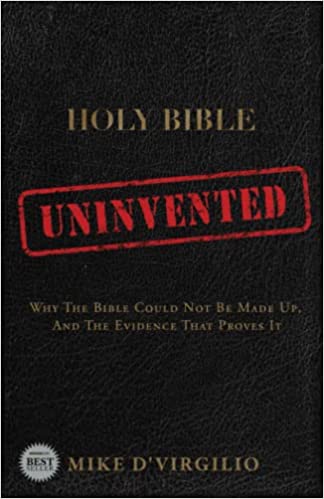
As I argue in Uninvented, if someone comes to the text without a question-begging anti-supernatural bias, they will be able to see the verisimilitude in the resurrection account and all the events surrounding it. The gospels are all about Jesus’ death and resurrection because it is those events that happened in real space and time, in what we call history, and everything turns on whether they actually did or not happen. As I also argue in the book, the burden of proof is every bit on those who reject the resurrection and that it could have made up. My claim is that is not possible. Thus we declare this Easter Sunday the Year of our Lord 2023:
He is risen, He is risen indeed!





Recent Comments