Take 3 on My Encounter with The Rationalist: Why I Believe the Evidence

Take 3 on My Encounter with The Rationalist: Why I Believe the Evidence

In my previous post on my encounter with The Rationalist, I explained the nature of evidence and how it is used in a court of law as “proof” for conclusions to either convict a defendant or not. Everyone uses evidence in life in all kinds of ways that acts for them as “proof” for what they do or don’t do, believe or don’t believe. What evidence that leads to “proof” can never yield is absolute certainty, as I also discussed. I put the word proof in quotation marks because in a very real way proof is in the eyes of the beholder, and everyone at some point needs to trust the evidence and only then does it become proof for them. This fact of human existence is why I always insist on pointing out that everyone lives by faith, which I define as trust based on adequate evidence. I trust based on more than adequate evidence to me that Christianity is true.

As I said, whenever I mentioned a bit of evidence to The Rationalist, he rejected it as evidence. He would basically say, That’s not evidence! Says you, Mr. Materialist Atheist. He has what afflicts all such people: epistemological blindness. According to them, there is only one way to know and it’s their way or the highway. No thanks. So by what evidence do I embrace Christianity?

Before I get to that it’s important to preface it with knowing the importance of “the consideration of the alternative.” I talk about this in writing and conversation often, and it is something The Rationalist rejected because it didn’t serve his purpose. It states, if one thing isn’t true about something, another thing must be. This basic fact of reality cannot be escaped, so keep that in mind any time you consider pretty much anything, regarding Christianity or not. There is no neutrality in reality, only being in between decisions about what we choose to believe, or not. Not choosing is of course a choice.

In no particular order:

  • When I look outside every morning, I thank God for his revelation in creation. It takes entirely too much faith to believe everything came from nothing for no reason at all. Literally every nook and cranny of reality shouts of being the result of an infinite omniscient omnipresent Almighty Creator God!
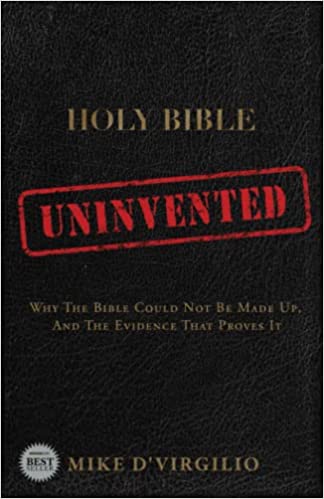
  • Next, I thank God for his revelation in Scripture, and that also takes entirely too much faith to believe it is made up, mere human invention. In fact, I wrote an entire book about it! Every morning when I the Bible, I marvel that it even exists. I am continually amazed at how it shows evidence of a plan only a divine author could orchestrate. Even though written over 1500(!) years by 40 or so different authors in primarily two languages, it has a tight, coherent, and relentless theme from Genesis 3:15 to Revelation 22:21 we call redemptive history. I see in it everywhere theological genius only a divine author could conceive.
  • Lastly, I thank God for his revelation in Christ, the most astounding revelation of all because it, He, makes sense of everything else in all of creation, all of Scripture, and in all of our experience living life in a fallen world among fallen people in a fallen body. I agree with ex-atheist C.S. Lewis who of course said it best: I believe in Christianity as I believe the sun rises, not because I see it but because by it I see everything else.

To get logical, these are deductive considerations, by which I mean I embrace the major premise, God exists. The minor premise is revelation is possible. Therefore, I am completely blown away! Some might see this as a presuppositional approach in that I assume something, God, and everything follows and makes sense because of that. There are also more inductive ways that I find extremely persuasive, meaning I find data and that leads me to a certain conclusion. There is mass quantities of such evidence. I am not sure where deduction and induction part ways, and have concluded they can’t be parted, as much as The Rationalist insists they must be. A list of such evidences would be very long indeed, so here is a small taste off the top of my head.

  • At the top of the list would have to be the resurrection. I do not believe the resurrection happened because the Bible says so, I believe it because the evidence is overwhelming, compelling, and solid. Most persuasive to me is the argument I make in Uninvented, that first century Jews would never, ever, in a million years make up a story of a Messiah being crucified, hung on a cross under God’s curse, buried, and rising from the dead. There is also an abundance of scholarly work on the historicity of the resurrection. One good example is a scholarly work by Mike Licona called, The Resurrection of Jesus: A New Historiographical Approach. He has almost 60 pages of references in his bibliography, so there is no shortage of scholarly work on the topic.
  • I can also trust the Bible is historically reliable on several grounds. As someone has said, archaeology is the Bible’s best friend because the more that is discovered, the more it is confirmed as history. There are also secular external sources that corroborate much of the history we find in our New Testament, including Jewish historian Josephus, and Roman historian Tacitus. In addition, despite what the critics say, it is not written like myth or fairy tells, but like eyewitness testimony, and thus history. Lastly, I believe we can trust the textual transmission of the Bible gives us pretty much what was written in its pages, and there is also an abundance of scholarly work on this topic.
  • I also find philosophical arguments persuasive. Among these are Thomas’s Five Ways, or five arguments that prove God’s existence, among them what are known as the cosmological and teleological arguments. The moral argument is another especially powerful argument because morality, the human sense that right and wrong exist, and that injustice is wrong, can only be explained if an objective standard exists. We only know a line is crooked because we have a straight line to compare it to. Human consciousness is also something philosophers find impossible to explain from a purely material perspective. Philosopher Thomas Nagel wrote a book called Mind and Cosmos: Why the Materialist Neo-Darwinian Conception of Nature Is Almost Certainly False. Nagel, though, can’t bring himself to reject his atheism, so he’s kind of stuck and the book reflects that.
  • We can extend the philosophical arguments to goodness, beauty, and truth, the classical virtues that the ancient Greeks share with Christianity. The question is not whether these things exist, but why, and whether The Rationalist has any ground to justify their existence based on his materialist worldview. What better explains their existence, matter, since that’s all the materialist has, or the God who created this world with features that go beyond matter? All the explanatory power goes to Christianity, every single bit. It is also a far more plausible explanation.

There is much more, and the resources on any one of these are endless. When I dove back into apologetics in 2009 I was amazed at the explosion of resources available since I’d last engaged in this theological discipline in the ‘80s. There really is no excuse for Christians today to know not only what they believe, but also why they believe it.
 

Chapter 9: Jesus’ Teaching

  • It’s All or Nothing at All: The Problem with Partial Jesus
  • The Forgiveness of Sin
  • The Hard Sayings of Jesus
  • Eat My Flesh and Drink My Blood
  • The Way, the Truth, and the Life
  • The First Will Be Last, And the Last Will be First
Take Two on My Encounter with The Rationalist: Evidence

Take Two on My Encounter with The Rationalist: Evidence

In a previous post I discussed my two-and-a-half-hour grilling at the hand of a quintessential rationalist. One thing especially stood out to me was how The Rationalist used evidence as a weapon against me by discounting anything that I claimed was evidence. Only what he counted as evidence was evidence. It’s a common tactic of atheists. The Rationalist, like most rationalists, is an empiricist, meaning only what is empirically demonstrably provable counts as “evidence.” Here is a definition of empiricism:

Empiricism, in philosophy, is the view that all concepts originate in experience, that all concepts are about or applicable to things that can be experienced, or that all rationally acceptable beliefs or propositions are justifiable or knowable only through experience.

Key word: only. In the history of philosophy the rationalists and the empiricists often didn’t see eye to eye, and many saw these two approaches to epistemology as mutually exclusive. But that debate is for scholars who have too much time on their hands. In fact, most people who reject the existence of God are rationalist empiricists because they believe all knowledge does in some way only come through sense experience and that it can be rationally deduced as real knowledge, the only knowledge that is in fact real. However, nobody can be perfectly consistent in this because human beings are more than senses and reason, as I think The Rationalist demonstrated in our conversation.

Now let’s take a look at a definition of evidence:

Evidence is anything that can be used to prove something — like the evidence presented in a trial, or the trail of breadcrumbs that is evidence of the path Hansel took through the woods.

The word evidence is derived from the Latin ēvidēnt-, meaning “obvious.” The word evidence shows up frequently in legal documents and dramas, because evidence is necessary proof in linking someone to a crime or crime scene. Evidence is used in many ways to show that something is true, as in “the chocolate stains around your mouth and the crumbs on the table are evidence that you ate the last of the brownies.”

Given all human beings see things differently to some degree, what is obvious to some is not so obvious to others. Notice the phrase “necessary proof” in the definition above. Rarely does “proof” in a court of law equal absolute certainty. In fact, people are sent to prison when certainty is far from certain, and different crimes require different levels of “proof” to convict someone. There are also different levels of “proof” to convict someone in criminal verses civil trials. But, evidence, whatever that might be, is “necessary proof” in a court of law. In other words, it is reasonable to come to a conclusion based on that evidence.

The point, though, is that proof is never absolute, and anyone who thinks it is, in Paul’s words, does not yet know as he ought to know. Also, evidence can never compel someone to believe something against their will. Someone is either open to the evidence, or they are not. Even if they are willing to consider it, they may not be persuaded by it. The Rationalist, and those of his ilk, doesn’t seem to understand that, or more accurately, refuses to think evidence he doesn’t find persuasive as “necessary proof” is ipso facto not evidence! How convenient. This kind of person is deluded by the ghost of René Descartes, the founder of modern philosophy who brought the concept that absolute certainty was possible into Western thought. It’s not. Finite beings cannot be absolutely certain of anything, and if they think they are, they are living a delusion. Such people are often unpleasant to interact with because they are absolutely certain anyone who disagrees with them is absolutely wrong! And they are not shy in saying so.

Given I don’t have enough room in this post to get into what I see as evidence for the veracity of Christianity and why I embrace it, I will do that in another post, but I will mention something here called the cumulative case argument. The phrase explains itself. As evidence accumulates the argument for the case become more compelling until it becomes for certain people “proof” that the argument is true. Put another way, it is that multiple arguments or pieces of evidence come together to form a stronger conclusion. Rather than aiming to prove the conclusion with absolute certainty, the goal is to establish a conclusion that is more likely to be true than false. I would argue that for Christianity, the cumulative case for its being true rather than false is like a tsunami combined with an avalanche that turns into a Noah like flood. For me, it’s impossible to not believe it is true.

That doesn’t mean over the last four plus decades of being a Christian there were not times when I doubted whether it might not be true. Although, this is not exactly the case. I’ve never believed some alternative to Christianity might be true. If I were to believe that I would have to believe the cumulative case for whatever that view of reality was, was more compelling than the Christian faith. I’ve always known what I now call “the consideration of the alternative” must be embraced, meaning if Christianity isn’t true, something else has to be. What has waxed and waned over the decades for me is the plausibility of Christianity. At times it just didn’t seem as real as other times. I now look back at those times and call them times of plausibility insanity. What changed? My deep dive into apologetics in 2009.

I had an encounter with a co-worker that year trying to engage him about the truth of Christianity, and I was pathetic. It was embarrassing, although he wouldn’t have thought so. I determined that would never happen again. I had just purchased a car with an aux cable jack, got a small MP3 player, and started listening to apologetics podcasts. I was amazed to learn there had been an explosion of apologetics resources since I’d last studied this theological discipline in the 1980s. So listening and reading, and reading and listening, I was drinking deep of the cumulative case that yes in fact, Christianity is the truth! And that there was more than enough evidence to make the case that Jesus was indeed the risen Lord and Savior, Creator of the heavens and earth, and the reason for my existence. I will say it as I often say, quoting C.S. Lewis:

I believe in Christianity as I believe the sun has risen, not because I see it but because by it I see everything else.

I will do a third and final post in response to The Rationalist on some of the evidence that to me, makes the cumulative case and has convinced me beyond a reasonable doubt that Christianity is true.


Truth Always Wins . . . . Eventually: Russell Brand Speaking Truth to Power

Truth Always Wins . . . . Eventually: Russell Brand Speaking Truth to Power

Who knew Russell Brand would turn into such a beast for truth! I recently wrote about the inevitable fall of the left because lies will always eventually be exposed for what they are, lies. This is happening now with the Covid scam among many other lies being exposed, and the J6 “insurrection” which in fact was an FBI “color revolution” set up. Regarding the latter, just last week Naomi Wolf penned an apology to conservatives about buying into the lie that J6 was an insurrection. She is an old school liberal who believes truth matters, and not narratives pushed by globalist Uniparty elites. And Steve Cortes published a piece with a nice description of how this elite lives on lies. He calls it The Cathedral of Lies, and this cathedral needs to be taken down brick by brick.

As for Brand, he is an old-fashioned lefty who who still believes in what the left used to believe, speaking “truth to power.” Now that all the power is controlled by the left be it government, corporations, or the culture, the left lies and uses “narratives” to push it’s ideology and shuts down any dissent and anyone who dares question it. The Uniparty, or the globalist ruling class, which includes all Democrats and way too many Republicans, is the power against the people, and they knowingly propagate lies to maintain it. It ain’t working! Truth will always win in the end because Jesus is the truth, and he is over all power in the universe, spiritual and temporal; He will not allow lies to triumph. Here are a few short videos of Brand on Bill Maher’s show and they’re worth watching as he speaks truth to power which nowadays takes guts.

Here he takes down the lies in the name of a virus.

Here is obliterates a lefty MSNBC host who is either delusional or lying in claiming this propoganda organ of the deep state is an objective media news source.

Here he comments on a portion of his appearancce and absolutely nails the corporatizing of politics which a grift and the MO of most politicians. Politicians are influenced more by corporate money (doners and lobbyists) than their constituents, whether they admit it or not, or more likely deny it. It’s a real problem.