
Sep 30, 2017 | Culture

Although only 3% of Americans claim to be atheists according to a recent survey, belief in God can be problematic in a culture awash in secularism. In our media, education, and entertainment God is persona non grata. Here are three examples:
- It’s amazing how many movies or TV shows you’ll watch, seeing people deal with the deep and profound issues of all kinds, and God is totally absent. If he, or Jesus, is mentioned at all it’s in the passing form of a curse.
- In media and journalism of all kinds, unless it’s specifically Christian, it’s the same. God is an idol curiosity, or something deeply personal that has no place in the public square.
- In public education, both in the K-12 and higher variety, God is separated from the classroom for the most part by that wall made famous by Thomas Jefferson, and completely distorted by the United States Supreme Court.
Culture is almost an all-powerful plausibility maker. In other words, it has the power to make things seem real or not to us. Whether the thing is real or not isn’t the point; the seemingness is. So for many Americans because of our dominant secular culture, God sometimes bears a passing resemblance to Santa Clause; he seems no more real than jolly ol’ Saint Nick. Culture obviously communicates, but culture also cultivates, and if we’re not careful we’ll allow the culture to determine our reality, or what seems real to us.
I myself went through a period of what I call “plausibility insanity” not too many years ago. I could never not believe in God or Christianity because I am convinced on too many levels that it is The Truth, but I had a little problem with it’s plausibility. I even remember thinking how I could understand why atheists see this religion thing as so strange. A few years before I decided to write Keeping Your Kids Christian, I wrote these words in an exercise I had to do for our church:
When I first became a Christian my faith was so dynamic and fresh and exciting. After 10 years or so it seemed like any relationship goes after a period of time, not as intimate and real. I continued to go to church as our family grew, read the Bible and prayed here and there, but it was nothing like those early days. I suppose every relationship can’t be always be novel and exciting, where it moves into a type of maturity that requires love that takes a decision and commitment. God doesn’t always seem “real,” but I can’t help but believe in a living God who is actually there.
Not even realizing it I was using the concept of plausibility. I didn’t understand how powerful a plausibility generator is the secular culture we live in. Even someone as convinced as I was about the veracity of Christianity’s truth claims, couldn’t help but be effected by the culture. It wasn’t any new arguments that I’d come across that made God seem less real to me; it was the culture! Unfortunately we live, eat, and breath this culture, and it will have its effect on us. So whenever we go through our own bouts of plausibility insanity I suggest we make use of the secular culture’s greatest enemy for the Christian: explanatory power. I’ll explain this “secret” to having your own personal powerful plausibility structure for your faith in my next post, so stay tuned . . . .

Sep 20, 2017 | Epistemology - Trust

One of my great frustrations in our secular age is how the concepts of “faith” and “belief” are communicated and understood. Too many Christians unknowingly acquiesce in using these terms that bias the cultural conversation against Christianity. What do I mean?
An article at The Veritas Forum is a great example. The title tells the tale: “The Dilemma of Faith in a Secular Age.” What does this assume? That “faith” and secularism are two separate concepts and have nothing to do with one another. The writer of the piece, unfortunately, accepts the dichotomy of “faith” and secularism as if they had nothing to do with one another—they do. She gives only one indication that all people struggle with what they believe when she says that “believers and non-believers alike struggle with doubt about whether our beliefs are indeed the right ones.” But using the terms “believers” and “non-believers” assumes that some people believe and others don’t, which plays into secularist hands.
The author writes about a poet who “has frequently written about this sense of being caught between belief and unbelief.” Again, the assumption is that such a thing “unbelief” exists—it doesn’t. In fact, every human being, regardless of whether they are “religious” or not, is fundamentally religious, i.e., they live by faith. It is crucial that we as Christians, and Christian parents, realize this.
Our secular Western culture tries to convince us that only “religious” people need faith—this is simply not true. At the level of presuppositions, all human beings are equal. Everyone has limited knowledge, therefore everyone lives by faith to one degree or another. The question is, which “faith” makes the most sense of reality as we find it, and which has the best evidence to make a claim on our allegiance. These questions must be at the forefront of raising kids in the 21st century West.
Thus the “the secular objectivity double standard.” The culture teaches in ways large and small, overtly and covertly, that those who are “believers,” i.e., religious folk, need “faith” and thus can’t be objective about things. Those who are “non-believers” it is assumed don’t need “faith,” and thus can be objective about things. To put it in technical terms, that’s a bunch of hooey!
The question on a level cultural playing field isn’t who has faith and who doesn’t, but who has the best justification for the faith that they have. Christians so easily buy into the notion that we’re the ones who must defend our beliefs, while the atheist, agnostic, or apathetic (the “triple A’s”) don’t have anything to defend—they do. As I’ve taught my children, if you learn how to skillfully ask questions, you’ll find that most of the triple A’s have no idea why they believe what they believe, or even what they believe. You’ll find that they can’t reason themselves out of a box, and yet they demand faultless evidence and logic from Christians, and when we provide it, they deny what it plainly says.
The implication of this double standard is that it allows people to move from one faith, Christianity, to another, all the while deluding themselves that they are moving from religion to non-religion. Technically they may not be “religious” in that they don’t go to church, but they still have a worldview based on faith commitments. The young lady, Lindsay, who inspired me to write the book is a great example. Leaving Christianity for agnosticism doesn’t means she left religion, or “faith” for some view of reality that doesn’t require faith. Every view of reality requires faith.

Sep 2, 2017 | Theology

In case you’re not familiar with the Burning Man Festival, it happens in the Nevada desert every year for nine days around Labor Day. And what a nine days it is.
I initially thought the title was a bit retrograde, a pre-feminist name for an event so post-modern that it goes full circle to become totally pagan. Look at the pictures and you’ll see what I mean: Woodstock on post-modern steroids. But shouldn’t it be called Burning Person Festival? My daughter quipped that maybe it is totally feminist after all because feminists want to burn men. I’ll confess, I hadn’t thought of that. But I think more is going on with the name, as I’ll conjecture below.
(more…)
Jun 17, 2017 | Parents and Family

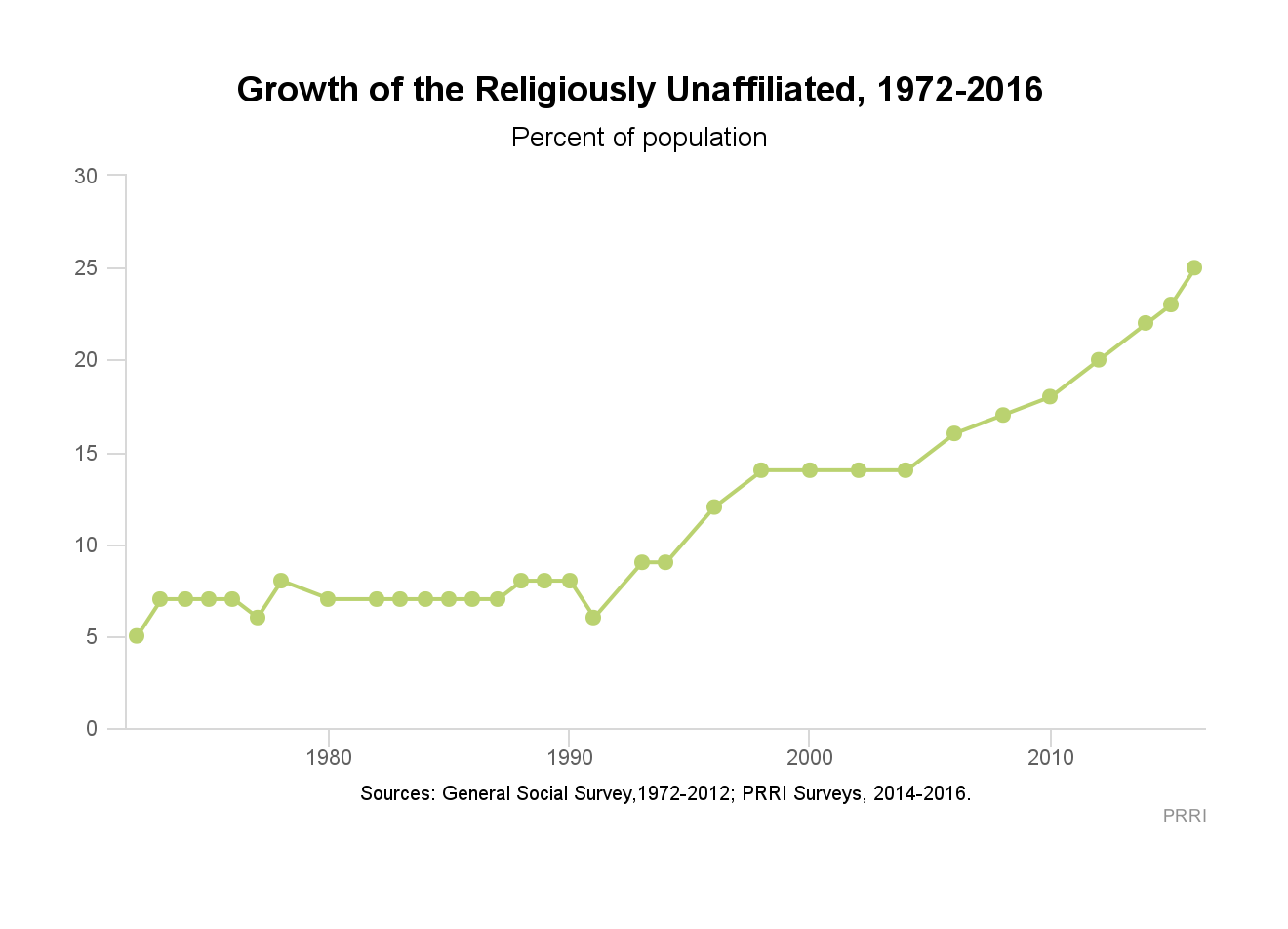
The title of a recent piece at Scientific American tells us the “Nones” juggernaut continues:
College Freshmen Are Less Religious Than Ever: Data from a nationwide survey shows students who list their affiliation as “none” has skyrocketed
“Nones” are people who when surveyed about their religious affiliation pick “None of the above.” What this means is that our culture will continue to get more secular as religion gets less important to more people over time. Those who applaud the increasing secularization of America hope we eventually turn out like Europe where churches are empty, and those who take their Christianity seriously are a curiosity.
(more…)

Feb 28, 2017 | Parents and Family

Since the Enlightenment and the drive by Western cultural elites to make secularism the default plausibility structure of reality, the family has been under attack. It may not have appeared this way to the average mom and dad in the street until the 1960s, but many Western intellectuals have been trying to throw off the shackles (for such is how they see it) of the family for several hundred years. The successful effort to legally redefine marriage is only the latest in this long march. The family is a reflection of the very nature of God, and thus of immense importance; it’s not up for redefinition.
In Genesis 2 when God makes a “suitable helper” for Adam, he established the foundation for the family, but the Triune nature of God is the true basis on which the family exists. The essence of the Triune God is life-giving love, unlike the monism God of other religions. I was reminded anew of the beauty and logic of the Trinity recently as I thought about some who can’t or don’t accept it.
In December of 2015 a professor at Wheaton College, the well known Evangelical college in Illinois, made the claim that Christians and Muslims worship the same God. The two religions venerate the Old Testament, but the Gods they worship couldn’t be more different. I also recently learned about a Christian sect called Apostolic Pentecostalism which rejects the Trinity. For them God is one, end of story. Father, Son, and Holy Spirit are only different revelations of the one God, not three persons in one as understood since the first church Council of Nicea in 325. Mormons and Jehovah’s Witnesses also have the trappings of Christianity, but deny its core. While adherents of these religions think the Trinity is illogical, it actually makes total sense logically. (more…)


Recent Comments