
Aug 26, 2017 | Notable Quotations, Truth

This is the third way. A belief in objectivity—in Beauty, Truth, and Goodness—requires neither a rejection of the complexities of the world nor a rejection of those who think differently. In fact, it requires more work. It requires a willingness to enter into the mess of a seemingly contradictory reality with a hope and a trust that there is something worth fighting for.
And thus, the sincerity of Wonder Woman and her Lasso of Truth arrive as a brief but necessary respite from the cycle of deception and disillusionment that plagues our cultural landscape. It unearths a newly repressed desire for wholehearted sincerity, even Truth, that we forgot we could believe in.
The critical and financial success of Wonder Woman proves audiences are ready for a strong female superhero. We might also be ready to face the Truth.
—Caleb Gotthardt, “Why Wonder Woman is the Best Lie Detector of 2017”

Aug 25, 2017 | Notable Quotations

I learned about this phrase when my daughter went to the great Hillsdale College in 2010. I’m sure I’d come across it in the past, but its significance as a pointer to the power and glory of our almighty Creator God has been impressed upon me continually in new ways since then.
In case you’re not familiar with it, the concepts, while not the exact phrase, go back to the ancient Greeks. Over time the phrase stuck, and the three always seemed to be mentioned together. The reason is that each depends on the other, and each implies the other. Most importantly, they depend on and assume God, a God of truth, goodness, and beauty, to which the Scriptures everywhere attest.
(more…)

Jul 14, 2017 | Explanatory Power, Notable Quotations

In an inversion of the ancient dictum, we might say: “As below, so above.” What we experience of space “out there” will reflect our inner spiritual state. Perhaps this is why, as glorious as the modern discoveries of the heavens are, they often leave us cold. This is not only because they’re mediated to us through images, or because we sense ourselves to be “of the earth.” It’s also because we children of modernity live in the shadow of the world’s disenchantment. The world is no longer “deep.” There is no inherent mystery in things. God’s absence from the world is echoed in the cosmos’s deafening silence. However wondrous the things we discover in space (which can awaken a reverent awe in even the most coldly scientific mind), they can never, in themselves, overcome this spiritual lack. For though we now have even more reasons for marveling at the cosmos than our ancestors, Peter Kreeft’s insightful observation remains true: People formerly looked upward and saw “the heavens”; today they simply call it “space.” Even the greatest exploratory adventures can never make up for this primary lack of spiritual vision.
—Brandon Tucker, “Creatures in the Cosmos”
I don’t normally comment on quotations, but this one is just too perfect, as is the entire article from which it comes. It is an especially good example of the concept of explanatory power. According to Google, explanatory power is “the ability of a hypothesis or theory to effectively explain the subject matter it pertains to.” In apologetics, it shows us how much more powerful and plausible the Christian worldview is compared to any of its competitors, and in this case the explanatory poverty of atheistic materialism. One of the keys to keeping our kids Christian is to consistently show them, to persuade and sell them on, the veracity and plausibility of the Christian Faith and worldview. As this article indicates, it’s rather easy to do.

Jul 12, 2017 | Notable Quotations

In each of these novels—by Huxley, Orwell, and Bradbury—books become an enemy because they represent a written record of the past to a dystopian future where the past is something to forget. Books threaten the status quo, undermine the dominant culture, overturn the ascendant social order—and so the powers that be attempt to wean or coerce their subjects away from the written word, with media they control.
—K.E. Columgini, “Books Versus Screens”
May 5, 2017 | Culture, Notable Quotations

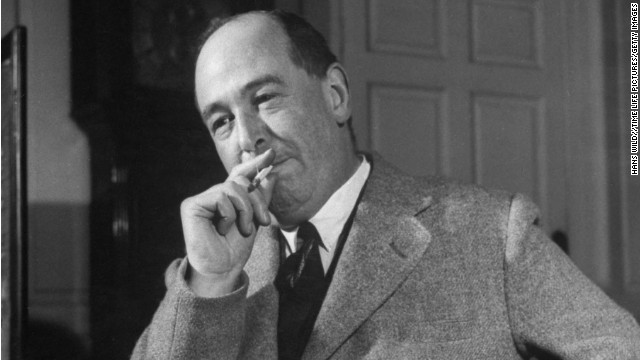
We must attack the enemy’s line of communication. What we want is not more little books about Christianity, but more little books by Christians on other subjects—with their Christianity latent. You can see this most easily if you look at it the other way round. Our Faith is not very likely to be shaken by any book on Hinduism. But if whenever we read an elementary book on Geology, Botany, Politics, or Astronomy, we found that its implication were Hindu, that would shake us. It is not the books written in direct defence of Materialism that make the modern man a materialist; it is the materalistic assumptions in all the other books.
C.S. Lewis, God in The Dock, p. 91.

Apr 19, 2017 | Notable Quotations

I believe like a child that suffering will be healed and made up for, that all the humiliating absurdity of human contradictions will vanish like a pitiful mirage, like the despicable fabrication of the impotent and infinitely small Euclidean mind of man, that in the world’s finale, at the moment of eternal harmony, something so precious will come to pass that it will suffice for all hearts, for the comforting of all resentments, of the atonement of all the crimes of humanity, of all the blood that they have shed; and that it will make it not only possible to forgive but to justify what has happened.
Theodore Dostoevsky, The Brothers Karamazov


Recent Comments