
One thing many Christians seem to miss is that Jesus was the Jewish Messiah, that he came first exclusively to his own people. There is a tendency to see all of Jesus’ words as written to us and universally applicable, and ignoring the historical context in which the story takes place. We’ll notice as we read through the gospels Jesus uses the word generation a lot, specifically in the Synoptic gospels of Matthew, Mark, and Luke where Jesus uses the word twenty-six times. Each time he uses it he is referring to the generation currently living. Even in John where that specific word is not used, John starts his gospel saying that Jesus “came to that which was his own, but his own did not receive him.” That statement is a good synopsis of the entire story of the gospels and Jesus’ ministry, which is the foundation upon which is built the Apostle Paul’s ministry eventually taking the gospel to the Gentiles and the entire world.
First, Jesus has to deal with the Jews and what the Jewish religion had become by the time he started his ministry. We have to look at the gospels in the context of the flow of redemptive history, and what God’s ultimate purposes were in creating a people for Himself in the first place. This requires us to go back to the very beginning. Adam was given a charge in the garden to take the world God had given him, and in effect to civilize it. Once he created man, both male and female, he gave them this charge:
28 God blessed them and said to them, “Be fruitful and increase in number; fill the earth and subdue it. Rule over the fish in the sea and the birds in the sky and over every living creature that moves on the ground.”
We call this the dominion mandate coming from the word the King James Version used for rule, dominion. Expanding on the meaning, it indicates prevailing against, to reign and rule over, to take. Adam was given a world of raw material with which to create a world of blessings for the people he would co-create with God. Needless to say, he blew it. When sin entered the world taking dominion would become a very mixed blessing, but the blessings were there to be had. Sin just complicated things. Eventually God chose Abram, one man out of all the people’s on earth to bring his blessings to every nation, to all peoples, through him and his seed or offspring, which is Christ (Gal. 3:16).
The Jews by the time of Jesus seemed to miss this message, that their religion wasn’t just for them, but for all peoples on earth. Judaism had gotten so insular, so exclusive, that Jews were not even allowed to eat with Gentiles, or to go into their houses and visit. Since God had stopped speaking through the prophets 400 years prior, the Jewish religious professionals had turned their religion into something completely foreign to what God had intended it to be. Jesus came to rectify that.
The Misunderstood Jesus
For those of us who’ve been Christians for a while and have read and heard the gospels preached many times, they don’t shock us, or even cause us to wonder what the heck is going on. Part of the reason is that we don’t realize the gospels were not written to us, but for us. In my early Christian years I thought the Bible was God speaking directly to me divorced from the historical context in which the stories took place. Needless to say that is not the most solid biblical hermeneutic, or interpretive framework. It’s impossible to understand what’s going on unless we see it as the culmination of Jewish history, as the turning point, the pivot in redemptive history.
Jesus was a corrective, and because of that completely misunderstood. His ministry, those three short years, might best be described in Isaiah 53:3, “He was despised and rejected by men.” Despite all he said and did to prove he had come from God, he was continually rejected, even by his own family! In Mark 3 Jesus is making a ruckus, and Mark tells us his family “went to take charge of him, for they said, ‘He is out of his mind.’ In Mark 6 Jesus visited his hometown, and the response of those who knew him best isn’t exactly welcoming. They say,
3 Isn’t this the carpenter? Isn’t this Mary’s son and the brother of James, Joseph, Judas and Simon? Aren’t his sisters here with us?” And they took offense at him.
As the old saying goes, familiarity breeds contempt. And as Jesus said, “A prophet is not without honor, except in his hometown and among his relatives and in his own household.”
In chapter 5 Mark gives us two stories of how how widely Jesus was misunderstood. In the first story, a demon-possessed man everyone must have known about because of his prodigious strength came to Jesus. No wonder the demons who spoke through him gave the name Legion. They plead with Jesus not to send them out of the area, so he gives them permission to go into a very large heard of pigs, who then immediately rush down a bank into a river and drown themselves. The people’s response is to plead with Jesus to leave their region. He had cost them a lot of money and they wanted nothing to do with him. The fact that Jesus commanded demons and they obeyed him was irrelevant.
The other story of rejection in this chapter is about Jesus raising a young daughter of one of the synagogue leaders named Jairus. He pleads with Jesus to come and heal his daughter, which he promptly does. When they arrive at his house, they tell him he’s too late, she’s already dead. Jesus tells them she’s not dead but asleep. The response of the people? “But they laughed at him.” This is what reminded me of John’s observation in the first chapter of his gospel:
11 He came to that which was his own, but his own did not receive him.
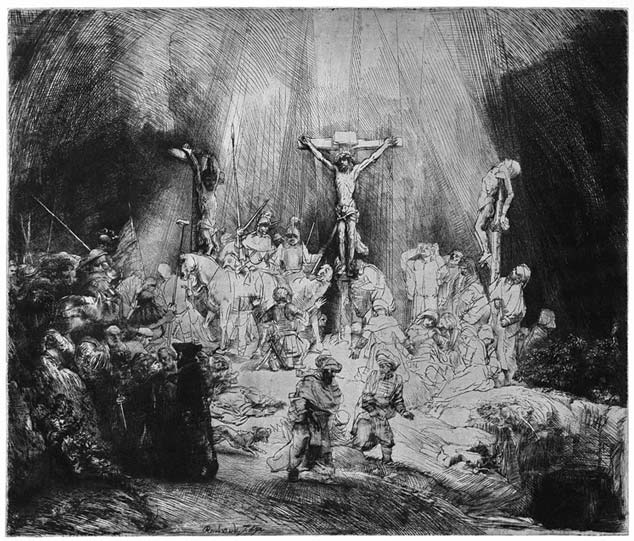
Jesus had already done amazing works of healing throughout the region, yet they still doubted. Moral of the stories? No matter what Jesus did, many, most Jews, would never believe. In fact, at the very end of his life he is completely alone, hung on a tree, a Roman cross, as a crucified criminal, enemy of the state. Only a handful of women are there in his final hours. He was truly despised and rejected by men. He came to bring good news to that generation, that man could be reconciled to God, that the blessings promised to Abraham and the Patriarchs could be theirs, that the dominion mandate could finally be fulfilled in him, and they wanted nothing to do with it.
Jesus’ War with the Religious Professionals and the Covenant
The ministry of Jesus is the culmination of 2,000 of Jewish history starting with God calling Abram to go from his home to Canaan to the land of promise (Gen. 12):
2 “I will make you into a great nation,
and I will bless you;
I will make your name great,
and you will be a blessing.
3 I will bless those who bless you,
and whoever curses you I will curse;
and all peoples on earth
will be blessed through you.”
The expansiveness of this promise is the point, and it goes back to the Dominion Mandate. God always intended to bless the entire earth, his creation and everyone in it, and that blessing would come through His people. The Jews forgot that, and turned this welcoming religion into an insular legalistic affair for only the few. Witness the early church’s struggle with Jewish Christians welcoming Gentiles into the church. When Peter had his vision of the clean and unclean animals and was sent to the centurion Cornelius, the Jewish Christians “were astonished that the gift of the Holy Spirit had been poured out even on Gentiles” (Acts 10). That wasn’t supposed to happen!
But if we’re going to understand the full redemptive-historical meaning of Jesus and his contentious interaction with the Jewish religious professionals, we have to see it in its legal-historical context in God’s dealing with His people. This requires some understanding of Ancient Near Easter religion, and for modern people that’s not easy to imagine. What we see in our Bibles isn’t some petulant God frustrated with His people and lashing out at them. The heretic Marcion even went so far as to see the Old Testament God as a different God. Far from it. Rather, God established a legal relationship with His people typical of an ancient Near Eastern Suzerain-Vassal relationship. A Suzerain was a superior ruler, a king, or great power who exercised dominance over a subordinate ruler or state, known as the vassal. The relationship was formalized through suzerain-vassal treaties (or a word we’re familiar with, covenants), which were common diplomatic and political instruments. These were not generally agreements between equals, although such did exist, but hierarchical relationships imposed by a stronger party on a weaker one, often after conquest, alliance, or submission.
This started with God’s unilateral covenant agreement with Abram in Genesis 15, a bizarre ritual to us, where God puts Abram into a deep sleep. He tells Abram the story of what will become his descendants’ slavery and deliverance that happens 400 years into the future, and then in the form of a firepot, a blazing torch passes between cutup animals as a ceremony to formalize the suzerain-vassal relationship between God and His people. This relationship was unique, though, because it was unilateral, only one party, the suzerain, God, declaring he would fulfill both parts of the covenant. These covenants or agreements, like our contracts today, were always established between two parties. Not with God and His people. Those who would become the Hebrews and then the Jews would never be able to keep their end of the bargain.
God rescuing His people from slavery in Egypt began to formalize this relationship as we can see from the intricate details required of the people to maintain it. God lays out the conditions and consequences most starkly in Deuteronomy 28. There are detailed blessings for obedience, and curses for disobedience, more of the latter than the former. We must notice the number one stipulation, a warning at the end of the list of blessings:
14 Do not turn aside from any of the commands I give you today, to the right or to the left, following other gods and serving them.
The turning aside, turning away from their God, was a function of their following other gods and serving them. That is the essence of the human struggle with sin. It isn’t primarily our behavior that is the issue, but which god or gods we will serve. Our behavior always flows out of that. The final result of the cursing, which would prove prophetic in Israel’s history, is destruction. It’s a sobering read knowing what happened three times in Israel’s history. First with the Assyrians destroying the northern kingdom in 722 BC, then the Babylonians destroying Judah and Jerusalem in 586 BC, and finally the Romans destroying Jerusalem and the temple in 70 AD. All this was a result of Israel’s unfaithfulness, of their turning aside to follow other gods and serve them.
Israel’s Marriage Covenant with God
In the Old Testament the covenant, i.e., legal, relationship between God and His people is depicted as a marriage, and Israel is often portrayed as an unfaithful wife who had committed spiritual adultery by turning to idols, yet God remains faithful and promises restoration. God had warned Israel of the exact consequences of the agreement, and they responded to Moses three times that, “We will do everything the Lord has said; we will obey” (Exodus 19 and 24). They willingly entered into this agreement, and would have to live with the consequences. This is the ultimate context of Jesus’ ministry and mission to the Jewish people.
If we go back through Jewish history in the Bible we see a double minded people who are not sure if they want to remain faithful to their God or follow the ways of the other heathen pagan nations. God called His people to be holy, set apart and not contaminated by those heathen pagan cultures, and by the time of Jesus the Jewish religious professionals, the Pharisees, Sadducees, and Teachers of the Law, had perfected a narrowly exclusive version of Judaism that bore little resemblance to what God intended in his promise to Abram. God’s design was that the nations wouldn’t infect His people, but rather that His people would influence the rest of the world with His blessings. After 2,000 years it was clear that just wasn’t going to work, and Jesus is bringing his message of warning to his people who instead of heeding it, kill him. Yet the Apostle Peter says in Acts 2 this was all part of the plan:
23 This man was handed over to you by God’s deliberate plan and foreknowledge; and you, with the help of wicked men, put him to death by nailing him to the cross. 24 But God raised him from the dead, freeing him from the agony of death, because it was impossible for death to keep its hold on him.
Israel’s history was one long object lesson in failure, that without God the Holy Spirit dwelling in His people, the kingdom of God could never advance on earth, or Satan’s dominion be destroyed. That would take the man who would come to be called the Messiah, who in himself would fulfill all three offices of mediator that sinful humanity required, prophet, priest, and king. As prophet, Jesus was truth teller, speaking messages the people often didn’t want to hear. It was as prophet that Jesus’ contentious relationship to the Jewish religious leaders is best understood. They chaffed at everything he said and did because it condemned them. As Jesus lamented (Matt. 23):
37 “Jerusalem, Jerusalem, you who kill the prophets and stone those sent to you, how often I have longed to gather your children together, as a hen gathers her chicks under her wings, and you were not willing.
They were determined to do the same to him. As priest, Jesus would atone for the sins of the people he spent three years condemning. Sadly, they completely missed that Jesus was himself the Passover lamb, who willingly took the wrath they deserved. And finally as King, he would be their ruler, the one to whom they owed unquestioned loyalty and obedience. Instead, they proclaimed that they had no king but Caesar.
The Jews would not accept Jesus’ atonement for their sin and unfaithfulness, and him as their Messiah, so as Jesus warned them, their house would be left to them desolate. Jesus had warned the teachers of the law and Pharisees in Matthew 23 with seven woes that judgment was coming, and in Matthew 24, what is called the Olivet Discourse, he prophesies the coming destruction of Jerusalem and the temple in AD 70. God would send an unmistakable message to the Jews and the world that there was a new way to the Father, the only way, and it was Jesus, Savior of the entire world.
Recent Comments