Paganism, Telos, and Re-Establishing Christendom

Paganism, Telos, and Re-Establishing Christendom

As Christians, our understanding of the world goes back several thousand years to the creation narrative in Genesis, and God calling Abram out of Ur of the Chaldeans, out from his pagan world to become a people of God. Telos, the Greek word for purpose, is critically important for how we understand both creation and history, and both are critically important for our battle against the forces of secularism to re-establish Christendom in the generations to come. I will start with history because it’s easier to grasp, then discuss teleology in creation after we get our biblical historical bearings.

Do you ever ask yourself how we got here? As the late great Rush Limbaugh used to say all the time, most of us think history started when we were born. I hate to break it to you, but none of us are that important. Before I get into a bit of theology and philosophy, I need to establish a Christian understanding of history. That’s not as simple as it sounds. History is stuff that happened, right? Well, yes and no. Most historians agree that certain historical events happened, by they disagree wildly on what those events mean, and why and how certain events lead to other events in the flow of history. All history, in other words, needs to be interpreted, and all interpreters are human beings with limits of knowledge and insight and wisdom. These human beings are also sinners, which brings up fundamental assumptions these people hold about the nature of reality. Such assumptions cannot be escaped, and thus will determine how we interpret history. As Christians, we must interpret history as Christians, which means our assumptions will inescapably be different than non-Christians. Let’s find out just how different.

A Biblical Teleological View of History
Like most Christians influenced by secularism, I’ve tended to see history and events like hurricanes, just happening and who knows which way either will go. In September 2022 when Hurricane Ian was tracking toward where we live in the Tampa area, I had to remind myself it is God alone who determines where it goes, not mere “natural” forces. Regarding history, we too must often must remind ourselves God directs all events, past, present, and future. As David says in his great doxology to Yahweh, the Lord, the God of Israel, He is “the ruler of all things” (I Chron. 29:10-13).

A proper Christian providential theology of history is captured by Daniel when God revealed to him Nebuchadnezzar’s Dream (Daniel 2). Grateful he and his buddies would not be killed, he proclaims the greatness of our God, the author and perfecter not only of our faith (Heb. 12:2), but of all history:

Then Daniel praised the God of heaven 20 and said:

“Praise be to the name of God for ever and ever;
wisdom and power are his.
21 He changes times and seasons;
he deposes kings and raises up others.
He gives wisdom to the wise
and knowledge to the discerning.

In Daniel 4, after Nebuchadnezzar’s sanity was restored, this pagan king of Babylon also couldn’t help coming to the same conclusion as Daniel the Hebrew prophet. The Old Testament affirms this continually. When we come to the New Testament, our providential understanding of history should be intensified by the death, resurrection, and ascension of Jesus, Israel’s Messiah and the Savior of the world. The Apostles Creed declares our belief in God, the Father Almighty, Creator of heaven and earth, and then we affirm of the second person of the Trinity:

I believe in Jesus Christ, his only Son, our Lord,
who was conceived by the Holy Spirit
and born of the virgin Mary.
He suffered under Pontius Pilate,
was crucified, died, and was buried;
he descended to hell.
The third day he rose again from the dead.
He ascended to heaven
and is seated at the right hand of God the Father almighty.
From there he will come to judge the living and the dead.

We Evangelicals do not pay enough attention to Christ’s ascension. In the ancient world the one who sat at the right hand of the king shared his kingly authority and power. In this case, Jesus has the ultimate position of power and authority in the universe. We find this in Ephesians 1, the crowning New Testament rationale for the confidence of Daniel and Nebuchadnezzar in God’s providence. We cannot overemphasize the theological and providential implications of Christ’s ascension, and Paul tells us why. Speaking of the surpassing greatness of the power for those who trust the Lord Jesus, he says:

That power is the same as the mighty strength 20 he exerted when he raised Christ from the dead and seated him at his right hand in the heavenly realms, 21 far above all rule and authority, power and dominion, and every name that is invoked, not only in the present age but also in the one to come. 22 And God placed all things under his feet and appointed him to be head over everything for the church, 23 which is his body, the fullness of him who fills everything in every way.

This is not only the rule and authority of material creation, but over beings spiritual and mortal that exercise rule and authority and power and dominion—over all of them. Many Christians quote Paul’s declaration in Ephesians 6:12: “For our struggle is not against flesh and blood, but against the rulers, against the authorities, against the powers of this dark world and against the spiritual forces of evil in the heavenly realms.” But it is critical to quote this in the context of the passage in Ephesians 1. Nothing happens that Christ doesn’t permit or cause to happen; his rule is sovereign and absolute.

I tended, however, to see this passage eschatologically when Christ comes to consummate all things in him. It’s more difficult to grasp that Jesus has all this power now and is using it in this world, in space and time, for the advancement of his kingdom and ultimately for his church. This has implications beyond the church, though, which is why Paul tells us Jesus’ kingly rule is for present age, as well as in the one to come.

Linear versus Teleological View of History
Once we accept God’s providential control over history, we need to have some idea how it works out in actual history, as in what the implications are for events themselves.

Prior to “In the beginning God created the heavens and the earth” (Gen. 1), all ancient peoples viewed time cyclically, a perpetual wheel endlessly turning going nowhere. One of the most profound changes Jews brought to the ancient world was the conception of time and history. This change started when God called Abram to go from Ur of the Chaldeans to the land of Canaan, by faith he left everything he knew and the world was forever changed. History going somewhere, forward, in a different direction was now possible.

We tend to think the contrast to the cyclical view of history is linear, a line going straight in one direction from A to B. That, however, is not the biblical understanding of history. If we’ve learned anything from thousands of years of recorded history, it’s anything but straight. It zigs and zags all over the place, backward, forward, and sideways. Biblically, the contrast to cyclical isn’t linear but teleological, meaning the end is bound up in the events themselves. History is going somewhere, every event leading to God’s appointed end regardless of what it may look like on the surface. This means there are no throwaway events in history, things that just happen. Every event has teleological significance whether we think we can see it or not. Too often we presume that we can. There are many times looking back in history, or at current events, or even in our own lives, when this is difficult to swallow. The most common question in all of history attests to this, “Why, God?” It just doesn’t make any sense. . . . to us.

As Christians, our fundamental assumption about history is what Jesus revealed in Luke 24 as the ultimate biblical hermeneutical principal—that the entire Old Testament was about him. But it isn’t just the Old Testament. The same hermeneutical principle applies for all history: we interpret it all according to God’s revealed word. Because of this, we can no longer look at the past, present, and future, and all events contained therein, in any other way. They are all ultimately about Jesus in some way, unless we have some other interpretive non-biblical framework for history, to which we turn next.

The Secular View of History
Those who don’t have a biblical and thus providential view of history will by default have a secular one. Even though there are variations on the secular view, a strictly God-less interpretation of history means there is no overarching narrative, no telos, or purpose, to history. Things happen randomly. If there is no God ordaining and guiding history providentially, we’re forced to conclude it is but chance and agree with Macbeth at the death of his wife:

Tomorrow, and tomorrow, and tomorrow
Creeps in this petty pace from day to day
To the last syllable of recorded time.
And all our yesterdays have lighted fools
The way to dusty death. Out, out, brief candle.
Life’s but a walking shadow, a poor player
That struts and frets his hour upon the stage,
And then is heard no more. It is a tale
Told by an idiot, full of sound and fury,
Signifying nothing.

Typical of Shakespeare, it could not be said any better. However, given we cannot escape living in God’s created universe no matter how hard sinful humanity insists otherwise, chance has never proved a satisfying explanation, for anything. We also live with thousands of years of the influence of Judaism and Christianity, so the teleological view of history can’t be completely escaped. Which brings us to Hegel.

German philosopher Georg Wilhelm Friedrich Hegel (1770-1831) is the father of historicism, which is a teleological view of history without God—well, without a God any of us might recognize. As a child of the Enlightenment, Hegel could not believe in a personal God who ordains history according to His will. Instead, for him God was history itself as the unfolding of a World-Spirit. Hegel’s writing is inscrutable, but it made sense to a lot of other philosophers and intellectuals, including one Karl Marx. Historicism is in effect a bastardization of the Christian idea of God’s providence, and a competing assumption on how we interpret history. The takeaway from Historicism is that it strips human beings of agency, that we can change things and alter the course of history. The World Spirit is impersonal and deterministic. We’re basically cogs in the World Spirit Machine. In the Christian view, human beings have real agency, they can change things even though God ordains and is in control of all things.

While most modern Americans and Westerners are not Hegelian per se, his influence can be seen in their assuming history is the story of inevitable “progress,” an idea baked into the historical cake. A driving assumption is that things just naturally get better because as secularism teaches, we went from ancient superstition and “the dark ages” to Enlightenment and science.

Therefore, we have three options for how we interpret history, the biblical providential view of a sovereign ordaining God, or the two secular options, a historicist view a la Hegel, or chance. That’s it. There are no other options when it comes to interpreting the events of the past, the present, or the future. Agnosticism is not an option. As Orwell said in 1984, “Who controls the past controls the future. Who controls the present controls the past.” For our purposes, whoever defines history defines the present and the future. These are not just academic questions debated in ivory towers, but questions the answers to which will affect everything about our lives and the generations to come.

The Importance of Telos in Creation
As we’ve seen, our assumptions about history will determine how we interpret history. The same can be said about creation, or what people today refer to as “nature.” I no longer use the word nature because it is loaded with Darwinian assumptions, and as we saw with history, assumptions determine interpretation. So what has telos, or purpose, to do with creation. Only everything!

Way back in the Middle Ages, a brilliant scholar and monk, William of Ockham (1287-1347), developed what in philosophy is called nominalism, and having some understanding of it will help us grasp the importance of telos in creation. These are very deep philosophical waters in which to swim, so we’ll only get our toes wet. Bear with me and its importance will become apparent.

Richard Weaver in his book, Ideas Have Consequences, believed nominalism was “the best representative of a change which came over man’s conception of reality.” He argued the seeds of this move to the subjective (meaning, we think our perspective is reality itself) goes back to nominalism. Ockham rejected the idea of universals, a concept developed by ancient Greek philosophers Plato and Aristotle. Very simply put, nominalism contends that things only have meaning because of the names we attach to them (Latin nomen). What does this mean in practice?

Over time this led to empiricism, or the idea that knowledge can only be attained via sense experience. In due course experience came to be viewed as ultimately authoritative, and as the only thing that really counts. As a result, personal preferences become sovereign, and people tend to deny any authority exists outside of the self. In other words, all meaning exists inside, not outside of them. This connects directly to how nominalism affected our perspective on creation, and in due course destroyed the possibility of telos in God’s created order, what people mean whey they say “nature.

There are numerous deleterious implications of a nominalist perspective, but one is that we no longer see the created world imbued this its own meaning and purpose, or telos. Nature, as we see it through a secular lens, no longer has an end to which it works. It just is. We’ll use the most common of things in human experience, dogs, to illustrate this. Since nominalism rejects universals, there is no such thing as “dogness,” only things that have dog qualities we call dogs so we don’t confuse them with cats, for instance. Think of a dog like you think of puffy clouds that take the shape of a dog. it may look like a dog, but we know it’s only a bunch of moisture particles condensed in the air that just happened at that moment to take the shape of a dog. Nominalism does the same thing with atoms of matter. There really is no such thing as the universal dogs, only matter that by chance just fell together and there were these things we call dogs for convenience, so we don’t confuse them with other animals.

Again, as I said, these are deep philosophical waters, but we in the modern world are drowning in these waters, and God is throwing us a life raft called telos in creation. Once Darwin came along, evolutionists rejected any kind of telos or purpose in nature, in matter itself. Matter just fell together without any guidance from an outside source, and out popped dogs! And everything else. There’s nothing behind the matter but . . . . more matter. In my favorite metaphor, there are only puzzle pieces and no puzzle, so no bigger picture, universals, to give the pieces, the particulars, any meaning. Here’s the takeaway: the individual pieces can only be given ultimate meaning from the bigger picture. If we only see pieces in isolation, we will get a distorted picture of everything. Welcome to the modern world in 2024! No wonder we are in the middle of a Great Awakening. People are tired of nominalism, so to speak, tired of the puzzle pieces without the big picture, and the resulting confusion. They’re exhausted.

To show the practical implications of this concept, let’s finish this with an example as simple as it is relevant; human sexuality. If human beings are merely a collocation, an arrangement, of atoms or matter and that is all, then male and female don’t actually exist. Simply put, the concepts of maleness and femaleness are malleable, can be changed on a whim by rearranging some of the matter. Same with sexual organs. If bodily orifices are just so much matter with no inherent telos or purpose, then we can do whatever we want with them, pleasure and preference is all. If homosexuality floats your boat, knock yourself out. If, on the other hand, God’s creation is filled with the purpose he gave it at creation, then we look at it all completely differently. We try to find the meaning outside of us, in the things themselves, to discern their purpose, which leads to human flourishing because we’re using things as they were designed to be used! It’s incredible how simple it is, yet sinful rebellious humans want to “be like God” and call the shots. Telos says, they . . . . don’t . . . . get . . . . to!

Why We Need More Hypocritical Christians

Why We Need More Hypocritical Christians

Since I recently wrote on Christian Nationalism, I need to address a criticism some Christians have of the concept: hypocritical Christians.

This criticism comes mostly from thoughtful Baptists who are consistent with their theological presuppositions and worry that in a Christian nation many or most people who profess Christianity won’t really be born-again, regenerate Christians. That is undoubtably true, and that concern is what I will address in this post. I will argue that is irrelevant to the concept of a Christian nation, and in fact a good thing, thus the title of this post.

We have no way of knowing who the true Christians among the populations of Christian nations of the past were, nor do we know that today. I make it a habit not to presume upon the state of someone’s soul or relationship to the Living God, unless they make it absolutely clear what state that is. I trust those who claim the name of Jesus that they are sincere, even if I disagree with their theology, or even if their life doesn’t reflect it to the degree I think it should. I leave the souls of the non-Christians up to God to deal with as he sees fit. As Hebrews says, “Just as man is appointed to die once, and after that to face judgment,” (Heb. 9:27), so I leave the judging to God.

When I started thinking about writing Going Back to Find the Way Forward in early 2022, I struggled with what as conservative and Evangelical Christians we’re trying to accomplish. What exactly is a Christian society or nation? What does such a thing look like? Is it fifty-one percent of the people being professing Christians? I was always frustrated because I knew intuitively what makes a nation Christian isn’t just the number of Christians. I’m not sure there’s ever been a time in Western history where the vast majority of people in the nations of Christendom were Christians, yet the people, Christian or not, considered themselves living in Christian nations. Most Christians seem to believe if we just convert enough people things will magically change for the better. It doesn’t work that way. What I’ve learned in the last two plus years is the way I think it does work, and more on that to follow.

The Confusion of the Church and the Kingdom
One of the reasons Christians are confused about this, as I was for most of my Christian life, is that I conflated the church and the kingdom of God. To me the church was the kingdom and the kingdom was the church. Anything or anyone outside of the church was not part of God’s kingdom, and it was only where the church or Christians were that made a place God’s kingdom. This is certainly a reflection of Baptist theology which is pretty much ubiquitous in modern Evangelicalism. I didn’t realize as a Presbyterian I had categories to see such a perspective as distorted and unbiblical. Of course Baptists will disagree with me on that.

What’s the difference between the two theological perspectives that merges kingdom and church or doesn’t? For me it was embracing postmillennialism that caused me to realize why as a Presbyterian I should see the church and the kingdom as two distinct and separate, though interrelated entities. The church is the main driver of advancing the kingdom of God in the world, and the kingdom lived out in the life of the church is brought outside of the walls of the church by faithful Christians applying God’s law and word and the gospel to every square inch of life. In the words of Jesus, we are salt and light in a fallen world, and Jesus used such metaphors because what we do in the world matters, as salt we really do enhance flavor and preserve, and as light we really do make darkness flee. In other words, as disciples of King Jesus, what we do actually changes things, pushes back the effects of the fall, and advances God’s kingdom.

First let’s address Baptist theology. For most of the history of the church until the Reformation, all Christians were baptized as infants because Christians were part of the national community of Christians. In Christendom 1.0, as Doug Wilson calls it, church and state were conflated, so in effect the church was the state and the state was the church. Baptism was what introduced you as a community member and citizen. If you were not baptized you were not part of the Church or the community, and thus not part of the nation, not a citizen. This all changed with what’s come to be known as the Radical Reformation, and the introduction into Christendom of the Anabaptists. This was very early in the Reformation, and Anabaptists refused to baptize babies, an extremely unpopular sentiment in those days, and many paid for it with their lives. The reason it was perceived as so dangerous and capital punishment was seen as a reasonable response, was because it threatened the essential order of a society. Religion wasn’t a personal and individual thing in the Middle Ages, but a family and community and societal thing, something that encompassed every area of life.

As you can imagine in such societies, there were a lot of hypocritical Christians, or what I’ve heard some call them, nominal Christians, or Christian in name only. That is undoubtably true, and yet all these people considered themselves living in a Christian nation and culture. This also highlights the concept of the visible and invisible church coming out of the Reformation. Not every baptized member of a church is in fact a born-again Christian, as Jesus says, “Not everyone who says to me, ‘Lord, Lord,’ will enter the kingdom of heaven, but only he who does the will of my Father who is in heaven.” (Matt. 7:21) This applies to Baptists who don’t baptize infants, and Presbyterians who do, but also for that matter Catholics, Orthodox, and Lutherans. Just because someone is baptized and belongs to a church, doesn’t mean their profession of faith is real. God will determine that at the end of time.

Hypocrisy is a Fact of Life: The Only Question is Which Hypocrisy
Do you ever wonder how many woke hypocrites there are? That may sound like an odd question, but think about it. Contrary to the First Amendment, the established religion of America is secularism, and woke, a form of cultural Marxism we’re all too familiar with now, is the most powerful denomination. Few people, though, are secular progressive absolutist woke leftists, yet the woke have no problem imposing their views and policies on an unwilling society. As Christopher Caldwell documents in The Age of Entitlement, because of the Civil Rights Act and other laws passed during 60s, the leftist agenda has been pushed on an unwilling populace from the top down. All the so called “rights” regarding race and sexual perversion were never embraced or welcomed by the vast majority of Americans, until the courts shoved it all down their throats. The examples are legion, and I encourage every American who wants to get our country back to read that book, what I now consider probably the most important book of the 21st century.

Let’s establish one indisputable fact: every human being is a hypocrite. We are all sinners and thus imperfect. That means we can’t live up to our own standards, let alone those of a holy God. We say and believe things, and often act contrary to what we believe. This is just as true for secular people who claim not to be religious, although they too live by faith. They have certain values and beliefs and can’t live up to those all the time either. Just ask one if they are perfect, and they will instantly say no, which means they are hypocrites too.

The greatest illusion in the age of secularism is the myth of neutrality. Because all people live by faith and are thus religious, and because societies are made up of religious people, all of a society’s laws and values are a reflection of their religious faith. Culture is simply religion externalized. There is no morally or religiously neutral nation. The question must always be asked about a nation’s laws: by what standard? Where do a nation’s laws and standards, what is embraced and what is stigmatized, considered right and wrong, come from? Ultimately, there are only two choices, God or man, revelation or reason.

Many scholars and historians seem to miss a very basic fact about America’s founding, that America was founded as a Christian nation. When Jefferson wrote in the Declaration about a Creator, about nature and nature’s God, he and every person who read it knew this Creator and God was the God of the Bible, of Genesis to Revelation. There was not one secularist among the founding generation, and none were doctrinaire Deists. All of America’s founders were Englishmen until they became Americans, and they were fighting for the rights of Englishmen that came down to them from King Alfred the Great in the 9th century, to Magna Carter in 1215, and through the Glorious Revolution of 1688. Every one of those 900 years was bathed in Christianity with God’s law as the foundation of the development of English common law and the rights afforded to citizens because of it.

America was founded as a Protestant Christian nation, and it will only be re-founded to the degree that Christianity again becomes the dominant religious foundation of the nation. As Doug Wilson says, it is either Christ or chaos. Too many conservatives and Christians buy into the myth of neutrality, and that secular pluralism in some kind of classical liberalism is the answer to the current chaos of Marxist wokeness. If you start talking about God’s law, the Bible and Christianity, and God forbid, Christian nationalism, they all start warning everyone against the horror of theocracy, as if the meaning of that word is self-evident. It is not. But yes, God must rule our nation because only if He does, will we regain the liberty our founders fought and died for. Otherwise with secularism, we have tyranny and the will to power, the bitter taste of what America is experiencing now.

Culture, Plausibility Structures, Law, and Faith, and the Disaster of Pietism
A movement in Germany in the 16h century arose to purify the German Lutheran church which came to be called Pietism. In due course it leaked out and infected all forms of Protestant Christianity, especially through the efforts and ministry of John Wesley. The Second Great Awakening in the 19th century was primarily a Pietistic awakening, which in due course turned conservative Bible believing Christianity primarily into a form of fundamentalism. When I was a young Christian in the late 70s and 80s, I learned about Evangelical Christians who I differentiated from the fundamentalists. The former were more culturally engaged and intellectually oriented, while the latter were not. I considered myself an Evangelical because of the influence of Francis Schaeffer very early in my faith journey. Today, however, there is no distinction and few if any embrace what has become post-9/11 a pejorative term, fundamentalism. All conservative protestants are now Evangelicals.

Why do I say that Pietism is a disaster? Because it turned Christian faith inward, making it primarily personal and not societal. Wesley and Pietistic Christians until the raise of fundamentalism very much believed their faith should affect the morals of society, but that was the problem—it was moralistic. Christianity for them was primarily about ethics, right and wrong, doing good verses doing bad, rather than metaphysics, or Christian worldview. Here is a good definition of this term:

The branch of philosophy which studies fundamental principles intended to describe or explain all that is, and which are not themselves explained by anything more fundamental; the study of first principles.

For 1500 years until the rise of Pietism, all Christians saw their faith as totalizing, as an encompassing authority and standard of every area of life, both personal and societal. Pietism was a monumental change in perspective that slowly but completely took over Protestant Christianity, making it increasingly irrelevant to anything more than the Christian’s personal faith journey. The advocates of the Enlightenment, the other side of the Pietistic coin, were all too happy to see Christianity retreat from societal influence, and in due course Christian Western civilization ceased to exist. Now we have woke Western civilization.

This means the culture, plausibility structures, and the law, are all dominated and driven by the secular religion of the Marxist woke faith. On a practical level we live in societies where the social conditions of are no longer conducive to belief in God and Christianity, but in the secular alternatives. Aaron Renn calls this negative world. Up until the 1980s Christianity was seen as a positive good for society. Then as secularism came to dominant the culture, Christianity became something neutral, neither good nor bad, but as the 21st century turned into its second decade, we now live in negative world where Christianity is seen by cultural elites as positively dangerous and regressive. Witness the secular pagan left going nuts over Kansas City Chiefs kicker Harrison Butker affirming motherhood and the traditional conception of the family. If some famous football player had said the same things in 1995 when he was born, in neutral world, nobody would have noticed.

The mission for Christians and the church in the 21st century, then, is to re-Christianize the culture and build the plausibility structures that makes Christianity plausible to more people, which leads to the growth of the church (more people saved) and the advance of God’s kingdom. We want the social conditions to be conducive to belief in God and Christianity, and that means we reject Pietism and a merely personal faith. On a practical level, per Jesus’ instructions in the Great Commission, our job is to disciple our nation, and teach it and all the people in it, everything Jesus commanded us. In due course as the culture shifts in our direction, that will mean more hypocritical or nominal Christians, which is exactly what we should want. The alternative is the hypocritical woke Marxists we live with now. As Jesus said about the poor, the hypocrites we will always have among us. The question is which kind of hypocrites do we prefer.


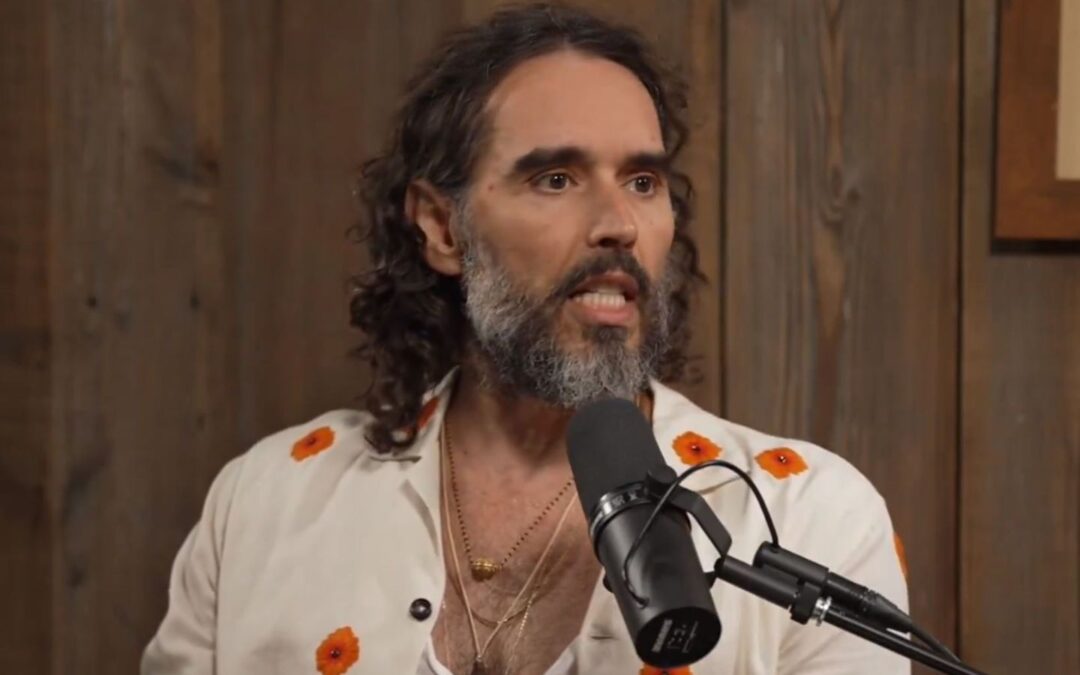
Must Listen Interview of Tucker Carlson with Russell Brand

Must Listen Interview of Tucker Carlson with Russell Brand

I’ve recently decided to get active on Twitter/X to promote my work, and especially my new book when it’s published next month, God willing. So instead of posting twice a week, I now post once on Wednesdays, and focus the rest of my time on Twitter/X. So I normally wouldn’t post anything on a Thursday, but I saw this conversation between Brand and Carlson yesterday, and had to share it.

Brand is a quintessential example of what my book is about. In this discussion he makes the exact argument I do in the book for the Great Awakening that is happening all around us. I won’t share with you exactly where he says it, but I will give you a hint that it’s near the end. You’ll have to read the book to find out exactly what it is, and how I work it out in book length form.

Plus it looks like he may be coming to faith in Jesus from something else I saw him share recently, and there are hints in the discussion a personal almighty God is becoming more real to him. He’s been very much an Eastern religion guy until recently, and that seems to be changing, praise God. Pray for him. It’s definitely worth a listen.

I’m kind of surprised it’s actually allowed on YouTube, but just in case they think better in their little leftist hearts, here is a link to Twitter/X, which Elon Musk turned into a free speech platform:

https://twitter.com/search?q=Russell%20Brand%20and%20Tucker%20Carlson&src=typed_query

Ayaan Hirsi Ali’s Conversion and a Typical Christian Response

Ayaan Hirsi Ali’s Conversion and a Typical Christian Response

I recently did a post on the surprising conversion of ex-atheist Ayaan Hirsi Ali to Christianity. A response by John Daniel Davidson at The Federalist is insightful, but it is also a great object lesson in the constricted view of Christianity common among many modern Christians. Ayaan became a Christian primarily for two reasons. A Muslim, after 9/11 she lost her faith and became a passionate defender of the liberal West against tyrannical Islam. She realized over the last twenty years that atheism could never sustain what the Judeo-Christian tradition gave to the world in Christian Western civilization. She also found that living in a God-less universe without any spiritual solace unendurable. I think she could relate to the reason C.S. Lewis rejected atheism for Christianity. He said he believed in Christianity as he believed the sun had risen, not because he saw it but because by it he saw everything else. Without Christianity the puzzle pieces of life never fit, but with it they finally made sense. This is the power Ayaan now sees in Christianity

What She discovered in Christianity was not only a worldview that explains everything, but a faith whose purpose is to transform the fallen world into which it was born. Davidson like most Christians sees Christianity as primarily personal with spiritual implications for the individual, and only secondarily with implications for society. Davidson’s assessment of her conversion is a good example of this myopic view of Christianity:

She’s also right about that but wrong to think Christianity is primarily about countering those forces or preserving a particular civilizational or political project. As great as Western civilization is, it arose as a byproduct of the Christian faith, the sole object of which is communion with Almighty God by means of salvation through Jesus Christ. Things like freedom of speech, rule of law, and human rights are fruits of the Christian faith, but they are not what Christianity is about.

This is right and wrong, unfortunately more wrong than right. It is right because of course all the wonderful blessings we experience in the West are because of Christianity, as Tom Holland persuasively argues in his book Dominion. It is wrong because the fruit he speaks of is most definitely what Christianity is about.

Societal Transformation is Not a Byproduct of Christianity
Davidson uses the word “byproduct” for the blessings that Christianity brought to the world. That word is defined as, “a secondary and sometimes unexpected or unintended result.” Although most Christians believe this, and I too believed it until not long ago, I now believe it is not the biblical position. Jesus himself tells us the reason for his coming, and it wasn’t merely personal salvation that would somehow spill over into society. I quote these words a lot and sound like a broken record, but Jesus said them for a reason. When he taught his disciples to pray he said (Matthew 6, KJV):

Our Father which art in heaven, Hallowed be thy name.

10 Thy kingdom come, Thy will be done in earth, as it is in heaven.

Then we will connect this with the Great Commission in Matthew 28:

18 Then Jesus came to them and said, “All authority in heaven and on earth has been given to me. 19 Therefore go and make disciples of all nations, baptizing them in the name of the Father and of the Son and of the Holy Spirit, 20 and teaching them to obey everything I have commanded you. And surely I am with you always, to the very end of the age.”

Again, like most Christians, I saw Jesus’ command to the eleven disciples in purely personal terms, but Matthew has Jesus use the Greek word ethnos- ἔθνος, which means a race, people, or nation, not a comparable Greek word for individual. And then they are to teach this conglomeration of peoples to “obey everything” he commanded them—not some things, but everything. And Jesus prefaces his command with his declaration of ultimate authority in heaven and on earth, then he says, Therefore, go. Are we to believe he will not exercise that authority for the advancement of his kingdom? That he’s telling his disciples to give it the good old college try, but you know, this fallen world is pretty bad and ultimately evil will win until I come back at the end of time to save the day? I believe those questions answer themselves. And the Apostle Paul tells us the kingdom of God is a matter “of righteousness, peace and joy in the Holy Spirit.” How by any definition is societal transformation in all this a “byproduct” of Christianity? It seems like that’s the point.

I do understand Davidson’s concern, an understandable one shared by many Christians. It is that we’re going to primarily make Christianity about politics or “social justice,” and the gospel of salvation and personal holiness becomes secondary. Fair enough, but fallen saved sinners do this all time with all kinds of things. Tim Keller often said, idolatry is turning good things into ultimate things. Just because people do this doesn’t make those things not good. And this is far more than a debate about the Christian worldview applying to all of life, which I’ve always believed. Rather, it turns on the authority of Christ he earned by his life, death, resurrection, and ascension to take back his creation from the devil. Satan’s temptation of Jesus in Matthew 4 is instructive to make my point:

Again, the devil took him to a very high mountain and showed him all the kingdoms of the world and their splendor. “All this I will give you,” he said, “if you will bow down and worship me.”

At that point in redemptive history Satan had the authority to do this, but Jesus rejected him because his mission was to take “the kingdoms of the world” back! Thus his preface to the Great Commission, and Paul’s assertion in Ephesians 1 that Jesus is seated at God’s right hand exercising all authority in this present age as well as the age to come. That is the issue, bringing Christ’s authority into all things, not just Christian influence as a byproduct of personal salvation.

I think it will be helpful for those who aren’t sure about all this to get a redemptive-historical perspective on what I’m saying. The battle waged for this world, the battle in which we are engaged whether we like it or not, or whether we’re even aware of it or not, is a civilizational battle between Christianity and paganism. There is no in between, as some think of secularism. It is either/or.

Christianity Verses Paganism
The war against paganism in redemptive history also goes back a very long way. This is the same war over ultimate things we fight today—it only looks more sophisticated.

The Bible doesn’t inform us how long it was from Babel (Gen. 11) to God calling Abram out of Ur of the Chaldeans, but it’s only one chapter. In the first verse of Genesis 12, the Lord says to Abram: “Go from your country, your people and your father’s household to the land I will show you,” and “all the peoples on earth will be blessed through you.” That land was Canaan and it encompassed modern day Israel and surrounding lands. The blessings would eventually encompass the entire world starting with God developing a covenant relationship with Abram (Gen. 15). The Lord declared through a covenant ceremony that He would be responsible for both sides of the agreement making it a legally binding contract in the ancient world. In Genesis 3, the Lord had promised the seed of the woman would bruise or strike the serpent’s head, and we see here the beginnings of the fulfillment of that promise. Amid a heathen world, God would use one man to create a people for Himself. In due course, this people would defeat the dominant pagan religions of the ancient world to create a modern world where the knowledge of God would one day stretch throughout the earth.

In the ensuing 2000 years, God’s plans didn’t appear to be progressing much. After His promises to Abram in Genesis 12 and 15, then confirming his covenant in the sign of circumcision (17) and changing his name to Abraham (means father of many), God put him through the ultimate test with Isaac (22). When Abraham passed the test, the Lord confirmed His promise yet again:

17 I will surely bless you and make your descendants as numerous as the stars in the sky and as the sand on the seashore. Your descendants will take possession of the cities of their enemies, 18 and through your offspring all nations on earth will be blessed, because you have obeyed me.”

The entire history of Israel is the story of one battle after another in this religious i.e., spiritual, war. From the beginning of Israel’s identity as a people, they vacillate between embracing the idolatry and paganism of the surrounding nations, or Yahweh and the true worship of God. The story seems to end without an ending in the last book of the Old Testament, Malachi, but it points forward to the messenger of the one who would bring ultimate victory over the enemies of God’s people. In 3:1 we are introduced to Yahweh’s messenger:

 “I will send my messenger, who will prepare the way before me. Then suddenly the Lord you are seeking will come to his temple; the messenger of the covenant, whom you desire, will come,” says the Lord Almighty.

Four hundred years later John the Baptist turned out to be the messenger, and Malachi tells us this will be the beginning of something big, a momentous salvific moment in the history of redemption:

“See, I will send the prophet Elijah to you before that great and dreadful day of the Lord comes. He will turn the hearts of the parents to their children, and the hearts of the children to their parents; or else I will come and strike the land with total destruction.”

And Jesus, as he does in his often cryptic way, confirms this in Matthew 11 :

14 And if you are willing to accept it, he is the Elijah who was to come. 15 He who has ears, let him hear.

At the time Jesus appeared on the scene, victory over God’s enemies certainly didn’t appear immanent. Israel was a small backwater province in an obscure corner of the Roman Empire, the Romans being only their latest oppressors. They certainly didn’t resemble the stars in the sky or the sand on the seashore promised to Abraham two thousand years previously

Jesus’ disciples were convinced he was the long-awaited Messiah who would fulfill God’s covenant promise and give his people victory over their enemies, finally ushering in God’s kingdom reign on earth. Prior to the resurrection, they didn’t realize the Messiah’s immediate concerns were not geopolitical, but rather saving His people from their sins (Matt. 1:21). When Jesus was crucified on a cross, hung on a tree indicating he was under God’s curse (Deut. 21:23, Gal. 3:13), they knew he could not be their long-awaited Messiah—until the third day. Jesus then explained to them how the entire Old Testament is about him (Luke 24), which would include the promise to multiply Abraham’s seed beyond human ability to count. The geopolitical and cultural implications would take time to become apparent as God’s kingdom advanced and the church grew like leaven in a very large batch of dough (Matt. 13:31-35).

The Apostles and the New Testament Church also didn’t have geopolitics and culture on their minds because they expected Jesus to come back within their lifetimes. We see in Acts and the Epistles how this new Christian faith would influence their actions toward the political powers of the day, but it wouldn’t be until well into the second century when it became apparent Jesus might not be coming back soon after all. Christian thinkers would need to explore more fully the implications of Christianity for society.

This became imperative when, against all expectations, Constantine converted to Christianity in the early fourth century, and Christianity was declared the official religion of the Roman Empire in 380 AD by Emperor Theodosius I. The implications for Christianity on society became even more imperative when in the early fifth century the Goths sacked Rome and overran the Roman Empire. The pagans blamed the Christians and their strange religion for angering the gods and bringing the downfall of the Empire. A robust defense of Christianity was required, and Augustine, the great Bishop of Hippo (northern Africa), mounted one in his erudite tome, The City of God. This influential work would reverberate down through the ages as Christians realized there were no easy answers to the questions posed by those who inhabited a heavenly city and how they would engage with the earthly city. It seemed the pagans, though, would again be the dominant force in Europe, and God’s promise to Abraham delayed yet again.

The Defeat of Paganism
However, the pagans didn’t win. Through St. Patrick and the Irish, to English King Alfred the Great, to the history of England from Magna Carta to the Glorious Revolution and the establishment of the Rule of Law, to America’s founding, God’s kingdom was advancing and paganism defeated. Paganism started making it’s great comeback in the Enlightenment, and its full fruition finally established in the 21st century secular West. Make no mistake, secularism is paganism, and as I said above there is no in between. We will either be ruled by the tyranny and will to power of paganism, or the liberty of Christ in the rule of God’s law. As I’ve heard Doug Wilson say, it’s either Christ or chaos.

This spiritual war, and it is ultimately spiritual, started at the fall, and the first shot across the Satanic bow was God’s promise to Abraham in Genesis 12. For the next 4,000 years the war has been between God’s redeemed people and the pagans, and only one of these people can rule the earth. God assured victory for His people in Genesis 15 when he made a unilateral covenant promise to Abram. He would fulfill both sides of the agreement and give Abram and his descendants the land of promise. This land purchased by Christ, his very own creation, is the land on which you and I stand!


David Mamet Thinks Jesus was an Anti-Semite

David Mamet Thinks Jesus was an Anti-Semite

In the response to the horrific invasion of Israel by Hamas terrorists on October 7, antisemitism has been much in the news. It’s been an eye opening experience for many who consider themselves liberals and of the left to see the blatant Jew Hatred of their fellow leftists. One of those who used to be of the left but woke up some time ago is the great playwright, filmmaker and author, David Mamet, himself a Jew. In fact, back in 2008 he wrote a piece called, “Why I am no longer a brain dead liberal.” He is now a consistent critic of all things left and Democrat, so this recent piece by him didn’t surprise me: “How the Democrats betrayed the Jews,”  In it he laments how Jews can so consistently vote for a party that hates them. That, thankfully, is slowly changing, the shock of October 7 increasing the pace.

Modern Jews are mostly white, so in the perverse universe of wokeness where oppressor and oppressed dominate their worldview, of course Jews are no better than Christians. You’ll see in these leftists diatribes that Jews are accused of being “colonizers,” the worst thing white people can be. It was, after all, white Christian men from England who colonized indigenous people throughout the world, including the most heinous of all, America. This was known as the British Empire which gets top billing on the woke Marxist Hall of Shame. The Jews in 1948 were added to that wall when they founded the nation-state of Israel. Prior to that they were an oppressed people, so considered good. After all, a genocidal maniac named Adolf Hitler tried to wipe the entire race off the face of the earth. That’s gotta be worth a few oppressed points. But they blew it when they entered what was called Palestine and occupied it, dispossessing the Palestinian people. Before the woke mind-virus infected the entirety of elite leftist opinion, Jews had their sympathy, but that started to change with the cultural devastation brought to us by the 1960s.

Mamet’s Slander Against Christians
The reason I’m writing about this here, and Mamet’s take on it, is not because of these slanders against the Jews, but because of Mamet’s slander against Christians. As I’ll show, it is an understandable slander, but a slander, nonetheless. He is speaking specifically of “the West’s oldest, most reliable, and most permissible sick entertainment: the call for Jewish extinction.” He blames “the West,” but while there is plenty of blame to go around there, “the call for Jewish extinction” goes back much further, as I’m sure he knows. But it is the West and Christianity here who get the blame, and in that he is not completely wrong. In fact, Jew hatred has been a staple of Western Christian history, but in no sense did Christians “call for Jewish extinction.” I haven’t studied this in any depth, so I could be wrong, but I doubt it. Even Martin Luther who could easily be labeled an antisemite would never have imagined let alone desired a “final solution.”

Mamet states that this call for “Jewish extinction” goes back to the words of Jesus:

It began with the fall of the Jewish state in 77 CE (i.e., AD). Afterwards, we find the Christian libel that the Jews killed Christ, the medieval information that we slay Christian children to bake their blood into matzoh, that we were the cause of the Second World War; and, currently, that we exist to murder Moslems.

It’s all one horrific attack, and its earliest recorded instance is John 8:44 (of the Jews): “You are of your father, the Devil, and your will is to do your father’s desires. He was a murderer from the Beginning, and has nothing to do with the truth because the truth is not in him. When he lies, he speaks according to his nature, for he is a liar and the father of lies.”

Christianity came into being with the destruction of the Jewish State — the adherents were Jews whose Temple and culture had been destroyed.

As he rightly says, the first Christians were Jews, so it makes little sense antisemitism as we know it today originated with them. But what about his assertion that Jesus’ statement about the Jews was the “earliest recorded instance” of this Jew hatred? I’m pretty sure I’m on safe ground when I say that Mamet’s understanding of orthodox Christian theology is limited. He certainly knows the Bible, but more like a shallow creek than the ocean it is.

If you do a Bible word search, it’s interesting to see the word Jew begin to show up around the time of the Babylonian exile (c. 580 BC), while prior they were called Hebrews. The reason is because during the exile they came to be known as the people from Judea, hence Jews. The first reference to a Hebrew as a Jew is in Jeremiah 32:12, but in Jeremiah 34:9 we see Hebrew and Jew used in the same sentence indicating a time of flux in how a people describe themselves:

everyone should set free his Hebrew slaves, male and female, so that no one should enslave a Jew, his brother.

Jeremiah lived from approximately 650 to 570. The Lord kept him in Jerusalem as a prophet to the kings of Judah, while the younger fellow prophet Ezekiel became part of the exiled Jewish community in Babylon. The context of this verse is King Zedekiah declaring all Hebrew slaves are to be free while the Babylonian armies are fighting against Jerusalem and other Judean towns. I’m guessing the Babylonians coined the word as they slowly took over the land of the Jews.

The History of Jewish Persecution
The desire for Jewish (i.e., Hebrew) extinction goes back well before the time of Christ. While we can’t say the Egyptians wanted to rid the world of Hebrews because they needed slaves, the Exodus could have easily led to mass slaughter (i.e., genocide) if God had not ordained their miraculous escape. In a universe without God, I can easily imagine Pharoah so furious he would want to rid the world of the Hebrew people; he’d find another people to build the pyramids. The slaughter of people was common in the ancient world, but kings and armies were more interested in keeping people alive to turn into slaves than killing them all. Free labor was necessary for an ambitious king to build an empire. The very first true antisemitism comes after the Babylonian captivity when the now Jews were back in Israel, over 400 years before Jesus was born.

If you go back to the Bible word search for Jews, you’ll notice in Esther the word Jew appears almost 50 times, in Nehemiah 10, and Ezra 6. The Jews, no longer called Hebrews, and primarily speaking the Aramaic of Babylon instead of Hebrew, are back in Israel. These three Old Testament saints lived in the mid-400s, approximately 483-425. When the Jews were first allowed to go back to Jerusalem, the first thing they wanted to do was rebuild the temple, which covers approximately 538-516. So by the time these three historical books were written, the Jews were fairly well established back in their homeland. The story, if you’re not familiar with it, is a simple one. A young Jewish women, Esther, becomes queen of Persia. The second in command to the king, Haman, hates the Jews and lies about them to the king because Mordecai, who raised Esther, would not bow down to him. His response is the first instance in history of a “final solution”:

When Haman saw that Mordecai would not kneel down or pay him honor, he was enraged. Yet having learned who Mordecai’s people were, he scorned the idea of killing only Mordecai. Instead Haman looked for a way to destroy all Mordecai’s people, the Jews, throughout the whole kingdom of Xerxes.

Haman’s plot is exposed because of Esther, and Haman is hanged on the gallows he intended for Mordecai. This is the only book in the Bible God is not mentioned, but his sovereign providence in protecting His people against a Jew hater is everywhere.

The Jews of Jesus’ Time
The Jews had a tough time of it for the next 400 years, oppressed by various kingdoms except for a brief period in the second century under the Maccabees. Judaism changed a lot in that time specifically with the development of the Jewish professional class of religious leaders, priests, Pharisees, Sadducees; they were the religious establishment of the first century. As Jesus shows, these men became the enemies of true religion, setting themselves up as a class superior to average people, not to mention “sinners.” They thought and taught that acceptance before God could be earned by a righteous life, but one dictated by their customs and rules, not God’s law and word. This infuriated Jesus because it turned God’s covenant promises upside down. It was to them all outward performance of arbitrary rules that had nothing to do with mercy and grace, or obeying the greatest commandment to love God with all your being. They also rejected the Messiah, God’s true answer for sin, something Jews had been expecting for 400 years.

It was these Jews who Jesus was picking fights with throughout his ministry, not Jews as a class of people or race. It was these same Jews who fought against the Apostles until 70 AD when Rome destroyed the temple and Jerusalem with it. There is nothing antisemitic about early Christianity because the first 10 or 20 years before Paul began his outreach to Gentiles, all Christians were Jews, and thought of themselves as Jews. In fact, you can see in Acts the reluctance of the first Jewish Christians to embrace Gentile Christians. We see this clearly in Acts 10 when Peter has a vision of God telling him nothing is unclean He has declared clean. Then the Roman Centurion, Cornilious, shows up at the door, and he and the Gentiles (non-Jews) with him received the visible sign of the Holy Spirit as the first Jewish Christians did at Pentecost. Peter and the other Jews were shocked. Even after this it was difficult for them to accept Gentiles as part of the New Covenant community as we see in Acts 15 at the Jerusalem council. Paul’s call to be the Apostle to the Gentiles, and obedience in carrying it out in spite of persistent opposition from the Jews, changed all that.

Romans 9-11-All Israel Will Be Saved
To answer Mamet directly, Jesus’s condemnation of the Jews in John 8 is not the beginning of antisemitism in the West. Just because Christians, or those claiming to be Christians, perverted Christ’s words and the gospel and turned it into Jew hatred doesn’t mean Christianity is the cause. The worst calumny of these Christians, or so called Christians, is saying it was Jews who killed Christ. Whoever God in his sovereign providence used to accomplish that horrific event, it was our sin that crucified Christ. We are the guilty ones, not Jews, or Romans for that matter. God loved us when we were his enemies, and was willing to lay down his life for us to pay the penalty for our sin and reconcile us to God. I would suggest that our attitude toward the Jewish people be that of the Apostle Paul.

Mamet should spend some time in Romans 9-11 and carefully consider Paul’s words and argument. If he did, he would find that antisemitism is the very last thing you can infer or deduce from Christianity rightly understood. Here is how Paul introduces his argument:

 I have great sorrow and unceasing anguish in my heart. For I could wish that I myself were cursed and cut off from Christ for the sake of my people, those of my own race, the people of Israel. Theirs is the adoption to sonship; theirs the divine glory, the covenants, the receiving of the law, the temple worship and the promises. Theirs are the patriarchs, and from them is traced the human ancestry of the Messiah, who is God over all, forever praised! Amen.

For Paul, the tragedy of the Jews, his people, rejecting the Messiah is so great he would give his own eternal destiny for it. Christians owe a massive debt of gratitude to our Jewish brothers in faith whose eyes have yet to be open to their Messiah. It is clear reading these chapters that God’s plans very much include the Jewish people, and we should pray for them and their safety. According to Paul, their salvation is in God’s plans.


Have More Babies! One Woman’s Regret and the Demographic Apocalypse

Have More Babies! One Woman’s Regret and the Demographic Apocalypse

Of course, I qualify this exhortation with if you’re married and able to have babies. If not either one or both, encourage other married couples to have more babies. The blessings are worth every sacrifice.  

When I was growing up in the 1960s and 70s, the environmental hysteria of the day was too many people—overpopulation. There were predictions of massive famines by the 1980s because of too many mouths to feed. This started the trend among environmentalists of never having to say they’re sorry for their mistaken predictions which are always blatantly wrong. This mentality or worldview of the earth not being able to sustain the life upon it goes back to Thomas Malthus (1766-1834). The poison he inflicted into the stream of Western ideas has caused untold misery because it is based on an anti-biblical, anti-God lie. According to Britannica and put simply,

Thomas Malthus was an English economist and demographer best known for his theory that population growth will always tend to outrun the food supply and that the betterment of mankind is impossible without strict limits on reproduction. This thinking is commonly referred to as Malthusianism.

The Power of Assumptions
One of the best things I’ve learned in developing my apologetics skills over the years (i.e., my ability to defend the truth claims of Christianity), is the pernicious power of invisible assumptions. I get into this in some detail in my book, The Persuasive Christian Parent, because understanding the nature of assumptions, and how pervasive they are, is critical to developing a life-long faith in our children and ourselves. Never forget, everyone has assumptions. In other words, they have points of view that cannot be proved, and are most likely unexamined. In fact, people generally don’t even know they have assumptions! A fantastic exercise with your children when you’re watching TV shows or movies is to stop them (the clicker is your apologetics friend) and ask them to identify hidden assumptions. In due course they will realize assumptions are everywhere and inescapable, and more often than not, mistaken.

Let’s look at something that likely informed the assumptions of Thomas Malthus. From the Britannica bio:

His father, a friend of the Scottish philosopher and skeptic David Hume, was deeply influenced by the French philosopher Jean-Jacques Rousseau, whose book Émile (1762) may have been the source of the elder Malthus’s liberal ideas about educating his son.

No wonder Malthus became Malthusian! If you’re familiar with the thinking of Hume and Rousseau this won’t surprise you, if not, you’ll have to trust me. Even though Malthus was ordained in the Church of England when he was 31, it was the skepticism of Hume and hedonism of Rousseau, and not the Bible, that informed his worldview assumptions. If it had, he would never have become a “Malthusian,” and the lie that God can’t provide for his creatures would never have become a common assumption in the modern world. His non-biblical assumptions also display a lack of foresight. He obviously couldn’t imagine food production would ever change, and thus would always be limited. In the modern world the problem is obesity and too much food.  

Can you identify the assumption in Malthus’s assertion: “the food supply and that the betterment of mankind is impossible without strict limits on reproduction”? I haven’t read his “Essay on the Principles of Population,” so I’ll have to take it from the many other people I have read that this is an accurate reflection of his thoughts. He believed there are limits on the ability of creation to sustain the creatures God created. Thus he saw the necessity of “strict limits” on having babies if we’re to have a good life. I can’t think of anything more biblically upside down than this. In Scripture children are blessings that lead to human flourishing, full stop.

Why did Malthus get it so wrong? When he wrote his treatise, world population was likely less than a billion people. Today there are 8 billion people, and fewer people starving than at any time in history. Why? Human ingenuity and the technology has allowed food production to grow exponentially, something Malthus thought was not possible. Read Wealth and Poverty by George Gilder to see the contrast between a scarcity and poverty mindset and a wealth one—assumptions make all the difference.

One last point about assumptions before I get to babies. I recently read a book, The Black Swan, and the author is clearly not a Christian, nor likely even a theist. He uses the phrase “mother nature” a lot. Anyone who uses such a phrase, no matter how intelligent they may be, does not understand their own assumptions. First, the phrase is dishonest. If someone doesn’t believe in creation, that the world had a designer, then it’s disingenuous to introduce purpose by using such a phrase. I see and hear this all the time, and it’s amazing what “mother nature” can do even though “she” is mere material randomly thrown together. “She” can’t do anything! Everything just is, and the only valid explanation on this worldview and its assumptions is that it’s all a fortunate coincidence. I will hand it to the author, though, Nassim Nicholas Taleb. He ends the book with this bit of honesty:

We are quick to forget that just being alive is an extraordinary piece of good luck, a remote event, a chance occurrence of monstrous proportions.

That’s it. We’re lucky dirt! And that’s all we are. So his conclusion? And I’m not kidding: “So stop sweating the small stuff.” As much as he might try, life in a universe as a meaningless concoctions of atoms that fell together for no reason at all is a very difficult place to find meaning.

We, on the other hand, don’t believe we are merely lucky dirt. I started a saying with my children I hope they use when they are raising theirs, God willing. My daughter has two very young ones, so she’ll be able to practice soon. I know she got it when we were texting about the most recent incredible full moon, and my response was, “God!” Her reply, God bless her, was, “Praise chance!” I used this phrase with them growing up all the time, and even now as they are grown. Children know intuitively that it is silly to attribute all the beauty, complexity, and sheer awesomeness of creation to chance. BTW, bonus tip: I never use the word nature because in our secular world people can read their God-less assumptions into that word. They can’t do that with creation. Now to babies.

The Pain of Regret
The inspiration for this post was an article by a British woman, Mary Wakefield, with the title, “Why I should have had more children.” That is clickbait for me! She spent her twenties and thirties pursuing her career and didn’t give any thought to having a mate or children until she was almost 40, and had a child at 41. Then it was too late to have more. Women in their 40s have a difficult time getting pregnant. She didn’t realize the assumptions driving her younger lifestyle until it was too late:

The tacit assumption was always that children are an obstacle to the noble process of self-actualization.

As if “self-actualization” is a worthy goal for creatures made in God’s image. Jesus said if you want to find your life, lose it for his sake. If you want to be first, be last, and those who want to be great must be servants—kind of upside down from self-actualization. You can see here someone going through much of her life never questioning assumptions because she likely didn’t realize she even had them. Only in hindsight (life is very often 20/20) did she realize there were reasons she never even thought about having babies until it was almost too late. She writes, “The single-child family is a popular subject in magazines these days,” with headlines such as “One and Done.” She reads such articles and they leave her empty. The message being, having one is easier. Her reply reveals the shallow and unfulfilling nature of the secular worldview: 

But what’s ease got to do with having children? If ease is your aim, why have kids at all? And why does no one ever mention the only-child situation from the child’s perspective? What if your one child would like there to be others? 

To those driven by the sovereign self where personal gratification is all, it doesn’t matter what a child wants. It only matters what the mother and father want. She finds it surprising, although she shouldn’t:

It’s just curious, given all the hand-wringing over birth rates, that regret is taboo. Perhaps it’s because although we all face the same predicament, every nation has its own preferred explanation. In some countries the received idea is that childcare is too expensive, in others that women work too much or men too little.

I would suggest the answer is that talking about regret in polite secular society is not acceptable. Editors determine what is allowed in those magazines, and regret might get people thinking the me-first lifestyle isn’t working out so well. 

The Demographic Apocalypse
The word apocalypse has come to mean ultimate disaster in Western culture, but it’s a biblical word meaning “an unveiling, uncovering, revealing, revelation,” thus the name of the Book of Revelation in English (coming from the Latin revelationem). The revealing reflects what I wrote about recently, the death of secularism. Because of feminism, and many other things in the modern world, anti-natalism not only came to be accepted, but something worthwhile and good. The poverty stricken worldview of secularism is apparent in the idea that having babies is an option. Non-Christians can do whatever they want, but Christians understand that God made man male and female for a reason, and marriage to populate heaven and earth. Having babies is most certainly not an option for followers of Jesus. I believe far too many Christians have accepted anti-natalist assumptions, and limit the number of children they have. I was guilty of that. If I knew then what I know now we too would have had more blessings from God.

Demographers, those who engage in the statistical study of human populations, have realized for a while that humanity is not having enough children. We’re told that human global population will stabilize and shrink at some point in the 21st Century. We will see an inflection point in the not too distant future as the number of old people will soon exceed the number of young children, and that creates all kinds of problems. Former New York Times reporter Alex Berenson commenting about dropping birth rates around the world writes, “nothing less than the future of humanity is at stake.” As he says, he is not exaggerating. This piece titled, “A World Without Babies,” is a sobering read of what that world might look like.

The flourishing of a society can only happen when more people work and produce wealth than don’t work and only consume. That is the way God intended it. Not to mention loneliness kills. The stories of Japanese old people without families dying alone in their apartments is sickening (watch this documentary if you want to see what that feels like). God has different plans for his creation, and His people must lead the way. When God commanded, not suggested, Adam and Eve to be fruitful and multiply, it implied He never intended there ever to be more older than younger people. When Jesus said, “The thief comes only to steal and kill and destroy” (that would be the devil), but that he came to give us an abundant life, life to the full, that life includes lots of babies.

The left, whatever we call them (liberals, progressives, Marxists), are masters of unintended consequences. For instance, they believe giving people something for nothing is “compassionate.” This gained steam with Lyndon Johnson’s War on Poverty  in the 1960s, which didn’t get rid of poverty but destroyed the black family and created intergenerational dysfunction. Good intentions without wisdom leads to suffering. We’re not exactly sure what the consequences of the demographic apocalypse will be, but we know it won’t be good. The solution is, as God told us, have more babies!