The Material Implications of the Gospel

The Material Implications of the Gospel

Most Christians reading the title of this post might think I’ve mixed things up. Shouldn’t it read, “The Spiritual Implications of the Gospel”? Well, yes, it does if read the right way. The gospel’s spiritual implications have material implications as well because we live in a material world. We can’t divorce spiritual from material, nor material from spiritual. Many varied influences throughout Christian history gave us a kind of dualistic thinking about things, as if material reality were on one side, and spiritual reality on the other, and never the two shall meet. And when we see or think of the word “spiritual” we envision a kind of ethereal non-material thing, ghostly, something you can see through, not something solid like a brick. I would suggest this is a faulty view of spirituality and the spiritual, more Platonic and Gnostic than Christian, influenced more by Greek philosophical thought than the Jewish faith which birthed the Christian religion.

Having recently read through the Old Testament again, I was impressed with what an earthy book it is. There is even a sect of Jewish religious professionals that developed in the intertestamental period called Sadducees who we read about in the gospels. They only accepted the first five books of the Bible, the books of Moses, and because there is little reference to “spiritual” things in the Pentateuch, they denied the resurrection of the dead, and the existence of angels and spirits (or demons). The concept of heaven and a non-material reality where God and angels dwell is an Old Testament theme, but everything about the Jewish faith is focused primarily on man’s life in this world, and the implications for it. They had no conception of a bodyless spiritual existence of the soul going to heaven when they died. The focus for Jews always remained on this world where God blessed His people with long life, prosperity, children and descendants into the future, rather than on hope for existence after death. The are many examples of God exhorting the Israelites to obedience that they might receive blessings in this life.

Deuteronomy 8 is a good example. Moses is giving the people a vision of the life they can have, the material blessings of the promised land, if they just obey and observe His commands. Toward the end he says:

18 But remember the Lord your God, for it is he who gives you the ability to produce wealth, and so confirms his covenant, which he swore to your forefathers, as it is today.

We tend to think of wealth in a narrow sense, as mainly money and material possessions. The Hebrew word for wealth, however, is much broader and all encompassing. It has the sense of a force, whether of men, means or other resources. So, it can be an army, wealth itself, money, or virtue, valor, and strength, along with the idea of being able, of activity, like accomplishments, even an army, or band of soldiers, or great forces, including power and riches, strength and valor. The way I read this verse is that because of God’s covenant promises to the Patriarchs, he gives us the ability to prosper and flourish in this life, to accomplish substantial things for His glory, our good, and the good of others. Blessing in this life is the point of Christianity, not an accidental by product of capitalism. It was Christianity that allowed for the creation of capitalism!

This more Jewish conception of blessing carried over into Christianity, but it also inherited a strong other worldly focus that often competed against life in this fallen world. Nonetheless, Christendom was built by men and women who sought blessing in this life, not escape of this life for the next.

The Origin of our Faulty Notion of Spirituality
Joe Boot wrote a book called The Mission of God, and when we see a phrase like that, most Christians immediately think of proclaiming the gospel, of saving people from their sin so they can go to heaven when they die. The word missions brings to mind the same thing, people going to the nations of the world to proclaim the gospel with primarily a spiritual or soteriological focus, the saving of people from their sins so they can have eternal life and escape the punishment of hell. Of course it is that, but it’s so much more. Everything about the mission of God changed for Christians in the 19th century, from a this-worldly spiritual focus to a primarily other-worldly spiritual focus, the faulty kind. Nineteenth century conservative Protestant Christianity is exemplified by evangelist D.L. Moody (1837-1899). All things, including doctrine, took a backseat to winning souls. By the early twentieth century, according to George Marsden in Fundamentalism and American Culture, for Christians “evangelism overshadowed everything else.”

When I became a Christian in 1978 I was born-again into a type of fundamentalist Christianity where the focus was on evangelism, Bible reading, Scripture memory, and fellowship with other Christians. Discipleship was about developing our relationship with Jesus, and sharing that with others so they too could experience that same saving faith. This is all to the good; the problem is that that’s as far as it goes. Any implications of this faith for the culture or societies in which we lived was never mentioned. It was irrelevant because the implication was that it was the spiritual, eternal things that matter, not this life and its worldly concerns. This kind of fundamentalist Christianity came from somewhere, and I’ve written about that here many times, so I won’t rehash all that. I will briefly, though, mention the word I would like anyone who is influenced by my work to remember, Pietism. That mindset, a faulty view of spirituality, is the enemy of the true full orbed mission of God in the world.

As I always have to say, however, I’m not talking about being pious, something I’m grateful to have learned from my brothers and sisters in college in my early Christian life. I still daily practice all the things I learned there, but what I constantly warn Christians about is the German Lutheran movement of the 17th century with good intentions that over time ended up destroying Christian cultural influence in the world. Fundamentalism with its narrow, truncated version of Christianity came from that influence. It went through a first and second Great Awakening, and the Moody type of revivalism in the 19th century, eventually doing battle with the German higher criticism. Praise God for the fundamentalists in the early 20th century who did battle against the modernists and liberal Christians who turned Christianity into a completely different religion, a non-supernatural religion.

By the 1920s, unfortunately, fundamentalist Christianity had become almost completely culturally enervated and lost its ability to influence the culture it once created in America. The symbolic turning point was the 1925 “Scopes Monkey Trial.” The cultural irrelevance and caricature of conservative Christianity started there until in the 1960s when it was finally openly mocked and despised, when not ignored.  Scopes was the first culturally accepted overt hostility to Christianity in American culture, and it eventually weaved its way into the popular imagination in the 1960 movie Inherit The Wind, staring Spencer Tracy and based on a 1955 play of the same name. For decades prior to Scopes, modernists were portraying fundamentalists as backward, benighted enemies of progress, science, and all that was good about civilization. As Marsden says about the liberal perception of fundamentalists:

Modern liberal culture was fighting back against the efforts of “bigots and ignoramuses” (as Darrow described them) to retard its progress, and ridicule was perhaps the most effective weapon.

After Scopes the mainstream media was merciless. Marsden says the trial and its fallout “would have far more impact on the popular interpretation of fundamentalism than all the arguments of preachers and theologians.” Unfortunately, fundamentalists often lived down to the caricature, and their alienation from the wider American culture was complete.

In trying to keep from being defiled and reviled by the culture, Christians increasingly developed their own sub‑culture. Isolated in a Christian cocoon, they were soon creating their own educational system, books, movies, and media, all of which still have little impact on the wider culture today. Much of conservative Christianity for the next 50 years embraced a Christ against culture posture which is informed by an over spiritualized dualistic Platonic spirituality. Let’s see how God in Scripture reveals to us a different kind of spiritually, one that has material implications for this world.

Christianity and Transforming Our Material World
One of the challenges of reorienting to a more this world spirituality is that modern Evangelical Christianity tends to focus on the New Testament to the exclusion of the Old. It’s built into the fundamentalist theology inherited from dispensationalism that separates the Jewish Old Covenant people of God from the Christian New Covenant people of God. The implication is that the Old is not relevant for the New, that Moses and the Law of God revealed to Israel no longer apply to the Christian life. That’s unfortunate because the New is the fulfillment of the Old, not something different from it. Everything that was revealed under the Old Covenant was to find it’s fulfillment in the New, including the material blessings of a redeemed and renewed relationship with our Creator.

I was inspired to write this post after reading one of the most powerful gospel passages in the Old Testament, Zechariah 3. Standing before the Lord being accused by Satan, the high priest Joshua is wearing filthy clothes. The Lord rebukes Satan and tells the angel to take off those filthy clothes and he tells us why. “See, I have taken away your sin, and I will put fine garments on you.” He next gives Joshua a charge to obedience that should always result from a sinner being saved, and then telling him about a Branch to come, a prophecy referring to Christ. Then the chapter ends with this:

10 “‘In that day each of you will invite your neighbor to sit under your vine and fig tree,’ declares the Lord Almighty.”

To our modern eyes there doesn’t seem to be anything overtly “material” here in terms of prosperity or success, but to an ancient Jew living in Israel in the 5th century BC it definitely suggested exactly that. The phrase “in that day” and variations is used 16 times in Zechariah, and they are all Messianic references. Do a Bible word search and you can see all 16 on one page. It’s a powerful confirmation of God’s transformational intentions of the mission of the Messiah in this world, with not one mention of a heavenly or spiritual life.

Given that the entire Old Testament is about Christ, you would expect there are probably more than a few passages that refer to the transformation of Messianic fulfillment to come, and the specific material implications for this world. It starts with God’s promise to Adam and Eve that her seed will crush or strike the serpent’s head, and that promise begins to make its way into history with God’s calling of Abram. The blessing God promises him and his descendants implies a this-worldly prosperity, and the Hebrews eventually called Jews as those from Judea certainly believed that. As I mentioned above, to them God’s covenant promises were for the blessings of a prosperous life in this world, the spiritual making itself real in the material circumstances of their lives. It was sin that got in the way of true peace and prosperity which would only be found in relationship to their Creator God as he dwelled among them. They missed that it was only in the Messiah that they would find the fulfillment of this promise, in Immanuel, the one who would be God with us.

If you want a wonderful picture of how Christ and the gospel and God’s word, the Bible, really changes the material circumstances of our lives, I’d suggest reading a wonderful book by Indian Vishal Mangalwadi called, The Book that Made Your World: How the Bible Created the Soul of Western Civilization. As an Indian, he has seen first-hand what a civilization without Christianity looks like, in his case a Hindu culture. I recently listened to an interview he did with Jordan Peterson called India, Europe & Biblical Revolution. I highly suggest giving that a listen.

A Different Kind of Discipleship
My college Christian experience was all about discipleship, but a truncated, narrow, other worldly one that ignored the culturally transforming power of the gospel. I would suggest a different kind of discipleship, one that sees cultural and societal transformation as one of the primary purposes of the gospel, of bringing God’s kingdom to earth just as Jesus taught us to pray. That was the purpose of Jesus being given “all authority in heaven and on earth,” to bring the fulfillment in this world of all the types, shadows, and promises of the Old Testament. That is a completely different, and more exciting vision for life than the over spiritualized personalized Pietism of much modern Evangelical Christianity.

That means a young person should taught beginning in their teenage years that their career is more than just making a living, but a calling, a way to live out a Christian, gospel infused world and life view in the marketplace. When we see the word gospel we tend to define it narrowly as salvation from sin and primarily personal, but the good news of Christ is that this salvation affects all that we are an everything we do. The transformation started in our hearts is then worked out into our lives into the lives of others and how those lives develop into a civilization. Christians miss this not only because of Pietism, but because of the modern notion of secularism that programs us to believe there is a realm where our faith doesn’t apply, but biblical faith applies to every square inch of existence, everything we see or do or experience, it’s all through the lens of our Christian faith.

We can see this civilizational transforming power of the gospel develop in the early centuries of the church as it battled paganism. When Constantine converted to Christianity in the early 4th century, he started the process of outlawing crucifixion and gladiatorial games, blood for sport. A nation’s laws are a reflection of its faith and worldview. Christianity had begun a slow process of infusing its morals and values into Western culture. Thomas Cahill writes in his book, How the Irish Saved Civilization:

In his last years St. Patrick could probably look out over an Ireland transformed by his teaching. According to tradition, at least, he established bishops throughout northern, central, and eastern Ireland . . . With the Irish—even with the kings—he succeeded beyond measure. Within his lifetime or soon after his death, the Irish slave trade came to a halt, and other forms of violence, such as murder and intertribal warfare, decreased.

That is the gospel! As Paul says in Romans 14:17, the kingdom of God is a matter of “righteousness, peace and joy in the Holy Spirit.” Christianity is never merely personal, and that is how we are to raise and disciple our children, with a faith that is transforming on a societal level, not just about their own personal holiness and relationship to God.

For just one example, in practice that means, speaking of laws, that if your son gets into the middle school years and likes to argue, you might begin thinking he could make a good lawyer. Then you begin teaching him about the Christian nature of law, where it comes from, what are its purposes, and so on. He can then see his calling as a lawyer as a Christian mission to advance God’s kingdom on earth by brining justice to the nation. It could lead to a political career as a Christian legislator who brings God’s law to bear upon the state’s or nation’s law. This can be done with any career, including the calling to be a wife or husband, a mother and homemaker or father. This gives our lives and our children’s lives what every person is looking for, meaning, hope, and purpose, and on a grand scale, the spiritual-material touching and influencing everything we and they do. Life doesn’t get any better than that!

Most Christians Don’t Believe in Postmillennialism, But the Left Does

Most Christians Don’t Believe in Postmillennialism, But the Left Does

In January I was listening to Steve Deace opine on the woman in Minnesota who was trying to block ICE agents on a suburban street. At one point it looked like she was trying to run over one of the agents, and he shot her. She died giving her life for the leftist religious cause of all things anti-Trump. You can bet if Joe Biden had sent Ice to deport illegal aliens, she would not have been on that street blocking them that day, and ICE wouldn’t be in the news at all. In fact, when Democrats have deported illegal aliens, and they have, there wasn’t a peep from the left, but if Trump does it, the left loses its mind. They are also invested in immigration, illegal or otherwise, because their power depends on it. A guy who goes by the moniker Raw Egg Nationalist put it well:

Mass immigration is an existential issue for the modern left, perhaps more than any other. Without mass immigration, the leftist project collapses. Kaput.

The word existential is one most people aren’t familiar with, but it says perfectly what’s at stake: existence itself. The concept developed in the mid-20th century post-World War II, “where an entire generation was forced to confront the human condition and the anxiety-provoking givens of death, freedom, and meaninglessness.” The seeds of this intellectual movement go back to Kierkegaard and Nietzsche in the 19th century, but it was the horrors of the 20th century capped by Nazi death camps and atomic bombs dropped on Japan that gave it momentum. Existence itself, and it’s meaning, seemed to be on the verge of extinction. The radical left realizes this, and unfortunately most of the Democrat Party is right with them. Trump is the ultimate threat to their power grab because he realizes their threat to the American way of life, the liberty and prosperity handed down to us from our forefathers. Too many on the right side of the political, cultural, and religious spectrum don’t seem to get this, that this is a metaphorical war for a way of life we’ve come to take for granted.

Deace sees this, and was bewildered that more on our side, especially Christians, don’t get what’s at stake. He was also marveling at the religious commitment of this woman willing to become a martyr for the cause she believed in so deeply, and he was wondering how she became who she is. The media tried to portray her as an innocent woman caught in the wrong place at the wrong time, but she was in fact an anti-ICE warrior, part of a group of activists who worked to “document and resist” the federal immigration crackdown in Minnesota. She was a lesbian who was “married” to a woman and who was previously married to a man. She likely immersed herself in the left’s religious echo chamber, CNN, MSNBC, NPR, The New York Times, etc. and was committed to applying her faith to all of life. She had a radical leftist atheistic secular worldview. She even sent her son to a woke charter school, which boasts that it puts “social justice first” and “involving kids in political and social activism.” She took her faith seriously.

What Deace was marveling at was this passionate commitment of leftists compared to most Christians who are committed to comfort and ease. For many Christians, their faith is irrelevant to this world, and thus this world is never influenced by their faith. As I’ve written about extensively here, I blame Pietism for this, the 17th century German Lutheran movement with good intentions, that over the next three hundred years changed Evangelical Christianity from a transforming force in society into a culturally irrelevant one. A curiosity to me is how many people complain about how terrible things are, but don’t seem to realize the faith they believe is a transformational faith, not just for individuals but for entire civilizations. Look what happened to the once mighty Roman Empire; it was defeated by Christianity and turned into Christendom.

The Left: No Longer Democratic Rivals, but Existential Enemies
The existential battle between left and right, between good and evil politically and culturally, goes back to the French Revolution. That conflict gave us left and right, specifically from the seating arrangements in the National Assembly (also known as the Estates-General convened at Versailles). Those who supported the king, monarchy, tradition, and the old order sat on the right. Today these are called conservatives. Those who supported radical change, the revolution, limiting or abolishing royal/aristocratic power, greater equality, and republican ideas sat on the left. These are the leftists, liberals, progressives; Democrats have become the party of the left. That first radical Revolution in France led to tens of thousands of executions, upwards of 17,000 having their heads lopped of via Madame de Guillotine. It turned out to be a revolution in innocent blood, unlike the revolution coming before it in America.

Many revolutions followed in its wake, the most consequential the October 1917 Russian Revolution, out of which came communism and what is called the “Old Left.” This left gave us Stalin and purges and war on an industrial scale, but accomplished none of the dreams of its grandfather, Karl Marx. Communism simply didn’t work. Those who yearned for a world informed by the French Revolution, taking down the old order and everything supposedly inimical to “progress,” would never give up. In the 1920s and 30s a group of leftists in Germany developed a form of cultural Marxism, moved to America before the war, and eventually developed into the New Left in the 1960s. The current batch of woke leftists are the children and grandchildren of the New Left. The old Left focused on economics, labor issues, and socialism, while the New Left’s obsessions were issues like civil rights, anti-war protests, feminism, environmentalism, and plain old countercultural rebellion, sex, drugs, and rock ‘n roll.

I grew up in the 60s and 70s when screens were limited to 3 main channels, CBS, NBC, and ABC, or channels 2, 4, and 7 in Los Angeles. PBS was channel 11, and then there were a couple local stations. Shocking to you youngster, I know. Protests of leftist hysteria over one issue or another was a consistent theme, and I had a front seat to it all in our house when the screen was turned to the news every night. So the antics of the woke left in our day are nothing new, and not at all creative. They’re basically a broken record, same old story, a turgid Saul Alinsky Rules for Radicals movie, over and over again. It’s exhausting, and banal, not to mention dangerous. Susan Sontag, one of the New Left radicals, is a good example. Some people today are shocked by the anti-white racism of the leftist-Democrat liberal establishment, but Sontag wrote in 1967 that, “the white race is the cancer of human history.” You can’t get more anti-white than that! The real cancer of anti-white racism, which is anti-Christian and anti-masculine, has been around a long time.

What makes them especially pernicious is their self-righteous smug moral superiority. They believe themselves to be moral and good and right, and everyone else is evil, a fascist, a Nazi. Hitler for them is the apotheosis of evil; Satan doesn’t compare. Branding everyone who disagrees with them a fascist allows them to justify violence as a political tool. That’s why they’ve branded Trump as Hitler from the moment they realized he wasn’t one of them, and was a threat to their vision to take over the world. Of course killing Hitler is justified, then there would have been no World War II and no Holocaust. Go back to the 60s and 70s and we’ll see this is nothing new either. Their only real moral value is might makes right; the will to power rules all. Truth is a luxury they can’t afford.

The Christian Response to the Evil of the Left
These people take their faith seriously, and it is an all-consuming religious worldview applying to every area of life. Like we postmillennialists, they are confident their kingdom will eventually win and take over the world. They are something that appears contradictory, optimistic in their rage and anger. This actually reflects the futility of their efforts, but they don’t know that. They’re convinced they are, in the words of radical leftist Barack Obama, on the “right side of history.” Jesus begs to differ. When Peter in Matthew 16 declared of Jesus, “You are the Christ, the Son of the living God,” Jesus told them that he was going to build his church upon this declaration, and the gates of hell would not prevail against it. For most of my Christian life I missed that gates were defensive mechanisms in the ancient world. It is the church, Christians, who are on the offensive in this spiritual war, and the devil and his minions are on the defensive.

We give the devil entirely too much credit. After the resurrection Jesus had been given “all authority in heaven and on earth,” and at his ascension was coronated as King of Kings and Lord of Lords. Paul affirms this in Ephesians 1 when he tells us that Jesus was seated at God’s right hand,

21 far above all rule and authority, power and dominion, and every name that is invoked, not only in the present age but also in the one to come.

Notice, and this is critical, Paul took it for granted that his audience understood Jesus had all this power and authority now, in “the present age.” He felt he had to remind them, it was also for the age to come. The devil has no authority on this earth, zero, zip, nada, none. He only does what God allows him to do. Scripture further tells us when the Holy Spirit was unleashed on this world at Pentecost, that Christ “must reign until he has put all his enemies under his feet. The last enemy to be destroyed is death” (I Cor. 15). Peter in the first sermon in Christian history in Acts 2 quotes Psalm 110 to affirm that this has been the plan all along:

“‘The Lord said to my Lord:
“Sit at my right hand
   until I make your enemies
a footstool for your feet.”’

All of this started, the ushering in of the kingdom of God on earth, at Christ’s first coming. The victory in this world is ours because we belong to Christ, we are “in him,” as Paul says many times in his letters.

We have a problem, though. Most Christians don’t believe this. I didn’t believe it either until a few years ago. I was convinced sin and the devil were such powerful forces that things would get increasingly worse on earth until Jesus came back to save the day and finally usher in his kingdom. This is a relatively new eschatological perspective in the history of the church. Most Christians believed the kingdom of God on earth had come in Christ, and it was the church’s job to advance the kingdom on earth. In the 1830s this all changed with J.N. Darby and the rise of dispensationalism. Even those who are not familiar with that term or what it means, have heard of things like Antichrist, 666, the rapture, and the great tribulation. This mentality is fundamentally defeatist in the face of evil, like the evil presented to us by the political and cultural woke left in our day.

The other problem is non-theological. Most Evangelical Christians are conservatives. Unlike secular leftist radicals, and the Democrat big money donors that enable them, we just want to be left alone to live our lives and raise our families, and be productive members of society. That’s why we’re called conservatives. We think there is value in traditions and the Christianity that gave birth to our civilization, and want to conserve them against those who fetishize progress. We are on the right side of the French Assembly squarely against the Revolution. Most normal people’s lives are not consumed by politics, yet therein lies the problem. The radical left, which is the entire Democrat industrial complex today, will never leave us alone until they’ve ushered in their woke Utopia. Basically what it’s come down to is us or them, as I said, it’s existential.

As I write this, we are witnessing an existential battle for the American way of life in the streets of Minneapolis. Either the radical left and their minions of protestors are crushed, or America is over. It’s our will against theirs. Either truth, righteousness, and justice prevails, or it’s lies, evil, and tyranny. As a culture, a society, a nation, we have a clear choice, made all the clearer by the woke radicals: it’s either Christ or chaos. The church, as Jesus said, needs to “discern the signs of the times.’” It is either them or us. I will end this with the immortal words of Thomas Paine written in the darkest days of the Revolutionary War in late 1776. They apply to our present moment in history and we need to take them to heart. There is no place anymore for a personalized Pietistic faith. As with the Patriots of old, we must decide if America is worth fighting for:

THESE are the times that try men’s souls. The summer soldier and the sunshine patriot will, in this crisis, shrink from the service of their country; but he that stands it now, deserves the love and thanks of man and woman. Tyranny, like hell, is not easily conquered; yet we have this consolation with us, that the harder the conflict, the more glorious the triumph. What we obtain too cheap, we esteem too lightly: it is dearness only that gives everything its value. Heaven knows how to put a proper price upon its goods; and it would be strange indeed if so celestial an article as FREEDOM should not be highly rated.


That Old Rugged Cross and Our Home Far Away

That Old Rugged Cross and Our Home Far Away

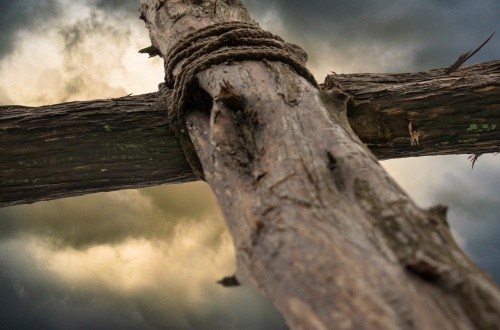
Recently at a church service the closing hymn was That Old Rugged Cross, for over a hundred years a beloved hymn to conservative Protestants. It had been a long while since I’d sung it, and I noticed the final stanza got the ultimate hope of our faith backwards, although most Christians wouldn’t think so. I myself wouldn’t have given it a second thought until not too many years ago. The final stanza reads:

To that old rugged cross I will ever be true, its shame and reproach gladly bear; then he’ll call me some day to my home far away, where his glory forever I’ll share.

In fact, our home is this very earth upon which we live which Jesus came to redeem and restore to its previous Edenic glory, and Jesus will complete the job when he returns. Sure, it doesn’t quite feel “homey” because sin still exists and we long to be freed from being afflicted by its doleful effects. That, however, is a process only to be fulfilled at Christ’s second coming when we receive our new bodies and live on this new redeemed, renewed, and restored earth. That’s when we will be fully home. Heaven could never be our home because we won’t have our bodies, and we were never meant to live a bodyless existence. The Christian hope in the final analysis is not heaven, but a physical, resurrected body, on a material earth Christ redeemed from sin. We’re merely living the down payment now as we await the glory to come. These words of the Apostle Paul say it a whole lot better than I can, and notice not a word of heaven:

18 For I consider that the sufferings of this present time are not worth comparing with the glory that is to be revealed to us. 19 For the creation waits with eager longing for the revealing of the sons of God. 20 For the creation was subjected to futility, not willingly, but because of him who subjected it, in hope 21 that the creation itself will be set free from its bondage to corruption and obtain the freedom of the glory of the children of God. 22 For we know that the whole creation has been groaning together in the pains of childbirth until now. 23 And not only the creation, but we ourselves, who have the firstfruits of the Spirit, groan inwardly as we wait eagerly for adoption as sons, the redemption of our bodies. 24 For in this hope we were saved.

Our hope is completely material in orientation. Why we tend to think it isn’t, I’ll address below.

We give the devil entirely too much credit, as if this earth belonged to him and our goal is to escape it. Our goal, in fact, is to transform it, as Jesus prayed, “Thy kingdom come, thy will be done on earth as it is in heaven.” That wasn’t a prayer for thousands of years in the future when he returns, but a prayer fulfilled at his first coming. Like the mustard seed and leaven (Matt. 13), Jesus wants us to know his kingdom’s coming on this earth is inevitable and all pervasive. It’s why Paul says when we are in Christ we’re part of a “new creation, the old has passed away the new has come” (2 Cor. 5:17). One day nobody will be able to deny this new creation as the kingdom’s transformational power goes out from God’s people to all the earth.

Satan, the World, and our Home
If we’re to talk about this sinful fallen messed up world, it’s important to be clear about what world we’re talking about. The physical earth and material world while always belonging to God its creator, was ruled by Satan since Adam and Eve rebelled, and he remained in the driver’s seat until Christ ascended on high and sent his Holy Spirit 50 days later at Pentecost. At that moment, Satan like the strong man in Jesus’ parable (Matt 12, Mark 3), was bound up for a thousand years so he could no longer deceive the nations (Rev. 20:1-3) and the gospel could go forth and bear fruit across the entire earth as it has these last 2,000 years. Prior to the ascension and Pentecost, that couldn’t have happened.

The problem with thinking heaven is our home and that it is far away, is that it’s not true. Jesus tells us as much in Luke 17:

20 Being asked by the Pharisees when the kingdom of God would come, he answered them, “The kingdom of God is not coming in ways that can be observed, 21 nor will they say, ‘Look, here it is!’ or ‘There!’ for behold, the kingdom of God is in the midst of you.”

The kingdom of God, of Heaven, is right smack dab in the middle of where we live. In that sense we’re “home,” only it doesn’t feel like it sometimes because we still need to tidy up, clean out the junk in the garage and attic, and put on some additions and redecorate. We need to truly make it feel like home, and that is the process of the Christian life, thy kingdom come!

Whatever heaven is, we can say with assurance that our residence there is only temporary. Theologians have termed our time there as the intermediate state, as in, it’s a temporary state of our eternal existence. We won’t get too comfortable there because we’ll be longing for our actual eternal home on this renewed, restored, and redeemed earth, the one paid for by Jesus’ blood. While we are in this fallen world living in our fallen bodies surrounded by fallen people, our mission is to make it as homey, eternally speaking, as possible, a place where God’s law is honored, and Christ exalted as King of kings and Lord of lords. In other words, in obedience to Christ we are bringing heaven to earth and discipling the nations. That is the Great Commission, not merely saving people from the fires of hell. We are not only attempting to sanctify ourselves, but working to sanctify the world, and the peoples and nations in them. It’s a tough job, difficult in every way, against the grain, but look at the progress over the last 2,000 years; from only a handful of people to over 2 billion, and transformation beyond what Jesus’ followers could ever imagine.

Havin said that, there are numerous passages in the New Testament that give us the impression this earth, rather than the fallen world, is not our home. Just this morning as I write this, we had a missionary from Thailand give sermon in I Peter 2. Peter opens his letter telling us he’s writing “to those who are elect exiles” in several Roman provinces in Asia Minor (modern-day northern Turkey). There is some debate as to whether Peter is speaking to Jewish or Gentile Christians, but Christians tend to read this as applying to our spiritual estate in the world, and not the literal description of Christians Peter was writing to who had been scattered, or dispersed, throughout Asia Minor. The word exiles in Greek means pilgrim or sojourner, so we conclude that must be us on this earth. Then in chapter 2, Peter says:

11 Dear friends, I urge you, as foreigners and exiles, to abstain from sinful desires, which wage war against your soul. 12 Live such good lives among the pagans that, though they accuse you of doing wrong, they may see your good deeds and glorify God on the day he visits us.

Again, we tend to read this as if it’s directly to us and about our spiritual estate in this fallen world, we being the foreigners and strangers and aliens in a fallen world. In some ways that’s true, but Peter is in fact writing to Christians living in the thoroughly pagan cultures of the time. Yes, it is analogous to living in a fallen world among heathens in our own day, but we’re the ones doing the transforming. We are not helpless before the juggernaut of evil wrought by the devil in this world. He’s been defeated! And now we bring the victory earned by our Savior and God to bring Joy to the World. As Isaac Watts wrote and we sing on Christmas, “He comes to make his blessings flow, Far as the curse is found.”

There are other passages that we could explore that give us the same impression, but how we read these depend on our eschatological assumptions, which most Christians are unaware they even have. If we see the world as belonging to the devil, and that it will get increasingly worse until Jesus returns to save the day, we’ll think we’re the ones who are the exiles and strangers here. By contrast, it’s the lost sinners who feel that way in God’s world, and we have to help them see that. If we realize Jesus took the world back at his first coming, and enabled the possibility of his kingdom to invade what was enemy territory, then we’ll see our mission as taking back what is rightfully his. We’re the light that drives out the darkness, and light always wins. We’re the salt that preserves and enhances. And as Paul says in Romans 14:

17 For the kingdom of God is not a matter of eating and drinking but of righteousness and peace and joy in the Holy Spirit. 18 Whoever thus serves Christ is acceptable to God and approved by men.

In other words, people want what we have! That is how the kingdom is advanced, as God’s Spirit is apparent in our lives and he works in the souls of those we encounter.

Why Do We Seek to Escape This World?
Why do we think heaven is our home and not this earth? Why do we think in such escapist terms? Until a couple hundred years ago most Christians didn’t, in fact. While they realized life was extremely short and perilous, instead of escape they saw their mission in life as bringing heaven to earth, God’s kingdom come His will be done. All Christians thought this way to one degree or another regardless of their view of “end times,” or eschatology. In fact it wasn’t until the mid-19th century that the “eschatology wars” started because of a new player on the eschatology stage, J.N. Darby.

I won’t go into the details of his thinking because I’ve done that here numerous times before (see here and here and here), but since the 1920s it’s been known as dispensationalism, and by the 1970s Antichrist, rapture, and tribulation had become pop culture mainstays. The entire point of this version of “end times” eschatology is escape. The term “end times” itself was popularized in this period and came to mean a dystopian hell from which all true Christians were supposed to be rescued. I was born-again into this milieu in which the zeitgeist, or the spirit of that Christian age, was all about escape. I even remember praying one time right before I graduated from college that the rapture would happen so I wouldn’t have endure real life after college. But all of this mentality is the result of a false, unbiblical spirituality that goes back to the influence of Platonism on the early church.

If you never did your study on the ancient Greek philosopher Plato and his influence in church history, you wouldn’t know that the distrust of this material world found at times in Christianity came from him. His unfortunate influence in this regard was most powerfully felt with the rise of the heresy of Gnosticism in the second century. Plato gave the Western world a dualistic view of reality, upper/lower, spiritual/material, good/bad, and it’s wormed its way through Christianity ever since.

The 16th century German Lutheran movement of Pietism was one worm that eventually allowed a kind of Gnostic dualism to fully dominate the church, which is the answer to my questions. Pietism is the bad guy. And in case you’re wondering, I’m not talking about piety, or a dedicated pious life of a vibrant personal relationship with our God through Christ. That kind of piety and Pietism are two completely different things. This kind of Gnostic dualism is a way of seeing the world, a mindset that mistakes this world for something inherently bad that we’re to get away from to experience true eternal life, the life of God meant for us in Christ. Francis Schaeffer called it a two story view of reality.

The Alternative to Escape: Transformation
One of the most unfortunate effects of Pietism is how it causes Christians to over spiritualize everything. The tendency is to downplay the importance of this world of material things, and only give true value to that which is forever, the spiritual, the not “this worldly.” I’m not talking about the perverse desires of this world the Apostle John talks about in I John 2, but rather to the contrast he makes, doing the will of God on this earth. The mission of God in Christ, the Great Commission, is distinctly for this world. The charge Jesus gave to his disciples right before he left the earth was to “make disciples of all nations,” not just the people in those nations, and having baptized them, teaching them to observe all that he commanded them. And he promised he would be with us always on this earth “to the end of the age.” This wasn’t his only final message. In Acts 1 he expands on it:

So when they had come together, they asked him, “Lord, will you at this time restore the kingdom to Israel?” He said to them, “It is not for you to know times or seasons that the Father has fixed by his own authority. But you will receive power when the Holy Spirit has come upon you, and you will be my witnesses in Jerusalem and in all Judea and Samaria, and to the end of the earth.”

He wanted the disciples’ vision to be the entire earth so that the blessings promised to Abraham and the Patriarchs would come upon all peoples and nations; true Israel would now touch the four corners of the earth. The Great Commission and being his witnesses to the ends of the earth could only happen after Pentecost. Once he sent his Spirit he himself would be with us in power, the power to transform lives which in due course would transform civilizations. That is the point of the Great Commission, what makes it Great, not only saving souls to go to heaven when we die. Jesus wants his earth back, and we’re the down payment!

This transforming power, contrary to the Pietistic mentality of most Christians, affects every nook and cranny of existence, everything Christians put their hearts and minds to. I don’t need to define everything because it means, literally, every single thing we do. What happens when the spirit comes? Read Galatians 5, and compare “the works of the flesh” to “the fruit of the spirit.” This is transformation! And it not only transforms us personally, or in our relationships, but it makes us productive citizens. When Paul tells us the kingdom of God is a matter “of righteousness, peace and joy in the Holy Spirit,” imagine a town or city or county or state or country filled with kingdom people who exhibit these qualities. Can you? It’s something wholly different than John Lennon could Imagine. We’re so used to seeing dysfunction and strife and “works of the flesh” we think that’s what it will always be. Jesus said otherwise.


What Distinguishes Amillennialism from Postmillennialism?

What Distinguishes Amillennialism from Postmillennialism?

While I very much appreciate my optimistic amillennialist brethren, or what I call practical postmillennialists, it’s important to understand that being optimistic, or not, is not what separates these two eschatological perspectives. It’s more than merely seeing the glass half full. On a surface level that is non-theological or biblical, it can appear the two have much in common, but our eschatological optimism is the result of something much deeper than a desire to see things turn out the way we want. Having an optimistic perspective with a fundamentally pessimistic theology is like running up hill. When you believe things are going to the proverbial hell in a handbasket, one way ticket, it’s tough to maintain a positive outlook.

As those of you who are familiar with my work will know, I was born-again into the Late-Great-Planet-Earth late 1970s, which meant I accepted the dispensational premillennialist outlook on eschatology and the world. Things were getting increasingly worse, quickly, and the Rapture was happening any day, so be ready to go. Such newspaper eschatology got wearisome after a while, and even after my stint in seminary, I wasn’t really keen on eschatology. That lead me to adopt a kind of eschatological agnosticism, what I later heard termed pan-millennialism. Or it will all pan out in the end, as indeed it will, but that’s a copout.

Because I was a recovering dispensationalist, I was convinced God didn’t see fit to reveal much that wasn’t confusing about eschatology, so why bother. But would God really want to confuse us and leave us in the dark about a topic as important as how it all ends? Where everything is headed and how we get there? Sure, every orthodox Christian agrees, that as the creed says, Jesus will come from the right hand of God “to judge the living and the dead.” We know God will usher in a new heavens and earth where sin and suffering and sorrow will be no more, and he will wipe every tear from our eyes. The question is whether it is true that the world is going to hell in a handbasket and Jesus comes back like Batman to save the day. That’s what I used to believe, and what most Christians believe. Or alternatively, did God begin establishing His kingdom at Christ’s first coming, and like a mustard seed and leaven it is slowly and inevitably growing throughout the entire earth to eventually usher in the final sin free and reconciled kingdom on a new heavens and earth when Christ returns. These are the questions which most Christians would never ask, and if you ask it they think you’ve been drinking too much of the funny juice.

My Journey through Amillennialism to Postmillennialism
For whatever reason, God created me as something of an idealist with a kind of ambition where I believed if I worked hard enough I could accomplish anything. Of course that is not true, but when I was young I believed it completely. My dad used to make fun of me. My first obsession being a SoCal boy was surfing, and I just had to have that David Nuuhiwa surfboard and went to the beach to work on my surfing as much as I could. Then I moved on to guitar, and without a doubt I would be one of the greats. Eddie Van Halen had nothing on me! Being from SoCal himself, I saw him as a rival, which is kind of funny. I practiced for hours every day and got pretty good, but not close to Van Halen good. One thing my dad would never let me forget was haranguing him into get me a wawa pedal. For the rest of his life he would say to me, “You just had to have the wawa pedal.” Yeah, dad, then I could play Robin Trower and Hendrix! Then I got diverted into golf, and not only did I want to be great, but in fact the greatest in the world! Sadly, I only had the talent to be the greatest in my family. Yes, delusions of grandeur came naturally to me.

Then I went away to college and got born-again, and the idealism didn’t stop there. I was going to become a missionary and change the world like William Carey, but realized I’m to addicted to the comforts of American life. Then after college it was politics. I’d learned about what it means to have a Christian worldview from Francis Schaeffer, and was determined to apply it to all of life, and I dove into political activism. It didn’t take long to get disillusioned with that. I’d embraced Reformed theology, and went to Westminster Seminary in Philadelphia and Academia was my next rout to change the world. God rescued me from that life because I met my wife to be at Westminster, and we were married and started life together. We got involved in an Amway business, which my older readers will be familiar with, for the decade of the 90s, and that was the next vehicle to change the world, and get rich! That didn’t happen. Then in the late 2010s after I’d gotten disillusioned with politics again, I decided to start a non-profit called The Culture Project because I realized that’s the way we have to change America. That didn’t go anywhere either.

Through all these permutations of my delusions, I still maintained my idealism. Then in 2014 I embraced Amillennialism. I didn’t intend to become a pessimist, but in hindsight I see that’s what it did to me. When I embraced it through the teaching of scholar, theologian, and pastor, Kim Riddlebarger, I was so excited to learn that God actually did have something to say about “end times.” Eschatology wasn’t just a means to confusion and bickering after all. It was only after my embrace of postmillennialism in August of 2022 that I could look back and see what amillennialism did to my idealism that being dispensational and pan-mill could not.

Anyone who it familiar with my story knows it was Roman Catholic Steve Bannon and his War Room podcast after the debacle of the 2020 election who slowly turned me into an optimist. I then started to look for a theological, biblical justification for my growing optimism, and found it in the eschatological position I’d rejected all my life as a joke. I did not see that coming! It was one of the many ongoing effects of the red pill I unknowingly took when Donald J. Trump came down the golden escalator at Trump Tower in June 2015 to run for president. It’s kind of amazing to me that at almost the age of 55 I would begin to rethink so many things in my life, and change my mind more often than not. I’m an object lesson to not allow our beliefs to become so ossified that when presented with different ideas and facts and perspectives we won’t change our minds.

Prior to Bannon and still embracing amillennialism, I even got to the point where I would mock my younger self for being an idealist. I’m not changing thew world because the world can’t change. I came to believe the world isn’t changing fundamentally until Jesus returns. Sin was too powerful a force in a fallen world filled with fallen people to change, and things would get worse until Jesus returned to clean up the mess. After my “conversion” I tried to figure out why I’d come to believe this so strongly. Mind you, prior to that I still believed in the things getting worse and Jesus coming back to save the day paradigm, but it personally didn’t turn me into a pessimist. Amillennialism did.

Why Most Amillennialists are Pessimists
This is a bit of a sensitive topic because our amillennialists brethren don’t really like to be considered pessimists. I certainly would never have considered myself one of them, especially given my history, but that’s what I became. It goes with the territory. An interesting aside as we discuss this topic is that I’ve found that even though premillennial dispensationalists according to their theology should be even more pessimistic than amillennialists, they often become the most robust culture warriors while the a-mills generally don’t. You would think it might be the other way round. I’m all for theological inconsistency when it comes to this!

One thing you’ll find widespread among a-mills is Christian worldview thinking, but as I argue and have written about here, while it is a requirement for all Christians, a Christian worldview is not enough. The reason is that it is primarily an intellectual exercise rather than a theological imperative rooted in the authority of the ascended Christ at the right hand of the power of God. Things will get better and the influence of Christianity will spread like leaven in bread (Matt. 13), not because people are thinking in a Christian way about things, but because God in His power through Christ is advancing His kingdom, extending Christ’s reign, and building His church. It is not our work that makes the difference, but God working in, through, and for us. What postmillennialism is not, is positive thinking. It is realistic, biblical thinking.

The a-mills don’t see it this way. I’ll give you a couple quotes from a piece written by the man who persuaded me to become a-mill. Referring to the Olivet discourse in a piece at Modern Reformation magazine, he says:

Jesus himself speaks of world conditions at the time of his return as being similar to the way things were in the days of Noah (Matt. 24:37-38)—hardly a period in world history characterized by the Christianizing of the nations and the near-universal acceptance of the gospel associated with so-called optimistic forms of eschatology.

This assumes a futurist perspective on Jesus’ words, that what he’s talking about is his second coming at the end of time, not what a preterist like me believes, that Jesus was speaking to the generation who was listening to his words. As Jesus says just a few verses before his reference to Noah:

34 Truly I tell you, this generation will certainly not pass away until all these things have happened.

So just three verses before the passage Kim uses to refer to a generation thousands of years into the future, Jesus says it’s his generation. People try to make his words into something they are not, but in Greek, or English, or any other language you choose, this means this generation, not some other one far into the future. In another passage from the same piece, he says:

Aside from the fact that many contemporary notions of optimism have stronger ties to the Enlightenment than to the New Testament. . . the New Testament’s teaching regarding human depravity (i.e., Eph. 4:17-19) should give us pause not to be too optimistic about what sinful men and women can accomplish in terms of turning the City of Man into a temple of God.

This of course assumes postmillennialism’s case for optimism comes more from human than biblical teaching, but it doesn’t. That’s one of the reasons I embraced it, realizing I’d gotten this wrong, and the case for eschatological optimism was thoroughly biblical and exegetical. Kim is not a fan of the optimistic/pessimistic paradigm, and I respond more in depth to Kim in a piece I did previously.

Why Postmillennialists are Optimistic: The Ascension and Christ’s Kingship
It wasn’t but a few weeks after I embrace postmillennialism that I heard Doug Wilson on a video say, “Now you have a theological justification for your optimism.” Bingo! That’s what I was looking for, and God provided it. Amazing. And this optimism had nothing to do with secularism and science and human knowledge that distorted postmillennialism in the 19th century, but with God’s clear declarations in Scripture of victory in Christ. We see this through all the covenant promises and prophetic declarations in the Old Testament pointing forward to Christ. It’s easy enough to pick out the declarations of judgment, but to me they are overwhelmed by the power in contrast to the declarations of victory of God’s kingdom rule to come. Again, it is the Scriptural proclamation of victory of the plans of God that compelled me to embrace postmillennialism once my mind was opened to it, which previously was shut like a trap door I was convinced was unable to be opened.

Since that is the basis of our eschatological hope “not only in the present age but also in the one to come” (Eph. 1:21), I will end with one passage and how I now see it, and others like it, as applying to Christ’s first coming and not his second as I used to. Reading through Micah I came to these stirring words in chapter 4:

In the last days

the mountain of the Lord’s temple will be established
as the highest of the mountains;
it will be exalted above the hills,
and peoples will stream to it.

Many nations will come and say,

“Come, let us go up to the mountain of the Lord,
to the temple of the God of Jacob.
He will teach us his ways,
so that we may walk in his paths.”
The law will go out from Zion,
the word of the Lord from Jerusalem.
He will judge between many peoples
and will settle disputes for strong nations far and wide.
They will beat their swords into plowshares
and their spears into pruning hooks.
Nation will not take up sword against nation,
nor will they train for war anymore.
Everyone will sit under his own vine
and under his own fig tree,
and no one will make them afraid,
for the Lord Almighty has spoken.
All the nations may walk
in the name of their gods,
but we will walk in the name of the Lord
our God for ever and ever.

With my futurist assumptions I automatically saw this, and the many other passages like it, as of course applying to Jesus’ second coming. Swords into plowshares? Not in this fallen world! Now I realize that’s exactly why Jesus came, to bring, as the shepherds proclaimed, peace on earth, good will toward men. If you compare the ancient world into which Jesus was born to the modern world as brutal as it can still be, it is peaceful in comparison, all because of the Prince of Peace. Just because the peace has yet to seep into every nook and cranny of existence, doesn’t mean the peace hasn’t been slowly coming all over the world since the resurrection, ascension, and Pentecost. No Christian would deny that peace has come to personal relationships and families, but it isn’t limited to that. The modern world shaped by the life, death, resurrection, and ascension of Christ is utterly different than the ancient world into which Jesus was born.

It is also clear, as it is in many other such passages, that they are speaking of life in a fallen world, not a perfected sinless and restored world. References to disputes among nations imply sin still exists. So does the possibility of being made afraid, or nations walking in the name of some other god. The kingdom’s coming is a painfully slow, mostly imperceptible process until you look in the rear view mirror—it nonetheless transforms wherever it goes. Maybe in a decade, or even a century, it doesn’t look like much transformation is happening, but look back 2000 years and the transformation is as obvious as a volcano in full bloom. Reading the Scripture, especially the Old Testament, with transformation expectations, can bring a new appreciation for what Christ is doing in our day,


Marriage and the Great American Baby Shortage

Marriage and the Great American Baby Shortage

The decline of Christianity with the rise of secularism in America has had disastrous consequences. At the center of this sad state of affairs is the decline of the family from which all civilizational and human flourishing emerges, as I wrote about recently. Sadly, not only are families increasingly dysfunctional, but many young people are no longer even getting married, let alone having families. The latter likely contributes to the former, given many people never experience or witness families that work and are blessed as God intended them to be. American, and Western culture in general, is like a dense secular moral English fog people negotiate every day pretending it’s a sunny day at the beach in the south of France. Like a wet blanket, the morass of secularism clings to people who aren’t even aware it exists. Secularism has infected Christians as well, often when it comes to having children and how many to have.

For secular people having rejected God’s revelation in creation, Scripture, and Christ, they walk through life virtually blind, stumbling into things they can’t see, wondering why they are so miserable. Christians, on the other hand, have been given the user’s manual directly from the Creator, and having children, bringing other beings into this world, giving them life, is the greatest blessing we as those created in God’s image can have. Hearing about the blessing of having large families, lots of children (let’s say five, six, seven kids), is something I’ve never come across in any church I’ve attended in 47 years as a Christian. It wasn’t until I embraced postmillennialism in August 2022 (as anyone who reads my work consistently knows, and is getting tired of hearing) that I came across a Christian community that extols large families.

Over the years I’ve heard sermons on raising kids, but not having more kids. I don’t remember, but I’m sure I’ve heard sermons that on Psalm 127 where Solomon proclaims the blessing of lots of kids.

Behold, children are a heritage from the Lord,
    the fruit of the womb a reward.
Like arrows in the hand of a warrior
    are the children of one’s youth.
Blessed is the man
    who fills his quiver with them!
He shall not be put to shame
    when he speaks with his enemies in the gate.

I’ve long wondered why so many Christians seems to want fewer rather than more rewards, or who don’t seem to want to seek God’s blessing by filling their quiver full of them. There are several reasons for that, not least is that it’s hard and scary. The sacrifice can be immense. My daughter and her husband had three under three this entire year, and their oldest turned four in just last week. It’s exhausting, but they wouldn’t give it up for the world. My daughter already laments how fast it’s going, and as many of us already know, in the blink of an eye it’s over.

Another reason is that most pastors, let alone Christians, do not believe having large families is in fact a biblical imperative. Rather, the mindset is that having children is just another “lifestyle choice,” as marriage itself is increasingly for secular young people. I argue that it is in fact not a choice but something God expects of his people if He’s given them the ability to do it. Which brings us to culture.

The Importance of Culture
We went to a church for a number of years and seeing so many families with just two children distressed me. Such parents have no idea how much that secular fog I mentioned influences them and their decisions to have children and how many. I knew a Christian guy some years ago and he and his wife decided not to have any children, and he thought that was okay! That blew my mind. I know this fog influenced us when we were younger and starting to think about having children. My wife wanted two because she came from a family of two, and I insisted on three, given that’s what we had in our family. I got my way, but it never occurred to us that 5 or 6 kids was even an option. With the old 20/20 hindsight that is life, if I knew then what I know now . . . . We were caught in the secular fog like most others.

Given we live at the end of 300 to 400 years of secular cultural development in the West, the great Everest challenge today for the Christian church is not being subsumed by that culture, and in turn developing a distinctly Christian culture. Not a sub-culture which is easy and often done, but transforming the secular culture into a Christian one. That’s where the Mount Everest metaphor is apropos. As the tallest mountain in the world at 29,000 feet, for all but the most seasoned and expert climbers Everest is an insurmountable challenge. The culture can appear just as formidable given secularism has been the dominant plausibility structure in America since the 1960s. Plausibility structure is a phrase I’m confident you’ve never heard in church before, or even outside of it. Plausible is a word we are familiar with, “having an appearance of truth or reason; seemingly worthy of approval or acceptance; credible; believable.” It’s something that seems real or true. The structure is the culture in which we live, and the meanings the culture conveys in all its myriad ways will seem real or true to us. Whether these things are real and true or not is irrelevant, only that the culture makes them seem so.

At its most basic level, culture is whatever human beings create, but for our purposes culture is an amorphous set of influences. Christian sociologist James Davison Hunter in his book, To Change the World, states that, “culture is a system of truth claims and moral obligations,” and that, “culture is about how societies define reality—what is good, bad, right, wrong, real, unreal, important, unimportant, and so on.” Culture affirms certain values and propositions, while it denies others, it embraces certain beliefs, while it eschews others; culture is never neutral. Our modern concept of culture derives from a term first used in classical antiquity by the Roman orator, Cicero: “cultura animi.” In Latin, cultura literally means cultivation. We could say culture cultivates. Culture is an indoctrination factory.

This seems obvious, but most people, including most Christians, don’t realize the extent that culture shapes not only what they believe, or what they like, or how they behave, but literally shapes who they are. If we don’t think in a discerning way about the culture we inhabit, we will be merely reactive rather than proactive. Culture is something we cannot take for granted or escape.

This sociological fact of human existence is why “the culture wars” are so important, and in fact crucial for obeying Christ’s injunction that his kingdom come, his will be done on earth as it is in heaven. If we don’t fight against the secular culture that influences us every moment as the water influences the fish, we will be determined by it. Even at that it can’t be fully escaped, but we can become aware of what it is communicating to us, how it is shaping us, and push back in any number of ways, including children. Having a large family is an act of cultural rebellion.

Creating A Marriage and Baby Culture in the Church
I started thinking about this when I read a piece in the Wall Street Journal about the connection between declining marriage rates and their correlation to the decline in the number of children couples are having. Chalk this up to the indoctrination of the secular culture of expressive individualism and personal fulfillment as “the chief end of man” (a la the Westminster Shorter Catechism, Q1). While conservative Christians have higher marriage rates and more children than secular couples, it’s not close to what it should be, at least in my humble opinion.

Then I read a piece in the New York Post by an American Jewish Woman with the click bait title, for me, “I took our six kids overseas — and saw a ‘family-friendly’ nation in joyous action.” I learned that prior to going to this “family-friendly” nation, they first spent a week in Greece, which is most definitely not “family-friendly.” She explains the differences in these two cultures and their people to their “large” family. I put the word large in quotes because I want to emphasize how rare six children in a family is today; it shouldn’t be, especially in the church. I encourage you to read the piece, but here’s how she starts:

If you’ve ever wanted to feel like a celebrity, turning heads everywhere you go, I recommend taking a gaggle of children to a country with a plunging birth rate. Across the European Union, birth rates are far below replacement level — and Greece is among the lowest, with the average woman having 1.3 children in her lifetime.

Touring it with six kids made me feel like I was traveling with a circus troupe. Everywhere we went, people stared. They counted the children aloud (I learned the number six in Greek, éxi,  because I heard so many people tallying how many kids we had). They smiled politely and encouragingly, but with a kind of stunned disbelief.

Greece’s birth rate has collapsed so dramatically that a family like mine, once utterly normal, now looks like a moving museum exhibit.

America, if not quite there yet, is on its way. The birth rate currently is at 1.6, which is well below the 2.1 replacement rate. In other words. Women need to have over two children on average just to tread water. If that doesn’t happen, then in several decades that country will have some very serious problems, if it even exists as all.

Now let’s look at the country they next travelled to, and as she is Jewish you probably already guess that country is Israel, a nation where “large” families are not unusual.

Then we flew to Israel. It’s only a short hop on the map, but culturally it felt like crossing a continent. Suddenly, we weren’t an oddity: We were — wonderfully, refreshingly — unremarkable. In Israel, where the birth rate is not just stable but rising, a family with six kids isn’t an act of rebellion.

Walking around Jerusalem, no one turns to gawk because families with three to even eight children are everywhere. Babies in carriers, toddlers on shoulders, siblings zipping ahead on scooters; the streets are alive with them. This isn’t a place where children are squeezed into the seams of adult life. They are the fabric.

Oh how I love this! This should be like walking into a church on Sunday, children everywhere. I know, that’s not possible at all churches, but churches with a lot of young people should be a little Israel. How does this happen? How does a culture change, go from Greece to Israel regarding marriage and children? It starts from the Pastor and leadership of the church, that’s how. Since the secular culture mitigates against life and the sacrifices it takes to raise that life, conservative Christians culture should be radically counter cultural. This is not only because civilization is at stake in the current demographic crisis, but because God wills it!

Let’s see if we can make a biblical case for natalism. That word comes from a French word meaning birthrate, and simply means having lots of babies is good! It is in fact, a moral imperative. I know this will be “controversial” to some Christians who will immediately, in the toxic empathy that is endemic in our day, point to the poor couples who can’t have children and want to, or to single people who can’t seem to find a spouse. We don’t want to make them feel bad, but truth and blessing are no excuse to feel bad. If we do we should repent because God is the sovereign Lord of marriage and the womb, as he is the sovereign Lord of all of reality.

The Biblical Case for Having Children
This case should not have to be made, but given the secular captivity of the church on this issue, it must be. There are only three express commands to have children in the Bible, the first in Genesis 1 from a passage most Christians are familiar with, but unfortunately ignore:

28 God blessed them and said to them, “Be fruitful and increase in number; fill the earth and subdue it. Rule over the fish in the sea and the birds in the sky and over every living creature that moves on the ground.”

I recently did a post on the Dominion Mandate, so I won’t repeat what I said there, but this command was not abrogated after the fall, or after Christ. This is the NIV, and other versions translate it as, “Be fruitful and multiply.” After the flood and before God’s covenant promise in the rainbow to Noah and his sons, he twice commanded them, “Be fruitful and increase in number and fill the earth” (Gen. 9:1), and “As for you, be fruitful and increase in number; multiply on the earth and increase upon it” (Gen. 9:7). The only other place where a command to have children is found is to the exiles in Babylon (Jer. 29:6):

Marry and have sons and daughters; find wives for your sons and give your daughters in marriage, so that they too may have sons and daughters. Increase in number there; do not decrease.

The reason these are the only direct commands in Scripture to have children is that nobody would have conceived of a need to be commanded to have children, and as many as one could. That’s what families did! And to think otherwise would never have occurred to anyone in the ancient world. While industrialization diminished the incentives to have large families, until feminism, and especially until the dreaded 1960s, having children was seen as fulfilling and natural, not a burden to keep people from living their best life now.  

Contrary to our current historical moment, I grew up in the 60s and 70s, and became an adult in the 80s, when the environmental hysteria de jure was overpopulation. Masses of people were supposed to die of starvation by the 80s, and the overpopulation predictions proved to be the lie they always were. God would never have created a world that could not sustain the apex of his creation. I even had Christians over the years argue that God’s command to Adam and Eve no longer applies to us because the earth is pretty much already filled up. Nobody would say such a thing now. In fact, I see Elon Musk on Twitter/X posting all the time about the demographic apocalypse that will happen if people don’t start having more children.

The promises of God in the Pentateuch are the foundation of God’s redemptive plans on earth, and they always included children. If we do a Bible word search for words such as offspring, seed, child, we’ll see that children are integral to everything God does with and for His people, and more children was always better than fewer. And in the first Christian sermon by Peter in Acts 2, he affirms the centrality of children to his redemptive plans in the New Covenant, as he says to the three thousand people assembled, “the promise is for you and for your children.” Children are assumed as part of the deal. They are not a burden, they are not an inconvenience, they are to be a natural part of Christian families and God’s church, the more the better. My prayer is that we become more like Israel so we don’t become like Greece.

The Miracles of Jesus and their Meaning

The Miracles of Jesus and their Meaning

I was inspired to write this post because of an unpleasant Twitter interlocutor who claimed to know things about me from one sentence I wrote in a comment: “Jesus’ healing ministry was a metaphor for spiritual reality.” He came back in so many words with, why do you hate Jews? What? He used the word “literal” a number of times as if my statement somehow implied I didn’t believe Jesus physically, “literally” healed Jews. Not too many responses in and it was clear he was not interested in a conversation. Such is part of the downside of social media and interacting with sinful human beings, but alas I get to flesh out here what I did in fact mean, and why I think it’s important.

As a Reformed Christian I embrace the doctrines of grace, which refers to a Calvinist understanding of how God saves sinners. Man is unable to save himself because he is dead in his sin, not merely sick or crippled, but on the bottom of the pool dead. That was the metaphor I was presented the first time I was introduced to Calvinism. For my young Christian life up to that point, over six years, I believed all people had the ability to decide to believe in and follow Christ. Jesus died for everyone, and those who choose him will be saved. Instead of being at the bottom of the pool, dead, they were flailing around in the water yelling for help. Jesus was the life preserver, and anyone is free to grab it, or not. I remember thinking, Calvinism is upside down from how I had conceived the Christian faith, but it made sense logically; more importantly, it made sense biblically. I went home and reading the Bible I saw it everywhere, thinking, how could I have missed this?

You might already see where I’m going with this. If someone is blind, he can’t make himself see. Only Jesus can do that. Deaf, lame, or crippled? Only God can heal that. Not to mention literally (there’s the word) bringing someone back from the dead, which included Lazarus and Jairus’s daughter. All these healings, and almost all of them were Jews, point beyond the healings, to a much more important spiritual healing to come. First, Jesus didn’t heal people to show off his power, but as evidence of his authority to fulfill God’s covenant promise to save His people from their sins (Matt. 1:21). Jews were expecting a different Messiah than Jesus turned out to be, which is why he could never have been made up by Jews. They were looking for a Davidic king who would finally end their oppression, the Romans only the latest of their tormentors. What Jesus the Messiah came to bring was a transformation in spiritual reality by paying the ultimate price for sin that would eventually transform this material world.

The Material Implications of Jesus’ Healing Ministry
Using the word “spiritual” in the modern church context is a problem because of Pietism. I used that word with my unpleasant interlocutor, and he went on a rant that I was against being pious, or against a personal, experiential relationship with God through Christ in devotional Bible reading, prayer, and worship. Nothing could be further from the truth. I’ve never been as emotionally invested in my faith as I am now. What I do mean by Pietism is the 17th century German Lutheran movement that developed in response to a dry, overly intellectual approach to the faith called scholasticism. Through the First Great Awakening, Wesley, the Second Great Awakening, Revivalism, and fundamentalism, Pietism came to dominate the modern Evangelical church.

As a result, the word “spiritual” came to mean other worldly, heavenly, non-material. The word that best describes this state of mind is dualism, an upstairs/downstairs reality. Upstairs is the important, “spiritual” stuff, Bible reading, prayer, evangelism, worship, downstairs the not so important, mundane, material stuff like work and politics and cultural pursuits. My interlocutor was stuck in his dualistic perspective on spirituality, so when I wrote “spiritual” he interpreted it as having nothing to do with downstairs, physical, “literal” reality. In fact, biblical speaking, the “spiritual” has everything to do with the “material.” There is no dualism separating them in a biblical view of the world. This is why it’s good to immerse ourselves in the Old Testament because the Hebrews, then Jews, were a deeply this material world oriented people, and they saw salvation as connected to material reality. To them, spiritual meant material, and material meant spiritual. It was the Greeks who brought us dualism, and eventually that made its way into Christianity over many centuries.

Now that we have definitions out of the way, what exactly do I mean by these “material implications”? This is a paradigm shift for most Christians, so stick with me.

We’re familiar with the story in Luke 5 about the paralyzed man who is lowered through the roof because his friends were desperate to get him healed by Jesus. When God put in Scripture He had to have Hollywood in mind, it is that dramatic. Luke tells us:

19 When they could not find a way to do this because of the crowd, they went up on the roof and lowered him on his mat through the tiles into the middle of the crowd, right in front of Jesus.

The crowd must have been enormous. Luke says that people had come from “every village of Galilee and from Judea and Jerusalem.” The news of the power Jesus had to heal had gone far and wide, and now the show was ready to begin. What does Jesus do? The unexpected, of course:

20 When Jesus saw their faith, he said, “Friend, your sins are forgiven.”

What? I can imagine the people thinking, “What in the world does that have to do with healing a crippled man?” The Pharisees and teachers of the law were horrified because they rightly thought, “Only God can forgive sin.” To them Jesus was blaspheming. Then Jesus asks a question nobody could have made up, except Jesus of Nazareth:

23 Which is easier: to say, ‘Your sins are forgiven,’ or to say, ‘Get up and walk’?

This is almost funny because it’s easy to say either one. The issue is, can you pull it off, whether you have the authority and power to do these things. Here is where we see an example of the material implications of a spiritual reality. So Jesus tells them:

24 But I want you to know that the Son of Man has authority on earth to forgive sins.” So he said to the paralyzed man, “I tell you, get up, take your mat and go home.” 25 Immediately he stood up in front of them, took what he had been lying on and went home praising God. 26 Everyone was amazed and gave praise to God. They were filled with awe and said, “We have seen remarkable things today.”

If you’ve ever seen Franco Zeffirelli’s Jesus of Nazareth, the 1977 miniseries, he portrays this episode masterfully. Nobody, most especially no Jews, could conceive of a Messiah who would have the authority to forgive sin. If he could, he would be God! Exactly. Jesus proved his authority to forgive sins by overcoming one of the consequences of the fall, disease of the human body.

Metaphorically, then, Jesus healing disease points to a powerful spiritual reality of the transformation of this fallen, sinful world, and a pushing back against the material effects of the fall. Contrary to what our Charismatic and Pentecostal brothers and sisters might believe, Jesus and the Apostles were not telling us that supernatural healing would be the common, normal way people would be healed. Rather, it would be the result of the permeating of the good news of the gospel into the dark, fallen world. The two parables that speak most directly to this are the parables of the mustard seed and leaven in Matthew 13. Jesus prefaces the parables with, “The kingdom of heaven is like . . .” The scope and extent of the spreading of gospel influence, i.e., God’s kingdom, will ultimately affect every square inch of reality like leaven or yeast through a batch of dough. The question is what this spiritual-material influence looks like.

The Christian Transformation of the World
We have to go back to the very beginning when God gave Adam and Eve the dominion mandate to rule God’s creation, to fill the earth and subdue it. When they rebelled, sin and death enter the world, and Satan took control of God’s creation. God’s plan was to take it back, and he promised the seed of the woman would strike or crush the serpent’s head. Then God in Genesis 12 promises Abram that “all peoples on earth would be blessed through” him. The word blessed is used some 65 times in Genesis because the whole point of redemptive history is for God to bless his creatures and his creation, to bestow his favor upon it, and not in dualistic “spiritual” terms, but in every way human beings interact with material reality. Look around you. Open your eyes. What do you see? Blessings!

One way I define blessing is with the idea of empowerment. When God blesses people He empowers, He enables, them to do a wide variety of things, to flourish. We easily see the blessings of “spiritual” flourishing in personal terms, in our own relationship to God, forgiven, loved unconditionally, living in harmony with others, but not so much in material terms, those we easily take for granted. Try to imagine living in a world without electricity. You can’t! Electricity empowers us to control our environment so we can live in a swamp like Florida or a desert like Arizona. Try counting the modern amenities electricity makes possible, and you would be at it for a while. Blessings! Prior to the late 19th century people couldn’t conceive of any of them. Petroleum used to be a nuisance in the ground, and the knowledge gained from science and technology has enabled us to transform civilization with it.

We would go on, but the material flourishing we live with every day is the spiritual reality of God’s covenant promise expressing itself in materially significant ways. In other words, what God promised Abram, and then confirmed consistently throughout redemptive history, and fulfilled in Christ, we’re experiencing right now in material blessing. That is spiritual! It is the result of what Christ accomplished on the cross. The Lord through Moses in Deuteronomy 8 tells is:

18 But remember the Lord your God, for it is he who gives you the ability to produce wealth, and so confirms his covenant, which he swore to your ancestors, as it is today.

One of the reasons Jewish people have been materially successful wherever they’ve lived throughout the millennia is because wealth isn’t merely a material thing to them, but a sign of God’s covenant faithfulness to them, a result of God having established a relationship with them. This mentality got into the Jewish DNA so that even secular Jews have some kind of residual blessing effect in what they accomplish.

My last post was on developing an attitude of gratitude, and in it I compare life in the modern world to what it was like in the ancient world so we get a graphic picture of the profound blessings we have all around us and live with every day. I won’t repeat all that, but in the first century before science and technology and modern medicine, and the explosion of knowledge in the last two hundred years, life was extremely hard. English philosopher Thomas Hobbs describing life in his own time more than 1500 years later as living in “continual fear and danger of violent death; and the life of man, solitary, poor, nasty, brutish, and short.” In the ancient world even more so. Life was terribly difficult until the 20th century, but in the ancient world it was positively brutal. Because of God’s promises to Abram and the Patriarchs it is so no longer.

What I’m trying to say is that when Jesus died on the cross, was buried, rose three days later, ascended to heaven and sent his Holy Spirit at Pentecost, material wealth and prosperity have been one of the many blessings of his saving work. We’re so caught up in that Pietistic and dualistic mentality that we limit Christ’s saving work to our own personal salvation from sin and personal holiness, but not saving the material world from the horrible effects of sin. Jesus has enabled us, his body, by the power of the Holy Spirit to fulfill the dominion mandate Adam could not. I’ve often referenced and quoted Tom Holland’s book Dominion: How the Christian Revolution Remade the World here and in my books, and if you haven’t read it, it’s well worth the effort. He says in the preface:

So profound has been the impact of Christianity on the development of Western civilization that is has come to be hidden from view.

And this transformation from ancient and brutal to modern and civilized and wealthy is not merely from the ideas of Christianity, but from Christ defeating the devil and sin and death on the cross! Salvation from sin is not merely personal or relational or just for the church but for the entire world. As Isaac Watts says in his great Christmas hymn, Joy to the World, “He comes to make His blessings flow Far as the curse is found.”

I know how counter intuitive this is to most Christians today because our conception of “spiritual” is so other worldly. But God so loved this world that he gave his only begotten son for it. One day it will be fully transformed when Christ returns and sin and death are finally destroyed, but God began the transformation at Christ’s first coming, and it’s been slowly happening ever since, and will until he has put all his enemies under Christ’s feet (I Cor. 15:25).

One of my favorite passages pointing to Christ’s transformational power accomplished in the gospel is Isaiah 65. I used to think it applied only when he returns and transforms all things ultimately. This verse seemed to confirm that:

17 “See, I will create
new heavens and a new earth.
The former things will not be remembered,
nor will they come to mind.

How could this not be at his second coming? Now I realize given the rest of the passage, this is describing what is happening because of this first coming, his first Advent. It’s a metaphorical description of what Christ came to accomplish, and will be literal as well when he returns. Think about it. Can you even imagine a world without the gospel, without Christianity, without the multitudes of transformations, personal and societal, it brought? No! You can’t.

It’s clear from the rest of the passage this can only refer to our current fallen world where sin’s effects still exist, including death:

“Never again will there be in it
an infant who lives but a few days,
or an old man who does not live out his years;
the one who dies at a hundred
will be thought a mere child;
the one who fails to reach a hundred
will be considered accursed.
21 They will build houses and dwell in them;
they will plant vineyards and eat their fruit.
22 No longer will they build houses and others live in them,
or plant and others eat.
For as the days of a tree,
so will be the days of my people;
my chosen ones will long enjoy
the work of their hands.
23 They will not labor in vain,
nor will they bear children doomed to misfortune;
for they will be a people blessed by the Lord,
they and their descendants with them.
24 Before they call I will answer;
while they are still speaking I will hear.
25 The wolf and the lamb will feed together,
and the lion will eat straw like the ox,
and dust will be the serpent’s food.
They will neither harm nor destroy
on all my holy mountain,”
says the Lord.

It is difficult to see how this refers to a sinless, perfected world where death and the effects of the fall are completely eradicated. Some will say the wolf and the lamb feeding together is certainly in the new heavens and earth, but it could also be a metaphorical account of harmony among us as God’s creatures, and what will happen when everything is made new again.

Also, because of my post-Covid health epiphany, I see the possibility of a hundred plus year healthy lifespan as a real possibility in the generations to come. I also love that the Lord is telling us because of “new creation” (2 Cor. 5:17), we will “long enjoy” the work of our hands. As Paul says, our “labor in the Lord is not in vain” (I Cor. 15:58), both now and into forever. All of this is the gospel! All of it the good news! Proclaim it from the rooftops: Our God is the Lord Almighty!