
Oct 14, 2020 | Culture
Eddie Van Halen was my sworn enemy when I was a teenager aspiring to be a guitar god. I’m a bit competitive by nature. I’ll never forget a trip I took to the local Guitar Center on Hacienda Boulevard (SoCal) when I was 16 or 17. For some reason driving there I was thinking of Van Halen, and I must haven’t know the band was starting to make it big. I determined then and there that I would beat him and become the greatest guitar player of all time! Delusions of grandeur were one of my favorite pastimes. Needless to say I never made it to guitar god stardom, thankfully. God had different plans, but being a guitarist I couldn’t help being awed by the greatness of Eddie Van Halen. Alas, as you probably know, he recently went the way of all flesh, and reminds us, as if we needed reminding, Momento Mori, we too must die. (more…)

Oct 10, 2020 | Explanatory Power
I don’t know about you, but I find this whole spiritual, Christian, life after death, life is more than matter thing very hard to believe at times. Scripture tells us we live by faith, and not by sight, but I find it so much easier to live by sight and not by faith! This is of course really dumb, because there are all kinds of things I can’t see, or understand, or comprehend, but which I live by all the time. I can’t “see” gravity or wind or logic or love or quarks or smells or my thoughts or any number of other things, but that makes them no less real. In fact, the more we learn about the so called “natural” world, the more inconceivable and incomprehensible it becomes, but we still “believe” in it. It’s impossible to read a book like Michael Denton’s Nature’s Destiny, like I’m currently doing, and find atheism/materialism the least bit plausible. In fact, it is absurd! That everything came from nothing for no reason at all, and that by chance, is truly unbelievable! With all that said, spiritual reality is still hard for me to believe. (more…)
Oct 3, 2020 | Explanatory Power
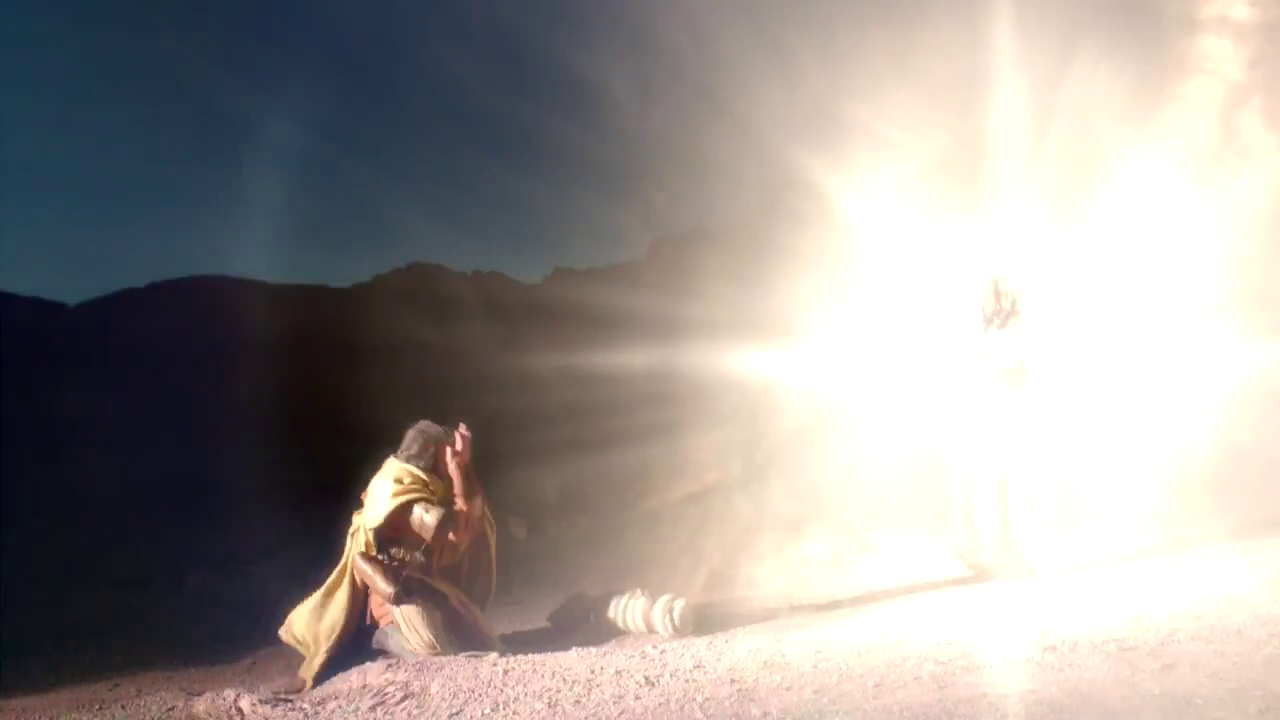
Given I spend my days in front of two computers, one for work, and one for me, I’ve started listening to Christian conversion testimonies on Youtube when I have busy work to do. For reasons related to my Christian fundamentalist past, I’ve tended to downplay the importance of conversion testimonies. In the early years of my Christian life, experience seemed to take precedence over the objective testimony of God in Scripture. The focus, I felt, was too much on our subjective experience of God to validate the truth claims of Christianity, rather than his revealed truth in Scripture. I now believe that’s wrong, and a false trade-off. God’s truth revealed in the Bible is validated by people’s experience, and of course it would be if the Bible is true! And oh how true it is! Many of the testimonies I’ve heard bring me to tears because of how real God makes himself to all kinds of people in all kinds of ways, to as the Apostle John says, every tribe and peoples and language. If Christianity is true, this is exactly what we would expect, God having a real impact on real people in ways that defy predictable explanations. (more…)

Oct 2, 2020 | Uncategorized
Not me, silly. I’ve been a Christian for a hundred years, give or take a few decades. No, it’s this guy with the very British sounding name, Chadwick Moore. The subtitle is priceless: “If religion is opium, Marxism is crystal meth.” This kind of conversion, and there are many happening now even if they don’t get people all the way to orthodox Christianity (and I know nothing of the details of his Christian commitment), but his move to conservatism goes hand and hand with his move to faith. The reason this is important is because what we’re dealing with here in the year of our Lord 2020 is far more than politics. Well meaning Christians too easily fall into a moral equivalence trap between left and right, Democrats and Republicans. In their desire to not make an idol of politics, they miss the forest for the trees. What we are dealing with today is much more than politics, but a clash of worldviews, of ultimate faith commitments, a class of civilizations. We’ve heard that we’re in a cold civil war, and that is true, but as we’ve seen in major cities throughout America over the last four months, it’s not so cold. (more…)

Sep 26, 2020 | Apologetics

I just finished reading Tactics by Greg Koukl, and it’s a book that should be read by every Christian young person in our anti-Christian culture. I recently bought it for my kids, and myself, and it was better than I thought it would be, much better. I’m not sure what I was expecting, but it’s tremendous. Koukl uses what he calls “The Columbo Method,” named for the 1970s series with Detective Columbo, Peter Falk, who had the effective habit of asking annoying questions to get to the truth. What Koukl shows us is that Christians don’t have to be on the defensive, but that we can put the challenges to Christianity, and those who make them, on the defensive. It’s clear that those challenges can’t be defended very well because they are so weak, and questions expose their weaknesses. The beauty of Tactics is that it demonstrates that we as Christians don’t always have to have all the answers. Any Christian can utilize these tactics regardless of the depth of their knowledge. Of course, more knowledge is better than less, and thus we need to do our homework, but the playing field can now essentially be leveled.
(more…)

Recent Comments