
Aug 3, 2019 | Plausibility
Since I keep seeing articles and blog posts about the apostasy of Joshua Harris, I keep thinking of lessons we can learn from his postmodern rejection of the Christian faith. I outlined three in my last post, and add another in this one. It’s a concept that is all but invisible in Christian conversations, and even in apologetics: plausibility structures. Before you go off somewhere else in Internetland because it sounds like an esoteric concept for brainiacs, or something, stick with me. It could not be more important for Christians trying to navigate their faith commitments in a hostile, secular 21st century Western culture.
(more…)
Aug 1, 2019 | Parents and Family
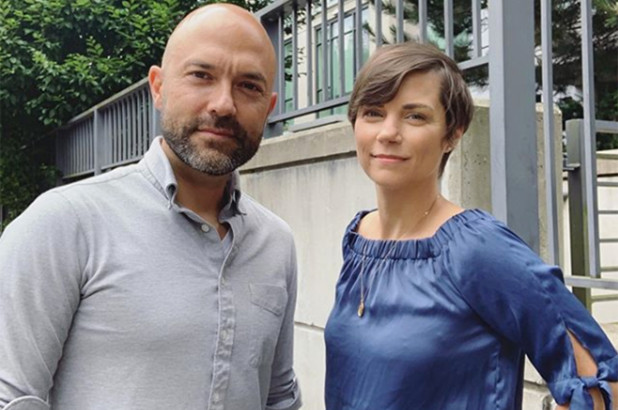
A lot of Internet ink has been spilled about author/pastor, Joshua Harris, so I figured I might as well add to the torrent. And given my bent, I’ll orient it toward apologetics. Harris recently decided to jettison the ideas in a book he wrote about sexual purity and dating in the 90s, and also decided that the Christian faith he thought inspired those ideas must be jettisoned as well. The marriage of 20 years based on the book’s message, that’s over too. In his declaration of apostasy he also apologized to the “LGBTQ+ community,” which means he’s embracing the moral system of modern liberal secularism. He’ll get plenty of praise from the usual suspects for that move, but there are some lessons here, elephant in the room kind of lessons. I haven’t read the book, but I think what I’ve read based on what’s transpired in his life is accurate.
(more…)

Jul 27, 2019 | Epistemology - Trust
My wife and I watched a documentary on Netflix the other night about these three great German thinkers who have shaped the modern world in innumerable ways, most of them harmful. I couldn’t help thinking as I watched about the great divide in human existence between God revealing himself and Truth to us, and human speculation. It’s one or the other, my friends. Without seeking and accepting the former, the latter is all we have. When I was much younger a cultural phenomenon called the Rubik’s Cube was all the rage. It’s a 3-D puzzle that is very difficult to solve, but it is solvable. Reality without revelation is not, a completely unsolvable Rubik’s Cube.
(more…)
Jul 24, 2019 | Theology
Those of you who are parents know those moments Madison Avenue has coined as “priceless.” I had one the other night that thrilled my soul when my son said something to the effect, “I’m so glad that God is my salvation.” The subtitled of my book gets at why this was so thrilling for me: “God’s Provision for Building an Enduring Faith in Your Children.” It’s very easy for Christians, saved fallen sinners that we are, to think our salvation is up to us: if we just do the right things, make the right decisions, live the right way, then God will be a little more pleased with us than he otherwise would be. The focus tends inward, subjective, on us, something I’ve taught our kids all their lives is not the Christianity we embrace.
(more…)

Jul 20, 2019 | Epistemology - Trust
Depending on your age the events of one or all of these dates are seared into your memory. You can see in your mind exactly where you were, what you were doing, and how you responded when you heard or saw what happened. I’m old enough to remember two of the three dates. Even not quite nine, I remember distinctly walking into a neighbor’s house just as the lunar module was going to be landing on the moon. I can see the people in the house sitting on sofa and chairs watching the grainy black and white footage of the lunar surface on a small TV. As an adult, the events of 9/11 are obviously more distinct in my memory. The emotions I felt, still palpable. For those old enough to remember the Kennedy assassination on November 22, 1963, the traumatic events of that day would scar a generation.
(more…)

Recent Comments