
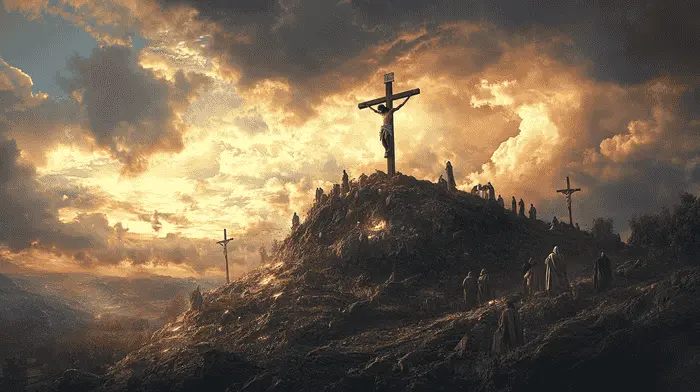
The Power of the Gospel Revealed in Zechariah
My last post was my perspective on the Catholic faith from my Protestant perspective, and how much over the years I’ve come to appreciate it and see the nature of my faith in some ways more in line with theirs. This post, however, will highlight the significant differences in our understanding of the gospel. I’m not going to compare and contrast, but this will come from my Reformed perspective, which Rome at the Council of Trent declared heretical and anathema. Catholics aren’t so hard core today, for the most part, and they believe we Protestants are Christians too. There are, however, fundamental differences between the Reformed and Protestant understanding of how God saves His people from their sins, and I believe Zechariah highlights these differences.
There are numerous passages in Zechariah that reveal the gospel in the Reformed tradition of salvation being a monergistic work of God in the soul of man. First we’ll define monergism:
The word monergism comes from a combination of the Greek terms for “one” and “energy.” Combined, they mean “a single force.” When applied to salvation, monergism implies that God is entirely, completely, and solely responsible for any person’s salvation. This view contrasts with synergism (“a combined force”). Synergism suggests salvation is accomplished through a cooperative act of God and man.
I learned the phrase above from reading Charle Hodge’s Systematic Theology back when I was 24 and 25 years old and brand new to Reformed theology. He explained this most profound truth in the simplest statement: “Salvation is the work of God in the soul of man.” God does the work, we respond. By His almighty power, he calls us out of the grave spiritually as Jesus called Lazarus out of his grave physically, and guides us through life in holiness, service, and love. We call the former justification, and the latter sanctification, although having lived almost five decades as a Christian, I now call it the pain of sanctification.
Both of these, justification and sanctification, are the work of God to save His people from their sins (Matt. 1:21). He initiates and completes it all, and even our cooperation, our “working out our salvation with fear and trembling,” as Paul puts it, is the sovereign work of God. That eventually became apparent to me a bit later in this journey with Christ when the truth I Corinthians 1:30 hit me in a way I had previously not appreciated. Paul says:
It is because of him that you are in Christ Jesus, who has become for us wisdom from God—that is, our righteousness, sanctification and redemption.
First we are only in Christ Jesus because of God, because He sovereignly put us there. He chose us and put us “in him,” one of Paul’s favorite salvation phrases, “in Christ.” Jesus tells us the nature of our salvation in John 6:
44 “No one can come to me unless the Father who sent me draws him, and I will raise him up at the last day.
Jesus is confirming here all of Paul’s descriptions of our salvation, from God choosing us in Christ, to our justification, declared righteous because of Christ’s sacrifice, God’s making us holy, sanctifying us, setting us apart increasingly to Him, and our redemption, the resurrection of our bodies. It’s a package deal! All of it includes us, every part of what makes us human, emotionally, psychologically, our choosing, our failures, our wills, but none of it is ultimately up to us. I didn’t quote what Paul says in verse 31 right after he affirms the monergistic nature of our salvation:
31 Therefore, as it is written: “Let the one who boasts boast in the Lord.”
Paul is quoting from a passage in Jeremiah 9 in which the Lord is talking about boasting of our wisdom, strength, and riches, and now Paul is adding to that our very salvation.
Related to our salvation is another area where Hodge is helpful. He said that we tend to equate God’s “control” with human control, which requires coercion and destroys our free will. God, however, can “control” human beings without destroying or in any way distorting their humanity or agency. He is sovereign and God, almighty in every way, and how he does it we have no idea; we simply trust him that once he chooses us He will never let us go. As Paul says in Philippians 1, that God who began a good work in us “will carry it on to completion until the day of Christ Jesus.”
Monergism in Zechariah 3 & 4
Zechariah is given visions that point forward to a day when this salvation Paul declares will be fulfilled in Christ. It’s an amazing testimony to the power of God to save His people from their sins (Matt. 1:21). It is the most Messianic of the 12 minor prophets, and in that it is not unlike Isaiah. He lived not long after the Israelites had returned to Judah after their exile in Babylon in the early 500s BC into the early decades of the 400s prior to Ezra and Nehemiah rebuilding of the temple. It is a book of encouragement to give the Israelites strength to endure the troubles to come. Nothing they are planning to do will be easy, as is living a Christian life in a fallen world in a fallen body among fallen people always will be. We are always working against the gravity of sin, trudging up a mountain with that heavy backpack of sin, and we get a picture of that in chapter 3 as the scene is set up.
Joshua is the high priest at the time, not a coincidence the same name the Lord would give our Savior five centuries into the future. In Zechariah’s vision he is standing before the angel of the Lord and Satan himself. The devil is living up to his name, accusing Joshua, of what we’re not told. Then we see the Lord defend his high priest as he will one day the final high priest:
2 The Lord said to Satan, “The Lord rebuke you, Satan! The Lord, who has chosen Jerusalem, rebuke you! Is not this man a burning stick snatched from the fire?”
As Jesus says in John 10:10, the thief comes only to steal, kill, and destroy, and the accuser does it by accusing, by rubbing our sin in our faces as if God is incapable of saving us from our sins. To make the point, we’re told that Zechariah is dressed in “filthy clothes.” The word in Hebrew doesn’t just mean dirty, as if your toddler was out playing in the mud, but something much more disgusting. It means, “soiled (as if excrementitious).” To keep this family friendly, he is covered in crap, smelly, disgusting. That is what sin does to us. What does the Lord do with this “burning stick snatched from the fire”? Then we get a beautiful picture of the monergistic nature of our salvation from sin:
4 The angel said to those who were standing before him, “Take off his filthy clothes.”
Then he said to Joshua, “See, I have taken away your sin, and I will put fine garments on you.”
5 Then I said, “Put a clean turban on his head.” So they put a clean turban on his head and clothed him, while the angel of the Lord stood by.
Of ourselves, we can’t do anything about our filthy clothes. Only God Himself can have those taken off. And it’s not just that our sin is taken away like those clothes, but God Himself has us dressed in fine garments, the righteousness of Christ himself, enabled by the active and passive obedience of Christ in life, even unto death. As I heard Tim Keller say many times, Christ lived the life we should have lived, and died the death we should have died. Unlike Catholics, we believe that not only did Christ die for our sins, but his righteousness was given to us as well. We are as Luther put it in Latin, simul iustus et peccator, or simultaneously righteous and sinner. We are declared righteous before God, legally, yet we are still sinners. It is a forensic declaration because of the transaction, that actual ransom paid for us, on the cross. This is justification.
Then we see that this is only the start. The Lord charges Joshua to walk in obedience and keep his requirements. There is no room for antinomianism, or being lawless, in the Christian faith or life. We don’t continue to sin because we figure we’re forgiven. As Paul says in Romans 6, God forbid! We are saved from the slavery of sin, like the Hebrews were saved from slavery in Egypt, to live like them in obedience to the law, to righteousness. There are also material implications to a full orbed gospel, as we learn next:
10 “‘In that day each of you will invite your neighbor to sit under your vine and fig tree,’ declares the Lord Almighty.”
The phrase, “that day,” is a critical part of Zechariah’s prophetic power, which I’ll get to below, but we see here, and throughout the Old Testament prophetic declarations of salvation, that the blessings coming as a result are not only “spiritual,” but material as well. This is something Evangelicals either ignore or think has nothing to do with the gospel. God in his revelation, however, says differently. The Old Testament is an incredibly earthy document, focused on blessings in this life more than on the life to come. With Christianity we get both!
The Importance of “That Day” in our Salvation
This phrase is used 20 times in Zechariah to indicate the time in which salvation will come to God’s people, and it will be in one day, as we know in hindsight. Let’s look at some of the hopeful declarations the prophet gives to us.
Chapter 2:
10 “Shout and be glad, Daughter Zion. For I am coming, and I will live among you,” declares the Lord. 11 “Many nations will be joined with the Lord in that day and will become my people. I will live among you and you will know that the Lord Almighty has sent me to you.
Chapter 9:
16 The Lord their God will save his people on that day
as a shepherd saves his flock.
They will sparkle in his land
like jewels in a crown.
17 How attractive and beautiful they will be!
Grain will make the young men thrive,
and new wine the young women.
Chapter 13:
“On that day a fountain will be opened to the house of David and the inhabitants of Jerusalem, to cleanse them from sin and impurity. 2 “On that day, I will banish the names of the idols from the land, and they will be remembered no more,” declares the Lord Almighty. “I will remove both the prophets and the spirit of impurity from the land.
9 The Lord will be king over the whole earth. On that day there will be one Lord, and his name the only name.
And it ends in chapter 14 with the final references:
20 On that day holy to the Lord will be inscribed on the bells of the horses, and the cooking pots in the Lord’s house will be like the sacred bowls in front of the altar. 21 Every pot in Jerusalem and Judah will be holy to the Lord Almighty, and all who come to sacrifice will take some of the pots and cook in them. And on that day there will no longer be a Canaanite in the house of the Lord Almighty.
The Old Testament is a powerful testimony of the sovereignty of God in salvation. The plan of redemption, of God saving His people from their sins since the fall has always been the work of God. He says to Adam and Even in Genesis 3:15:
And I will put enmity
between you and the woman,
and between your offspring and hers;
he will crush your head,
and you will strike his heel.”
In Hebrew crush and strike are the same word, but I like the NIV’s rendering because while Satan can do some damage, symbolically the heel, the seed of the woman, Christ, defeats and renders powerless the devil, symbolically the head. From that moment, history is a very slow beeline to the birth, life, death, resurrection, and ascension of Christ, redemption accomplished, to Pentecost, redemption applied.
The Gospel Fulfilled in Zechariah
There are two passages in the book that are amazingly specific about how this salvation to come is to be accomplished. In chapter 3 where we read about the Lord taking off Joshua’s filthy clothes and putting on fine garments:
8 “‘Listen, High Priest Joshua, you and your associates seated before you, who are men symbolic of things to come: I am going to bring my servant, the Branch. 9 See, the stone I have set in front of Joshua! There are seven eyes on that one stone, and I will engrave an inscription on it,’ says the Lord Almighty, ‘and I will remove the sin of this land in a single day.
Those reading Zechariah’s words for the next 400 years must have wondered how sin could be removed in only a single day. Mixing metaphors, the Lord tells us the servant will be a branch and a stone, and Jesus tells us (Matt.21 and Mark 12) quoting Psalm 118,
‘The stone the builders rejected
has become the cornerstone;
the Lord has done this,
and it is marvelous in our eyes’
Who did this? The Lord. We also learn something about the identity of this branch in Isaiah 11, one of the most glorious salvation chapters in the Bible. It starts with the Branch:
A shoot will come up from the stump of Jesse;
from his roots a Branch will bear fruit.
2 The Spirit of the Lord will rest on him—
the Spirit of wisdom and of understanding,
the Spirit of counsel and of might,
the Spirit of the knowledge and fear of the Lord—
3 and he will delight in the fear of the Lord.
This eventually leads to the suffering of the Lord’s servant in Isiah 52 and 53, where we read the gospel
5 But he was pierced for our transgressions,
he was crushed for our iniquities;
the punishment that brought us peace was on him,
and by his wounds we are healed.
Several hundred years later Zechariah echoes Isaiah in chapter 12:
10 “And I will pour out on the house of David and the inhabitants of Jerusalem a spirit of grace and supplication. They will look on me, the one they have pierced, and they will mourn for him as one mourns for an only child, and grieve bitterly for him as one grieves for a firstborn son.
In perfect biblical hindsight it becomes apparent just how true it was when Jesus said to his disciples after his resurrection: “Everything must be fulfilled that is written about me in the Law of Moses, the Prophets and the Psalms.” Or the two on the road to Emmaus, telling them, “what was said in all the Scriptures concerning himself.” The Bible has one author, Almighty God, and every bit of it points to Christ. In the immortal words of the Hallelujah Chorus which proclaim Christ sitting at the right hand of the Almighty:
The kingdom of this world is become
the kingdom of our Lord, and of His Christ,
and of His Christ;
And He shall reign for ever and ever,
King of kings, and Lord of lords.Hallelujah!

Recent Comments